REVIEW · PALM SPRINGS
Joshua Tree National Park Sightseeing Adventure Tour
Book on Viator →Operated by Joshua Tree Tours and Experiences, LLC · Bookable on Viator
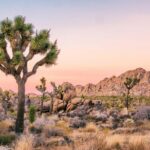
Boulders, vistas, and just enough walking. This Joshua Tree National Park sightseeing tour is built for people who want the highlights without spending the whole day driving between viewpoints. You’ll get short walks, photo stops, and clear explanations of how the park’s rocks and plants fit together, from Quail Springs to the big lookout at Keys View.
I love the geology-focused stops that make Joshua Tree feel more than just pretty shapes, starting with Quail Springs Trail and its ancient boulders said to be about 1.7 billion years old. I also like the small-group pace: short, doable stretches plus time to just look, with an air-conditioned vehicle and bottled water and protein bars included. One consideration: there may be an extra park fee collected at the gate, with some mentions of about $15 per person.
In This Review
- Key highlights you’ll feel on this tour
- A simple plan for seeing Joshua Tree’s best rock moments
- Price and what’s actually included in the $99 value
- The 10:00am start: what the timing feels like in real life
- Stop 1: Quail Springs Trail and the ancient boulder playground
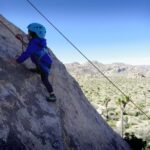
- Stop 2: Banana Cracks Rock and the climb-worthy boulder energy
- Stop 3: Hidden Valley’s metamorphic rocks and climbing scene
- Stop 4: Keys View at about 5,500 feet and the big map feeling
- Stop 5: Cap Rock Trail for easy walking and surreal rock angles
- Stop 6: Skull Rock, the famous boulder photo stop
- Guides, small-group tweaks, and why it feels personal
- Practical tips so your day feels smooth
- Who this tour suits best (and who might want a different plan)
- Should you book this Joshua Tree sightseeing tour?
- FAQ
- How long is the Joshua Tree National Park sightseeing adventure tour?
- Where does the tour start and end?
- What time does the tour begin?
- What’s the group size and how private is the transportation?
- What’s included in the price?
- What isn’t included?
- What language is the tour offered in?
- What should I know about weather and cancellations?
Key highlights you’ll feel on this tour
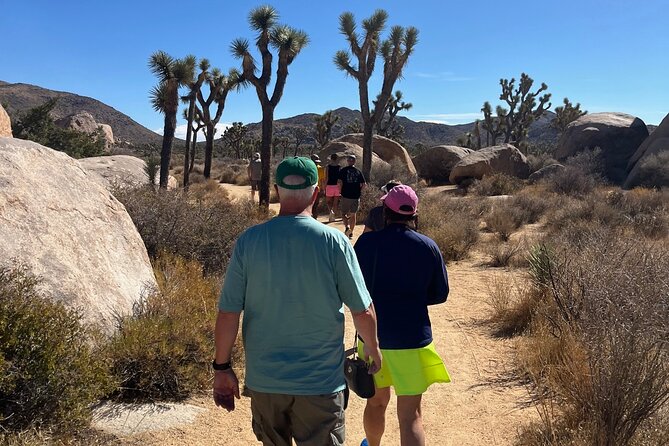
- Ancient granite first stop: Quail Springs Trail with boulders described as roughly 1.7 billion years old
- Big-view payoff at Keys View: Coachella Valley and San Bernardino Mountains from about 5,500 feet
- Joshua Tree photo time built in: multiple stops where you can walk onto formations and grab great angles
- Hidden Valley rock formations: a main area packed with giant metamorphic rocks and climbers
- Skull Rock is tourist-friendly: easy area to wander, pose, and take classic photos
- Comfort matters: air-conditioned transport plus water and protein bars in the vehicle
A simple plan for seeing Joshua Tree’s best rock moments
Joshua Tree can be overwhelming at first. The park is huge, roads take time, and the good spots don’t always jump out from the highway. This tour solves that by doing a tight loop with short stops that keep your legs fresh and your camera busy.
What you’re really buying is focus. You’re not guessing where to stand or how to interpret what you’re looking at. With a guide on board, the rocks stop being random piles and start making sense—boulder formation, high-desert survival, and why certain valleys and outcrops became natural gathering spots for climbers.
The other win is pacing. The total time runs about 4 to 5 hours, and most of that is spent at stops, not stuck in traffic. For first-timers, or for people who don’t want a long hike, it’s a smart way to get your bearings fast and still feel like you experienced the park.
You can also read our reviews of more tours and experiences in Palm Springs.


Price and what’s actually included in the $99 value
At $99 per person for about half a day, the key value question is: what do you get besides transportation? Here, quite a lot is built in.
You’ll have:
- Private transportation in an air-conditioned vehicle
- A tour guide
- Bottled water and protein bars in the vehicle
- Admission tickets included for each of the listed stops
That admission detail matters. Joshua Tree sightseeing often turns into a patchwork of small costs and scattered entry rules. Here, the tour is structured so your time at Quail Springs, Banana Cracks Rock, Hidden Valley, Keys View, Cap Rock Trail, and Skull Rock is the point, not paperwork.
One caution on value: some people report needing to pay around $15 per person at the gate. If that happens, it’s still a small add-on compared with the cost of renting a vehicle and paying for your own park entry—but it’s worth being mentally prepared.
The 10:00am start: what the timing feels like in real life
This tour starts at 10:00am and ends back at the meeting point. The route is designed so you can enjoy several “get out, look, walk, take photos” moments without feeling rushed.
Each stop is listed as about 30 minutes. Add that up and you get roughly 3 hours of on-foot time across the day’s highlights, with the remaining time used for travel between locations. That works well because Joshua Tree’s best features aren’t miles apart—you just need the right sequence.
Also, group size is capped at 10 people. In practice, that usually means fewer bottlenecks at photo spots and more flexibility if someone wants to walk slower or linger longer at a particular boulder.
Stop 1: Quail Springs Trail and the ancient boulder playground
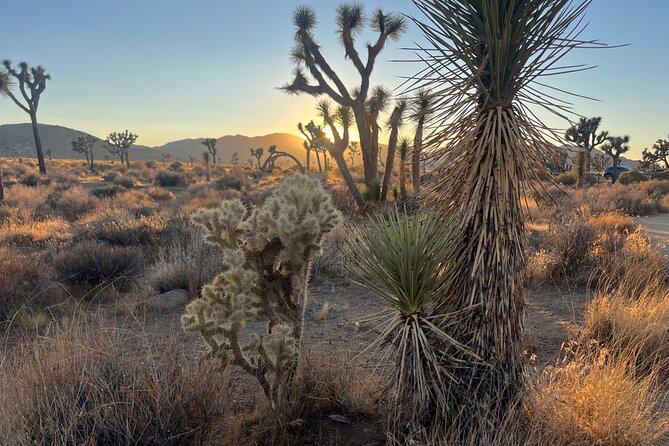
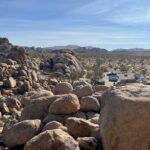
Quail Springs is a strong opener, and it sets the tone for the whole trip. You’re dropped into a rocky area where boulders and granite outcrops do the talking. This stop is described as being among the oldest rocks in the park, around 1.7 billion years old—way older than the dinosaur timeline.
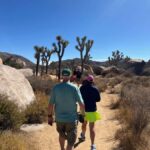
You’ll treat this as both a walk and a photo mission. The terrain is rock-and-boulder shaped, so it’s less about a straight trail and more about exploring the textures and angles. Even a short time here can make the rest of the park feel more meaningful, because you’re seeing scale right away.
What to watch: rock surfaces can be uneven. Wear shoes that grip well, not just pretty ones. If you’re trying to maximize photos, plan to spend the full half hour rather than sprinting through. The best shots often come after you stop trying to capture everything and start choosing one strong viewpoint.
Stop 2: Banana Cracks Rock and the climb-worthy boulder energy
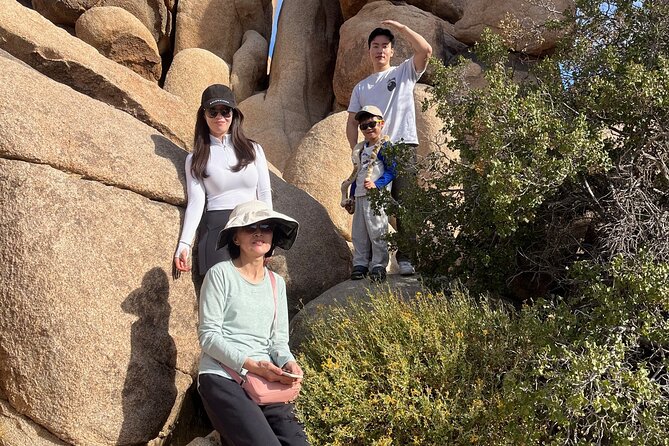
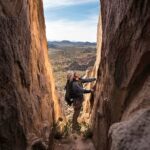
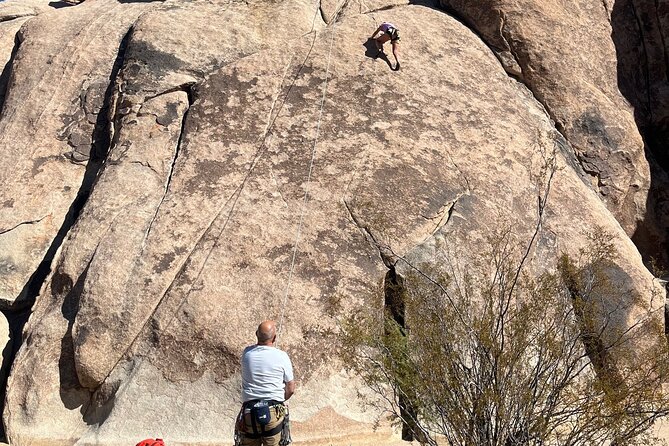
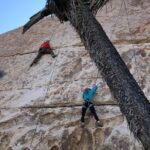
Next comes Banana Cracks Rock, a famous set of big boulders associated with the name Hemingway. This is a look-but-don’t-need-to-climb stop. Advanced rock climbers tackle these formations, but your experience here is about marveling at the shapes, Joshua Trees nearby, and the sheer size of the granite blocks.
What I like about this stop is how it shows Joshua Tree as an activity magnet. If you’ve only heard about the park as a scenic drive, this reminds you it’s also a serious climbing destination. Even from the ground, you can spot how the rock fractures guide movement.
You’ll also get another round of “walk on the formations” style sightseeing. That means short, flexible footwork and plenty of places to frame the trees against the rocks.
Possible drawback: because climbers often use prominent lines, you may see people moving around and setting up. It doesn’t ruin the experience, but if you’re hoping for total quiet, keep your expectations realistic.
Stop 3: Hidden Valley’s metamorphic rocks and climbing scene
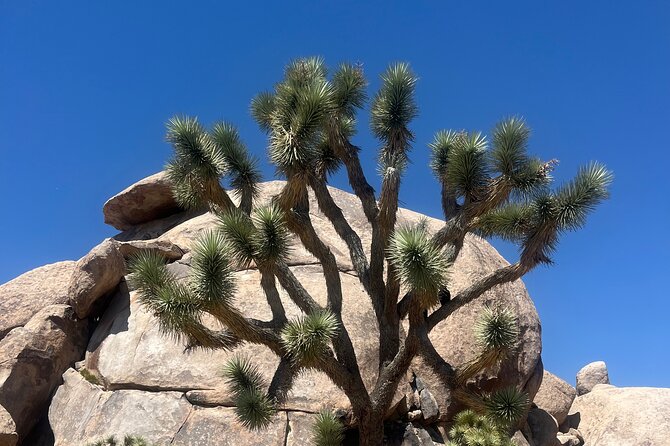
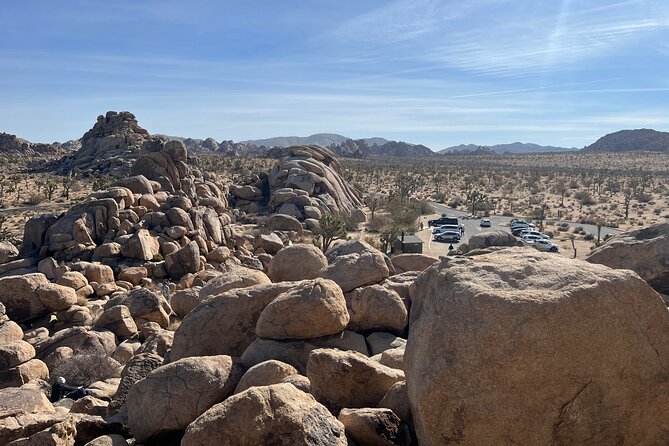
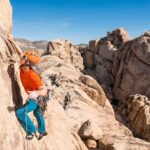
Hidden Valley is described as a main area of Joshua Tree National Park, and it’s easy to see why. You’ll find dramatic rock formations plus the kind of scene that naturally brings rock climbers. Even when you’re not climbing, it changes your understanding of the park—this isn’t just a photo backdrop. It’s a place with a long-standing outdoor culture.
The tour stop here includes time for a walk and exploring some famous giant metamorphic rocks. Metamorphic doesn’t have to be intimidating. The practical takeaway is that these rocks tell a story of pressure, heat, and transformation over time—so when you look closely, you can see why the forms look the way they do.
What I’d do: at least once, pause and look outward from one rock to the next. Hidden Valley reads better in layers. You’ll notice how the boulders frame the sky, how Joshua Trees fill cracks and slopes, and how the valley shape changes sound and wind.
Stop 4: Keys View at about 5,500 feet and the big map feeling
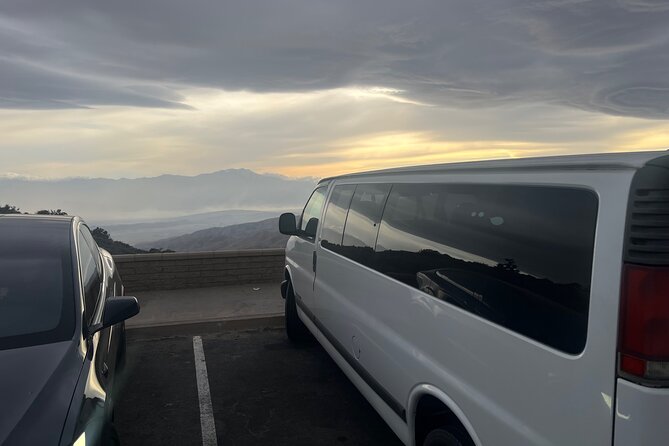
Keys View is a standout because it’s where Joshua Tree stops being only rocks and plants and becomes a view game. You’ll be at roughly 5,500 feet in elevation, looking over the Coachella Valley and toward the San Bernardino Mountains.
On a clear day, the description includes seeing the Salton Sea, the San Andreas Fault lines, and even Palm Springs. That’s a lot to process, so the best part is having a guide who can help you “read” the view instead of just staring at it.
This stop is only about 30 minutes, but those minutes can feel long—in a good way. It’s the moment when you realize you’re in the middle of a huge geologic system, not a small set of attractions.
Practical tip: weather swings are real in the high desert. Dress in layers so you can handle chilly, windy moments, then warmer stretches. If it’s too hazy, don’t panic—focus on the mountain silhouettes and fault-line direction cues rather than trying to identify every distant feature.
Stop 5: Cap Rock Trail for easy walking and surreal rock angles
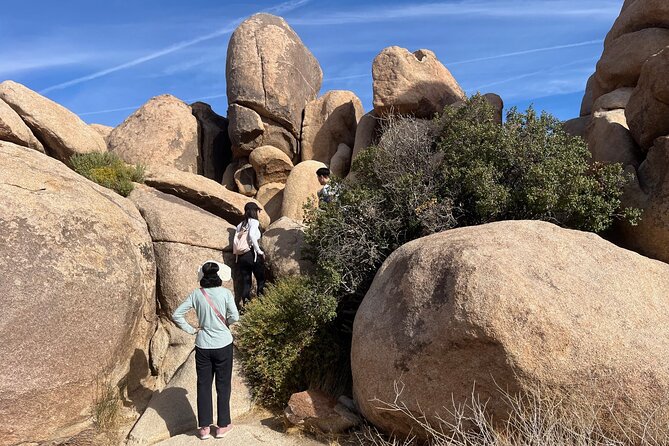
Cap Rock Trail is a quick stop designed for movement without major strain. You’ll get an easy walking area along Cap Rock with surreal scenic views, plus lots of Joshua Trees woven into the rock scenery.
This is a great stop if you want variety. After the big lookout feeling at Keys View, Cap Rock brings you back down to a more intimate scale—still dramatic, but closer, with more chances to notice how Joshua Trees grow around rock.
You’ll also have a good opportunity for steady photo angles. Trails like this are often where you can get photos that look like you spent much longer in the park—because the rocks do the heavy lifting for composition.
What to watch: because it’s an easy trail, people sometimes walk too fast. Slow down. The most interesting visuals happen when you stop and look up at how the rock edge shapes the plants.
Stop 6: Skull Rock, the famous boulder photo stop
Skull Rock is the last stop, and it’s the most famous for a reason: the main boulder looks like a skull, and the area is set up for people to walk around it and take photos.
This is also a family-friendly moment. The stop is described as easy to wander and even jump around on, which makes it one of those “everyone can participate” locations. If your group includes kids, this is usually the part they remember later.
What I like is that it’s a perfect end cap to the tour. You started with ancient boulders and geology, you moved through valleys and views, and you finish with a single recognizable feature that turns all the earlier interpretation into a fun photo memory.
Possible drawback: it’s a popular photo spot, so plan for more people in the frame than you’d like. Use the time to try a few different angles rather than waiting for the perfect empty scene.
Guides, small-group tweaks, and why it feels personal
This is a small group tour with a max of 10, and that changes how the day plays. Instead of getting dragged through stops on a fixed script, you can often adjust your pace. The guide can also tailor the route toward the group’s comfort level and interests.
I’ve seen guides named Frank, Sophie, and Spencer mentioned on past tours. The common thread in those notes is simple: they’re good at explaining what you’re seeing and staying flexible if your group wants more walking or wants to keep it chill.
That flexibility shows up in real ways:
- You get safer, more confident directions at rockier places
- You’re encouraged to explore at your own pace
- You can spend extra time when a stop clicks for your group
Even the vehicle setup supports this. Bottled water and protein bars mean you’re not hunting for snacks mid-route, and air conditioning helps on warmer days when the high desert still feels hot between stops.
Practical tips so your day feels smooth
Joshua Tree is high desert. That means big temperature swings and intense sun. You’ll want to be ready for both.
Here’s what I’d plan around:
- Wear comfy shoes with grip. Rock-and-boulder stops mean uneven ground.
- Dress in layers. Reviews mention it can go chilly to warm, and windy to calm.
- Bring a small day bag. You’ll want your phone/camera handy for the best rock angles.
- Use the guide’s pacing cues. Even on easy stops, the best photos come after you slow down.
Water is included, and protein bars are included too, which is great. Still, if you’re someone who drinks more than average, consider bringing an extra bottle just in case.
Also, this tour is built around viewpoints and short exploration. If you’re expecting a long strenuous hike all day, you’ll likely feel underwhelmed. If you want a focused highlights route with a guide, it’s a strong match.
Who this tour suits best (and who might want a different plan)
This works well for:
- First-timers who want the main sights fast and understand what they’re looking at
- Couples and solo travelers who don’t want to rent a car and plan a route
- People who like short walks, photos on boulders, and scenic outlooks
- Groups that include seniors or anyone who prefers a manageable pace
It may not fit as well if you:
- Want a full-day hike with serious elevation gain
- Prefer to explore entirely on your own schedule without stop times
- Are specifically looking for long rock climbing instruction (this tour is more about viewing and easy exploration than a training camp)
Still, the day includes enough variety that even if you’re not a hiker, you’ll get action: rock formations, viewpoints, and a famous skull-boulder photo finale.
Should you book this Joshua Tree sightseeing tour?
If your goal is to see a lot of Joshua Tree in one morning or afternoon—Quail Springs, Hidden Valley, Keys View, Cap Rock, and Skull Rock—this tour is a practical way to do it. The price feels fair because admission to the stops, a guide, and comfort items (water, protein bars, air-conditioned transport) are included.
I’d book it if you’re planning your first Joshua Tree visit and want structure, photo-worthy stops, and a guide who can help you interpret the rocks instead of treating them like wallpaper. I’d think twice if you’re chasing a long hike day or you’re comfortable driving yourself and building your own route.
One last piece of advice: pack for temperature swings and wear grippy shoes. If you do that, this tour is one of the easiest ways to turn a few hours in the high desert into a day with real meaning.
FAQ
How long is the Joshua Tree National Park sightseeing adventure tour?
The tour runs about 4 to 5 hours total, and that total duration includes travel time.
Where does the tour start and end?
It starts at 6554 Park Blvd, Joshua Tree, CA 92252, USA. The activity ends back at the same meeting point.
What time does the tour begin?
The start time is 10:00 am.
What’s the group size and how private is the transportation?
The tour has a maximum of 10 travelers, and it includes private transportation in an air-conditioned vehicle.
What’s included in the price?
The tour includes private transportation, bottled water and protein bars in the vehicle, an air-conditioned vehicle, a tour guide, and admission tickets for each stop.
What isn’t included?
Tips are not included. There may also be a possible additional payment collected at the gate (reported around $15 per person).
What language is the tour offered in?
The tour is offered in English.
What should I know about weather and cancellations?
The experience requires good weather. If it’s canceled due to poor weather, you’ll be offered a different date or a full refund. You can cancel for a full refund if you cancel at least 24 hours before the experience start time.