REVIEW · PALM SPRINGS
Death Valley National Park Self-Guided Audio Driving Tour
Book on Viator →Operated by Adventures with Action · Bookable on Viator
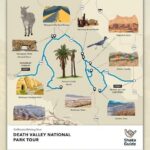
Death Valley is better at car-speed and audio. This self-guided experience strings together hands-free location-based stories with offline maps, so you can follow the route and learn as you go without hunting for cell service. It’s also priced per car, not per person, which makes it a smart way to see the park highlights without budgeting for a full guided tour.
I like that the narration is built for real driving time: the route runs 80+ miles with 55+ audio stories over about 4–5 hours, and you can start and pause whenever you want within the day. One real consideration: the app has to be downloaded in strong wifi/cellular first, and Death Valley can be a dead zone for phone signal once you’re out there.
In This Review
- Key things I’d plan around
- Death Valley Junction to Badwater Basin: how the audio drive really feels
- Price and time math: is $16.99 worth it?
- The app setup that makes or breaks the day
- Story-driven driving: Death Valley Junction and Borax
- Dante’s View and the long golden hour road: big views, smart timing
- Zabriskie Point: erosion as a giant work of art
- Furnace Creek Visitor Center: water, restrooms, and the thermometer photo
- Mars Hill, Artist’s Palette, and Devils Golf Course: color with a reason
- Badwater Basin: the numbers that make the place feel unreal
- Small details that make the drive smoother
- Should you book this Death Valley self-guided audio drive?
- FAQ
- What does this Death Valley self-guided audio driving tour cost?
- How long does the tour take?
- Is the Death Valley National Park entrance fee included?
- Do I need cell service to use the audio?
- How do I access the audio tour after I book?
- Do I need to be at a specific spot to start?
- Can I choose a starting point based on where I enter Death Valley?
- How can I play the audio in my car?
- When can I start the tour?
- Is there a refund if I cancel?
Key things I’d plan around
- Offline-first: download before you enter, then rely on offline playback
- GPS-triggered audio: the stories start automatically as you reach each stop
- Per-car value: one purchase covers up to 4 people in your group
- Route timing: plan on 4–5 hours for the core drive, more if you hike
- Terrain varies: some roads are rugged and unpaved, so drive carefully
Death Valley Junction to Badwater Basin: how the audio drive really feels
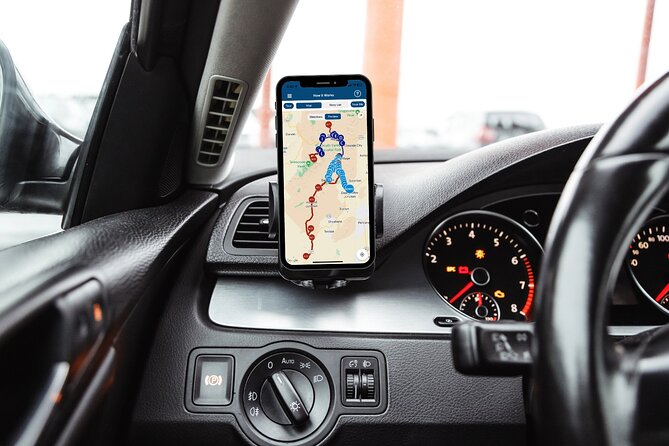
A driving tour works best when it does two jobs at once: it tells you what to look at, and it keeps you moving at a calm pace. This one does that with audio that plays automatically based on where your phone thinks you are. You don’t need to babysit your screen while you’re parked, and you don’t need signal to keep listening once the tour is downloaded.
The park itself is built for this format. Death Valley is wide, hot, and visually intense. You’re not trying to “see everything” like a museum. You’re bouncing between viewpoints, short walks, and big empty horizons. The audio helps you translate what you’re looking at: borax mining, iron-oxide rock color, erosion patterns, and why Badwater feels so unreal even before you read the numbers.
You can also read our reviews of more tours and experiences in Palm Springs.


Price and time math: is $16.99 worth it?

At $16.99 per group (up to 4), you’re paying for convenience and interpretation more than transportation. If you’re traveling with even two people, it usually beats per-person tour pricing because you’re sharing one guide per car.
Time matters too. The core drive is about 4–5 hours. That’s long enough to hit the major viewpoints—then still leave room for one short hike (the Golden Canyon option) and a few photo stops. If you’re doing a day trip through Death Valley, this is a workable “main sites” plan without turning your schedule into a sprint.
What you should budget for separately: Death Valley National Park entrance fees are not included. The park fee covers seven consecutive days, so you can also tack on extra stops before or after your audio drive if you arrive early or stay later.
The app setup that makes or breaks the day
This experience is very “do it right at the start” friendly, and Death Valley is not forgiving if you get stuck with a half-downloaded app.
Here’s the clean way to do it based on the instructions you’ll receive:
- After booking, you’ll get an email and text with setup instructions and a password. Look for it in your messages (the instructions say to search for audio tour).
- Download Action’s Tour Guide App before you rely on it.
- Use strong wifi/cellular to download the tour while you’re still in decent coverage. After that, it works offline.
On site, there’s no host meeting you at the first pull-off. You just open the app in the car area, pick the correct tour version if there are multiple starting points, and listen as you drive. If audio doesn’t kick in, it’s usually a phone setup or version mismatch. The guidance also notes to follow the route and speed limit for the best automatic story triggers.
Audio playback options are practical:
- In the car: connect your phone to the stereo using Bluetooth, USB, or AUX
- For walking bits: headphones can be easier than blasting the speaker
Story-driven driving: Death Valley Junction and Borax
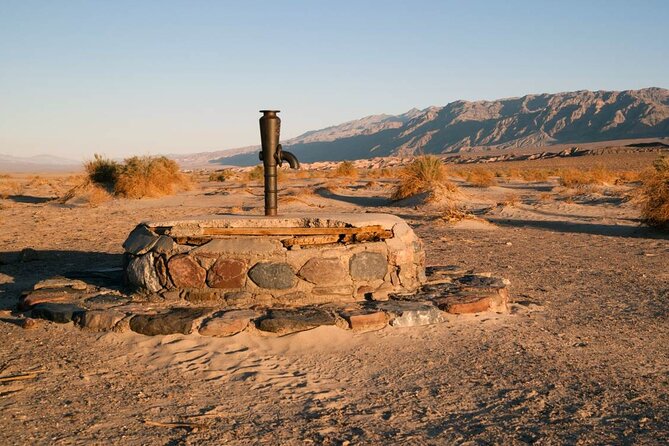
You’ll start with Death Valley Junction, where the name sounds ominous for a reason—this is a place built for extremes. The audio frames the valley as more than a heat headline. It sets the scene for what you’re about to see: how people arrived with big dreams, then got humbled by the land.
Next comes Borax, where the story shifts from gold rush expectations to the mining material that actually helped put the valley on the map. If you’ve ever wondered why borax shows up in Death Valley branding, the audio gives you the link: miners came searching for precious metal, but borax was the discovery that mattered.
These two early stops work well because they give your eyes context before the views go big. By the time you’re chasing color and depth at the viewpoints, you’ll recognize more than just scenery—you’ll recognize an idea of how the human story and the geology story connect.
Dante’s View and the long golden hour road: big views, smart timing
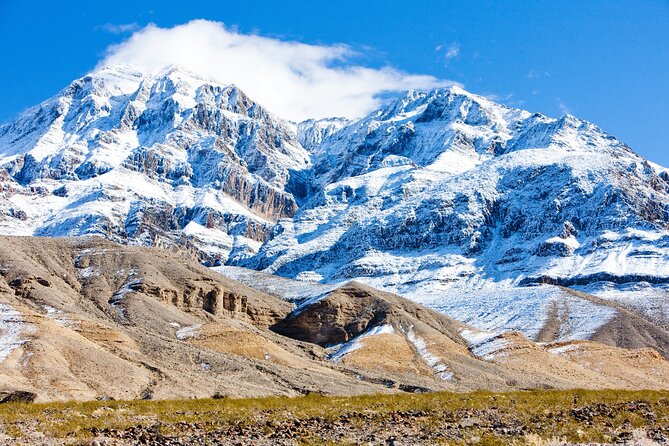
Dante’s View is a photo stop even if you’re not trying to be a photographer. It towers more than 5,000 feet above Badwater Basin, with a wide vantage looking toward the Panamint Mountains. The audio pitches it as a perfect place to watch the sun drop behind the range, which is exactly when the sky and rock tones can shift fast.
Then you’ll roll into Twenty Mule Team Canyon, named for those wagon trains tied to the borax era. This section is all about the winding drive and the changing colors. The audio emphasizes how saffron-colored hills and colorful badlands appear different at different times—especially early morning or around sunset. Translation: plan to move slowly here and don’t assume one pull-off will be enough. You’ll likely want a couple quick stops for different angles.
Practical note: canyon drives can tempt you to stop anywhere. Resist that. Stay within safe pull-offs and don’t park where you can block other cars.





Zabriskie Point: erosion as a giant work of art
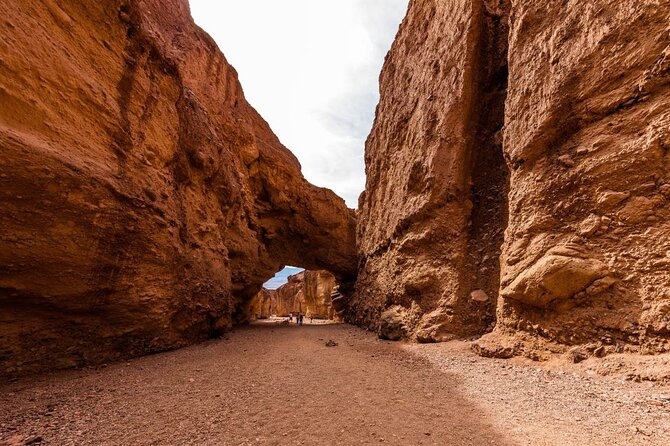
If you only want one “iconic” viewpoint in Death Valley, Zabriskie Point is a strong candidate. The audio explains it as a place where you can understand how erosion shaped the valley. From above, you get a layered view: the darker badlands in front, lighter salt flats beyond, and the Panamint Mountains framing it all.
Zabriskie Point also works because it’s not just about what you see—it’s about how you see it. The audio gives you a mental map, so your photos turn into something more than random desert shots. You’ll start noticing the transitions between rock types and light areas instead of treating it all as one color.
If you’re short on time, aim to hit Zabriskie Point when the light is less harsh. If you’re not short on time, you’ll probably catch better results with a slower approach: listen to the story, then take a minute for your own observations before moving on.
Furnace Creek Visitor Center: water, restrooms, and the thermometer photo
After the big viewpoints, the experience slows slightly at Furnace Creek Visitor Center. This is one of the most practical stops because it’s built for breaks: you’ll find snacks, water, and restrooms. And yes, the audio calls out the thermometer—there’s a large digital display just outside the entrance that shows the temperature at one of Death Valley’s lowest points.
That’s also where the “this tour is useful beyond the drive” feeling really kicks in. You can time the hottest part of your day for a viewpoint-to-break rhythm: listen, check the thermometer, refill, then roll on.
From Furnace Creek, the tour gives you access to Golden Canyon trail, an out and back hike about 3 miles total and around 1 hour. It’s popular, so you can expect to share the route with other hikers. If you’re doing this drive as a half-day, this hike is a great way to add legs without turning the plan into an all-day expedition.
Mars Hill, Artist’s Palette, and Devils Golf Course: color with a reason
Mars Hill is a gentle-looking rise that somehow feels like a warning sign. The audio leans into the comparison: the name fits because much of Death Valley resembles the arid feel people imagine on Mars—deep ochre stones, strange formations, and wide dusty stretches.
Then the audio turns to a rock-color story at Artist’s Palette. The tour explains the canvas look through geology: volcanic deposits plus iron oxides and chlorite are part of what creates the glow. At this point, you’re no longer only enjoying the colors—you’re learning what produced them. That makes the stop feel more satisfying, especially if you’ve seen deserts that all look the same at first glance.
Next you’ll have a road-based stop for Devils Golf Course. The tour notes the road is rugged and unpaved, so use caution. The name is part of the fun, but the real value here is perspective: Death Valley doesn’t follow your expectations of how a playground, a battlefield, or a park “should” look.
If you’re nervous about unpaved driving, keep it simple:
- slow down
- watch other cars
- don’t force photos if you need to reposition your vehicle
Badwater Basin: the numbers that make the place feel unreal
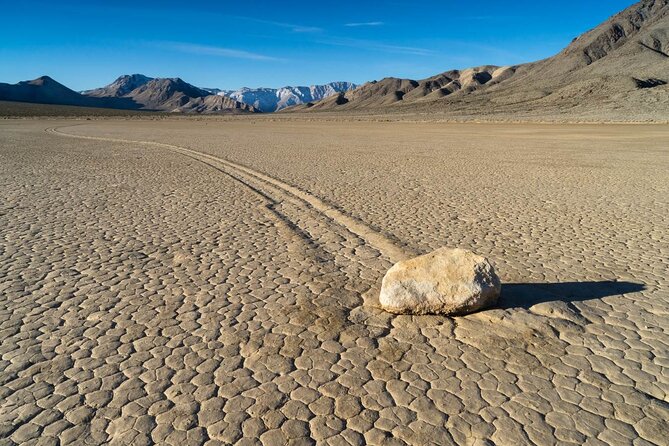
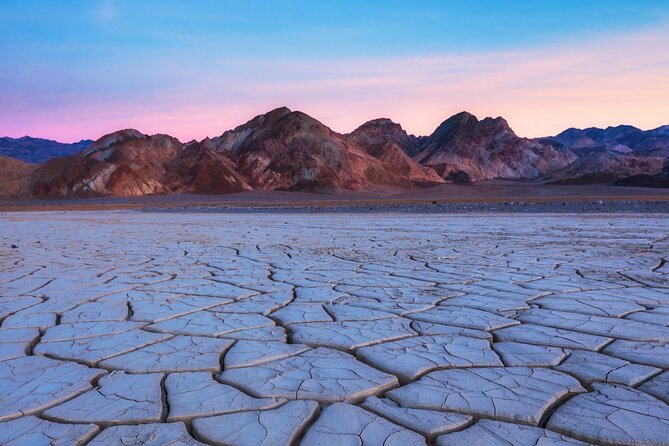
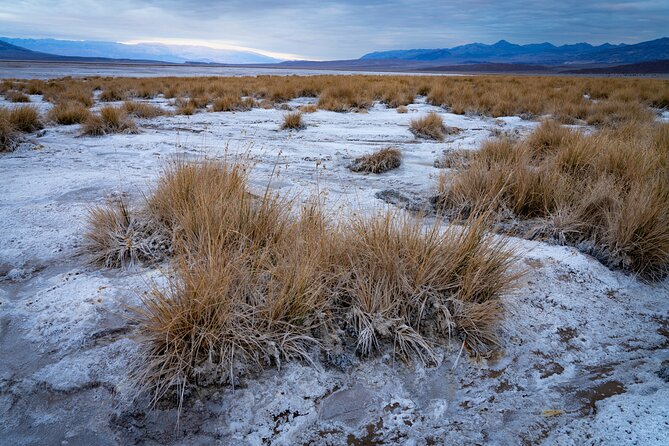
The final major stop is Badwater Basin, where salt flats spread out across about 200 square miles. The audio highlights the key fact that this basin sits 282 feet below sea level, described as the lowest point in North America.
Badwater is the kind of place where the visual impact comes first, and the facts hit second. The flatness can look almost blank until you notice texture, distance, and the way light bounces across salt. The audio helps you connect that wow-moment to the scale and the geography, so you leave understanding what you were seeing instead of just remembering that it was strange.
This ending also makes sense for a self-guided drive. After viewpoint after viewpoint, the basin gives you a big reset—one more wide horizon, one more chance for photos, and then you’re done.
Small details that make the drive smoother
A self-guided audio tour sounds simple. It is simple, but the details decide whether it feels effortless or frustrating.
Here are the practical things I’d plan around:
- Download first: Death Valley can have no signal, so you need the offline tour ready before you enter the park area.
- Use the car audio: Bluetooth/USB/AUX can keep you from lowering your voice while you drive. If you’re stepping out, headphones can keep audio clear without disturbing others.
- Match your starting version: the instructions note there can be multiple tour versions depending on your starting point. Versions mentioned include East Entrance (Death Valley Junction), Furnace Creek Visitor Center, North Entrance (Beatty’s Entrance), and West Entrance (Towne Pass). Starting with the wrong version can make your timing feel off.
- Drive with caution on unpaved roads: Devils Golf Course access includes a rugged unpaved road.
- Check closures and alerts: the tour notice says recent flooding has closed Badwater Road, North Highway, and Bonnie Clare Road, and access for pedestrians and bicycles may be limited during repairs. Conditions can change, so check official park alerts before you go and on the day.
Should you book this Death Valley self-guided audio drive?
Book it if you want a low-stress way to hit the major Death Valley viewpoints with built-in explanations, and if you’re comfortable doing a little phone prep before you leave the safety of signal.
Skip it (or at least think twice) if you don’t want to deal with app setup, or if you’re likely to show up with low battery and no place to download the tour. This kind of audio experience lives and dies on offline readiness.
If you like road trips where the stops actually teach you something—borax mining origins, erosion patterns at viewpoints, and why the colors look the way they do—this is a strong value. For the price of one small dinner out, you get a guided-feeling loop through some of the park’s most memorable places.
FAQ
What does this Death Valley self-guided audio driving tour cost?
It costs $16.99 per group, up to 4 people.
How long does the tour take?
Plan on about 4 to 5 hours to complete.
Is the Death Valley National Park entrance fee included?
No. Park entrance fees are required to visit Death Valley National Park, and that fee covers seven consecutive days. It’s not included with this tour.
Do I need cell service to use the audio?
No. You must download the tour while you have strong wifi/cellular, but after that it works offline.
How do I access the audio tour after I book?
You’ll receive an email and text with setup instructions and a password. Then you download the separate Action’s Tour Guide App, enter the password, and open the app once you’re onsite.
Do I need to be at a specific spot to start?
You go to the starting point and enter the first story’s point. There’s no host meeting you at the start. The audio begins automatically at the first story point and continues based on location.
Can I choose a starting point based on where I enter Death Valley?
Yes. If multiple versions exist, you should download and launch the version that matches your planned starting point and direction. Versions mentioned include East Entrance (Death Valley Junction), Furnace Creek Visitor Center, North Entrance (Beatty’s Entrance), and West Entrance (Towne Pass).
How can I play the audio in my car?
You can connect your phone to your car stereo using Bluetooth, USB, or AUX. Audio playback is also compatible with Apple CarPlay, and Android Auto support is noted as on the way.
When can I start the tour?
The listed opening hours are Monday through Sunday, 8:00 AM to 5:00 PM.
Is there a refund if I cancel?
Yes. You can cancel for free up to 24 hours in advance for a full refund. Canceling less than 24 hours before the experience start time is not refundable.