REVIEW · PALM SPRINGS
Family Rock Climbing Trips in Joshua Tree National Park (6 Hours)
Book on Viator →Operated by Stone Adventures · Bookable on Viator
Joshua Tree rock climbing, built for families. I like that this is private, family-only coaching and you get safety training plus gear tailored to kids. The big thing to consider is that park entrance fees aren’t included, and you’ll want a moderate fitness level even though the routes are matched to everyone’s ability.
You start with a quick meet-up at a spot set for your family, then head into Joshua Tree for real climbing on routes that help you dodge the busiest areas. The guides are professionally certified and a Wilderness First Responder is part of the crew, so the day feels structured and calm—especially helpful when you’re managing different ages at once.
In This Review
- Key Things That Make This Joshua Tree Climb Worth Your Time
- Family-Only Climbing In Joshua Tree’s Backcountry (6 Hours)
- How The Guide Safety Training Actually Helps Kids (Not Just Adults)
- Meeting Up In Joshua Tree: What To Expect Before You Climb
- First Stop: Stone Adventures Check-In and Getting Set Up
- Second Stop: Joshua Tree National Park and Quiet Route Time
- Equipment for Kids: Helmets, Baby Shoes, and Full Harnesses
- Custom Routes for Age 2 to Adult: How the Coaching Feels Different
- A Realistic Look at the 6-Hour Timeline
- Price and Value: What $290 Per Person Really Buys
- Who This Trip Suits Best (And Who Might Want Another Plan)
- Practical Tips I’d Use Before You Go
- Should You Book This Family Climbing Trip?
- FAQ
- How long is the family rock climbing trip?
- Where does the trip start and end?
- Is this a private tour or shared group experience?
- What’s included in the price?
- Are National Park entrance fees included?
- What language is the tour offered in?
- Do children get special climbing gear?
- What is the cancellation policy?
Key Things That Make This Joshua Tree Climb Worth Your Time
- Family-only access to quieter backcountry routes so you’re not fighting for space or attention
- Kid-first safety setup, including harnesses and helmet sizes that fit small climbers
- Route choices that match skill levels, from first-timers to more experienced climbers
- A guide who works at kids’ speed, including patient coaching for beginners
- All climbing equipment provided, so you show up ready instead of hunting gear
Family-Only Climbing In Joshua Tree’s Backcountry (6 Hours)
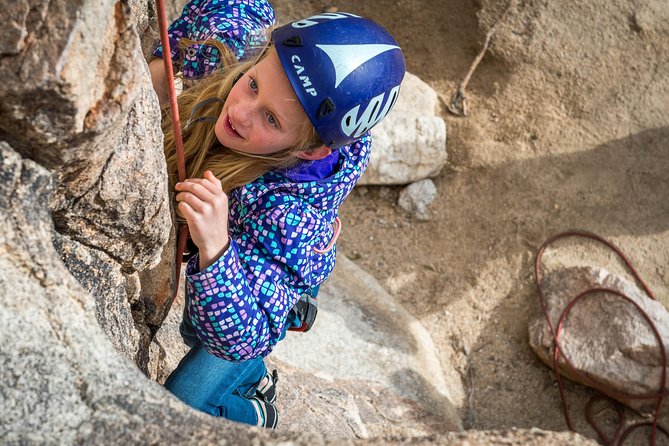
This is the kind of Joshua Tree trip that works when your family has a mix of ages and climbing comfort levels. You’re not doing a one-size-fits-all scramble. Instead, you get a customized route plan for your group, and the guide adjusts the plan as you go—whether someone is eager from the start or needs a little extra time to warm up.
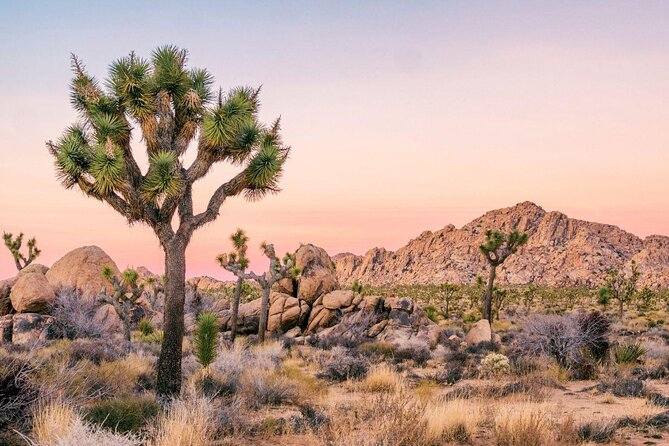
Joshua Tree is famous for rock climbing, with over 9,000 routes. What’s smart here is that you don’t need to pick a “perfect” route. Your guide picks what fits your abilities, the conditions, and your family’s pace. That matters because the difference between a great experience and a frustrating one is usually not the rock. It’s the match between the route and the people on it.
The other big value is the focus on getting away from crowds. You’ll be climbing on backcountry routes, not the busiest, most copy-pasted areas. That usually means a calmer rhythm: time to learn, time to practice, and time to just enjoy being on rock without constantly being bumped by other groups.
You can also read our reviews of more tours and experiences in Palm Springs.

How The Guide Safety Training Actually Helps Kids (Not Just Adults)
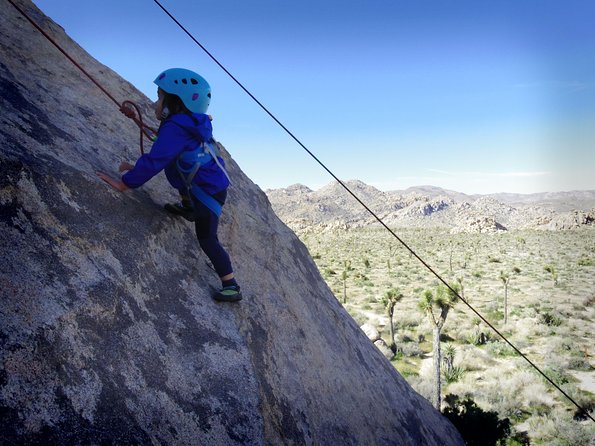
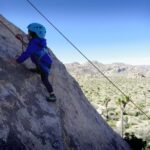
One of the best parts of this experience is that safety training isn’t treated like a boring checkbox. It’s taught in a practical way, including attention to small details. The guide provides equipment and instruction down to the littlest feet, which is exactly what you want when you’re working with young children who don’t yet have the balance, strength, or confidence adults bring by default.
You also get a guide who’s used to the Joshua Tree environment and the realities of families outdoors. The trip is designed for ages 2 through 80, which tells you the coaching style is flexible. A key skill for a family climbing day is figuring out how to explain what to do using language and cues that a child can follow without making it feel like a lecture.
And yes, the Wilderness First Responder piece matters. The data here doesn’t promise the day will be free of bumps (rock climbing always has some scrape-risk), but it does suggest you’re in hands that can respond quickly if something happens. That’s peace of mind you can feel in the structure of the day.
Meeting Up In Joshua Tree: What To Expect Before You Climb
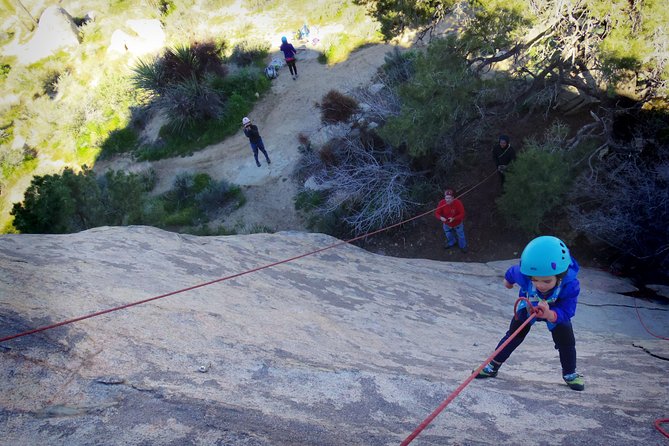
The day starts at 8:00 am, and you meet your guide at a place customized for your family. That sounds small, but it makes a real difference. Kids do better when the plan is simple: find the guide, get organized, and get moving.
There’s a specific first stop for the experience. You’ll begin at Stone Adventures, where the day’s setup happens. Then you move into Joshua Tree National Park for the climbing portion. Because the trip ends back at the meeting point, you’re not dealing with the stress of “Where do we get back to?” after climbing.
You’ll be in English throughout. So if you’re planning for kids who understand English cues best, you’ll be set. If your family speaks another language at home, it may still work fine—because the guide can usually demonstrate physically—but it’s good to know the instruction language is English.
First Stop: Stone Adventures Check-In and Getting Set Up
At Stone Adventures, expect the practical start: getting organized and prepping the group for climbing. This is where you’ll be handed the climbing equipment that’s included in the price—so you aren’t trying to figure out harnesses while standing in the dirt with a kid who wants to wander off.
This is also typically the moment when you’ll get the safety training that makes the actual climb feel manageable. For families, this matters because the first few minutes set the tone. When kids feel safe and understand the rules, they climb with more confidence—and adults enjoy the day more too.
A small drawback to keep in mind: because you start at 8:00 am, the schedule is tight. You’ll want to arrive ready so you don’t waste your best energy on late starts or frayed nerves.
Second Stop: Joshua Tree National Park and Quiet Route Time
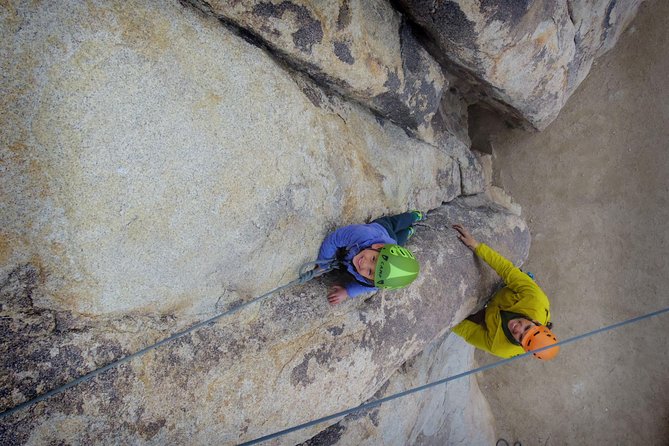
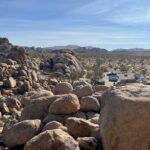
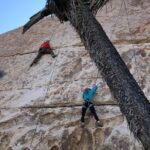
Once you’re in Joshua Tree National Park, the main event begins. Your guide will set up the right routes for your family, using the group’s skill levels and ambitions. Joshua Tree has thousands of routes, so your guide isn’t just improvising randomly. They’re selecting climbs that fit the plan for a mixed-age group.
This is where the “get away from the crowds” promise becomes real value. Even when you’re in a famous park, you can choose a climbing day that feels private and focused. Backcountry climbing routes mean you’re more likely to have space to practice movement, take photos, and breathe—without constant interruptions.
Another benefit: your guide is matching routes to your family rather than asking everyone to meet one climbing standard. That’s how you can keep a 7-year-old, a 13-year-old, and a younger child engaged in the same overall plan. It’s also how the day stays fun, not just “workout time.”
Equipment for Kids: Helmets, Baby Shoes, and Full Harnesses
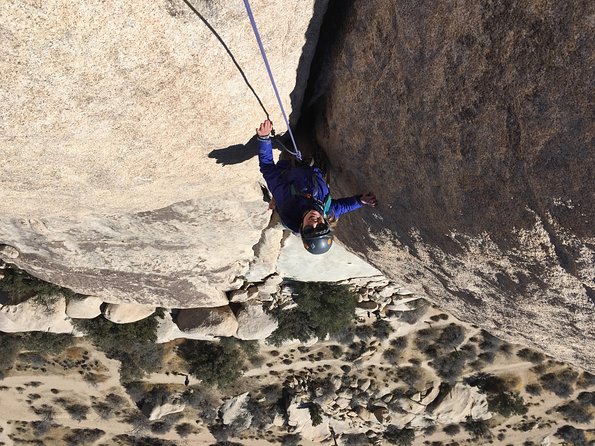
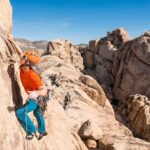
If you’re traveling with small children, pay attention to the gear details here. This experience provides specialty children’s gear, including:
- small climbing helmets
- sticky rubber baby shoes
- full body harnesses for smaller climbers
Those pieces aren’t just comfort extras. They’re what allow smaller climbers to participate without forcing them into adult equipment that doesn’t fit. Fit is everything in climbing. A helmet that sits right and shoes with grip can turn fear into curiosity fast.
The sticky baby-shoe idea is especially important in a place like Joshua Tree. You want shoes that give traction on rock textures a child’s legs can handle. And harnesses that match body size help with both safety and confidence, because kids can trust that they’re supported while they learn.
Custom Routes for Age 2 to Adult: How the Coaching Feels Different
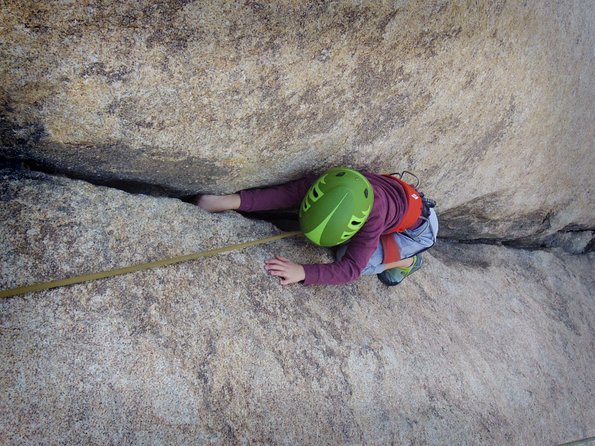
This trip is built around customization. Each rock climbing route is set to meet the ambitions and skill sets of your group. That means you might all be climbing during the same general session while still working on different levels of difficulty.
It also explains why the guide’s skill with kids is so heavily emphasized. Small climbers don’t need more information. They need better timing. A good guide can spot when a child is ready to try a move and when it’s better to reset, encourage, or adjust the route.
A useful mindset for parents: treat the day as a skill-building experience, not a “complete a big climb” checklist. The value is in learning how to move on rock safely. That learning can look different for each person, and that’s fine.
A Realistic Look at the 6-Hour Timeline
You should plan for about 6 hours total. Since the day includes safety training, equipment time, travel between meeting spots, and the actual climbing, that’s usually enough time for meaningful progress without turning into a full-day endurance event.
What I’d watch for is how energy changes with age. Younger kids often need short bursts and frequent reassurance. Older kids usually handle longer attempts and can enjoy repeating moves. Your guide’s job is to keep the group moving while giving each person a fair shot.
If you’re planning this with young children, build in the idea that the “first try” might not be the memorable one. Sometimes the second or third attempt is where the confidence clicks—especially when a guide uses patience and clear, simple coaching cues.
Price and Value: What $290 Per Person Really Buys
The price is $290.00 per person for a private family climbing experience. That’s not cheap, and it shouldn’t be treated like a casual activity. The value comes from what you’re actually paying for: a guide who provides equipment, safety training, and route planning built for your family’s specific ages and abilities.
The fact that this is private is a big piece of the value equation. When you compare this to shared group experiences, you’re buying attention. That attention often becomes the difference between a kid who stays engaged and one who gets overwhelmed.
One more cost to plan for: National Park entrance fees are not included. That doesn’t make the trip bad value; it just means you should budget for the full day cost. If you’re already paying park entry for your family, it’s smart to add it into your decision early so there are no surprise math moments.
Also note: adult pricing applies to all climbers. That means if a smaller child is participating, you should assume the same per-person rate applies to them. It’s fair in a way—because they require gear, harness fitting, and guide time—but it affects the total price in a family group.
Who This Trip Suits Best (And Who Might Want Another Plan)
This is a strong match if you want active family time in Joshua Tree with professional coaching and kid-focused safety gear. It also fits well if your group has mixed ability levels, because the climbs are set to match skill sets instead of forcing everyone onto the same route.
You’ll want moderate physical fitness. That doesn’t mean you need to be a rock athlete. It does mean you should be comfortable with outdoor movement on uneven terrain, plus carrying your energy for about six hours.
This might not be the best fit if your family’s idea of hiking is mostly a paved trail, or if you’re expecting a totally passive activity. Rock climbing involves effort, even on easier routes. The guides can scale the route, but the body still has to participate.
Practical Tips I’d Use Before You Go
A few things make the day smoother, even though the experience provides the climbing equipment.
- Wear clothes you don’t mind getting dusty and a little scuffed.
- Expect lots of “short attempts” more than one long continuous climb.
- Bring water and snacks, especially since the day is long and starts at 8:00 am.
- If you have kids, plan for mood swings. Even a 3-year-old may not be interested every minute, but having the right gear helps them participate when they’re ready.
Also, because this is an English-led experience, if you have children who respond best to direct demonstration, pay attention to how the guide shows the first steps. Kids often learn fastest when they can copy the movement, not just hear instructions.
Should You Book This Family Climbing Trip?
I’d book this if you want a private, family-only climbing day in Joshua Tree with real kid gear and safety-focused coaching. The combination of route customization, backcountry climbing, and professional guidance makes it a solid choice for families who want their kids to try climbing without chaos.
Skip it or consider alternatives if your group is very budget-sensitive, since $290 per person plus park entrance fees can add up quickly. Also think twice if your family isn’t comfortable with outdoor exertion for about six hours, even if the route difficulty is matched to skill levels.
If you’re trying to give your kids a first climbing experience that feels structured, safe, and actually fun, this one is built for that.
FAQ
How long is the family rock climbing trip?
It runs for about 6 hours.
Where does the trip start and end?
It starts at Joshua Tree National Park, California, USA, and ends back at the same meeting point.
Is this a private tour or shared group experience?
It’s private. Only your group participates.
What’s included in the price?
The price includes rock climbing equipment, plus a professionally certified rock climbing guide and a Wilderness First Responder.
Are National Park entrance fees included?
No. National Park entrance fees are not included.
What language is the tour offered in?
The tour is offered in English.
Do children get special climbing gear?
Yes. There’s specialty children’s gear, including small climbing helmets, sticky rubber baby shoes, and full body harnesses for smaller climbers.
What is the cancellation policy?
This experience is non-refundable and cannot be changed for any reason. If you cancel or request an amendment, the amount you paid is not refunded.