REVIEW · PALM SPRINGS
Death Valley National Park Self-Guided Audio Tour
Book on Viator →Operated by Shaka Guide Apps · Bookable on Viator
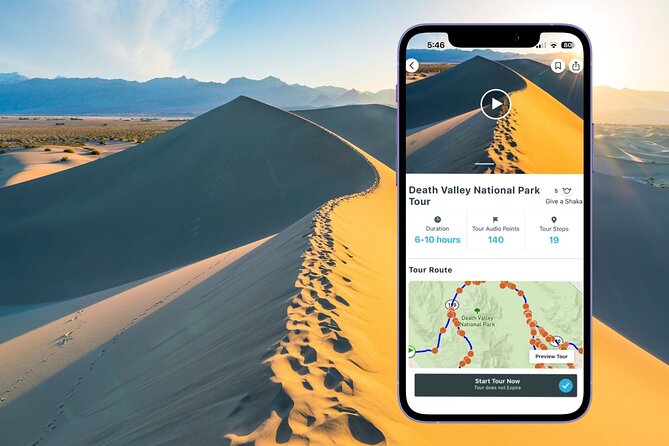
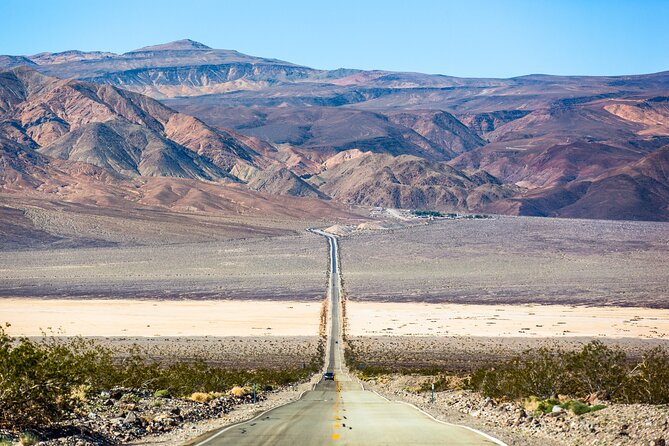
Death Valley feels like another planet, even in daylight. This self-guided road trip route strings together the park’s best sights with offline GPS directions and hands-free narration—so you spend less time hunting, more time looking. I love how the app keeps you on track with warnings about curves and roads, and I love the flexibility to skip straight past the stops you’re not feeling. One possible drawback: you need to plan for your own vehicle, fuel, and any park entrance/parking fees.
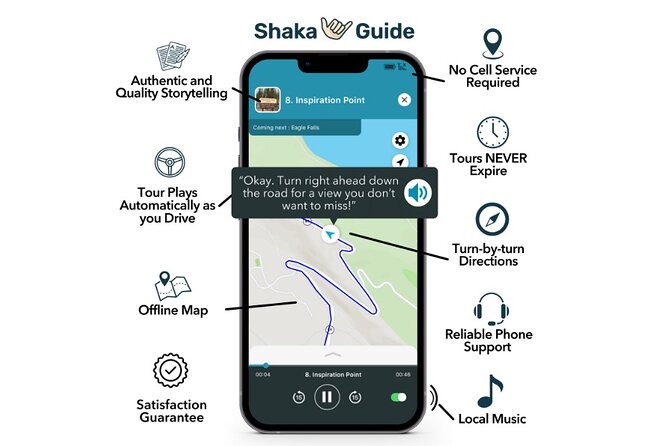
I also really like that the tour works without cell service. With an offline map and turn-by-turn guidance, you can drive the route at your pace and still get the story beats and practical tips at the right moments.
This is a great fit if you want a private tour for your group up to 15 and you don’t want rigid check-in times. Just download it ahead of your drive, because offline only works if you’ve already saved the route.
In This Review
- Key points to know before you go
- Pricing and value: $12.79 per group in a car-heavy park
- How the Shaka Guide audio tour works (offline, GPS, and your pacing)
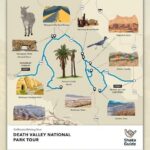
- Itinerary overview: from Emigrant Canyon history to Badwater Basin low point
- Stop 1: Journigan’s Mill and a quick step into early processing history
- Stop 2: Wildrose Campground for Civilian Conservation Corps footprints
- Stop 3: Beehive Charcoal Kilns (you can step inside)
- Stop 4: Stovepipe Wells Village for gas and a real meal plan
- Stop 5: Mesquite Flat Sand Dunes for the only dune stop
- Stop 6: Devils Cornfield for a strange patch of arrowweed
- Stop 7: Salt Creek Interpretive Trail and the pupfish boardwalk
- Stop 8: Harmony Borax Works, plus the 20-mule teams wagon
- Stop 9: Mustard Canyon detour (and a low-clearance warning)
- Stop 10: Furnace Creek Visitor Center for info, toilets, and the museum
- Stop 11: The Ranch at Death Valley for food, gas, and a general store
- Stop 12: Devil’s Golf Course for salt-flat shapes (and careful feet)
- Stop 13: Badwater Basin, the lowest point in North America
- Stop 14: Natural Bridge Trail for a short, rocky hike
- Stop 15: Artist’s Drive and the Artists Palette mineral colors
- Stop 16: Golden Canyon Trailhead for Red Cathedral views
- Stop 17: Zabriskie Point, film history, and the U2 Joshua Tree tie-in
- Stop 18: Twenty Mule Team Canyon detour (bumpy dirt road option)
- Stop 19: Dante’s View for the 5,000-foot overlook above Badwater
- What to do before you go: make the offline tour actually work
- Best for: who will enjoy this audio tour the most
- A couple of downsides to plan around
- Should you book this Death Valley audio tour?
- FAQ
- How long is the Death Valley self-guided audio tour?
- How much does the tour cost?
- Does it work offline with no cell service?
- Will the audio play automatically while I drive?
- Can I skip stops or spend more time at certain places?
- Is the tour only in English?
- Where does the tour start and end?
- Is a vehicle entrance fee included?
- Are there optional detours on the route?
Key points to know before you go
- Automatic, GPS-triggered narration as you drive, with music and site stories timed to the route
- Offline maps and directions, so you’re not stuck waiting for service in the valley
- One tour per vehicle group, priced at $12.79 per group (up to 15) instead of per person
- Real mix of easy photo stops and short walks, from boardwalks to 1–3 mile hikes
- Optional dirt-road detours to Mustard Canyon and Twenty Mule Team Canyon, with a low-clearance caution
Pricing and value: $12.79 per group in a car-heavy park
Death Valley is a park where your biggest costs are usually driving logistics: your vehicle, gas, parking, and sometimes park entrance fees. This audio tour is priced at $12.79 per group (up to 15), which is unusually friendly if you’re traveling as more than two people. It’s also built for the reality that you’re going to stop often—sometimes you’ll linger, sometimes you’ll just pull over for a quick photo.
The other value angle is time. A full Death Valley “greatest hits” day can turn into a frantic scavenger hunt without guidance. This route is designed to cluster the sights in a logical order, including major anchors like Badwater Basin, Zabriskie Point, and Dante’s View, plus scenic drives and short walks that help you break up long stretches in the heat.
If you’re traveling solo, you’ll still find it worth it for the offline navigation and stories, but the value increases as your group grows since the price is per group, not per person.
You can also read our reviews of more tours and experiences in Palm Springs.


How the Shaka Guide audio tour works (offline, GPS, and your pacing)
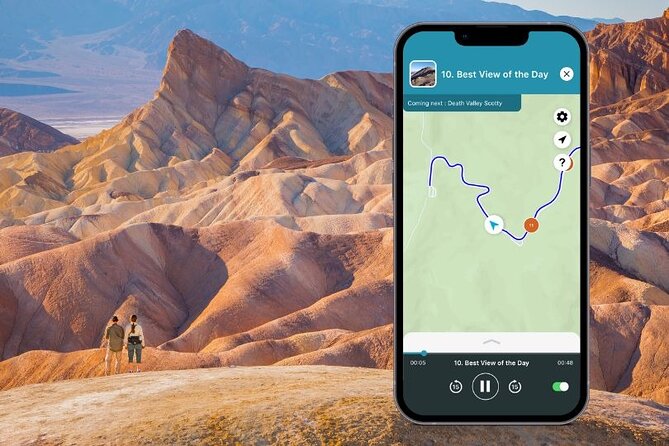
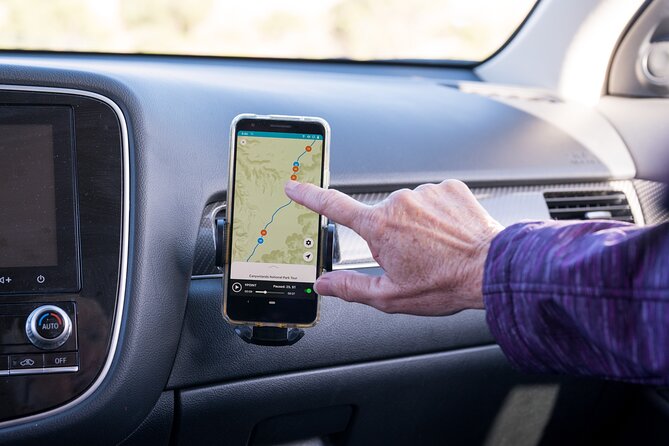
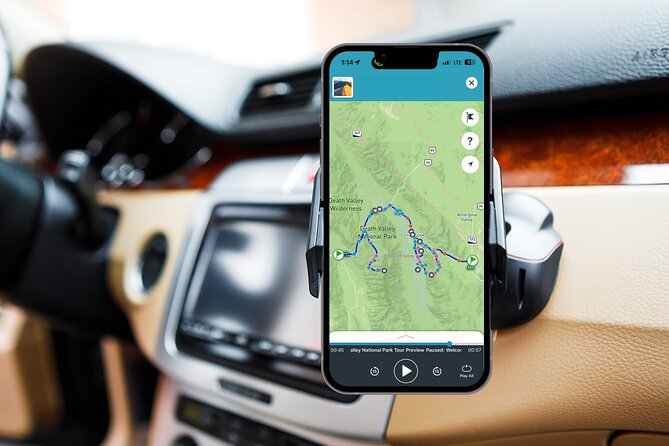
The system is simple once you start. You download the tour using the instructions in your email, then redeem the tour in the app with your redeem code. After that, you choose a starting point and follow GPS directions.
What matters day-of:
- Turn-by-turn directions using GPS
- Audio that plays automatically as you drive
- Offline map access, so you don’t need Wi‑Fi or data out on the roads
- No expiration, so you can take it on the day you want after download
- Freedom to explore at your own pace, meaning you can skip stops or spend extra time where you care most
In practical terms, this is the kind of setup that reduces “driver fatigue.” Instead of reading your phone and guessing where the next pullout is, you can focus on the road and let the tour cue you when something is coming up—then you decide if you want to hop out.
One more detail I like: the narration isn’t just “what you’re looking at.” It also includes route warnings. That’s the kind of service that helps in a place full of curves, steep grades, and long distances.
Itinerary overview: from Emigrant Canyon history to Badwater Basin low point
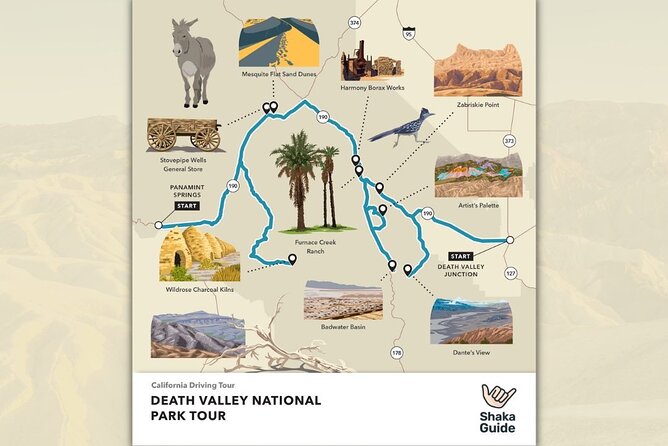
This route loops through Death Valley’s most memorable zones, mixing short historical stops with classic desert scenery. You’ll start at Death Valley Junction, CA 92328 (and the activity also offers an optional West Entrance near Panamint Springs start).
Total time is listed as 6 to 8 hours, and the actual finish depends on how long you linger at the dunes, salt flats, and viewpoints. If you’re traveling in warm seasons, plan on shorter walks and extra water breaks.
Here’s what the drive feels like stop by stop.
Stop 1: Journigan’s Mill and a quick step into early processing history
Your first stop is Journigan’s Mill, on Emigrant Canyon Rd, with an optional detour toward the Wildrose Charcoal Kilns. Not much remains of the early 20th-century processing plant, but that’s part of what makes it interesting: you’ll see foundations, empty tanks, and relics.
This is a good “wake-up” stop. It’s short, and it primes you for the region’s industrial past—then you head deeper into Emigrant Canyon to see how the area worked.
Tip: If you like desert photography, this kind of low-structure site lets you get shots with texture and scale without needing a long hike.
Stop 2: Wildrose Campground for Civilian Conservation Corps footprints

Next up is Wildrose Campground, also on Emigrant Canyon Rd. This former CCC campground is an easy stretch-your-legs stop with buildings right off the road.
Even if you’re not a history-first traveler, it’s worth the stop because it gives you a “human scale” moment after the industrial relics: you’re moving through places built for work and living, not just extraction.
Stop 3: Beehive Charcoal Kilns (you can step inside)
Then comes Charcoal Kilns—ten beehive-shaped kilns lined up in the Panamint Range. The tour encourages you to step inside one, and the description notes you may still catch a whiff of charcoal.
It’s a fun stop even for people who don’t usually get excited about industrial architecture. The shape does the work: the kilns look like alien architecture, and you’ll get great angles simply by walking around the row.
Stop 4: Stovepipe Wells Village for gas and a real meal plan
If you need food or fuel inside the park, the tour points you to Stovepipe Wells Village. It’s a practical pause: visitors services, accommodation, and a place to reset before the drive continues.
The key tip here is simple. If you want a meal without rushing, use this moment. Later stops are mostly short walks and viewpoints, which are not ideal for a sit-down meal.
Stop 5: Mesquite Flat Sand Dunes for the only dune stop
The only dune stop on the route is Mesquite Flat Sand Dunes. You can view from the parking lot, but the best experience is to explore on foot and wander among the mesquite trees.
This is also your best bet for:
- sunset photos, if timing works
- stargazing, because the tour notes it’s a top pick
Even if you’re not a photographer, you’ll appreciate the contrast: smooth sand curves meeting thorny desert vegetation.
Practical move: Bring something to sit on and wear shoes you can walk in comfortably. Sand warms up fast.
Stop 6: Devils Cornfield for a strange patch of arrowweed
Right near the dunes is Devils Cornfield, where you’ll find a patch of Arrowweed that can look like corn in a field. It’s a short stop with a small parking area and a closer look.
This one is for your “why not” brain. Don’t expect a big walk, but it’s a fun color-and-quirk moment in the broader scenery.
Stop 7: Salt Creek Interpretive Trail and the pupfish boardwalk
Next, take the Salt Creek Interpretive Trail. It’s a 0.5-mile boardwalk along the wetland, described as a key watering hole for critters and home to the endangered Salt Creek Pupfish.
This is one of the route’s smarter stops because it breaks the “dry everywhere” feeling. The boardwalk keeps it easy, and the narration gives you a reason to care about what you’re seeing—water matters here, even in tiny amounts.
Tip: If you’re sensitive to sun, the boardwalk can still be exposed, so bring sun protection.
Stop 8: Harmony Borax Works, plus the 20-mule teams wagon
Then you reach Harmony Borax Works, described as the earliest mining operation in Death Valley. The short path has placards that explain processing steps and you’ll also see a wagon pulled by the famed 20-mule teams.
This is a solid “education stop” that stays readable without requiring a long museum visit. If you like how places work and how people moved goods across harsh terrain, this is a highlight.
Stop 9: Mustard Canyon detour (and a low-clearance warning)
There’s no formal stop here, but the route includes a detour option into Mustard Canyon for a small canyon with an unusual yellow tinge.
Important practical note: the road can be bumpy, and it’s not advisable for low-clearance vehicles. The tour also tells you to check current conditions with the park before driving.
If you’re driving a rental or a car that sits low, you may want to skip this detour and keep your day stress-free.
Stop 10: Furnace Creek Visitor Center for info, toilets, and the museum
Your next “reset” moment is the Furnace Creek Visitor Center—with information, flush toilets, a water refill station, and a museum focused on natural and human history.
Even if you’ve already read about Death Valley, this is a practical stop. Flush toilets and refill access alone can change how relaxed your afternoon feels.
Stop 11: The Ranch at Death Valley for food, gas, and a general store
If you’re hungry or need supplies, this is the main place in the park. The tour notes ice cream, a buffet-style restaurant, and a Wild West-themed saloon vibe. There’s also a General Store with souvenirs plus a small grocery section.
Prices are higher here, but you’re paying for convenience in a remote place. If you’re trying to keep your day smooth, it’s worth planning lunch around this stop rather than hoping you’ll find something more convenient later.
Stop 12: Devil’s Golf Course for salt-flat shapes (and careful feet)
After that, you hit Devil’s Golf Course near Badwater Road. It’s described as salt flat with otherworldly shapes, reached down a short dirt road.
There’s no trail, and the tour warns you to wear sturdy shoes because the salt can hurt. That’s not just a safety note—it’s a “how much you’ll enjoy your time” note. If you’re worried about where to step, you’ll move slower and enjoy less.
Stop 13: Badwater Basin, the lowest point in North America
This is the big anchor: Badwater Basin, the lowest point in North America. The tour notes a boardwalk by the parking lot, and you can also wander onto the salt flats.
If you want the “cool geometric shapes” mentioned by the route, plan on about a 2-mile round trip (about 1 mile in) on the Badwater Basin trail area.
A key practical mindset here: Death Valley isn’t about long hikes every time. It’s about choosing the right amount of walking for the conditions. If heat is intense, do the boardwalk and quick interior walk, then come back.
Stop 14: Natural Bridge Trail for a short, rocky hike
The Natural Bridge Trail is flat but rocky. The tour says it’s about 1 mile round trip to the natural bridge rock formation.
Short hikes are the best match for an audio route because you’ll still be back at your vehicle without losing half the day. Just know you’ll be on rocky ground, so good footwear matters.
Stop 15: Artist’s Drive and the Artists Palette mineral colors
Next, you’ll drive Artists Drive, a one-way road ascending toward the Black Mountains through a twisty canyon. The fun part is the drive itself, but the highlight is a stop along the way called Artists Palette, where mineral colors create a colorful cliff.
You can explore on foot for a closer look. Expect a quick walk rather than a long trek, and treat it like a “color break” after the salt and dunes.
Stop 16: Golden Canyon Trailhead for Red Cathedral views
At Golden Canyon Trailhead, you’re in one of the park’s popular hikes. The tour describes a 3-mile round trip (about 5 km) leading through a lifeless canyon to the Red Cathedral cliff formation.
This is the kind of hike that pairs well with an audio route: you get the route guidance getting you there, then you can just walk and absorb the rock forms. Bring water and plan for sun exposure. You’ll be moving through open desert terrain.
Stop 17: Zabriskie Point, film history, and the U2 Joshua Tree tie-in
Then comes Zabriskie Point, one of Death Valley’s iconic views. The tour specifically connects it to film history and notes its role as the album cover for U2’s Joshua Tree.
The walk from the parking lot is short and paved, but steep. That’s a common Death Valley theme: short distances don’t always mean easy walking.
Stop 18: Twenty Mule Team Canyon detour (bumpy dirt road option)
Like Mustard Canyon, Twenty Mule Team Canyon is a dirt road with no specific stop. It’s about a 15-minute detour from the main route.
Again, you should check with the park for current conditions, and the tour warns that it’s not advisable for low-clearance vehicles because the dirt road can be bumpy.
If you’re unsure, keep it simple. The route already gives you plenty of “canyons worth seeing” without risking a vehicle.
Stop 19: Dante’s View for the 5,000-foot overlook above Badwater
Finally, Dante’s View. The tour says you ascend over 5,000 feet to an overlook above Badwater Basin.
From here you can see the lowest point with the Panamint Range looming across the valley. On clear days, you can even see the Sierra Nevada, including Mt. Whitney, noted as the highest point in the lower 48 states. The tour also flags this as a popular sunset and stargazing spot.
This is a great ending because the views “scale up.” After walking salt, sand, and canyon trails, you’re rewarded with the big picture.
What to do before you go: make the offline tour actually work
This tour lives and dies by prep. The big tip from real-world use is straightforward: download the tour using strong Wi‑Fi before you drive.
Once you’re in the park:
- Launch the tour in the app
- Redeem with the redeem code you received by email
- Start at the suggested meeting point (or choose the optional West Entrance near Panamint Springs)
- Keep the audio running while driving so narration cues your next stop
If your phone battery is weak, consider a car charger. You’ll be using GPS, and Death Valley is a place where power issues feel amplified.
Also, if you like sharing audio, one user strategy described is using Shokz headphones while switching from car audio, plus an Airfly adapter to send audio to two headsets over Bluetooth. The point: you’re not locked into one audio setup.
Best for: who will enjoy this audio tour the most
This format shines if you:
- want a self-paced Death Valley day without group timing pressure
- care about having stories and driving directions while still controlling your stops
- are comfortable handling your own driving, parking, and walking
- travel as a group in one vehicle and like the per-group pricing
It’s also ideal for people who like a mix of photo pullouts and short walks—Death Valley is big, and you’ll enjoy the flow more if you’re not spending your day stuck reading maps.
A couple of downsides to plan around
The biggest consideration is that you’re planning everything around a route that’s mostly driving plus short walks. That means you’ll still need to manage:
- how long you linger at dunes and viewpoints
- comfort levels on rocky or steep sections (like Natural Bridge and Zabriskie Point’s steep paved walk)
- potential walking in salt areas (Devil’s Golf Course)
- heat and water breaks
Also, the tour structure focuses on highlights. If you want deep on-site interpretation at every single stop, you may feel the narration moves on quickly compared to a full museum-style experience.
Should you book this Death Valley audio tour?
I think it’s a strong yes if you want offline GPS + automatic stories for a classic Death Valley loop, especially if you’re traveling with more than a couple people. The per-group price, the flexibility to skip, and the offline setup make it a smart way to see a lot without stress.
Book it when you can download ahead of time, you’re good driving your own vehicle, and you want a day that feels guided but not scheduled. If you’re relying on cell service for navigation or you dislike doing any detours, you might prefer a more hands-on tour option. For most people, though, this is a practical, cost-efficient route to the park’s headline moments.
FAQ
How long is the Death Valley self-guided audio tour?
The duration is listed as about 6 to 8 hours, depending on how long you spend at each stop.
How much does the tour cost?
It costs $12.79 per group, up to 15 people.
Does it work offline with no cell service?
Yes. The tour includes an offline map and offline GPS that works without Wi‑Fi or data once you download it beforehand.
Will the audio play automatically while I drive?
Yes. The narration plays automatically as you drive, synced to the route with GPS.
Can I skip stops or spend more time at certain places?
Yes. You can skip stops and explore at your own pace.
Is the tour only in English?
Yes, it’s offered in English.
Where does the tour start and end?
It starts at Death Valley Junction, CA 92328, USA, and it ends back at the meeting point.
Is a vehicle entrance fee included?
The optional $30 per vehicle entrance fee is not included, so you may need to factor it in depending on your situation. Parking fees and other entrance fees are also not included.
Are there optional detours on the route?
Yes. The route includes optional dirt-road detours for Mustard Canyon and Twenty Mule Team Canyon, and the tour advises checking current road conditions before driving.