REVIEW · BIG ISLAND OF HAWAII
Guided 3-Hour Hike in Volcanoes National Park
Book on Viator →Operated by Volcanoes Hiking Guides · Bookable on Viator
Volcano hikes have a way of humbling you fast. This one takes you down into Kīlauea’s Halemaumau Crater to see steam vents, sulphur deposits, rainforest plants, and the unforgettable scale of the crater. I love the clear focus on what you’re standing on, not just where you’re going, and I also like the small group size that keeps the pace friendly. One catch to plan around: the experience depends on good weather, so rain can change what you get to see.
What really makes it worth it is how the tour connects the geology to the living stuff around it. In the first mile you’ll spot remnants of an active volcano, then you’ll move through a rainforest scene of tree ferns, ohia trees, and honey creepers, with talk about how plants handle the crater’s harsh conditions.
My only real hesitation is practical: this is a 3-hour descent-and-return style hike, so you’ll want moderate fitness and decent comfort on uneven ground—especially if conditions are wet or slippery.
In This Review
- Key Highlights to Know Before You Go
- Entering Halemaumau Crater: The First Mile of Steam and Sulphur
- From Volcanic Ground to Rainforest: Tree Ferns, Ohia, and Honey Creepers
- Reaching the Bottom: Seeing the Lava Lake Power
- The Finish: Crater Views, Moana Loa in the Distance, and Possible Eruption
- Price and Value: What Your $120 Actually Buys
- Gear, Comfort, and How to Survive a Rainy Volcano Day
- Guide Style: Why People Keep Mentioning Jennifer and Yvonne
- Who This Hike Fits Best (and Who Might Want a Different Option)
- Should You Book This Guided Volcano Hike?
- FAQ
- FAQ
- Where does the hike start?
- How long is the tour?
- What does it cost?
- Are park fees included in the price?
- What’s included in the tour?
- What’s the maximum group size?
- What fitness level do I need?
- Is the tour offered in English?
- What happens if the weather is bad?
- Is an eruption guaranteed?
- What’s the cancellation window?
Key Highlights to Know Before You Go
- First-mile steam vents and sulphur deposits right away, so you don’t have to wait for the wow factor.
- Rainforest plants inside a volcanic crater, including tree ferns and ohia, with explanations that tie survival to conditions.
- Honey creeper birds in the mix, adding movement and sound to the hike.
- Walking down to the bottom of Kīlauea crater for big-picture views of the lava lake area.
- Up-close crater views at the end, with Moana Loa visible in the distance on clear days.
- Small group (max 10) plus a licensed guide, which usually means more questions and better pacing.
Entering Halemaumau Crater: The First Mile of Steam and Sulphur
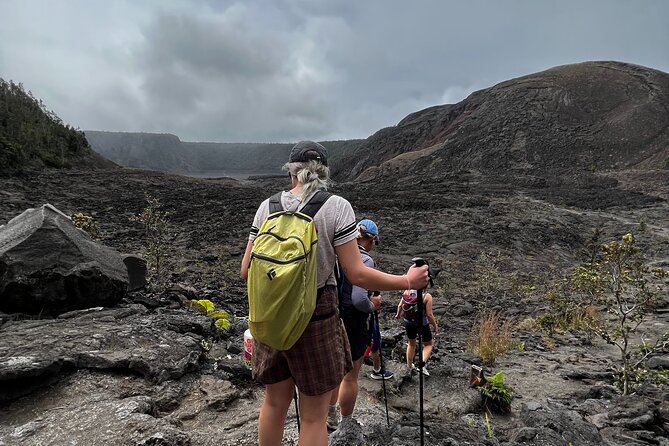
The day starts at the Kīlauea Visitor Center (1 Crater Rim Drive, Volcano, HI 96785). You’ll be with a licensed guide and a small group of up to 10 people, which matters here because crater hiking is not a casual stroll. The guide keeps you moving at a safe pace and points out what to watch for before you’re standing right in it.
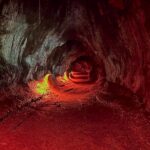
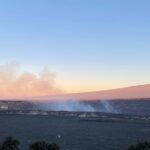
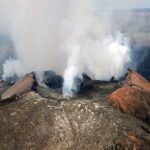
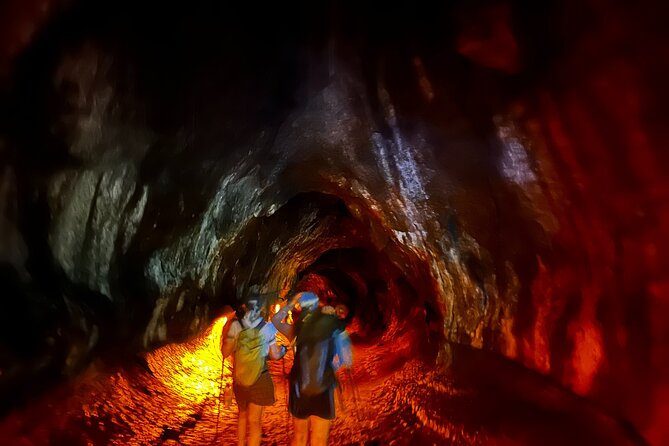
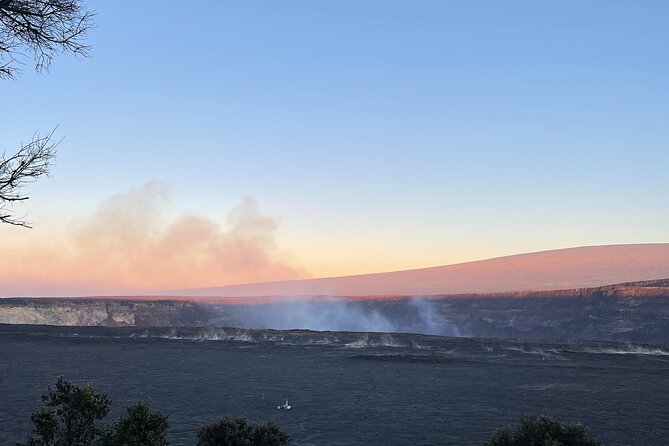
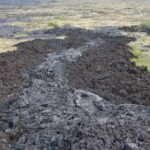
Right after you begin, you’ll experience the main idea of the trip: dropping into Halemaumau Crater and watching volcanic features appear immediately. The very first mile includes remnants of an active volcano, with steam vents and sulphur deposits you can actually see and smell if the air is moving the right way. This early section is great because it frames everything that comes later. You’ll understand why the next section looks the way it does—why the crater environment behaves differently from the rest of the island.
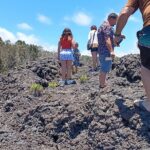
A small practical note: steam zones and sulphur areas can make footing feel slick or odd. Even if the surface looks solid, you should treat it like it’s less grippy than a normal trail. If you’re the kind of hiker who stops to take photos every five minutes, you’ll still be fine—just expect a little extra time when the ground looks interesting (because it will).
You can also read our reviews of more tours and experiences in Big Island of Hawaii.

From Volcanic Ground to Rainforest: Tree Ferns, Ohia, and Honey Creepers
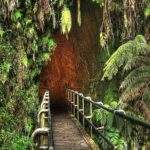
Once the initial volcanic sights are in your head, the hike turns into something more surprising: rainforest living in a crater. You’ll pass through a rainforest environment where tree ferns and ohia trees are part of the scene. This is the part I enjoy most because the plants aren’t treated as decorations. The guide connects them to the crater conditions—how they manage temperature swings, moisture, and the volcanic makeup of the area.
Ohia is a big theme on this route for a reason. In volcanic areas, certain plants have traits that help them tolerate stress, and the crater environment forces survival skills. You’ll likely hear explanations about those adaptations while you walk, not as a lecture before you go. That makes a difference. When you’re looking at a tree fern or ohia up close, the science and the story land fast.
Then there’s the bird factor: honey creeper birds. You may not see them constantly, but their presence adds real texture to the hike. If you listen for a moment when the guide pauses, you often catch movement you’d otherwise miss.
The balanced takeaway: this isn’t just scenery. It’s a hike where your eyes get trained. You’ll start noticing details—leaf shapes, textures on plants, where the air feels warmer or cooler—and that’s what makes the 3 hours feel like more than a quick tour.
Reaching the Bottom: Seeing the Lava Lake Power
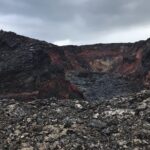
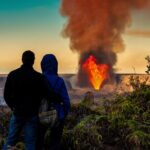
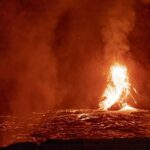
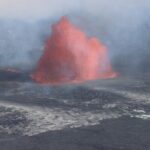
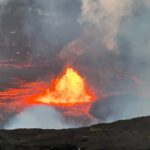
The heart of the tour is the approach to the bottom of Kīlauea crater. This is the segment where the hike earns its reputation. When you reach the lower area, your guide helps you focus on what you’re looking at: the magnificence of the Kīlauea lava lake. Even from a distance, it’s the kind of sight that shifts your sense of scale. You’re not just watching a volcano—you’re standing inside the story of how the island is built.
This portion also tends to feel like the culmination of the entire walk. Those steam vents and sulphur deposits at the start suddenly make more sense. The rainforest plants you saw along the way? They feel less random and more like responses to an extreme environment that’s still actively changing.
Is it dramatic all the time? It can be. But you should think of this as “chance to see something huge,” not guaranteed drama. The tour description even notes you might get lucky with eruption activity. That’s the nature of the place: Kīlauea can be mesmerizing without trying.
Safety and comfort tip: the bottom-of-crater views are worth slowing down for. If the weather is damp, take your time stepping around uneven surfaces. Your best photos come when you move slower, not when you rush for the shot.
The Finish: Crater Views, Moana Loa in the Distance, and Possible Eruption
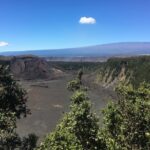
After the lava lake viewing moment, the tour wraps up with breathtaking crater views. You’ll also get a look toward Moana Loa in the distance when visibility allows. That end view helps you reset—after being focused on the crater floor, you get a sense of the bigger geography that makes Kīlauea part of Hawaii’s wider volcanic system.
And yes, there’s the possibility of something extra. The experience description says that if fortune smiles, you may even witness a Kīlauea eruption. In practice, that means you should treat it as a bonus. The main value is still the structured hike: the guide helps you understand what’s happening even if there’s no new eruption in that exact moment.
One more thing I like about how the tour ends: it returns you back to the meeting point at the Kīlauea Visitor Center. That keeps the day simple. You’re not trying to figure out transport or a second leg of the route. You finish where you started, tired in a good way, and ready to plan dinner.
Price and Value: What Your $120 Actually Buys
The tour price is $120 per person for about 3 hours with a licensed guide. That’s not cheap, but it’s also not just paying for walking time. You’re paying for:
- a guide who shows you what to look for (steam, sulphur, rainforest species)
- equipment support via backpacks and trekking poles
- a group cap of 10, which helps with pace and attention
Then you need to add park costs. The National Park entrance fee is $15, and there’s also an additional admission fee for Volcanoes National Park of $15 per person, listed separately. So plan on $30 in park fees on top of the tour price.
My rule of thumb for value: if you’d be annoyed figuring out what to notice on your own, this tour pays for itself. The crater environment is dramatic, but it’s also easy to miss what makes it special. With a guide, you don’t just see a steam vent—you understand why it’s there and what it means for the plants around it.

Gear, Comfort, and How to Survive a Rainy Volcano Day

This experience includes backpacks and trekking poles, which is a real plus. It means you don’t have to bring your own pole setup for a crater hike. It also helps if your hiking gear is at home or you just prefer to travel light.
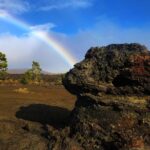
The rain factor is worth respecting. One review called out that it rained the whole time, and the hike stayed interesting anyway because the guide still made the experience engaging. That matches the reality of Volcanoes National Park: weather can change quickly, and you may still hike even if conditions aren’t perfect.
So what should you do? Bring sensible hiking clothing and expect wet ground. If you’re someone who gets cold fast, you’ll likely want layers. Also, wear footwear with grip you trust. Even when a path looks firm, volcanic terrain can be less predictable than standard dirt trails.
A small humorous reality: your hiking poles will feel like the best thing you packed the moment you hit slick volcanic surfaces. Then you’ll brag about it later like you always knew.
Guide Style: Why People Keep Mentioning Jennifer and Yvonne
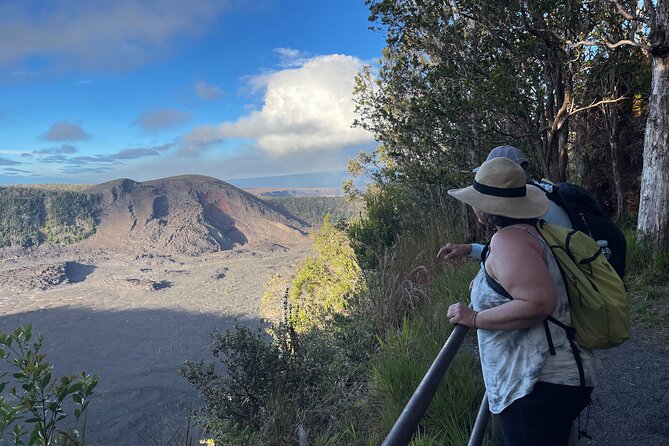
What shows up clearly in the feedback is guide quality and communication. Reviews highlight guides such as Jennifer and Yvonne for explaining what you’re seeing—volcano processes, plants and animals, and even Hawaiian legends tied to the landscape. That matters because it changes the hike from sightseeing into understanding.
You’ll also notice the guide-led organization: people mention how prepared guides were, including having extra hiking sticks, jackets, and backpacks on hand. Even without assuming you’ll need those exact items, it signals a thoughtful approach to the practical stuff: timing, staying together, and keeping everyone comfortable.
Another strong theme: the small group size. With fewer people, you’re more likely to get your questions answered and to have moments for looking longer instead of rushing through.
Who This Hike Fits Best (and Who Might Want a Different Option)
This hike is described for people with moderate physical fitness. So if you’re a steady walker and you’re comfortable with elevation changes and uneven ground, you’ll likely enjoy it. The tour is also ideal if you want a guided explanation focused on both geology and living things.
You might want to look for another option if:
- you don’t feel steady on uneven or potentially slick surfaces
- you’re hoping for a fully flat, easy walk
- weather is a major concern for you and you’d rather avoid any chance of rain affecting visibility
But if you like hikes that teach you something real while you’re moving, this is a strong match.
Should You Book This Guided Volcano Hike?
I’d book it if you want a guided way to experience Kīlauea’s crater environment—steam vents, rainforest plants, and the lava lake view—without guessing what matters. The combination of a small group, licensed guide, and included hiking support (trekking poles and backpacks) adds real value, especially when the park terrain is less straightforward than a typical trail.
I’d think twice only if you know you struggle with crater hikes or you’re very sensitive to weather. The experience depends on good weather, and while guides can keep things interesting in rain, visibility and comfort can still be affected.
If you’re deciding between self-guided walking and a guided hike, go guided. This is one of those places where someone pointing out the important bits turns the whole trip into a story you actually understand.
FAQ
FAQ
Where does the hike start?
It starts at the Kīlauea Visitor Center at 1 Crater Rim Drive, Volcano, HI 96785, and it ends back at the same meeting point.
How long is the tour?
The guided hike lasts about 3 hours.
What does it cost?
The tour price is $120.00 per person.
Are park fees included in the price?
No. The tour does not include the National Park entrance fee ($15.00 per person) or the Volcanoes National Park admission fee ($15.00 per person), as listed.
What’s included in the tour?
The tour includes backpacks and trekking poles, plus a licensed guide.
What’s the maximum group size?
The group is limited to a maximum of 10 travelers.
What fitness level do I need?
You should have moderate physical fitness.
Is the tour offered in English?
Yes, it’s offered in English.
What happens if the weather is bad?
This experience requires good weather. If it’s canceled due to poor weather, you’ll be offered a different date or a full refund.
Is an eruption guaranteed?
No. The description notes you may even witness a Kīlauea eruption, but it’s not promised.
What’s the cancellation window?
You can cancel for a full refund up to 24 hours in advance of the experience start time.