REVIEW · TUCSON
Saguaro National Park Self-Guided Driving Audio Tour
Book on Viator →Operated by Travel with Action · Bookable on Viator
Saguaro National Park gets way more interesting with audio. This self-guided driving audio tour turns the park into a story road trip, with location-triggered narration and plenty of stops for short walks and big views.
I especially like the value per car: $16.99 covers up to 4 people, so you’re not paying per head like many guided tours. I also love that you get offline maps and hands-free playback, so you can focus on looking out the windshield instead of managing your phone every minute.
One thing to watch: the app is picky about setup and timing. If your Bluetooth connection chops audio or you go too fast between story points, the narration can start at the wrong moment or cut off.
In This Review
- Key Highlights at a Glance
- Why This Audio Tour Works for Saguaro in Real Life
- Price and Value: $16.99 per Group Is the Smart Deal
- Logistics That Matter: Where You Start and How Stories Trigger
- Offline-First Setup: The One Thing You Should Not Skip
- Gates Pass: Tucson Views and the Cactus Teach-Your-Eyes Lesson
- Brown Mountain Trailhead: Coyotes, Echoes, and a Moderate Loop Option
- King Canyon Trail: A Longer Workout With Worth-Checking Views
- Desert Discovery Nature Trail: The Short Walk That Teaches Saguaro Basics
- Hugh Norris Trail and Valley View: Longer Effort vs. Quick Old-School Charm
- Signal Hill Petroglyphs: Reading the Desert Through Indigenous History
- Rincon Mountain Visitor Center: Your East Park Launch Point
- Overlooks and Cactus Forest Stops: The Stories You’ll Actually Look For
- Cactus Forest Trail, Loma Verde, and Garwood Dam: Longer Walks and Human Footprints
- Riparian Overlook and Javelina Rocks: When the Desert Gets Water and Names
- Rincon Mountains Aviation Incident and Tanque Verde Ridge Finale
- Small Setup Details That Make a Big Difference
- Should You Book This Saguaro National Park Driving Audio Tour?
- FAQ
- How much does the Saguaro National Park self-guided audio tour cost?
- How long does the tour take?
- Is the tour offered in English?
- Do I need a park entrance pass to visit Saguaro National Park?
- Does the tour work offline?
- How do I start the audio stories while I’m on-site?
- Can I pause or skip parts of the tour?
- Where does the tour start?
- Is there free cancellation?
Key Highlights at a Glance
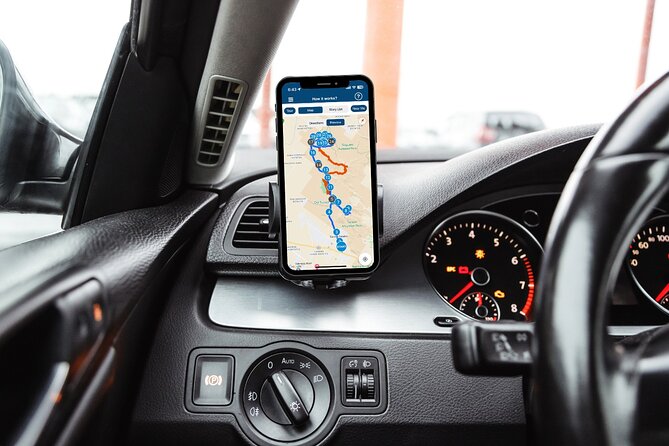
- Offline maps + GPS-triggered audio mean you can drive without cell service and still get narration at the right spots
- 40+ audio stories across 15+ miles gives you more than a simple scenic drive
- A mix of short hikes and overlooks (from 10-minute loops to longer trailheads) keeps the day flexible
- Real desert details you can spot right away, like cholla vs. prickly pear and why cacti bloom in dry years
- Car-stereo friendly options (Bluetooth/USB/AUX, plus CarPlay support) make listening easier
Why This Audio Tour Works for Saguaro in Real Life

Saguaro National Park is one of those places where a plain drive can feel a little flat, even when the views are gorgeous. This tour fixes that with narration tied to where you are, so every pull-off has a reason: a story, a name, a feature, or a bit of desert science you’ll notice once you know what to look for.
The best part is how the experience matches how people actually travel. You can start when it fits your schedule, pause for photos, and keep going at your own pace. That matters here because some stops are truly quick (think 5–15 minutes), while others hint at longer hiking options if you have the energy.
Also, the audio tour isn’t just about plants. You’ll hear about ancient life in the area, a Civilian Conservation Corps trail, and even a plane incident in the Rincon Mountains. In a park like this, context is what turns scenery into something you remember.
You can also read our reviews of more tours and experiences in Tucson.



Price and Value: $16.99 per Group Is the Smart Deal
At $16.99 per group (up to 4), this is built for car travel. If you’re coming with friends, it’s basically one ticket that covers everyone in your vehicle—so the cost per person drops fast.
Just keep one cost separate in your head: the park entrance pass is required and not included. The tour fee is for the audio guide and app, not admission. If you arrive without a pass, you’ll be stuck at the gate or forced to improvise your day.
Duration is about 2 to 3 hours on average. That timing is realistic because the route stretches over 15+ miles with 40+ stories. It’s long enough to feel like a real excursion, but not so long that you burn an entire day just driving.
Logistics That Matter: Where You Start and How Stories Trigger

This tour is self-guided, with no one meeting you at the start. You begin at the Rincon Mountain Visitor Center at 3693 S Old Spanish Trail, Tucson, then drive straight along Cactus Forest Drive. The tour ends in a different location, so don’t plan a strict meeting time right at your finish.
The narration is designed to be hands-free. Once you’re on the route, the audio plays automatically as you hit the story points. You’ll feel this most at overlooks and trailheads where the app triggers new segments.
A couple practical tips based on real-world issues people ran into:
- Download while you have strong Wi-Fi/cellular. After that, it should work offline.
- If you use Bluetooth and your audio cuts off at the beginning or end, try connecting via USB or AUX (your car’s Bluetooth hardware can cause clipping).
- Stay close to the posted speed limit, because the timing of story triggers can get out of sync when you rush.
Offline-First Setup: The One Thing You Should Not Skip

The tour is meant to run offline, but you have to earn that convenience up front. After booking, you’ll get an email/text with instructions and a password. Then you download Action’s Tour Guide App, enter the password, and make sure you’ve fully downloaded the tour while you’re on strong signal.
Device expectations are pretty clear:
- iPhone with iOS 15 or later
- Android 9 or later
- iPad/tablet with GPS and cellular connectivity (for navigation)
When you’re ready to start, open the app on-site, choose the correct version for your planned starting point/direction, then head to your first story point. The audio should begin on its own when you’re in the right place—once you’re in rhythm, the whole day feels smoother.
Gates Pass: Tucson Views and the Cactus Teach-Your-Eyes Lesson
Gates Pass Scenic Lookout is the kind of first stop that makes you understand why people come to Saguaro for repeat visits. You get wide views over ancient rock formations, and the audio helps you look beyond the obvious. There’s also a trail here, and the narration points you toward what to notice next when you’re ready to stretch your legs.
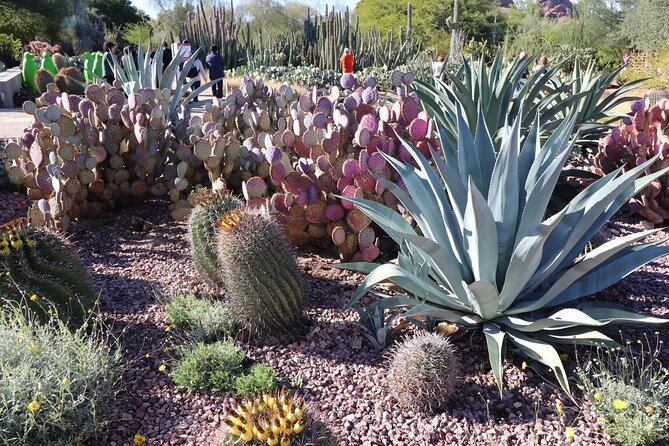
Right after that, you shift into a very practical desert lesson at Gates Pass Trail. You’ll learn how to tell prickly pear from cholla:
- Prickly pear: flat, circular pads (almost like Mickey Mouse ears)
- Cholla: more cylindrical segments, with a tree-like growth pattern
The story connects these cactus shapes to survival. You’ll hear that these plants store moisture in their stems, so even in low-rainfall years they can still bloom. That’s not just trivia—it changes how you interpret the whole park when you see flowers or notice how the cacti are positioned.
One consideration: these short walks can still be sunny and dry. Bring water, and wear shoes you trust on uneven ground. Even the “15 minutes” stops can feel longer when the desert is hot.

Brown Mountain Trailhead: Coyotes, Echoes, and a Moderate Loop Option
At the Brown Mountain Trailhead, the tour gives you a hiking choice rather than forcing you to stay in the car. The loop described here is about 5 miles, moderately challenging, and likely under two hours for many walkers.
The added perk is the wilderness vibe the audio sets up. Some hikers have reported coyote sightings, and you may hear coyote sounds echoing across the park. Even if you don’t see one, the narration makes the area feel alive, not just scenic.
If you’re the kind of traveler who likes options, this stop is a good one. If your group is more car-and-overlook than hike, you can skip the loop and still get value from the narration.
King Canyon Trail: A Longer Workout With Worth-Checking Views
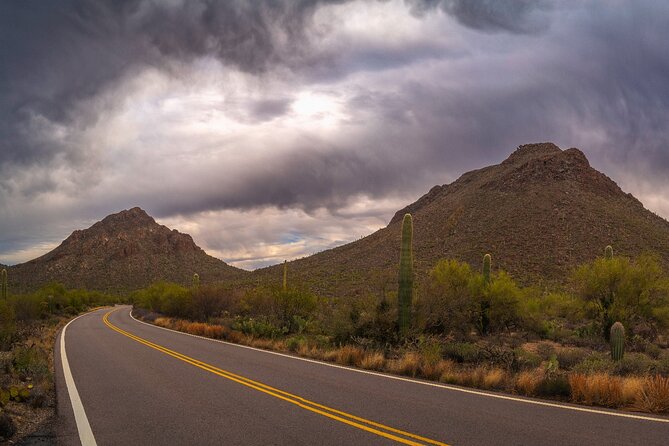
Next comes King Canyon Trail, described as a moderately challenging 7-mile hike, with an expectation of around four hours. That’s not a quick stretch—it’s a serious chunk of time.
The key reason to care is that the narration frames this hike around desert views along the way. If you’re choosing between “do we hike today?” and “do we just enjoy the drive?”, this is where you decide.
If you’re traveling with mixed fitness levels, you might use this stop as a split-moment: one group does a longer walk while others stay parked at overlooks (and keep listening). The tour design supports that rhythm because you can pause and resume.
Desert Discovery Nature Trail: The Short Walk That Teaches Saguaro Basics

The Desert Discovery Nature Trail is a half-mile, straightforward hike with a focus on saguaro cacti. It’s the kind of stop that works perfectly when you want movement without committing to a long hike.
The narration also adds a gentle caution. It notes that some cactus species are edible—but it doesn’t give you permission to pick and eat anything. Treat this as education, not an invitation to forage. In real desert conditions, it’s easy to make a mistake with what you see.
If you’re traveling with kids, or you just want a leg-stretch without sweating out a big trail, this is one of the best time-return stops.
Hugh Norris Trail and Valley View: Longer Effort vs. Quick Old-School Charm
The tour then introduces Hugh Norris Trail, a challenging 9-mile route often used by horseback riders. It includes a human history piece too: the trail’s name connects to Hugh Norris, a 20th-century tribal police officer who scoured for truant children for the Fort Yuma Indian School.
That history angle matters because it changes how you experience the trail. You stop thinking of it as just “a hike” and start seeing it as a place shaped by people, not only geology.
After that, Valley View Overlook Trail gives a contrast: an easy 1-mile walk around 20 minutes, built by the Civilian Conservation Corps in the 1930s. This is a great choice if you want an easy win after the longer options.
This pairing is smart for the day. You get a “serious trail” feel, then a restorative break.
Signal Hill Petroglyphs: Reading the Desert Through Indigenous History
At Signal Hill, the tour turns your attention upward and outward. You’ll encounter about 200 prehistoric petroglyphs made by the Hohokam (lived in the area roughly 450 to 1450 C.E.). The narration adds an important cultural note: indigenous people say that the placement of petroglyphs isn’t random.
The value here is in slowing down. Petroglyphs don’t reward speed. If you try to rush, you’ll miss what makes them special. Give yourself time to look at the shapes and the ways people chose locations in the desert.
Rincon Mountain Visitor Center: Your East Park Launch Point
The route reaches Rincon Mountain Visitor Center at 3693 S Old Spanish Trail again because this is where the tour’s East Saguaro side effectively begins. From there, the tour direction is straightforward: continue straight along Cactus Forest Drive.
Expect the audio to shift in flavor. The stories here emphasize ancient cultures, ancient rocks, and the idea that the area isn’t just a set of scenic pull-offs—it’s part of a living timeline.
One practical note: visitor centers can be quiet and busy depending on time of day. The audio is designed for driving and location triggers, so if you step off-route, narration timing may act differently than when you’re moving along the driving points.
Overlooks and Cactus Forest Stops: The Stories You’ll Actually Look For
This section is where the tour shines for people who like to spot features on their own. You’ll hit viewpoints such as:
- Sonoran Desert Overlook (Hohokam ancestors of the O’odham people, and the shift from nomadic hunting-gathering to farming)
- Future Generations Overlook / Cactus Forest Overlook (the park has about 25 cacti species, not only saguaro)
- Mica View Trail (a 4-mile loop, considered easy, under 90 minutes, with views toward the Rincon and Santa Catalina Mountains)
These overlooks are also useful for photography because you don’t need hiking time to get strong shots. When the audio teaches you what species are around—like prickly pears, chollas, and less-known cacti—you’ll start noticing patterns in the plants instead of treating them like one big cactus blur.
You should also plan for birdwatching if that’s your thing. The narration calls out Gila Woodpeckers and Gilded Flickers around these areas, which gives you a target list while you’re waiting for something to land.
Cactus Forest Trail, Loma Verde, and Garwood Dam: Longer Walks and Human Footprints
The tour then includes two loop-or-trail options that are more committed than the quick strolls:
- Cactus Forest Trail: a 10-mile moderately challenging route, about 3.5 hours, with mention of lime kilns dating back to 1880
- Loma Verde Trail: an easy 3.7-mile loop, about 1 hour 15 minutes, crossing a seasonal stream and featuring a gradual downhill through the cactus forest
If you’re hiking, these stops help you choose a “how much effort today?” level without guessing. The audio doesn’t just say distance—it frames what you might notice along the way.
Then you get Garwood Dam. The narration tells a family story: in 1945, Tucson residents Josephine and Nelson Garwood bought 450 acres; later, during construction of a bigger house, they discovered Wildhorse Canyon held water. This is the kind of detail that makes a small site feel meaningful.
Riparian Overlook and Javelina Rocks: When the Desert Gets Water and Names
At Riparian Overlook, the tour describes it as possibly the best view of the cactus forest. You can see across the sprawling saguaro wilderness from here, though the narration also reminds you that you can’t see rattlesnakes from the overlook.
That’s practical, not scary. It’s a gentle cue to keep safety habits in place when you step away from viewpoints.
Next, Javelina Rocks comes in with a name story. The rocks are named after javelina, described as a dog-sized animal found in this region resembling a wild boar, with salt-and-pepper coarse hair, short legs, and pig-like noses. The audio makes you read the animal into the rock shapes, which is a fun way to engage your brain during a driving tour.
Rincon Mountains Aviation Incident and Tanque Verde Ridge Finale
The tour reaches the Rincon Mountains with a specific historical moment: on August 29, 1984, a Cessna 310 flew above these mountains with four people inside while a thunderstorm raged. That’s a heavy story note in the middle of a desert day, and it adds weight to the idea that weather here can be intense.
Finally, you end near Tanque Verde Ridge Trail, a 3-mile moderately challenging route expected to take under two hours. It’s a solid “final stretch” option if you still have energy, and it helps the day feel complete instead of ending abruptly.
Small Setup Details That Make a Big Difference
A few practical things can decide whether the tour feels smooth or annoying:
- Connect your phone to your car audio via Bluetooth, USB, or AUX. CarPlay is supported, and Android Auto support is on the way.
- If audio starts too early or cuts off, try switching from Bluetooth to USB/AUX.
- Download in strong signal before you start. Offline playback depends on that.
- Follow the route and speed limit for the cleanest timing of the location triggers.
- If you’re driving with others, the group price is per car, not per person—so it’s worth it to keep everyone in one vehicle.
Should You Book This Saguaro National Park Driving Audio Tour?
Book it if you want a self-guided day in Saguaro that turns a scenic drive into a guided-feeling experience. The audio-driven format is especially worth it if you like learning while you go, want multiple short stop options, and appreciate being able to pause for photos.
Skip it or be cautious if your car setup makes audio tricky. If you know Bluetooth tends to cut off sound on your system, plan for USB/AUX from the start. Also, bring the right expectations: this is not a live guide who will customize your hike lengths or tell you what’s happening that hour at the visitor center. It’s a route-based audio experience, so staying on the route matters.
If you’ve got 2–3 hours and want Saguaro to feel like more than just a pretty drive, this is a strong match.
FAQ
How much does the Saguaro National Park self-guided audio tour cost?
It costs $16.99 per group, up to 4 people.
How long does the tour take?
It usually takes about 2 to 3 hours.
Is the tour offered in English?
Yes, it’s offered in English.
Do I need a park entrance pass to visit Saguaro National Park?
Yes. The park entrance pass is required and is not included with the tour.
Does the tour work offline?
It works offline after you download it. You need strong Wi-Fi or cellular to download the tour first.
How do I start the audio stories while I’m on-site?
After you arrive, open the Action’s Tour Guide App, launch the tour for your planned starting point and direction, then enter the first story’s point. The audio should begin automatically and play based on location.
Can I pause or skip parts of the tour?
Yes. You can pause anywhere and start again when you’re ready. You can also skip stops you don’t care about.
Where does the tour start?
The tour begins at the Rincon Mountain Visitor Center, 3693 S Old Spanish Trail, Tucson, and you continue straight along Cactus Forest Drive.
Is there free cancellation?
Yes. You can cancel for a full refund if you cancel at least 24 hours before the experience starts. If you cancel within 24 hours, it isn’t refundable.