REVIEW · BAR HARBOR
Milky Way Photography Workshop in Acadia National Park
Book on Viator →Operated by Wildscape Adventure · Bookable on Viator
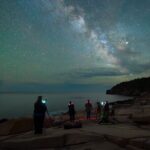
Acadia under the stars turns gear into stories. This Milky Way workshop in Acadia National Park mixes early-morning and late-night photo sessions with real instruction, focused on how to plan and capture images that feel like you’re there.
Two things I like: the group stays tiny (max 5 people), and the teaching covers the full workflow—from setting up the shot to getting strong results in editing. I also really value that you plan your frames with PhotoPills, then learn capture methods like single exposures and stacked images.
One thing to consider: this is a weather-dependent experience with set night hours. If the sky doesn’t cooperate, your timing may shift, and you’ll still need to be ready to work in the dark.
In This Review
- Key highlights you’ll actually use
- Why Acadia makes Milky Way nights feel different
- The 5-day rhythm and why the hours matter
- What you’re learning: from Milky Way captures to real edits
- Capture skills: single shots and stacked frames
- Planning: using PhotoPills for alignment
- Editing workflow: Lightroom + Photoshop
- Acadia photo stops: what each location is for
- Jordan Pond: practicing calm depth in a Milky Way frame
- Otter Cliff: using a dramatic edge as a frame
- Bubble Pond: refining the pond/foreground blend
- Sand Beach: working with open horizon foreground
- Eagle Lake: finishing with another lake foreground
- Gear reality check: what to bring so you don’t struggle
- Editing help that goes beyond pointing
- Price and value: $2,500 per person, what you’re really buying
- Who should book this, and who might not
- Should you book the Milky Way Photography Workshop in Acadia?
- FAQ
- How long is the Milky Way Photography Workshop in Acadia?
- Is pickup offered?
- What’s the group size?
- What camera gear do I need?
- What’s included in the price?
- Are meals and lodging included?
- Is the entrance fee included?
- What if weather is bad?
Key highlights you’ll actually use
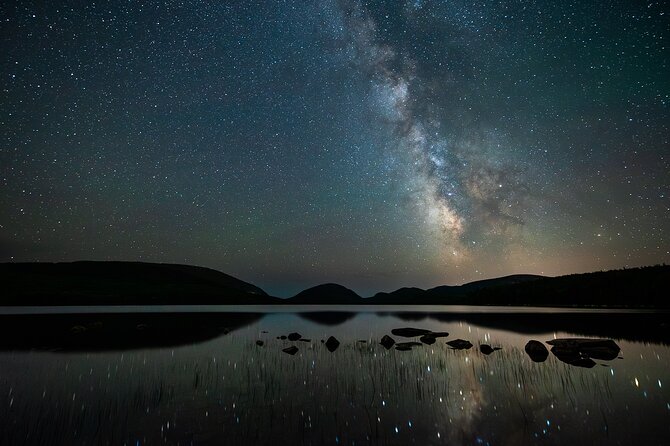
- PhotoPills shot planning for Milky Way alignment, so you’re not guessing where the sky will land in your frame
- Single-exposure and stacked night-sky techniques, built for both clean results and sharper detail
- Foreground storytelling taught as a core skill, not an afterthought
- Hands-on editing in Lightroom and Photoshop, including blending approaches for Milky Way + foreground
- One-on-one Discord post-processing session, so you can fix your images with direct feedback
- Iconic Acadia stops like Jordan Pond, Otter Cliff, Sand Beach, and Eagle Lake, all set up for night photography
Why Acadia makes Milky Way nights feel different
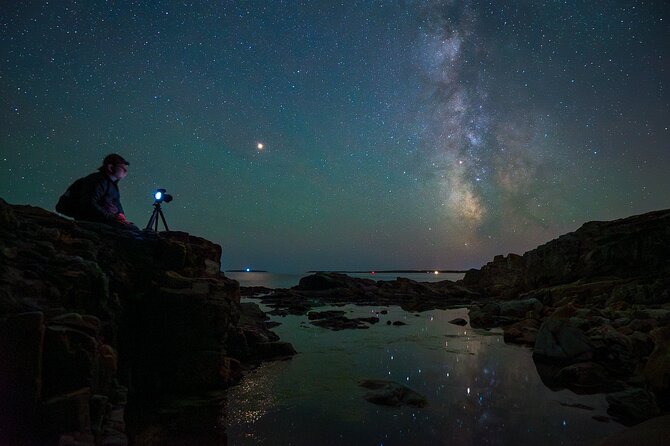
Acadia works because you get foreground options that already look cinematic at night. A pond reflection, a cliff edge, a beach line—those cues help your Milky Way images feel grounded instead of floating. The workshop leans into that idea: pairing the stars with dramatic coastal and water elements so your photos tell a clearer story.
What makes it especially practical is the way the instruction is structured around outcomes. You’re not just walking and shooting. You learn how to plan timing and composition, how to execute the capture, and how to process your files into a final image. The end goal is “celestial storytelling,” but the path is technical: camera settings, focus methods, and editing steps that you can repeat.
You also get direct teaching from Christopher (often called Chris), who has a reputation in the workshop community for being patient and clear. That matters because night photography is unforgiving—small mistakes in focus, framing, or exposure can ruin an entire frame.
You can also read our reviews of more tours and experiences in Bar Harbor.
The 5-day rhythm and why the hours matter
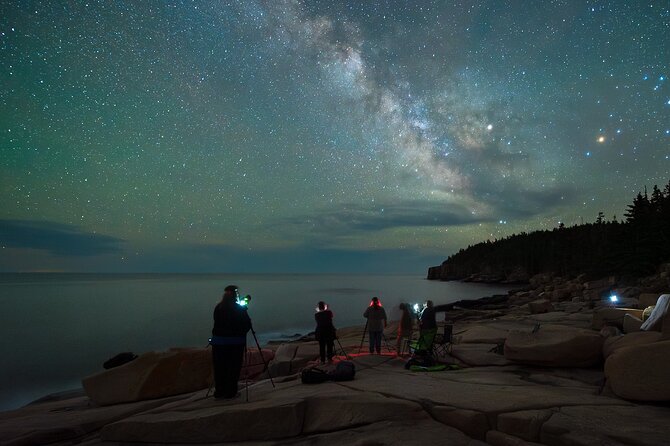
This workshop runs about 5 days and it’s built around prime night photography windows. Based on the posted availability, you’ll be active in the late evening and early pre-dawn hours, typically around 7:00 PM–11:30 PM and 12:00 AM–3:30 AM (Tuesday to Saturday). Translation: you’ll likely spend real time in the dark, not just a quick “sunset then sleep” experience.
That schedule is the point. The Milky Way’s visibility, plus the “glow” you can still capture in the foreground, both change quickly as the night progresses. The workshop approach helps you work through that timing instead of chasing it randomly.
Small group size (max 5 travelers) plus private transportation within Acadia also helps the flow. You’re not trying to coordinate ten different tripods at the edge of a parking lot. Instead, you move as a group between specific photo stops, with water and snacks provided during transport.
What you’re learning: from Milky Way captures to real edits
The workshop teaching isn’t just camera settings. It’s a repeatable system for getting results.
Capture skills: single shots and stacked frames
You’ll learn techniques for both single-exposure Milky Way images and stacked night-sky images. Single exposures can be great when conditions are stable and you want a straightforward process. Stacking helps when you’re after cleaner detail and more flexibility dealing with imperfect moments (like slight motion or inconsistent visibility).
You’ll also learn ways to incorporate foreground depth. The emphasis is on making your foreground part of the composition, not a dim extra. In practice, that often means using different exposure lengths for different parts of the scene and then combining them.
Planning: using PhotoPills for alignment
A big practical win is that you learn how to plan shots for Milky Way alignment using the PhotoPills app. That reduces guesswork, especially at locations where your framing needs to match where the sky is going—not just where it is right now.
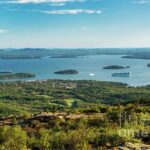
Editing workflow: Lightroom + Photoshop
You’ll learn advanced post-processing workflows in Lightroom and Photoshop to create final astrophotography images. One repeated theme in the workshop approach is blending: capturing the Milky Way and separately capturing the foreground with a longer exposure, then merging them into one clean image.
You’ll also cover focus stacking and timelapse concepts, including how timelapse files get processed (using tools designed for timelapse video editing). Even if you don’t plan to make timelapse every night, the underlying skills help you think more carefully about focus and sequence.
Acadia photo stops: what each location is for
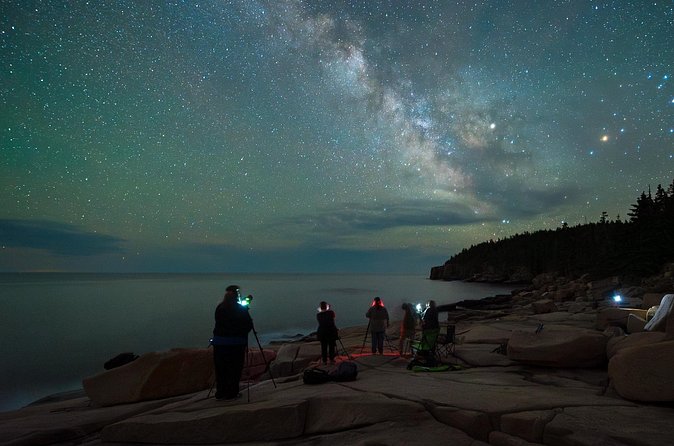
You’ll shoot at several well-known Acadia locations, and each one gives you a different kind of foreground to work with. The workshop uses that variety on purpose, because foregrounds change how you compose and how you blend exposures.
Jordan Pond: practicing calm depth in a Milky Way frame
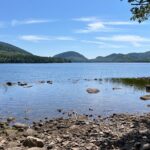
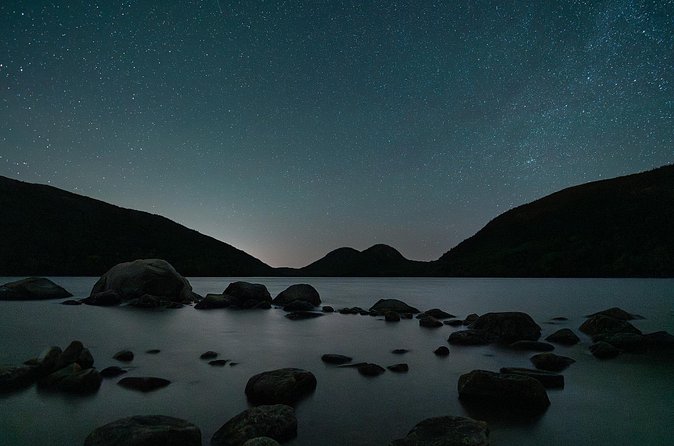
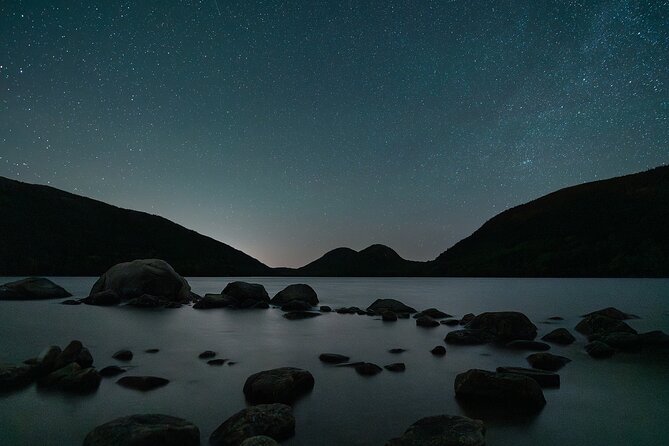
Jordan Pond is one of the first stops. A pond is ideal for learning because it gives you a large, visually simple foreground shape. That makes it easier to see what your foreground exposure is doing while you build your Milky Way framing.
The benefit here is practice: you can work on composition and then refine your exposure balance. If your foreground is too dark or your stars look weak, you’ll start to connect the settings with the result.
Otter Cliff: using a dramatic edge as a frame
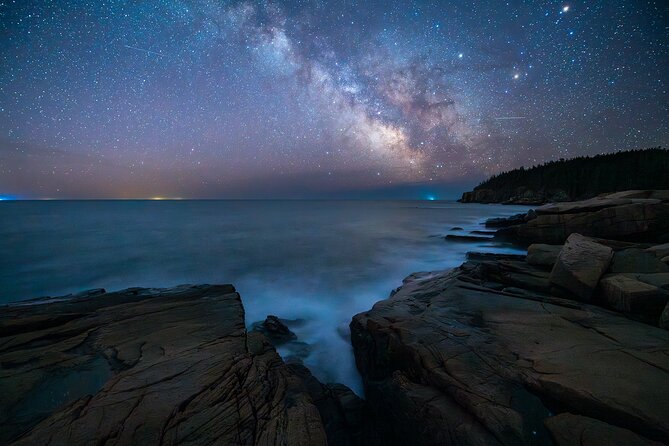
Otter Cliff brings a cliff-type foreground into the mix. Cliff silhouettes and edges help your eye understand scale, and they can make the Milky Way feel more “placed” in the scene. The tradeoff is that cliff framing can be unforgiving: small composition shifts show up quickly when you’re blending exposures.
This stop is where you’ll get more value from tight planning and careful alignment because you’re building a clear shape in the lower part of the image while the sky does its own thing overhead.
Bubble Pond: refining the pond/foreground blend
Bubble Pond adds another pond option, which is useful for learning because it’s a similar foreground category with a different framing opportunity. That gives you chances to test whether your workflow is working across locations.
If you’re learning blending, repeated pond stops can help you compare what changes when you adjust timing or exposure length.
Sand Beach: working with open horizon foreground
Sand Beach is a different kind of foreground: more open, more horizon. That can be great for Milky Way compositions because you can create a clean visual line under the stars.
The main consideration is that open areas can amplify uneven light. If your foreground exposure is off, it shows fast—especially when you’re trying to balance stars and near-ground brightness.
Eagle Lake: finishing with another lake foreground
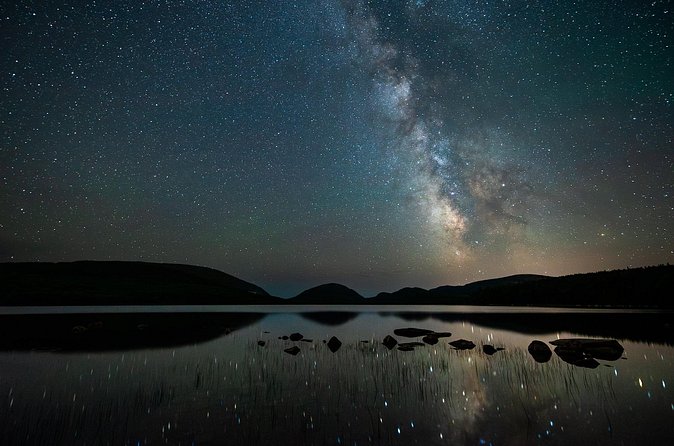
Eagle Lake rounds out the set. Like the other water-based stops, it gives you a broader foreground surface to work with. By this point, you should have a clearer feel for how your camera settings, focus approach, and blending choices affect the final image.
Also, having multiple water stops can be a confidence builder: even when one night’s sky conditions aren’t perfect, you can still create usable images by applying what you learned.
Gear reality check: what to bring so you don’t struggle
The prerequisites are straightforward, and you’ll want to meet them. This workshop assumes you can already handle manual exposure basics and post-processing.
Bring:
- A DSLR or mirrorless camera that can do long exposures
- A wide-angle lens at f/2.8 or faster
- A sturdy tripod
- An external intervalometer if your camera doesn’t have one built in
You might also want to plan for comfort, because night work plus tripod time adds up fast. The physical fitness level is listed as moderate, which usually means you’ll spend time standing, moving gear, and working at night in uneven outdoor conditions. Even if you’re in decent shape, night visibility is its own challenge.
Editing help that goes beyond pointing
The workshop doesn’t stop when you pack up your camera. You get a one-on-one post-processing instructional session via Discord, which is a big deal if you want to improve fast.
Why? Because astrophotography editing has a lot of small steps that can make or break a final image. If you only learn concepts, you’ll still wonder why your sky looks harsh or your foreground looks washed out. Direct help gives you faster answers.
Also, the focus on workflows in Lightroom and Photoshop matters. You learn not just what buttons to press, but how to structure your process so you can repeat it on future shoots.
If you’re interested in timelapse, the workshop teaching includes timelapse photography and the use of software designed specifically for processing timelapse video. That helps you connect shooting discipline to editing results.
Price and value: $2,500 per person, what you’re really buying
At $2,500 per person, this is not a casual add-on. You’re paying for several things that would cost you a lot of time on your own:
- expert in-field instruction during night shoots
- private transportation within Acadia National Park
- organized use of multiple iconic shooting stops
- water and snacks during transport
- a personal post-processing session via Discord
But the cost also comes with a few add-ons. Entrance fee isn’t included (it notes a $20 per person fee tied to a valid park pass). Meals and lodging aren’t included either.
So the real value question becomes: will you actually use the instruction? If you show up ready to work through camera settings and editing steps, this type of workshop can save you months of trial-and-error. If you mainly want scenic photos without mastering the workflow, the price may feel high.
One more factor: since the max group size is small, you’re not paying for a crowded event. You’re paying for guided attention.
Who should book this, and who might not
This workshop fits you if:
- you’ve got a DSLR/mirrorless and you’re comfortable with long exposures
- you want to learn planning with PhotoPills, not just shoot whatever looks pretty
- you want help with editing—especially blending Milky Way and foreground exposures
- you like structured nights with guided locations inside Acadia
It might not fit you if:
- you want a casual, low-effort nature walk experience
- you don’t want to be in the dark for long stretches at set night hours
- you’re not ready to do post-processing in Lightroom/Photoshop
It also helps if you don’t mind the weather element. The experience requires good weather, and if it’s canceled for poor conditions, you’ll either get a different date or a full refund.
Should you book the Milky Way Photography Workshop in Acadia?
Book it if you want real progress, not just photos. The combination of planning (PhotoPills), capture methods (single exposures and stacks), and editing (Lightroom/Photoshop with blending) gives you a full pipeline. Add in the small group size and the one-on-one Discord session, and you get a rare setup where you can fix problems instead of guessing later.
Skip it if you’re hoping for a relaxed outing with minimal technical work. This is a skill-building workshop, and you’ll get the best results when you show up ready with the right gear and the willingness to practice.
If you’re aiming for Milky Way images that actually look intentional—foreground included—this workshop is one of the more focused ways to get there.
FAQ
How long is the Milky Way Photography Workshop in Acadia?
The workshop runs for about 5 days.
Is pickup offered?
Yes, pickup is offered.
What’s the group size?
There is a maximum of 5 participants.
What camera gear do I need?
You’ll need a DSLR or mirrorless camera that can handle long exposures, a wide-angle lens with an aperture of f/2.8 or faster, and a sturdy tripod. An external intervalometer is needed if your camera doesn’t include one.
What’s included in the price?
Included are private transportation within Acadia National Park, expert instruction, water and snacks during transport, and a one-on-one post-processing session via Discord.
Are meals and lodging included?
No. Meals and lodging are not included.
Is the entrance fee included?
No. The entrance fee is not included, and it references a $20 per person fee for valid park pass coverage during the workshop.
What if weather is bad?
The experience requires good weather. If it’s canceled due to poor weather, you’ll be offered a different date or a full refund.