REVIEW · BAR HARBOR
Acadia National Park & Bar Harbor Self-Guided Driving & Walking Tour
Book on Viator →Operated by Adventures with Action · Bookable on Viator
Acadia moves fast, and this tour keeps up. The best part is the audio plays as you reach each spot, so you can stop for photos, drive on, or take a detour without waiting on anyone.
I especially like the self-paced format: you’re not stuck on a fixed group schedule, and you can pause to eat, browse, or just stand there and listen to the ocean. Second, the offline setup is practical—when service gets patchy around Acadia, you can still keep the experience going with the downloaded tour content and maps.
One drawback to consider: this is GPS-triggered audio. If you don’t follow the route closely or you’re driving faster than the posted limits, some sections can feel out of sync, so you’ll want to slow down and stick to the plan.
In This Review
- Key Things You’ll Notice From This Tour
- What You’re Really Getting in Acadia and Bar Harbor
- Price and Value: How $24.99 Actually Works
- The Offline Audio Setup That Makes Acadia Feel Easy
- How the Car-and-Walk Mix Changes the Experience
- Starting at Hull’s Cove Visitor Center: Fall Foliage and Forest Clues
- Park Loop Road to Cadillac Mountain: The Drive That Feels Like a Photo Mission
- Beaver Pond and the Bird-and-Science Detour Mood
- Pecipice Trail vs Ocean Path Trail: Choose Your Effort
- Frenchman Bay Views and Egg Rock Lighthouse: A Coastline Lesson
- Sand Beach: Small Beach, Specific Science
- Old Soaker, Thunder Hole, and Monument Cove: When Water Does the Talking
- Gorham Mountain, Otter Cliff, and the Glacial Story You Can Point At
- Jordan Pond and Bubble Pond: Ice Age Leftovers, Not Just Pretty Water
- Eagle Lake and the Drive Back Toward Town
- Bar Harbor Walking Stretch: Churches, Museums, and Beatrix Farrand
- Frenchman Bay Name, Champlain, and the Fur Trade Angle
- Balance Rock, Grant Park, and Bar Harbor Inn’s Big Social Role
- The Cadillac Mountain Summit Trail: Time Worth Giving Up
- Common Snags and How to Avoid Them
- Who This Tour Fits Best (and Who Might Want Something Else)
- Should You Book This Acadia National Park and Bar Harbor Audio Tour?
- FAQ
- How long does the Acadia and Bar Harbor self-guided tour take?
- Is this tour guided by a person?
- Do I need cellular service to use it?
- Are park entrance fees included?
- Where does the tour start and where does it end?
- Does the audio play automatically as I move?
- How many audio stories are included?
- What device do I need for the app?
- Is it a one-time ticket, or do I keep access?
- Is the tour always open?
Key Things You’ll Notice From This Tour
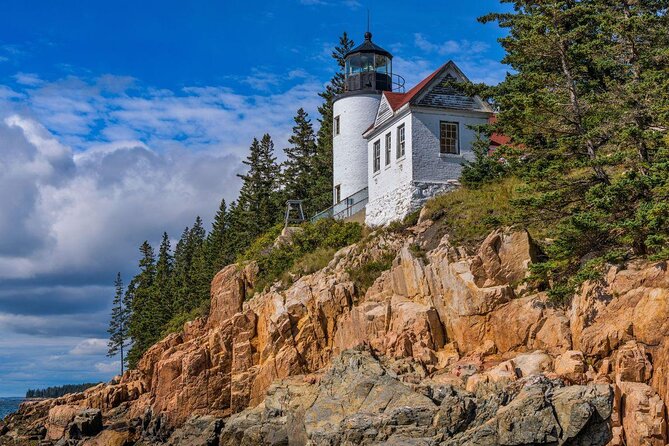
- Cadillac Mountain photo time: you get a dedicated summit-trail stretch for big views.
- Geology lessons built into the stops: glacial rock, sea-urchin sand, and wave-carved features are explained along the way.
- Two detour choices for different legs: Pecipice Trail for the steep option, Ocean Path Trail for the gentler walk.
- Bar Harbor context on your walking route: you’ll connect Frenchman Bay names, local institutions, and historic design details.
- Works offline after download: the tour is set up for places with weak cell coverage.
What You’re Really Getting in Acadia and Bar Harbor
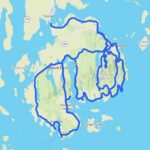
This is a self-guided driving and walking audio tour built around Acadia National Park’s Park Loop Road, plus a walking stretch in Bar Harbor. You’re looking at about 5 hours total time on average, with a route that runs 20+ miles and includes 30+ location-based audio stories.
Think of it as two trips that fit together. You drive the park for the views and coastal geology, then you switch to walking in town for culture, architecture, and local stories—still on your timeline.
You can also read our reviews of more tours and experiences in Bar Harbor.

Price and Value: How $24.99 Actually Works
The price is $24.99 per person, but the tour is described as better value when bought for the car rather than strictly per individual. That matters if you’re traveling with friends or family: one purchase can cover everyone in the same vehicle, making the cost much easier to justify than a guided tour per ticket.
Also, you’re not buying a one-day pass to a single use. The access is lifetime, no expiry, so if you return to Acadia later, you can reuse the same tour instead of paying again.
Do note what’s not included: the tour itself is the audio experience. Park entrance fees and attraction tickets are not included, so you still need to plan for any required entry costs at Acadia and any stops that have separate fees.
The Offline Audio Setup That Makes Acadia Feel Easy

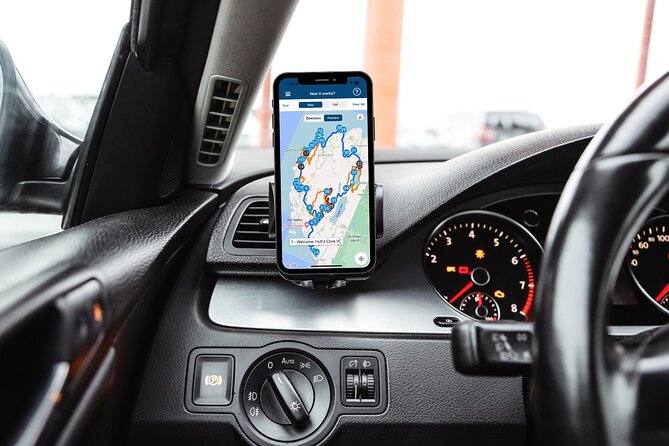
Acadia can be a phone-dead zone, and this tour is built for that reality. After booking, you receive instructions with a password by email and text, and you download the separate Action tour app. You’ll want to download the tour content while you’re on strong Wi‑Fi or cellular, then the rest should run without service.
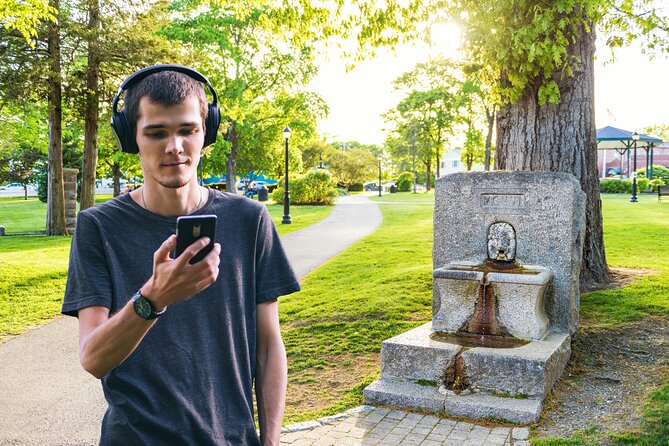
Once you’re there, it’s hands-free and location-triggered. You start by entering the first story’s point in the app, and the audio should move to the next stop automatically as you reach each location.
You can also plan your own rhythm. The tour supports pausing and resuming so you can step out for photos, watch waves from a viewpoint, or take a short break without losing your place.
How the Car-and-Walk Mix Changes the Experience

The drive and walk are not the same kind of fun. In the car, the tour helps you spot what you’re seeing while you’re still moving, so you’re not stuck reading signs at every turnout. For walking, it’s better with headphones so you don’t miss the direction-based narration when you’re closer to the ground-level details.
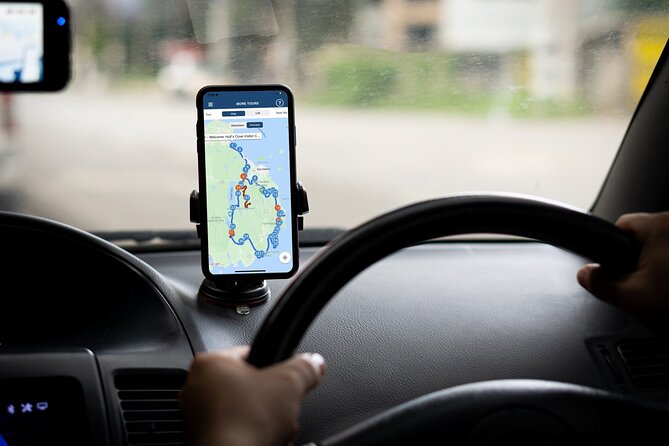
For a smooth setup, the tour notes that you can connect your phone to the car stereo using Bluetooth, USB, or AUX. It also mentions compatibility with Apple CarPlay, with navigation features coming soon, and Android Auto is described as on the way.
If you’re using your phone in walking mode, bring earbuds. Short audio cues at cliff edges and along the coast are where this tour really earns its keep.
Starting at Hull’s Cove Visitor Center: Fall Foliage and Forest Clues
Your route begins as you enter Acadia National Park at Hull’s Cove Visitor Center. The audio kicks off with why the forests look so vivid here, especially when fall colors hit.
This is a smart place to start because it sets expectations. Before you’re busy chasing overlooks, you understand that Acadia’s look is connected to what’s happening under the canopy—and that makes the rest of the park feel less random and more readable.




Park Loop Road to Cadillac Mountain: The Drive That Feels Like a Photo Mission
From the visitor center, you follow Park Loop Road, looping through the park all the way to Cadillac Mountain. The tour frames the summit as the big reward, and it gives you time at the top via the Cadillac Mountain Summit Trail.
This is where you’ll want to slow down. Even if you don’t do every pull-off, the narration gives you a reason to stop—views, wave action, and geology—so it feels like the park is guiding you instead of you just driving.
Beaver Pond and the Bird-and-Science Detour Mood
Next up is Beaver Pond, where you might see beavers and their dams if you’re lucky. The tour also mentions Jackson Labs on the far side and ties it back to the Bar Harbor area’s influence.
This section works best if you enjoy “look closely” stops. You won’t get a big landmark moment every time, but these quieter stops add variety between cliff views and loud wave points.
Pecipice Trail vs Ocean Path Trail: Choose Your Effort
Here’s a major fork in the road. The audio points out Precipice Trail as a physical detour and notes it’s home to the endangered peregrine falcon that nests on high rocky ledges.
If you’re up for steep and demanding terrain, this can be a memorable connection between wildlife protection and how cliff habitats work. The tour explains why the falcons nest where they do—high ledges are hard for other animals to reach.
If steep hiking isn’t your thing, you get an alternative: Ocean Path Trail. It’s described as a gentler, winding route, which is exactly what you want after a long driving day.
Frenchman Bay Views and Egg Rock Lighthouse: A Coastline Lesson
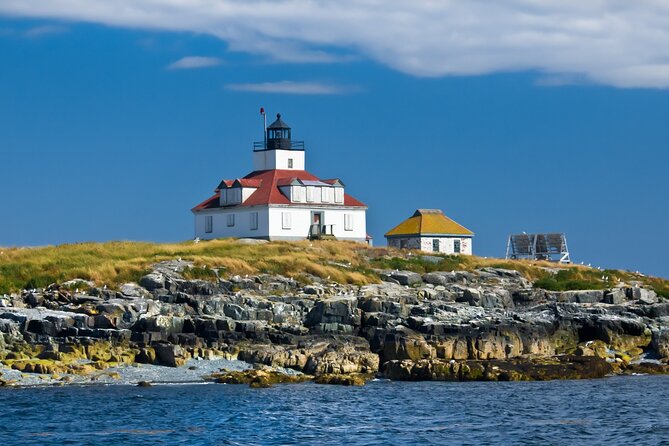
As you continue along the coast route, you reach a spot that looks out over Frenchman Bay. The tour notes you might spot Egg Rock Lighthouse in the bay.
This is the kind of viewpoint where your brain starts mapping the coastline. The audio helps by anchoring what you’re seeing to a specific landmark, so you’re not just staring at water—you’re recognizing a piece of the marine story.
Sand Beach: Small Beach, Specific Science
Then comes Sand Beach, described as about 290 yards long. Even though it’s small, the tour points out something interesting: the sand can look slightly greenish because of sea urchins.
This is one of those stops where a quick listen changes the whole experience. You’ll be able to tell yourself what you’re looking for, even if the beach itself feels modest compared to bigger Atlantic beaches.
Old Soaker, Thunder Hole, and Monument Cove: When Water Does the Talking
The tour keeps increasing the volume with coastal features.
Old Soaker is all about wave power hitting a vertical rock face and shooting water up into the air. Then Thunder Hole is the natural rock inlet where waves crash with a boom.
Finally, Monument Cove is where water and time have worn away granite over centuries, leaving behind a twenty-foot tall rock pillar that looks sculpted. This stop turns the coast into a geology classroom: you’re watching erosion, not just waves.
Gorham Mountain, Otter Cliff, and the Glacial Story You Can Point At
As the route continues, you’ll pass Gorham Mountain, with the audio calling out the steep trail up to a summit area that includes a false summit. You’ll also get the note that the real and false summits both offer views, which is useful if you’re choosing how far to go.
Next comes Otter Cliff and Otter Cove. The tour notes a steep 110-foot drop down to the Atlantic, which is the kind of detail that makes you respect the edge more than any safety sign ever will.
The narration also makes the glacial story feel physical. It explains how the same glacier that shaped other areas helped deposit an out-of-place massive rock—so you can connect the dots across the park.
Jordan Pond and Bubble Pond: Ice Age Leftovers, Not Just Pretty Water
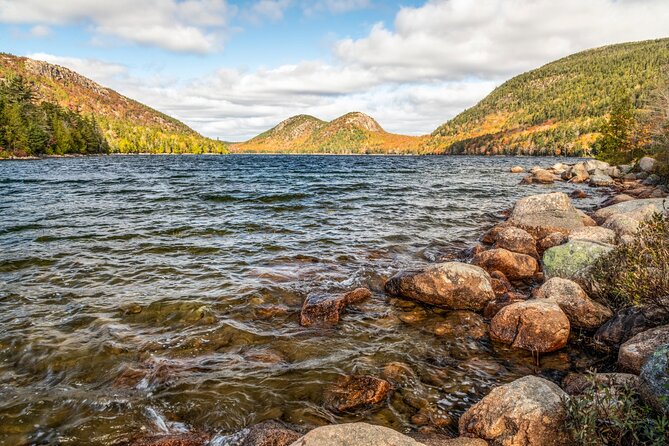
Jordan Pond is next, and the tour recommends pausing to enjoy the views and the restaurant nearby. It also provides the big timeline anchor: Jordan Pond was carved out about 20,000 years ago by a massive glacier.
Then Bubble Pond gets its own moment as another glacial remnant. The tour describes it as hollowed out tens of thousands of years ago by an ice sheet descending on the island.
These are great stops if you like seeing how the park’s look comes from real processes. If you’ve ever wondered why the ponds appear where they do, the audio gives you the cause, not just the effect.
Eagle Lake and the Drive Back Toward Town
You’ll pass Eagle Lake, which the tour notes serves as a water source for Bar Harbor and is also a food source for local birds. It’s a quick but useful detail because it ties the scenic stops back to real local living.
From here, the experience transitions from pure park driving to the Bar Harbor walking portion, where the audio shifts from geology and ocean action to architecture and place names.
Bar Harbor Walking Stretch: Churches, Museums, and Beatrix Farrand
Once you’re walking, the narration changes pace. You’ll pass two churches with very different designs. The tour describes one church as having a look made of mismatched parts, each representing a different historical era.
Then you’ll hear about a little library whose story stretches back to 1875, tied to a conversation among Bar Harbor’s wealthy summer residents. The point was to establish Bar Harbor as a real town, and that historical “why” is what makes the building story interesting.
The tour also tells you to look out for the Abbe Museum near the School Street intersection. That’s a practical clue so you don’t miss a cultural stop while you’re busy walking the main streets.
Next is Village Green, designed by Beatrix Farrand, the landscape designer behind the White House’s Rose Garden. The narration notes that the original design still remains intact, which helps explain why this isn’t just a random park stop.
Frenchman Bay Name, Champlain, and the Fur Trade Angle
You’ll walk along the coast of Frenchman Bay and learn why it’s called French. The audio explains that French expeditions charted and evaluated the area in the 1500s, with Samuel de Champlain tied to the naming story.
It also contrasts French focus with Spanish priorities: the French pursued fur trade in the north, while Spain’s conquistadors looked for gold in South America.
This section is great if you like place names with backstories. It turns a bay you can see from town into a map of early exploration.
Balance Rock, Grant Park, and Bar Harbor Inn’s Big Social Role
The tour includes Balance Rock, describing it as a glacial erratic—meaning a glacier pulled a boulder from up north and deposited it here.
Then you’ll reach Grant Park, where the tour notes the site of a building that no longer stands. It also calls out that the grassy area used to be a tennis court.
Right by Grant Park is the Bar Harbor Inn, and the narration gives it a historical identity: starting in 1887 as the Mount Desert Reading Room, it was a social hub for educated summer residents to meet and discuss literature. If you’ve only ever seen the hotel as a building, this turns it into a window on how people lived here seasonally.
The Cadillac Mountain Summit Trail: Time Worth Giving Up
At the end of the driving loop, you reach Cadillac Mountain again as the crown-jewel focus, with a dedicated 2-hour summit trail segment. The audio frames the summit views as unmatched, and honestly, even without any storytelling, it’s the kind of place where “views” isn’t an exaggeration.
The key is to treat it as an experience you can pace. Don’t rush. Use the audio to keep your bearings while you walk, and let the wind and ocean sounds do part of the work too.
Common Snags and How to Avoid Them
This kind of GPS audio tour is easy when everything clicks. It gets frustrating when it doesn’t, so here’s how to protect your day.
First, make sure you start the tour from the correct location. The tour is location-triggered, so starting elsewhere can cause the audio to send you into a loop of the wrong content.
Second, download the tour while you’re on good signal. The instructions are clear that you need to download on strong Wi‑Fi/cellular before relying on offline mode.
Third, keep an eye on audio sync. If you drive outside posted speed limits or don’t follow the route, the narration can feel out of step.
Finally, be ready for minor app behavior. Some people found that minimizing the app to take photos could cause the tour to restart from the beginning of a section. The fix is simple: pause the audio in the app rather than fully minimizing, and you’ll lose less time.
Who This Tour Fits Best (and Who Might Want Something Else)
I think this fits best for three types of travelers.
- First-timers who feel overwhelmed by all the “should we stop here” decisions. The audio tells you what to look for, when to pull off, and what each spot means.
- Couples and solo travelers who want independence. You can stop for photos, keep going, and still learn something beyond a parking-lot glance.
- Rainy-day planners who don’t want to guess. The audio keeps you moving through the park without staring at your phone for directions the whole time.
It may not be the best match if you want everything included, like park entrance fees and timed reservations. It also isn’t ideal if you really dislike phone setup. You’ll be happiest if you take 10 minutes before you go to download everything correctly.
Should You Book This Acadia National Park and Bar Harbor Audio Tour?
Book it if you like a route with structure but not a strict schedule. This tour is designed for people who want to connect the dots between Acadia’s coast, glacial geology, and Bar Harbor’s town stories—while still having control over breaks and detours.
Skip it if you’re expecting included entry fees, or if you’re traveling with limited patience for app downloads and GPS-triggered audio. If you can handle the tech basics and you’re willing to follow the route, you’ll get a lot of value from the 30+ storytelling moments.
If your goal is to see Acadia highlights without turning the day into a scavenger hunt, this is a strong match.
FAQ
How long does the Acadia and Bar Harbor self-guided tour take?
It’s listed at about 5 hours on average.
Is this tour guided by a person?
No. It’s fully self-guided. No one meets you at the start, and you launch the audio in the app onsite.
Do I need cellular service to use it?
You should plan to download the tour while you have strong Wi‑Fi or cellular. After that, it works offline, including offline maps.
Are park entrance fees included?
No. The tour includes the audio experience, but admission tickets, attraction passes, and reservations are not included.
Where does the tour start and where does it end?
It starts at the Hull’s Cove Visitor Center area in Acadia and ends back at the meeting point.
Does the audio play automatically as I move?
Yes. Audio stories are hands-free and play automatically based on your location. You can also pause and resume as needed.
How many audio stories are included?
The tour includes more than 30 audio stories across the route.
What device do I need for the app?
The tour guidance recommends an iPhone running iOS 15 or later, an Android device version 9 or later, or an iPad/tablet with GPS and cellular connectivity.
Is it a one-time ticket, or do I keep access?
You get lifetime access with no expiry, and you can use it anytime on any trip.
Is the tour always open?
The operating hours shown are 9:00 AM to 5:00 PM, Monday through Sunday, with the dates listed through 02/24/2027.