REVIEW · SEOUL
Bukhansan National Park: The Summit Course
Book on Viator →Operated by Sam LEE · Bookable on Viator
A mountain hike before city life? Perfect. This Bukhansan National Park summit course targets Seoul’s highest peak, 836 m, and helps you feel the seasonal rhythm of the mountain without turning it into a full-day ordeal. I like how the route is planned to be faster than the usual ascent while still getting you up to the summit, and I also like the calm, safety-first coaching style from Koa and Sam.
What I love most is the sense of control: you’re not just guessing your way up. The climb is structured around real elevation numbers (about 600 meters gain in roughly 2.1 km), and the toughest section—near the top—uses ropes so you’re not forced to tackle it blind. A heads-up: this isn’t for everyone. If you have knee issues, you should skip this one, and if you’re nervous around steep angles, the route includes a rope-assisted segment you may want to time around carefully.
In This Review
- Key highlights to know before you go
- Why Bukhansan’s Summit Course Feels Like a Seoul Must-Do
- Your 8:00 AM Start at Bukhansan UiSeoul (and why small groups help)
- The Route Up: 600 M Gain in 2.1 km (the “stair floors” reality check)
- Baek-un-dae and the rope-assisted steep angle (and how to handle nerves)
- Koa and Sam: the safety-first guidance that makes the summit doable
- Timing the day: why 4 hours can still feel intense
- Poles, knee warnings, and fitting the hike to your body
- Optional lunch: tofu-focused fuel that still works for meat-eaters
- Price and value: what $64.89 really buys you in Seoul
- Weather and the non-negotiable good-day requirement
- Should you book the Bukhansan Summit Course?
- FAQ
- Where does the tour start and end?
- What time does the hike start?
- How long is the hike?
- How much does it cost?
- What’s included in the tour?
- Is lunch included?
- Are hiking poles required?
- Is this tour suitable for knee problems?
- Is this hike for moderately fit people?
- What happens if the weather is poor?
- How many people are in a group?
Key highlights to know before you go
- A faster summit plan (about 4 hours up/down time) that’s closer to 4 hours than the typical 6
- 600 m of climbing in about 2.1 km, so you’ll want solid “moderate fitness” legs
- Rope-assisted steep climbing near Baek-un-dae (about 25–45 degrees for 20–30 minutes)
- Small group size (max 20), with guides focused on keeping everyone steady
- Optional tofu lunch after the hike at a dedicated tofu-focused spot (vegan/vegetarian friendly)
Why Bukhansan’s Summit Course Feels Like a Seoul Must-Do
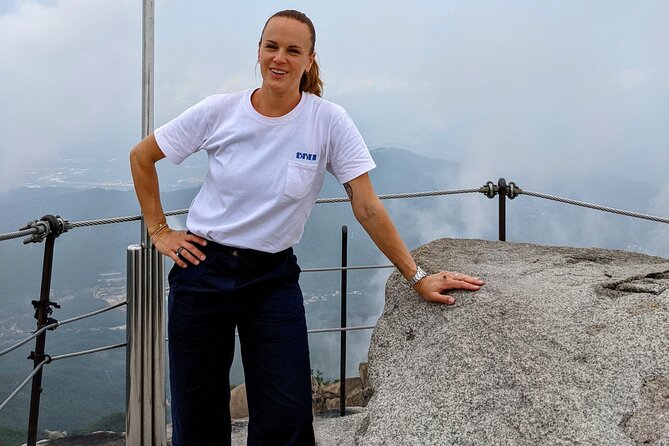
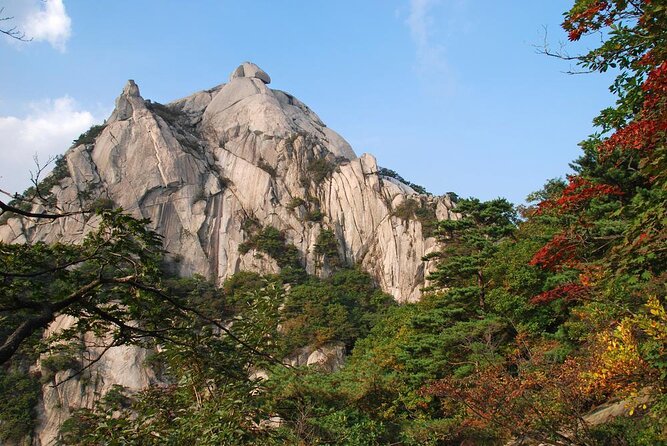
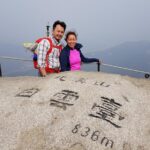
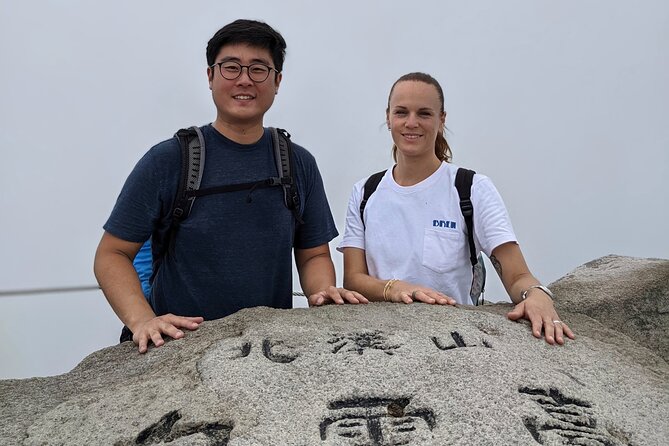
Bukhansan National Park sits right by Seoul, so you get mountain air without leaving the city orbit. The summit course is built around one big goal: hitting Baek-un-dae (peak height 836 m), the highest point in Seoul. I like that you’re not doing a vague “walk around the mountain.” You’re training the day around the peak itself.
This hike also has a strong seasonal feel. Even without changing your route, you can usually sense different textures of the mountain—how the air sits, how the trail footing behaves, and how the day’s light hits the rock and ridgeline. The guides also start you early, which helps you avoid turning the climb into a slow slog in warmer parts of the day.
One more reason I’d pick this over a random self-hike: safety matters here. The mountain draws lots of people, and rescues happen every year. You’re saving time, but you’re also choosing a route meant to keep things manageable. That’s the whole point of paying for guidance instead of rolling the dice.
You can also read our reviews of more tours and experiences in Seoul.
Your 8:00 AM Start at Bukhansan UiSeoul (and why small groups help)
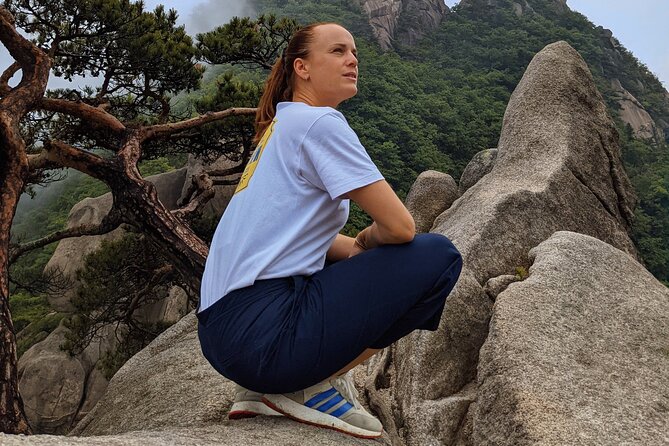
You meet at Bukhansan UiSeoul in Seoul, South Korea, and the start time is 8:00 am. The meeting point is near public transportation, which matters because you don’t want the logistics to eat your morning before you even put on your shoes.
This is a small-group experience with a maximum of 20 people. That size is big enough that you won’t feel awkward, but small enough that the guide can actually manage pace and spacing on steep sections. In the reviews, the standout pattern is that Koa and Sam keep safety first while still making the hike feel fun, which is exactly what you want when the mountain gets steep near the top.
You’ll also get a mobile ticket, which is simple for the day-of. No scrambling for paper, no confusion about where the booking confirmation lives. That’s a small thing, but it reduces stress when you’re trying to focus on your footing.
Tip: if you’re the type who freezes up when everyone else starts moving, the early start and group size make it easier to settle into a rhythm. You can breathe, check your pack, and start climbing without feeling rushed.
The Route Up: 600 M Gain in 2.1 km (the “stair floors” reality check)
The biggest thing to understand before you sign up is the climb profile. You’ll handle an elevation change of about 600 meters (2,000 ft) within roughly 2.1 km (1.3 miles) during the ascending portion. The normal time for that kind of climb is often 100–120 minutes, and this course is designed so you still reach the summit area in about 4 hours total time rather than the more typical 6 hours.
That’s why the course description uses a helpful comparison: think of going up-and-down around 200 floors of stairs. You don’t need to be an elite athlete, but you do need to be comfortable working steadily uphill. This isn’t a leisurely countryside stroll.
What you’ll feel on this kind of gradient is: your breathing ramps up faster than you expect, and your legs start to burn earlier than flat-city habits. If you go out too fast, the steep part near the top will feel worse. The good news is that the route is planned, and the guides help you pace so you can keep moving without panicking.
If you’re moderately fit—meaning you can hike uphill for a few hours without stopping constantly—you’ll likely find the time target realistic. If you’re coming straight from long sightseeing days with minimal walking, plan for extra effort and consider whether you might need more breaks than the group.
Baek-un-dae and the rope-assisted steep angle (and how to handle nerves)
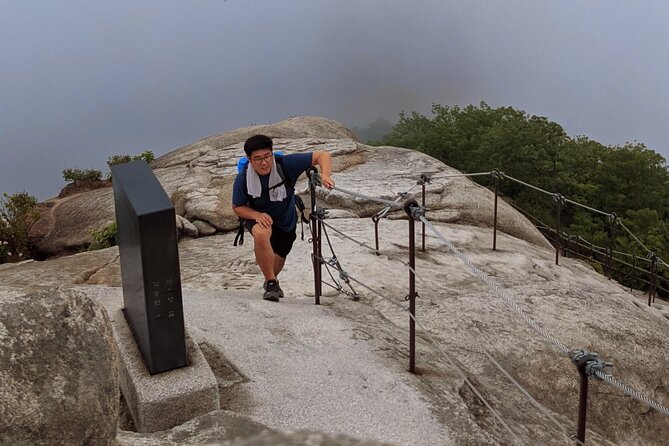
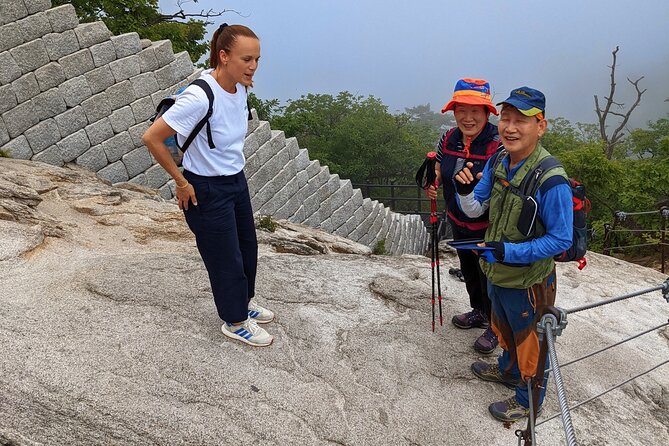
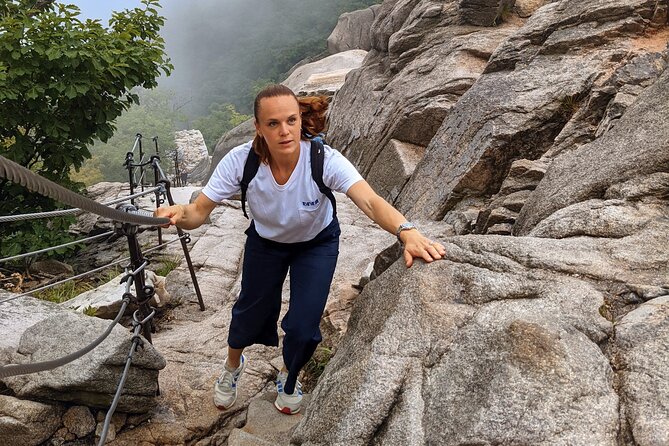
The highlight is Baek-un-dae peak, and the final climbing area requires attention. Expect a 25–45 degree angle climbing section that’s aided by ropes. The rope-assisted time is roughly 20–30 minutes.
Here’s the useful part: if you have a fear of heights, this segment can be avoided by taking a break. That matters because it gives you a way to keep your day positive instead of white-knuckling the whole steep portion. You can stop, reset, and then continue at a pace that feels safe to you.
A rope-assisted section isn’t automatically terrifying—sometimes it’s actually reassuring because you have physical support—but it will still demand focus. Your job is simple: place your feet carefully, keep your three points of contact when needed, and don’t rush just because other hikers look confident.
If you’re used to city hills but not real steep rock, think of this as the “gear shift” of the hike. The good guides make that transition smoother by watching footing and helping the group move safely.
Koa and Sam: the safety-first guidance that makes the summit doable
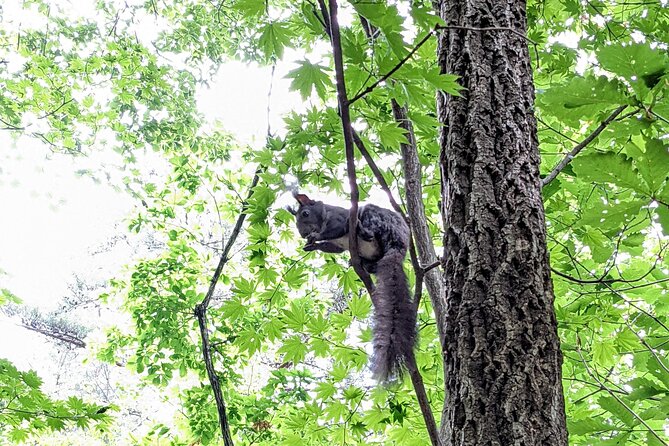
The best reason to book this course isn’t the peak name. It’s the way the hike is handled. I like that Koa and Sam focus on keeping people safe without turning the day into a lecture.
In the reviews, the repeated theme is organization and reassurance: they work with the group like a team, manage the pace for a small set of hikers, and make sure you feel supported even when the trail gets challenging. One review point that resonates with me: the guides always ensure participants keep safety first while still enjoying the moment. That’s the sweet spot. You want to enjoy the view, not just survive the climb.
You also get flexibility. Some people naturally move slower or need extra moments on a steep patch. A good guide accounts for that without shoving the pace onto the slowest hiker or leaving anyone behind.
Another advantage: because the course aims for the fastest reasonable route to the summit, you’re less likely to waste time on confusing turns. When rescues are common on popular peaks, planning becomes part of safety.
Timing the day: why 4 hours can still feel intense
The hike runs about 4 hours 30 minutes approximately from start to end, and it finishes back at the meeting point. That time window is a big deal for Seoul visitors. You can fit it into your schedule without sacrificing an entire day, and you’ll still come away with a summit experience that feels earned.
Because the ascent is vertical, reaching the top can happen in a shorter time than you expect compared to gentler hikes. That sounds great, but it also means you should treat this like an actual workout. Start fresh. Don’t turn your morning breakfast into a heavy meal you regret during the steep climb.
What you can plan after:
- Expect to be a bit tired, but not wrecked if you pace well.
- Bring layers, because mountain weather can shift from city conditions.
- If you’re planning Seoul dinner reservations, give yourself cushion time. You’ll come back hungry and ready to eat.
Poles, knee warnings, and fitting the hike to your body
The course includes one helpful option: hiking poles can be rented—but only if you inform the provider in advance. Poles aren’t mandatory for everyone. The guidance here is blunt: poles aren’t really necessary unless you have bad knees. If your knees don’t usually complain on stairs and downhill, you can probably hike without them.
If knees are your weak point, take the warning seriously: the tour is not recommended for people with knee issues. That doesn’t mean you can never hike in Bukhansan. It means this specific summit course has steep angles and a profile built for speed, and that can be a rough mix for sensitive joints.
So I’d suggest a quick self-check:
- Can you handle repeated uphill steps at a steady pace?
- Can you handle the downhill without gripping your muscles the whole way?
- Do you already use trekking poles for normal hikes?
If the answer is no to those, you may want a less steep route or a different hiking day.
Optional lunch: tofu-focused fuel that still works for meat-eaters
After the hike, there’s an optional lunch. It’s paid by individuals and runs about 9,000–15,000 KRW. The plan is to eat at a spot specializing in tofu dishes where they make items from scratch. They also have meat options, so this isn’t tofu-only purism.
If you eat vegan or vegetarian, this lunch choice is set up for you. And even if you’re not, tofu can be a satisfying post-hike meal because it’s filling and often easier on the stomach than very greasy food.
Timing-wise, the best part is psychological: you don’t have to hunt for food right after you finish. You get a simple “you did the hard part, now eat” payoff.
Price and value: what $64.89 really buys you in Seoul
The price is $64.89 per person, and on average this is booked about 14 days in advance. That might sound steep if you compare it to doing a hike on your own. But here’s the value math as I see it:
- You’re paying for a planned, faster route aimed at reducing total hike time (about 4 hours instead of 6).
- You’re paying for risk management on a mountain that sees rescues every year.
- You’re paying for a small-group guide who can manage pace and help you stay safe on steep, rope-assisted sections.
- You’re getting a simple day setup: 8:00 am start, a near-public-transport meeting point, and a mobile ticket.
Added cost note: hiking poles rental is extra and only if requested in advance. Lunch is optional and separate. So you’re not being forced into extras—but those details matter when you’re budgeting.
If you’ve never hiked Bukhansan before, the “cost” of getting off-route or taking too long is bigger than the ticket price. This course takes away a lot of uncertainty and focuses your day on the summit and the views.
Weather and the non-negotiable good-day requirement
This experience requires good weather. If it’s canceled due to poor weather, you’ll be offered a different date or a full refund. Still, the general rule is that it’s non-refundable and cannot be changed for any reason.
So here’s my practical advice: check the forecast the day before and morning of. If weather looks iffy, be ready for them to adjust plans. And once you book, don’t assume you can easily modify it if your schedule shifts—treat this as a fixed hiking date.
Should you book the Bukhansan Summit Course?
Book it if you want the best odds of reaching Seoul’s highest peak with a route that’s intentionally faster and guided with safety-first coaching from Koa and Sam. You’ll probably love it if you have moderate fitness, enjoy a real uphill workout, and want summit views without turning this into a 6-hour endurance test.
Skip it if you have knee issues, or if the idea of a 25–45 degree rope-assisted section makes you tense enough that you’ll lose the joy of the hike. You can avoid that segment by taking a break, but the route still includes challenging terrain.
If you’re on the fence, think of it like this: this is a “smart summit” hike—less guessing, more structured effort, and a clear payoff. For a Seoul day that feels like an escape into the hills, it’s a strong pick.
FAQ
Where does the tour start and end?
The tour starts at Bukhansan UiSeoul, South Korea and ends back at the same meeting point.
What time does the hike start?
The start time is 8:00 am.
How long is the hike?
The duration is about 4 hours 30 minutes.
How much does it cost?
The price is $64.89 per person.
What’s included in the tour?
The tour includes hiking support, and hiking poles can be rented at an extra cost if you inform the provider in advance.
Is lunch included?
Lunch is optional and paid by individuals. It typically costs 9,000–15,000 KRW.
Are hiking poles required?
No. They are not really necessary unless you have bad knees, and rental is only possible if requested in advance.
Is this tour suitable for knee problems?
It is not recommended for people with knee issues.
Is this hike for moderately fit people?
Yes. You should have a moderate physical fitness level to finish the hike.
What happens if the weather is poor?
This experience requires good weather. If it’s canceled due to poor weather, you’ll be offered a different date or a full refund.
How many people are in a group?
The group has a maximum of 20 travelers.