REVIEW · TENERIFE
Teide National Park: Stargazing Experience
Book on GetYourGuide →Operated by Discover Experience · Bookable on GetYourGuide
The stars at Teide feel close. I love how the night starts with naked-eye orientation and then moves into high-grade telescopes to show real detail. The main drawback is simple: it gets cold fast once you’re outside after sunset, so dress like you mean it.
This is an 80-minute stargazing experience in Teide National Park in the Canary Islands, designed for a sky with minimal light pollution and safe, good access points. You’ll learn to find Polaris (the guidepost for the celestial north pole), follow the ecliptic and the zodiac line, and use Greek mythology as a memory trick for what you’re seeing. The tour runs in Spanish and English, and it includes an astronomical guide plus insurance.
You meet in the parking area near the natural environment of Minas de San José (no hotel pickup). Then it’s about making sense of the sky quickly, before the telescopes take over and the objects start looking three-dimensional.
In This Review
- Key things that make this stargazing night worth it
- Why Teide National Park makes stargazing easier than most places
- The 80-minute flow: from naked-eye constellations to telescope views
- What you can realistically expect to see (and why the mix matters)
- Astrophoto telescope images: turning the night into something you keep
- Meet-up at Minas de San José: the small logistics that can save you stress
- The guide: science taught with stories (and a bit of humor)
- Price and value: is $41 for 80 minutes a fair deal?
- Who should book (and who should think twice)
- What to pack: cold, wind, and comfort at Teide altitude
- Moon and timing: why your viewing can change night to night
- Should you book Teide National Park stargazing?
- FAQ
- How long is the Teide National Park stargazing experience?
- Where do I meet for the tour?
- Is hotel pickup included?
- What languages are the tours offered in?
- What should I bring?
- Are pets or unaccompanied minors allowed?
- Is this tour suitable for everyone?
Key things that make this stargazing night worth it
- Naked-eye first, telescopes second: you learn where to look before you magnify anything
- Polaris + celestial north pole orientation: you leave knowing your bearings
- Ecliptic and zodiac line guidance: practical wayfinding for the moving sky
- Greek mythology as a visual map: stories that help constellations stick
- Astrophoto telescope results: what you see can turn into images you can keep
- A pro guide who talks at your pace: clear explanations in English or Spanish
Why Teide National Park makes stargazing easier than most places
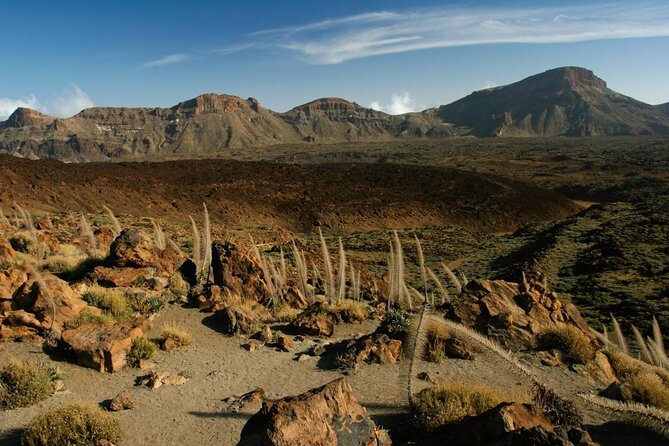
Teide National Park is set up for this kind of night activity: safe access points, and skies described as free from light pollution. That matters more than people expect. When the sky is dark enough, you stop thinking in terms of a few bright dots and start seeing patterns, structure, and the faint glow of distant targets.
This tour is also short by design (80 minutes). In a short window, you need a place and a plan that work. Teide’s dark-sky conditions help the guide teach faster, because your eyes can actually pick up what they’re pointing out.
You can also read our reviews of more tours and experiences in Tenerife.
The 80-minute flow: from naked-eye constellations to telescope views
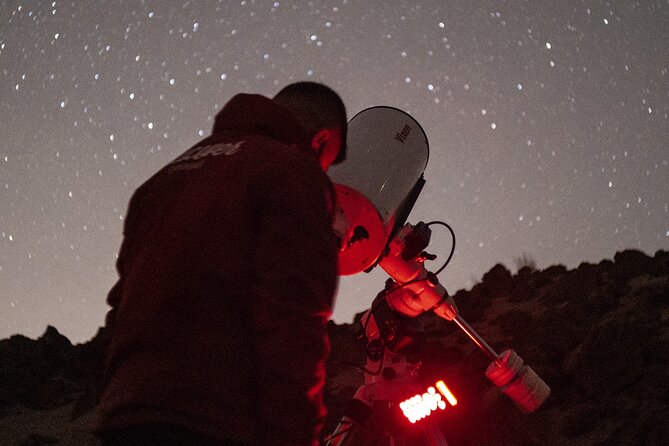
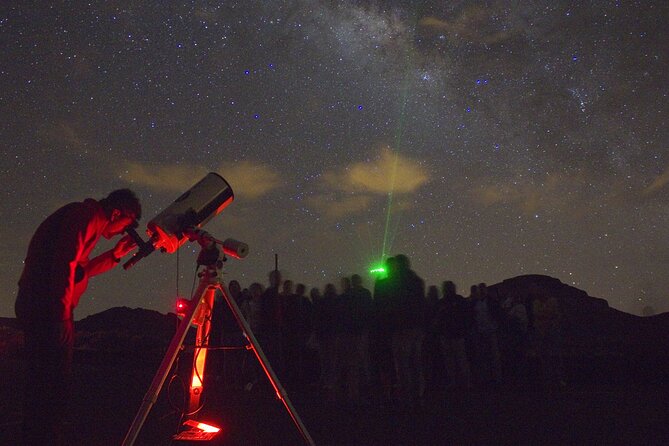
The tour starts after sunset, beginning with the basics: looking up without equipment. You’ll start by learning key stars and major constellations, with the guide actively pointing them out so you’re not just watching from a distance. It’s a smart way to start because telescopes don’t help much if you don’t know where you are in the sky.
Once your orientation clicks, the guide shifts to navigation tools for the night:
- Polaris position and the celestial north pole, so you understand the sky’s north reference
- The ecliptic and the zodiac line, so the solar-system path through the constellations makes sense
- Greek mythology through the sky, using familiar character-shapes as mental anchors for constellation positions
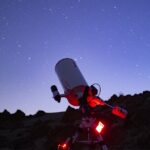
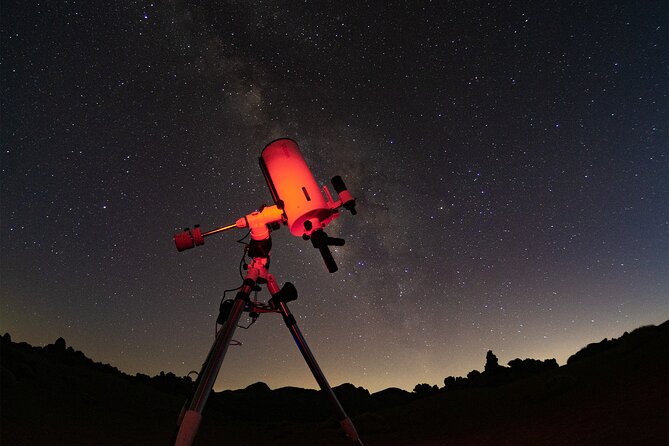
Then you move into the telescope phase. That’s where you’ll observe outstanding celestial objects of the night through professional equipment. The point isn’t just “more wow.” It’s that your view goes from “I think I see something” to “I can follow the details the guide is describing.”
What you can realistically expect to see (and why the mix matters)
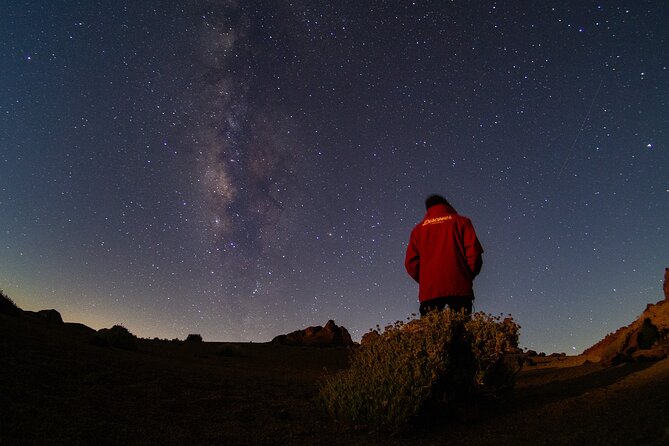
This experience is built around variety: some things you can spot with your eyes, and others that reward magnification. From the information and examples shared by guides in this format, you can expect a rotation of classic targets and solar-system favorites.
Typical highlights you may encounter:
- Constellation scenes and star patterns you can recognize during orientation
- Milky Way views, when conditions cooperate
- Planets through the telescope, with examples including Jupiter and Saturn and their moons
- Bright deep-sky targets such as Orion’s nebula and the Andromeda galaxy
- Mars during the right season and visibility conditions
Why this mix is valuable: your brain learns faster when you connect the two worlds. The naked-eye portion shows you how the sky is organized. The telescope portion shows you how that same organization points to objects that look dramatically different at higher magnification.
Astrophoto telescope images: turning the night into something you keep
One of the most practical upgrades here is the astrophoto telescope. Instead of only watching and forgetting, you get the chance to turn what you observe into images. On at least some nights, participants receive photos of objects observed, which is useful if you want to remember details like star clusters, galaxies, or whatever the night’s big target was.
Even if you’re not the type to print photos, these images help you review what you saw. And that’s how stargazing becomes more than a one-time moment.
Meet-up at Minas de San José: the small logistics that can save you stress
This tour does not include hotel pickup. So plan to drive yourself to the meeting point: the parking area just in front of the natural environment of Minas de San José.
Directions are simple but specific:
- If you come from the south, it’s the second car park on the right
- If you come from the north, it’s the first car park on the left
Arrive with enough buffer to park, gather your gear, and settle in before the group starts moving into the orientation phase. Since the stargazing begins after sunset and the tour is only 80 minutes, being rushed makes it harder to enjoy the learning part.
The guide: science taught with stories (and a bit of humor)
A big reason this tour gets strong marks is the way the guide teaches. You get a professional astronomical guide, and the format supports a clear flow: first you learn to recognize what’s above you, then you observe through telescopes.
You’ll also get a story layer. Greek mythology isn’t just for fun; it’s a memory method. When the guide connects characters to constellation shapes, you’re more likely to remember where things are after the tour ends.
You may hear different guide styles depending on the night. Examples of guide names in this experience include Miguel, Manuel, and Luke. The common thread is that the explanations are designed to be easy to follow, with people-friendly pacing in English or Spanish.
Price and value: is $41 for 80 minutes a fair deal?
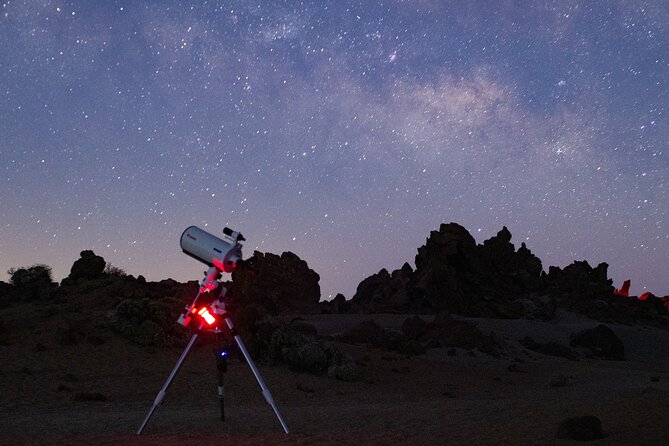
At $41 per person for an 80-minute tour, this isn’t the cheapest way to spend an evening—but it’s also not overpriced for what you get. Here’s what’s included: stargazing explanation at naked-eye level, telescope observation, a professional astronomical guide, and insurance during the tour.
You’re paying for three main things:
- Dark-sky access in Teide National Park conditions
- Equipment time with high-grade telescopes (including an astrophoto telescope setup)
- Human guidance, which turns random looking up into real navigation of the sky
One note: at least one person felt it should be a bit lower for the time spent. That’s fair as a concern, especially if you’re expecting a long, leisurely night. But if you want an efficient “learn the sky basics + see planets and standout objects” plan, this length is actually a benefit. You get the core experience without committing to an all-night schedule.
Who should book (and who should think twice)
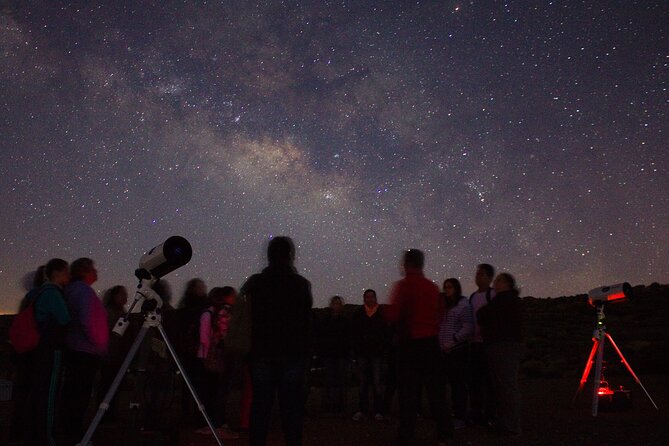
This is best for people who enjoy learning as they look up—whether you’re brand-new to astronomy or you want better structure than a casual star party. It also helps that the tour is short enough to keep the focus on the night’s most visible highlights.
It’s not for everyone. Don’t book if any of the following apply:
- Heart problems
- Respiratory issues
- People who are diving up to 24 hours prior
It’s also not suitable for pets, and unaccompanied minors aren’t allowed. If you’re traveling with kids, you’ll want to confirm that the group format fits your family situation, since the tour’s rules are strict about who can attend without an adult.
If you handle cold weather well and you can stand outdoors for stretches at night, you’ll likely enjoy this. If not, read the packing section carefully.
What to pack: cold, wind, and comfort at Teide altitude
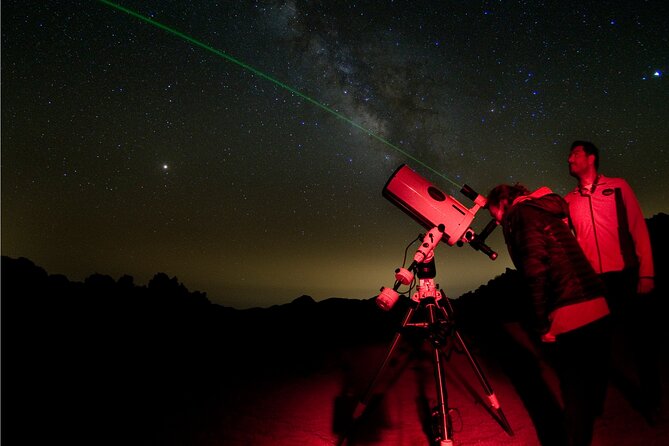
Bring comfortable shoes and warm clothing, plus warm shoes. This is not one of those “light jacket and sunglasses” experiences. The tour starts after sunset and moves between standing outdoors for orientation and then waiting for telescope time.
Plan for real cold. People have described being frozen after about two hours outdoors, and temperatures can drop into the low teens with wind at the viewing area. That wind is the kind that steals heat fast, so layers matter.
Quick packing list to keep it simple:
- Warm base layer
- Insulating mid-layer (fleece or similar)
- Wind-resistant outer layer
- Gloves or warm mitts
- Hat or beanie
- Warm socks and sturdy shoes
- Something small to sit on if you’re prone to getting stiff (not listed, but worth considering for comfort)
If you’re comfortable for the first 10 minutes, you’ll still want to stay comfortable for the last 10 minutes. That’s where most people feel it.
Moon and timing: why your viewing can change night to night
The tour specifically asks you to be aware of the moon’s cyclical nature when booking. Translation: the moon can affect how dark the sky looks and how crisp faint objects appear.
If you’re trying to maximize what you can see with the naked eye (Milky Way detail, faint star clusters, subtle galaxies), consider choosing a night when the moon won’t wash out the sky. Even with telescopes, a bright moon can reduce the “wow” factor for the fainter targets.
Also, if you book far in advance, the start time may vary, and the provider confirms the schedule afterward through WhatsApp or email.
Should you book Teide National Park stargazing?
If you want an evening that teaches you how to read the sky quickly—and then shows you standout objects through telescopes—this is a strong bet. The format is efficient: orientation first (Polaris, ecliptic, zodiac, mythology), then telescope observations for planets and deep-sky targets, with the possibility of getting astrophoto images after.
I’d especially recommend it if:
- You like structured learning, not just staring up
- You want a short, high-impact night activity at Teide
- You’re open to cold weather and you’ll dress properly
Skip it if you can’t manage cold outdoor standing, if you have heart or respiratory concerns, or if unaccompanied minors/pets are part of your plan.
If you’re deciding at the last minute and want flexibility, this kind of short tour also pairs well with Tenerife pacing. Book it when you can dress warm, and let the guide do the heavy lifting of turning the sky into something you can actually navigate.
FAQ
How long is the Teide National Park stargazing experience?
It lasts about 80 minutes.
Where do I meet for the tour?
Meet in the parking area just in front of the natural environment of Minas de San José. From the south, it’s the second car park on the right; from the north, it’s the first car park on the left.
Is hotel pickup included?
No. Hotel pickup and drop-off are not included.
What languages are the tours offered in?
The live guide offers Spanish and English.
What should I bring?
Wear comfortable shoes, warm clothing, and warm shoes.
Are pets or unaccompanied minors allowed?
No pets are allowed, and unaccompanied minors aren’t allowed.
Is this tour suitable for everyone?
It’s not suitable for people with heart problems or respiratory issues, and it’s not recommended for people who have been diving up to 24 hours prior.