REVIEW · USHUAIA
Tierra del Fuego National Park
Book on GetYourGuide →Operated by Agência CIATRIP. · Bookable on GetYourGuide
Tierra del Fuego is where the weather feels like part of the story. This guided day trips you to the planet’s southernmost park where mountains, forests, and sea meet, with narration that connects what you’re seeing to the region’s geography and life. I especially like the mix of viewpoints plus learning time, and I also like that you can choose the historic End of the World Train or a slower station-and-walk option.
The main thing to consider is language. The live guide is Spanish, and if you’re hoping for French support, plan for that gap. Also, parts of the day are mostly about scenery and stops, not long hikes, so set your expectations if you want lots of walking.
In This Review
- Key highlights worth your attention
- Why Tierra del Fuego really feels like the End of the World
- Getting there from Ushuaia: transfers and the pace of a 330-minute day
- End of the World Train Station: the one-hour ride (or the station stroll)
- Park roads and the 30 km drive: how the route shapes your stops
- Lake Roca (Acigami): the Chile view and a simple lakeside walk
- Restaurant break, pies, and the Alakushi Indigenous Interpretation Museum
- Lapataia Bay: Route 3’s southern marker and the deck viewpoint
- Correo del fin del mundo Post Office: stamp your passport
- Language, comfort, and the real value of the $117 price
- Should you book this Tierra del Fuego day trip?
- FAQ
- FAQ
- How long is the Tierra del Fuego National Park tour?
- Where does the tour start and end?
- What’s included in the price?
- What’s not included?
- Is the End of the World Train included?
- Where do you stop inside the park?
- Can I stamp my passport on this tour?
- What language is the guide?
Key highlights worth your attention
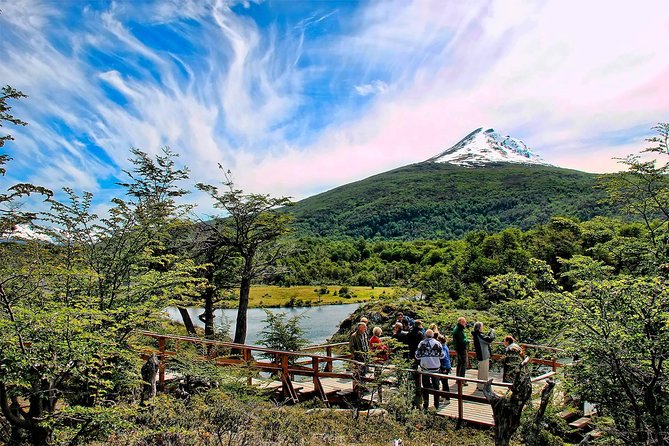
- End of the World Train history: a ride that ties to the railway used to transport prisoners from Ushuaia to Mount Susana
- Lake Roca (Acigami): lake time plus a walk with Chilean mountain views
- Alakushi Indigenous Interpretation Museum: a focused cultural stop inside the park’s flow
- Lapataia Bay deck viewpoint: a short walk to the kind of bay view you’ll remember
- Correo del fin del mundo Post Office: a chance to stamp your passport and send a postcard when it’s open
Why Tierra del Fuego really feels like the End of the World
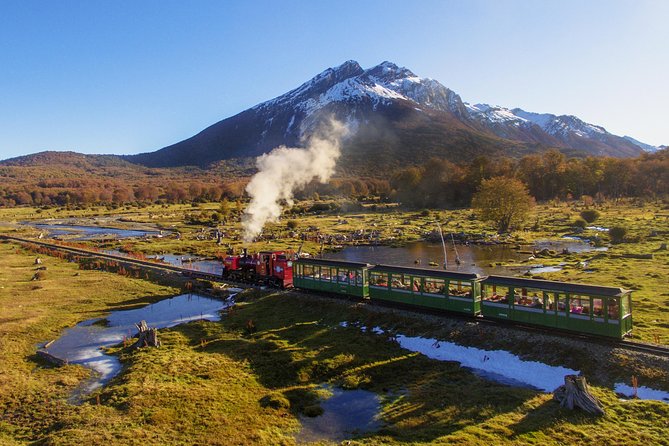
This park sits at the far end of Argentina, and it shows. The air is sharper here, the light changes fast, and you get constant reminders that you’re at the edge of the map. The experience is interesting because it’s not only “pretty nature.” You’re guided through how this place works—how the coastline, forests, and high ground come together at the southernmost edge of the country.
I like that the tour is built around stops that make you pause and interpret. You’re not just riding past things. The guide provides expert narration on fauna, flora, and geography, so the views become meaningful instead of just scenic photos. And because this is a private group, the pacing feels easier to manage than big-bus days.
One more practical plus: the park is big. A guided day saves you from spending time guessing where to go first and which roads are worth your patience.
You can also read our reviews of more tours and experiences in Ushuaia.
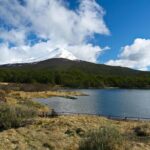

Getting there from Ushuaia: transfers and the pace of a 330-minute day
You start in Ushuaia with round-trip hotel transfers, so your day begins with less hassle. That matters in Tierra del Fuego, where travel time adds up quickly and weather can make extra stops annoying. The total duration is 330 minutes (about 5.5 hours), so the schedule is designed to fit multiple key viewpoints without turning the day into an all-day marathon.
Here’s the pacing logic I liked: you get a structured start (train option), then a block of park driving with meaningful stops, then a final set of iconic “End of the World” moments before returning to Ushuaia. If you prefer a calmer rhythm, choose the train option and use station time as your reset. If you’re feeling energetic, you can opt for the shorter hike or just keep moving.
Quick tip: timing can feel tighter than it looks on paper, so I’d confirm your pickup time clearly the day before and show up early at the lobby. Comfortable transport and punctual pickups help a lot—still, build a little buffer so the weather doesn’t turn the morning into a scramble.
End of the World Train Station: the one-hour ride (or the station stroll)
Your first major stop is just before the park entrance at the End of the World station. This is where the tour splits into two easy choices:
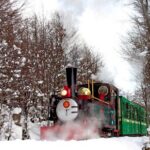
Option A: take the train. You buy tickets right at the station, then enjoy about a one-hour ride while learning the history of the railway. The key story is that this line was used to move prisoners from Ushuaia to Mount Susana. That detail changes how you view the tracks—suddenly it’s not just a scenic train, it’s infrastructure tied to a harsh chapter of the region.
Option B: skip the train. If you don’t want the ride, there’s a short hike option or you can hang around the station area while your guide explains more about the railway and what made it important.
This is one of the best parts of the day because it breaks up the “park driving” feeling. Even if you’re mostly here for nature, the train stop adds context and makes the region’s human story part of your experience.
Park roads and the 30 km drive: how the route shapes your stops
After the train section (or the station alternative), you head into the park on a roughly 30 km journey. The driving part matters because it’s what connects the best viewpoints without you doing long, complicated navigation yourself.
Think of this segment as the tour’s “scenic backbone.” It’s where you pass through different types of terrain and set yourself up for stops that are more focused: lake time, museum time, then the bay viewpoint. You’ll also get specific appreciation stops rather than random pull-offs, which keeps the day feeling intentional.
If the weather turns, this is also where flexibility helps. You can still appreciate the park’s different zones from the road, even if wind limits time on decks.
Lake Roca (Acigami): the Chile view and a simple lakeside walk
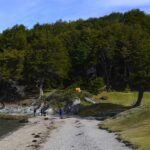
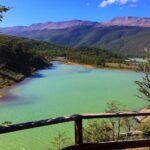
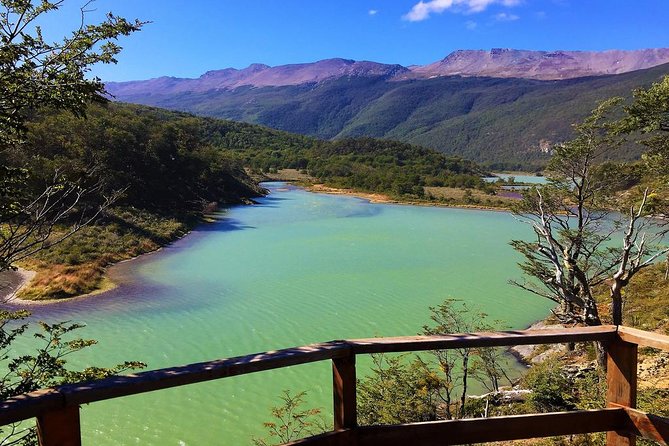
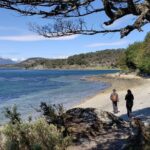
Next comes Lake Roca, also known as Acigami. This stop is built for two things: a view toward the Chilean mountains and a relaxed chance to take in the lake and surrounding forest.
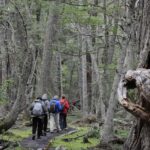
What I like here is that it isn’t only “stand and shoot.” There’s time for a walk along the lakeside, which helps you feel the scale of water and the thickness of the surrounding greenery. You’ll get the kind of stillness you can’t fully capture from a vehicle window.
This is a good stop if you’re traveling with mixed energy levels. It’s not described as a strenuous hike, so it works well for people who want nature time without heavy effort. If you love photography, it’s also a solid place to slow down and wait for light to shift.


Restaurant break, pies, and the Alakushi Indigenous Interpretation Museum
When you continue along the dirt road, you reach the park’s restaurant area. This is a welcome reset during a cold-weather outing. You can get pies, coffee, and drinks, and you’ll do it with a view.
Even if you skip a full meal, I’d treat this as part of the experience, not just a convenience stop. Food gives you energy, and the viewpoint helps you regroup before the final “End of the World” highlights.
Right alongside this area is the Alakushi Indigenous Interpretation Museum. The value here is that it turns the day beyond scenic stops. You get a chance to learn through interpretation tied to Indigenous presence and meaning in the region, which makes your later “southernmost point” photos land with more weight.
Practical note: coffee and snacks aren’t included in the tour price, so budget a little extra for a warm drink if you want one.
Lapataia Bay: Route 3’s southern marker and the deck viewpoint
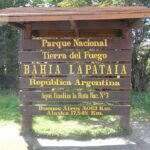
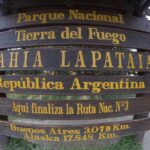
One of the tour’s most special places is Lapataia Bay. There’s a sign at the entrance with interesting facts, including that this bay is the southernmost point of Route 3. That matters because it gives you a very literal geographic feeling: you’re not only visiting the End of the World—you’re standing at a marker of it.
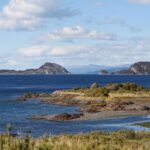
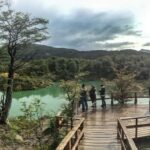
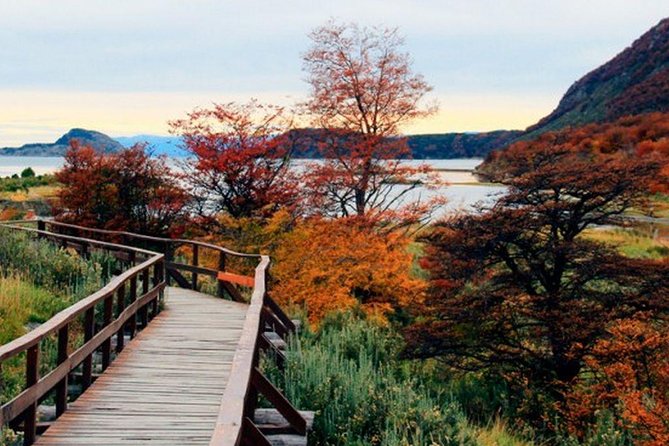
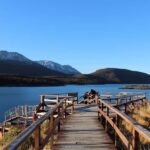
You’ll take a short walk to a deck built for the best view of the bay. This is the moment where the park’s “converging worlds” idea becomes visible in one frame: water, cliffs, and open sky all working together.
If you’re the type who likes to let the view set the mood, this is your stop. Bring your patience for weather shifts. When conditions are good, it’s one of those places where you just stand and keep looking.
Correo del fin del mundo Post Office: stamp your passport
After the Lapataia Bay stop, the day loops back toward the classic symbolic sites. The tour includes a stop at the End of the World Post Office (Correo del fin del mundo).
This is where you can stamp your passport and send a postcard from the southernmost reaches of South America. The catch is simple: the postcard sending stop happens when the post office is open, so it’s smart to carry a little flexibility and not assume the service will always be running.
Still, even if stamps are your only goal, this stop is quick, fun, and instantly memorable. It’s also a good way to prove to yourself you really did make it this far south.
Language, comfort, and the real value of the $117 price
The price is $117 per person, and the value is mostly in what’s included. You get round-trip hotel transfers and a Portuguese/Spanish guide. That saves you time and reduces the stress of planning in a remote area where you’d rather not spend your afternoon figuring out logistics.
What’s not included is important for budgeting: the Tierra del Fuego National Park entrance fee is payable in Argentine pesos at the entrance, and coffee/snacks aren’t covered. So your final cost will depend on what you choose to buy at the restaurant and the entrance fee amount.
Comfort-wise, the tour is set up for an easy day. Feedback highlights comfortable transport and a smooth pickup experience when the schedule is followed well. Just keep in mind that there can be occasional timing rough edges—one person felt the day’s schedule wasn’t managed as clearly as it should be. My advice: confirm the pickup time and meet at the agreed location promptly.
Language is another practical piece. The live guide is Spanish. The tour description also notes a Portuguese/Spanish guide, but Spanish is the clear anchor. If you’re traveling with a French speaker, don’t assume French interpretation will happen.
Should you book this Tierra del Fuego day trip?
If your priority is a high-quality intro to Tierra del Fuego—without the stress of self-driving—and you want expert narration connecting geography, plants, and animal life, this tour is a very strong choice. The train option adds a historical layer, and the sequence of Lake Roca, museum time, Lapataia Bay, and the Post Office gives you both nature and meaning in one day.
I’d skip it if you’re chasing a long hike day or you want constant walking. This is more about viewpoint stops plus guided storytelling, with shorter strolls rather than big trails. Also, if language is crucial for you, plan around Spanish-first guiding.
If you want an easy win from Ushuaia—where you come home with real southernmost memories and a story behind them—this is the kind of tour that does the job.
FAQ
FAQ
How long is the Tierra del Fuego National Park tour?
The total duration is 330 minutes (about 5.5 hours).
Where does the tour start and end?
It starts in Ushuaia and returns to Ushuaia, with round-trip hotel transfers included.
What’s included in the price?
Round-trip hotel transfers and a Portuguese/Spanish guide are included.
What’s not included?
The Tierra del Fuego National Park entrance fee is not included (payable at the entrance in Argentine pesos). Coffee and/or snacks are also not included.
Is the End of the World Train included?
You can purchase train tickets at the End of the World station. The train ride is about 1 hour, and there’s an alternative option if you don’t take the train.
Where do you stop inside the park?
Key stops include Lake Roca (Acigami), the park’s restaurant area (with access to the Alakushi Indigenous Interpretation Museum), and Lapataia Bay, plus the End of the World Post Office.
Can I stamp my passport on this tour?
Yes, the End of the World Post Office stop allows you to stamp your passport, and there may also be a postcard sending stop when open.
What language is the guide?
The live tour guide is in Spanish.