REVIEW · TENERIFE
Tenerife: Stargazing Walk in Teide National Park
Book on GetYourGuide →Operated by A donde vamos hoy · Bookable on GetYourGuide
Teide’s night sky can feel close fast. This 2-hour stargazing walk in Teide National Park puts you at about 2,000 meters elevation with a laser-guided experience to help you spot constellations and planets clearly. I like that it’s run by a local astrophysicist and a certified official guide, so the explanations come with real astronomy context. One thing to plan for: you’ll be walking outdoors in cold air, and a telescope isn’t included.
I also love the small-group feel. Expect single-language guiding (Spanish or English), with regular departures that average around 10 to 20 people on set days, which makes it easier to ask questions and get focused attention. The tour includes lanterns and even a personal picture moment so you’re not just standing in the dark wondering how to capture what you’re seeing.
The main trade-off is simple: this is a guided sky walk, not a long stargazing session with heavy equipment. If you want telescope viewing, you’ll need to request it in advance, and weather can change what’s possible.
In This Review
- Key Things I’d Plan Around
- Why Teide National Park’s Stars Feel Different
- Your 2-Hour Walk: From Parador Cañadas del Teide to Roques de García
- Laser Guidance: Constellations, Planets, and Moon Clues
- What the Night Walking Feels Like (and What to Bring)
- Telescope Reality: What You Get, and How to Upgrade
- Price and Value: What You’re Really Paying For
- Getting There: The One Logistics Detail That Matters
- Who This Tour Suits Best (and Who Should Skip It)
- Weather Can Change the Sky Plan
- Should You Book This Teide Stargazing Walk?
- FAQ
- How long is the stargazing walk in Teide National Park?
- Where do I meet the group?
- Do I need to bring my own transport?
- Are lanterns provided?
- Is a telescope included?
- What languages are the guides?
- What’s the walking distance and difficulty?
- What should I wear and bring?
- What happens if the tour is canceled due to weather?
Key Things I’d Plan Around
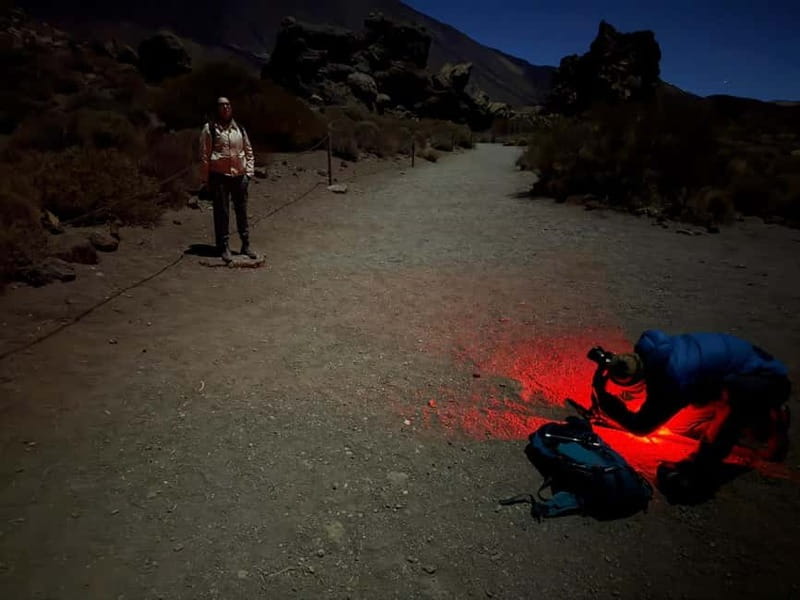
- Teide elevation (~2,000 m) means darker, clearer skies most nights, especially when clouds cooperate
- Laser guidance helps you match stars to constellations instead of guessing
- Local astrophysicist + certified official guide keeps the explanations grounded and practical
- Lanterns provided, plus a short, easy 2–3 km walk you can handle at night
- Single-language groups (English or Spanish) make the astronomy easier to follow
- A photo moment is built into the experience so you can document the night without stress
Why Teide National Park’s Stars Feel Different
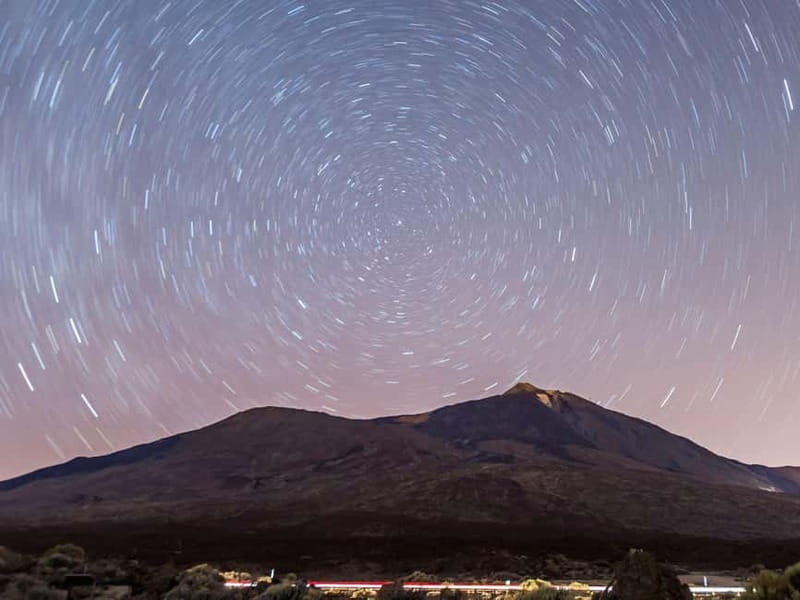
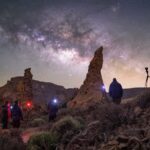
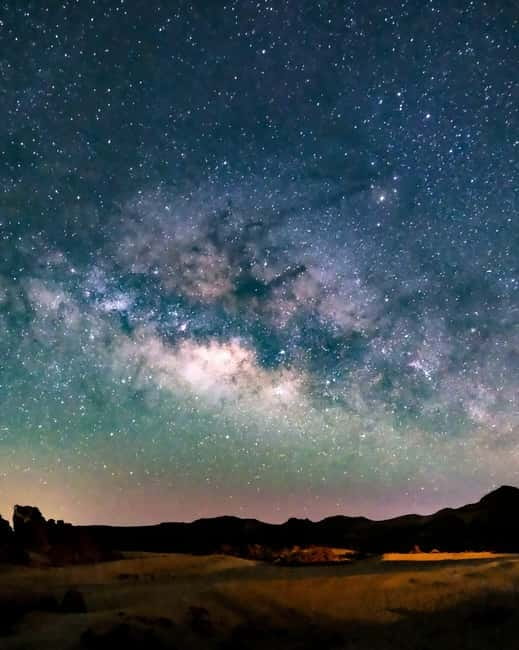
Teide National Park sits high enough that the sky can feel crisp and dramatic, especially compared to lower elevations. On this walk, you’re roughly at 2,000 meters above sea level, where you’re more likely to see stars with better contrast. That matters because stargazing isn’t just about seeing “more stars.” It’s about seeing patterns clearly, and patterns are what turn random points of light into constellations you can actually name and track.
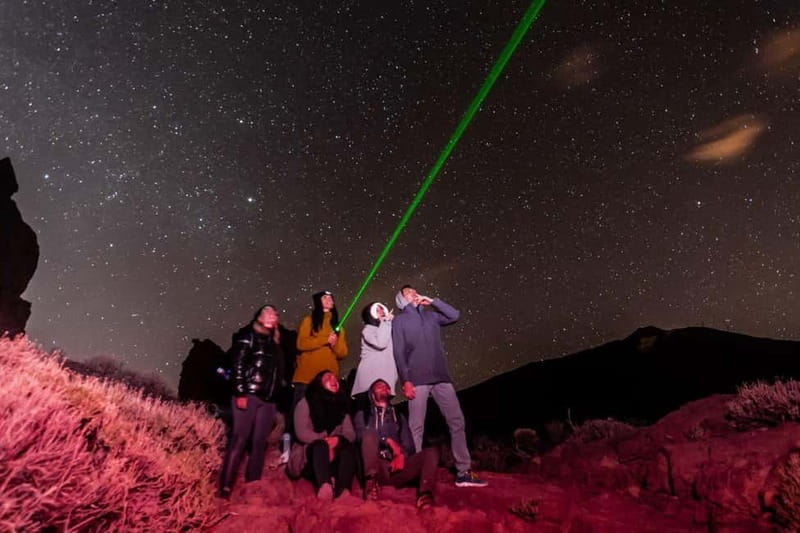
What I appreciate here is that the sky-watching isn’t left to chance. The guide uses a laser-guided approach to help you point out constellations and celestial objects in a way you can follow in real time. That’s a huge help on a night walk, because your eyes need time to adjust and your hands need a simple reference. When guidance is visual and immediate, you spend less time squinting and more time learning what you’re looking at.
Another bonus: the tour connects astronomy with what you’ll notice in the moment. You’ll talk about constellations, planets, and also practical sky events like the moon phases and shooting stars, which are the kinds of things you can spot and react to while standing outside.
You can also read our reviews of more tours and experiences in Tenerife.
Your 2-Hour Walk: From Parador Cañadas del Teide to Roques de García
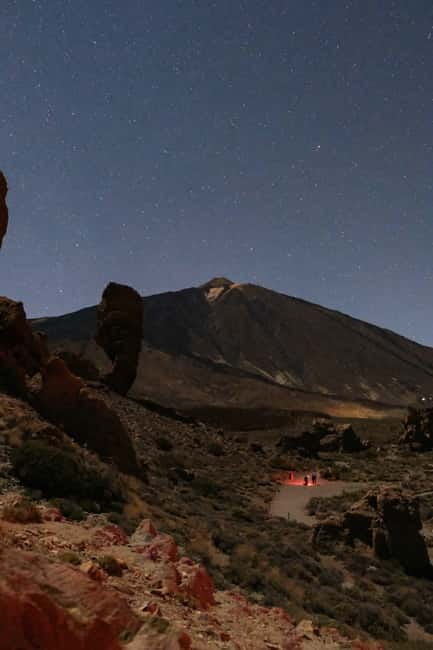
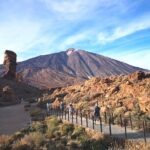
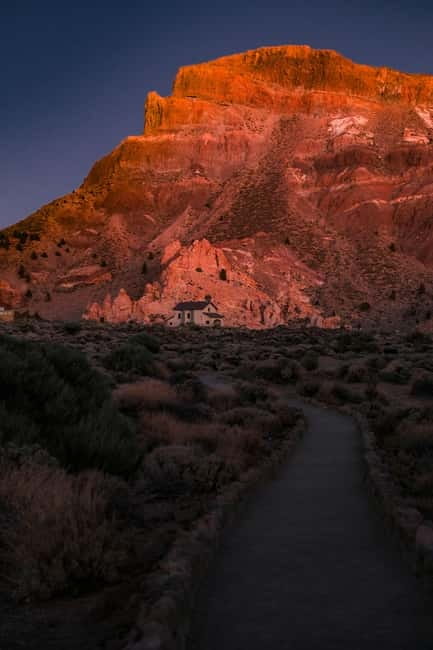
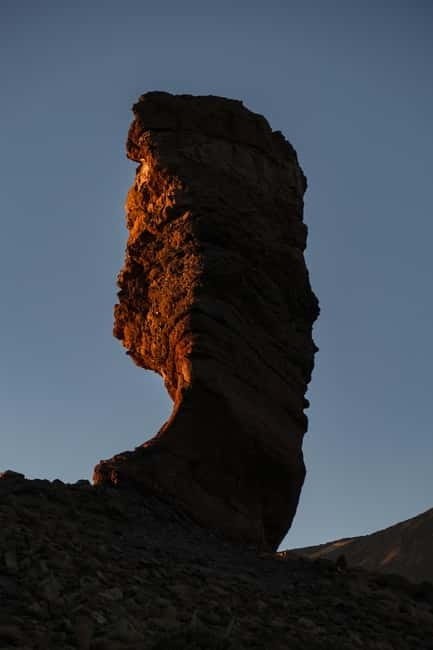
The meeting point is at the entrance or outdoor patio of the Parador Cañadas del Teide in Las Cañadas del Teide. From there, you head toward the Roques de García area, which is your main guided space for the sky walk.
Timing depends on the season. Your start can be at nightfall or by sunset, so the guide can match your viewpoint with what’s visible. That seasonal adjustment matters. If you start too late, you might miss the early “easy targets” that help you get oriented. If you start too early, you might not get the darkest sky needed for the fainter details. The tour is designed around that balance, so you’re not just waiting around in the dark.
The walk itself is described as easy, around 2–3 km. This is important because stargazing tours can sometimes turn into long treks through uneven ground. Here, the focus stays on stopping, looking up, and listening. The route is built for people who want a relaxing night outdoors, not a fitness challenge.
When you return, you come back to the Parador Cañadas del Teide, making the experience feel contained. That’s a plus if you’re juggling limited time on Tenerife and you want a clear start and finish.
Laser Guidance: Constellations, Planets, and Moon Clues
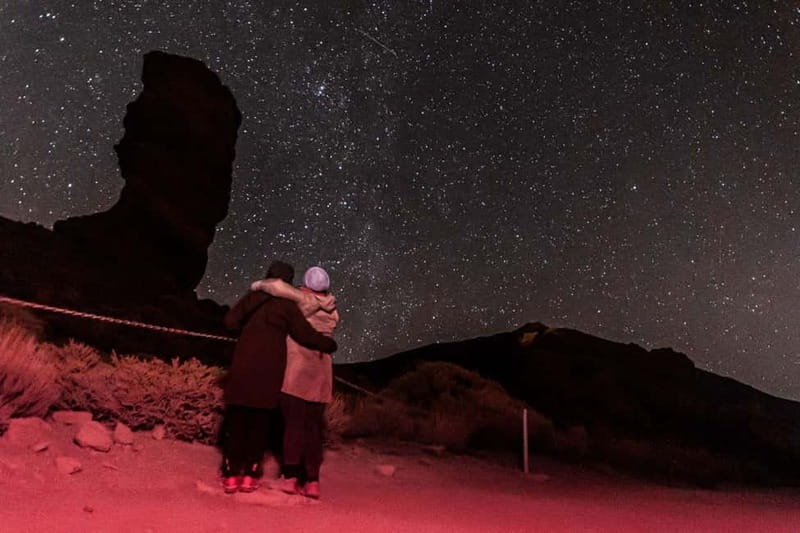
Here’s where this tour gets smart. Instead of telling you star names and hoping you’ll find them, the guide points them out using laser guidance. That helps you build a mental map quickly: star groupings first, then planets, then the smaller surprises like shooting stars if conditions allow.
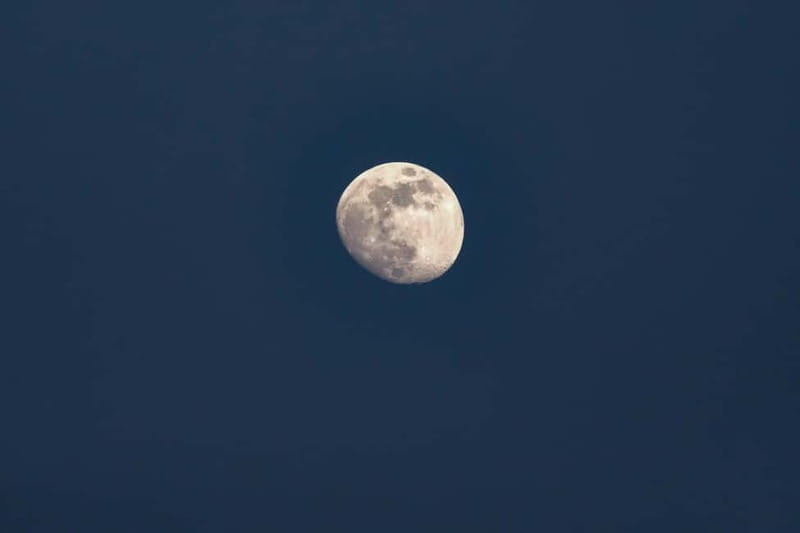
You’ll also learn about moon phases. Even if you’re not obsessed with lunar detail, the moon’s phase affects visibility and contrast. A bright moon can wash out faint stars, while a darker moon makes the sky sharper. By explaining moon phases in the context of what you’re seeing, the tour helps you understand why the sky looks the way it does on that night.
The guide also blends astronomy with history, which changes the vibe from purely scientific to story-driven. I like that approach because it gives you something to remember besides just the visuals. When a guide connects constellations to older ideas or how people historically read the sky, the experience feels more than a moment. It becomes a skill: you start recognizing patterns even when you’re not on the tour.
One more practical element: the tour is run in single-language groups (Spanish or English). That reduces misunderstandings and keeps the pace comfortable. If you’ve ever joined a mixed-language group during a talk, you know how distracting it can get. Here, the language stays consistent, so you can focus on the sky instead of following translations.
What the Night Walking Feels Like (and What to Bring)
This is an outdoors experience at altitude, and temperatures can drop fast. The tour guidance calls out warm clothing needs based on the season: between 0–4°C from October to March, and roughly 10–15°C from April to September. Even if you’re comfortable in daylight, nighttime on Teide can feel colder than you expect once you stop moving and look up for long periods.
Plan to bring:
- warm clothing, and thermal layers if you run cold
- long pants
- warm shoes with good grip
- water
- weather-appropriate clothing
Also, lanterns are provided. That helps you walk safely and keeps the ground from being completely dark. The lanterns matter because if you’re trying to watch the sky without any light at your feet, you’ll spend too much time checking where you’re stepping. Lanterns keep the balance: you can look up without losing your footing.
As for pace, it’s described as an easy walk. Still, it’s a night walk in a volcanic park. You should assume it’s not the same as a flat city stroll. Comfortable shoes are non-negotiable.
Telescope Reality: What You Get, and How to Upgrade
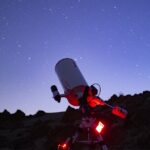
A telescope is not included. That’s an important point to understand before you go, because some stargazing tours advertise telescope viewing and then run out of time. This one is built around laser guidance and guided sky interpretation, not a guaranteed telescope session.
Good news: the tour offers options if you want telescope observation. If you want private activity or to include telescope time, you can request it. That lets you match the experience to your expectations. If you mainly want to learn constellations and understand what you’re seeing, laser guidance is the right tool. If you specifically want close-up viewing, telescope add-ons are where you’ll likely want to focus your planning.
Also, the tour includes a personal picture moment. That’s great because night sky photos often go wrong when everyone tries to figure it out at once. Here, you get help timed to the experience, so you’re more likely to capture something you’ll actually like instead of blurry dark-on-dark photos.

Price and Value: What You’re Really Paying For
The price is listed at $28 per person, and for a 2-hour guided astronomy experience in Teide National Park, that’s fairly strong value. The key isn’t just the cost. It’s what you’re buying: structured guidance plus expert input.
You’re getting:
- a laser-guided experience
- lanterns
- insurance
- a live guide in Spanish or English
- interpretation of the night sky (constellations, planets, moon phases, and possible shooting stars)
If you tried to do this on your own, you’d still need to get to the meeting area, figure out safe walking in the dark, and then learn the sky without a pointing tool. In other words, the paid part covers the hardest part: translating the night sky into something you can recognize quickly.
One small “value check” for you: the tour can be canceled due to weather, and the sky is weather-dependent. If you book close to your travel dates, consider having a flexible evening. On a good night, the laser guidance plus expert talk can make stars look twice as clear because you know what you’re hunting.
Getting There: The One Logistics Detail That Matters
You’ll need your own vehicle or a taxi to reach the meeting spot at the Parador Cañadas del Teide. That doesn’t sound glamorous, but it’s the main practical hurdle. If you’re staying on Tenerife and you’re planning multiple activities, don’t leave this as a last-minute scramble.
Because the experience runs at nightfall or sunset depending on season, you don’t want transport delays to steal your best viewing time. If you’re driving, aim to arrive early enough to park and settle before the group starts.
If you’re coming with friends, this also influences the best kind of day for booking. Choose a day where you can realistically handle getting there, rather than stacking it with a long daytime tour that makes your evening tight.
Who This Tour Suits Best (and Who Should Skip It)
This is a great fit for:
- couples who want a calm, outside-the-hotel kind of night
- friends who like guided experiences with clear takeaways
- families who can handle cool night temperatures and walking outdoors
It’s also specifically described as suitable for families and groups, but there’s an age note: the activity may not be appropriate for children under 7–9 years old, and it’s listed as not suitable for children under 8 years, plus babies under 1 year. That tells me the tour is paced and timed for participants who can stay engaged and comfortable in the cold while standing and looking up.
If you’re an experienced stargazer, you may find it a bit short for long telescope sessions. But as a “get oriented fast” sky lesson with a guide, it makes sense. If you’re brand-new to astronomy, it’s even better—laser guidance plus a real astrophysicist means you won’t leave feeling like you saw nothing but stars you couldn’t name.
Weather Can Change the Sky Plan
Stargazing depends on the sky, and this tour can be canceled if conditions aren’t right. The info you’re given is clear: the experience may be canceled depending on weather, a fully cloudy sky, or seasonal arrangements. When that happens, you’re covered with a full refund if the cancellation is done by the provider.
Even when the tour runs, don’t treat the sky like it’s guaranteed. Plan your expectations around a guided sky interpretation first, and then treat any meteor-like surprises or shooting stars as a bonus when conditions cooperate.
Should You Book This Teide Stargazing Walk?
I’d book it if you want a guided, easy night walk in Teide National Park that helps you actually learn the sky. For $28, you get expert interpretation, laser pointing, lanterns, and a structured route that keeps you focused for about 2 hours. It’s also a smart pick if you’re traveling with people who don’t all want the same kind of “activity”—this is one of the rare experiences where everyone can look up and share the same moment.
I wouldn’t book it if you’re expecting a long telescope session with equipment included. Since a telescope isn’t part of the standard package, you’d want to request telescope observation (or consider a different option) if that’s your main goal.
Also, bring warm clothes and plan for cold. If you show up comfortable, the experience feels relaxing. If you show up underdressed, you’ll spend the tour thinking about your hands and not the constellations.
FAQ
How long is the stargazing walk in Teide National Park?
The tour duration is about 2 hours.
Where do I meet the group?
You meet at the entrance or outdoor patio of the Parador Cañadas del Teide Hotel in Las Cañadas del Teide, Santa Cruz de Tenerife.
Do I need to bring my own transport?
Yes. You need your own car or you should arrange a taxi to get to the meeting point.
Are lanterns provided?
Yes, lanterns are included.
Is a telescope included?
No, a telescope is not included. If you want to include telescope observation, you can request it.
What languages are the guides?
The tour is offered with a live guide in Spanish or English.
What’s the walking distance and difficulty?
It’s an easy night walk of about 2–3 km.
What should I wear and bring?
Bring warm clothing, warm shoes, long pants, and water. Thermal clothing can help, and dress for the season’s temperatures.
What happens if the tour is canceled due to weather?
The activity may be canceled for weather or if the sky is fully cloudy. If the provider cancels, you get a 100% refund.