REVIEW · MOAB
Canyonlands National Park Self-Guided Driving Audio Tour
Book on Viator →Operated by Travel with Action · Bookable on Viator
Your car becomes the guide. Canyonlands rewards you with big viewpoints and nerdy desert science, served by an easy audio app. I especially like the hands-free GPS playback that keeps talking as you approach each stop, so you don’t have to play traffic-juggling games with your phone.
I also love the lifetime access part: buy once, then use it anytime on future trips without rushing through. One consideration: you’ll want solid Wi‑Fi to download the tour before you lose cell service, since the park can be tough on reception.
In This Review
- Key things that make this Canyonlands audio tour worth it
- Canyonlands in one smooth drive: Island in the Sky vibes
- Price and value: $16.99 per group can actually be a bargain
- How the app works: start, auto-play, and keep it offline
- The route in plain English: White Rim to The Neck
- Stop-by-stop: what to expect at each Canyonlands highlight
- White Rim and the warning to stay on solid ground
- Cataract Canyon: a long river canyon story
- Green River Overlook: color names meet real science
- Visitor Center stop: refill, reset, and don’t get caught out
- Corona Arch: a quick arch with bigger context
- An overlook with three-sided canyon views (Grand view style)
- Plateau Viewpoint: pull off, photos, and a helpful toilet
- Dead Horse Point: the legend and the view combo
- Sevenmile Canyon to the Merrimac and Monitor
- Murphy Point Overlook: an easy hike with a strong reward
- Big Mesa Viewpoint: when the mesa feels dropped in place
- Native granaries: look for them, but don’t rush in
- The Whale and Upheaval Dome: one-mile walk for giant views
- Mesa Arch: the must-do short trail moment
- Candlestick Tower and the “layered cake” look
- Buck Canyon and the La Sal mountains: a calmer, accessible pause
- Orange Cliffs and Under the Ledge
- The final science note: rock layers you can read
- The Neck: a short story about natural connections
- Practical tips so your audio day goes smoothly
- Should you book this Canyonlands self-guided driving audio tour?
- FAQ
- Do I need a Canyonlands park entrance permit for this tour?
- How long is the Canyonlands National Park self-guided driving audio tour?
- Does the audio tour work offline?
- What is the price and who can use it?
- Where does the tour start?
- Can I use the tour on future trips?
Key things that make this Canyonlands audio tour worth it
- GPS-triggered stories so you hear each stop at the right time while you drive
- Offline maps and offline operation after download, useful where signal is unreliable
- One price per car (up to 4 people), which can beat bus or guided tour costs
- A long, highlight-packed route with 37+ audio stories in about 1–2 hours
- Short walks planned into the drive, like Mesa Arch and the Whale-back hike
- Biological soil crust warning, so you know to stay on the right path and avoid fragile ground
Canyonlands in one smooth drive: Island in the Sky vibes
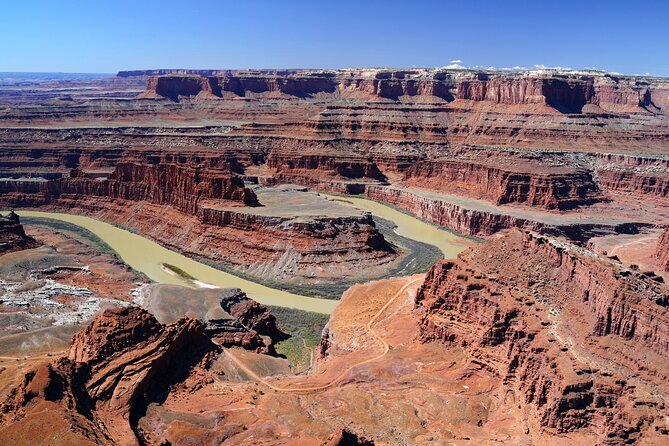
Canyonlands National Park in southeastern Utah is all about dramatic desert scenery carved by the Colorado River. The famous “Island in the Sky” area is a huge, flat-topped mesa, which means you get panoramic overlooks without signing up for a hardcore backcountry plan.
This audio tour is designed for the “see the highlights fast, then slow down if you want” style of day. You drive, pull over when the story cues tell you, and the audio keeps moving as you go.
You can also read our reviews of more tours and experiences in Moab.


Price and value: $16.99 per group can actually be a bargain

The price is $16.99 per group (up to 4 people). That matters because national parks often charge per person, and guided tours usually scale by headcount. Here, the cost stays tied to the car, not your party size.
Is it free? Not exactly. You still need to budget for a Canyonlands park entrance permit, since it’s not included. But the audio itself is what you’re buying, and at this price it’s a practical way to add context without hiring a guide or trying to read everything at pull-offs.
How the app works: start, auto-play, and keep it offline
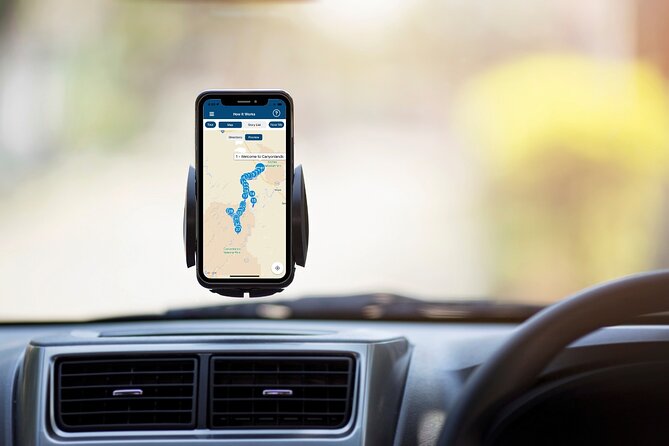
You’ll use Action’s Tour Guide App (download it separately). After booking, you get an email and text with setup instructions and a password. You must download the tour while you have strong Wi‑Fi/cellular access. After that, it works offline.
Once you’re onsite, you open the app, choose the tour version that matches your starting point and direction, and start the first story at the first cue point. Then audio plays automatically as you drive to the next location.
For best sound, connect your phone to your car stereo using Bluetooth, USB, or AUX. If you want audio while walking around viewpoints, headphones can help you keep sound private and clear.
The route in plain English: White Rim to The Neck
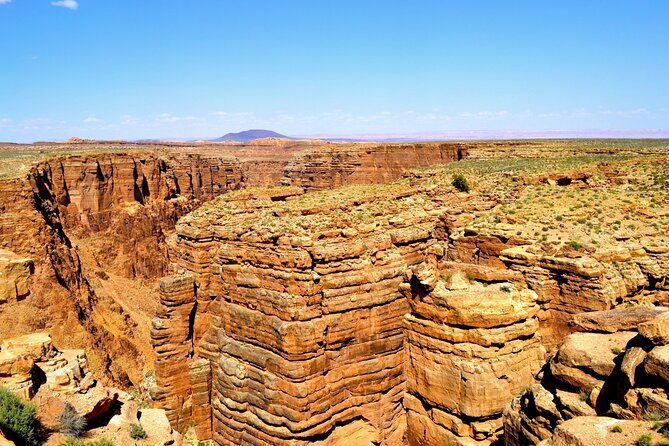
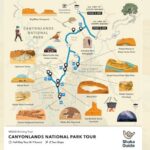
The tour is about 62+ miles long and includes more than 37 audio stories. Plan on 1–2 hours for the driving loop if you keep stops quick. If you like photos, add time—especially at the big arch and overlook areas.
Stop 1 is the main drive (labeled White Rim in the tour). Stop 2 is a shorter added story moment called The Neck, described as a narrow land strip that connects the Island in the Sky to other mesas—like a natural bridge.
You’ll also see that the tour is built around the idea that you’re moving through an area with very limited infrastructure. The audio repeatedly pushes you to pause for water and basics rather than treating Canyonlands like a city with bathrooms on every corner.
Stop-by-stop: what to expect at each Canyonlands highlight
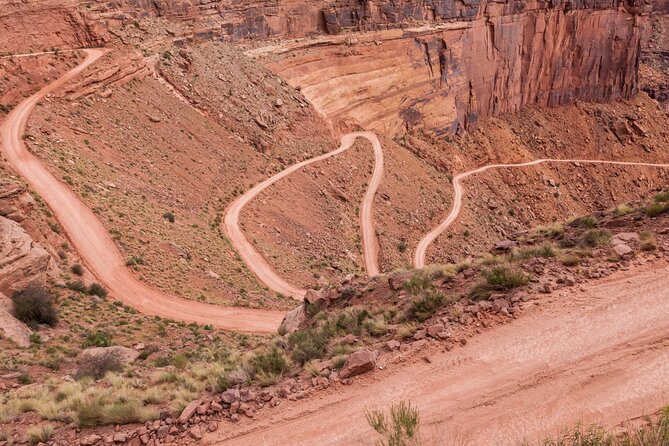
Below are the stops and why each one fits the story-driven way this tour is paced. Expect a mix of drive-up overlooks and short walks. Some viewpoints are easy from the car; a few are only slightly more work but pay off with big angles.



White Rim and the warning to stay on solid ground
Early on, the tour talks about exploring off the beaten path—and then gives a sharp reality check. Canyonlands (and nearby parks) includes biological soil crust, which is alive. The practical takeaway: stay on established roads and trails. It’s not just “be respectful.” It’s protecting living ground that takes a long time to recover.
This is one of the reasons an audio tour helps. It nudges you toward the correct choices before you wander without thinking.
Cataract Canyon: a long river canyon story
The tour includes Cataract Canyon, described as a 46-mile-long canyon of the Colorado River. That length matters. It helps you picture scale when you’re staring at a distant wall and trying to guess what you’re actually seeing.
Green River Overlook: color names meet real science
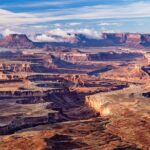
Next up is the Green River Overlook, with views of Canyonlands’ Island in the Sky district and the Green River working on the canyon walls. The audio notes the Green River is the largest stream in Utah at 730 miles, and the name is likely tied to green soapstone found along the banks.
Even from a parking spot, it gives you something to look for beyond “wow, canyon.”
Visitor Center stop: refill, reset, and don’t get caught out
The tour routes you past a Visitor Center, which is a smart move in a park with limited facilities. The audio encourages you to grab supplies, use the bathroom, and fill your water bottles.
I’d treat this as mandatory planning time. It’s easy to underestimate how fast you’ll feel heat and thirst once you’re driving between overlooks.
Corona Arch: a quick arch with bigger context
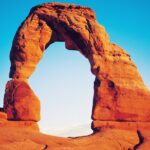
The audio covers Corona Arch, a natural sandstone arch near Moab. It also points out that it sits within the same rock formation as Pinto Arch and Bowtie Arch.
This is a good stop if you’re trying to connect Canyonlands scenery to the wider Moab area of arches and rock formations.
An overlook with three-sided canyon views (Grand view style)
You’ll hit a viewpoint that offers views from three sides, and the tour calls out the potential intimidation factor if you don’t like heights. There’s nothing between you and the canyon in the classic “stand and stare” way.
If you’re fine with exposure, this is one of those stops where your brain stops looking for information and just starts soaking it in.
Plateau Viewpoint: pull off, photos, and a helpful toilet
The tour directs you to a Plateau Viewpoint turnout. You’re told to pullover for photos, and it also notes a handicap accessible toilet and an information panel related to anthropological work in the area.
That panel part is key. It’s one of the few spots where you’re explicitly encouraged to slow down and read something, not just photograph.
Dead Horse Point: the legend and the view combo
Dead Horse Point comes with a local legend about mustangs being corralled, then broken in the early 1800s. The “undesirables” were left to run free after the best horses were claimed.
It’s a creepy name, yes, but it’s also a nice example of how this tour ties human stories to the terrain you’re looking at.
Sevenmile Canyon to the Merrimac and Monitor
The audio has a moment where you’re near the floor of Sevenmile Canyon, so tall rock walls block the view. Then as you drive forward, two distant features appear: the Merrimac and the Monitor.
That “nothing now, big reveal later” pacing makes the driving loop feel more like a guided route than a list of random stops.
Murphy Point Overlook: an easy hike with a strong reward
For Murphy Point Overlook, the tour calls out a trail that’s easy to hike—3.5 miles roundtrip. The audio notes the hike itself doesn’t offer much scenery, but the overlook view of Stillwater Canyon and the Green River is the payoff.
If you want a leg-stretch without committing to a long trek, this is the kind of stop that fits.
Big Mesa Viewpoint: when the mesa feels dropped in place
You’ll also pass Big Mesa Viewpoint, where the audio describes the enormous mesa looking like it was placed there and forgotten.
This one is mostly about changing your perspective. When you’re surrounded by canyon walls elsewhere, a mesa like this helps you understand how the park’s high ground works.
Native granaries: look for them, but don’t rush in
One stop highlights Native peoples’ granaries that are visible from the base of the last hill if you keep your eyes open. The audio stresses these granaries are hundreds of years old, and you should be careful when approaching.
This is a good reminder that some Canyonlands “things to see” are fragile and require restraint. You’re not supposed to treat everything like a playground.
The Whale and Upheaval Dome: one-mile walk for giant views
Then comes one of the most memorable story setups in the tour: a “world’s largest whale.” The audio points out you’ll find its head on the left side of the rock, and it gives you an easy one-mile hike up along the whale’s back.
From the top, you’re rewarded with spectacular views of Upheaval Dome. Even if you’re not into geology, the tour’s framing makes it easier to notice what’s changing from viewpoint to viewpoint.
Mesa Arch: the must-do short trail moment
The tour calls out Mesa Arch as a must-do. Park the car, walk along the short trail to the arch, and pay attention to the surrounding juniper and pinyon trees, which the audio notes are common in Canyonlands.
If you only have time for a quick walk, Mesa Arch is that choice. It’s short, iconic, and it hits fast.
Candlestick Tower and the “layered cake” look
Next is Candlestick Tower, described like layered colors: white at the bottom, reddish-brown in the middle, and red on top. It’s another moment where the audio nudges you to notice layers rather than just form shapes.
This kind of cue makes your eyes more useful while you’re driving.
Buck Canyon and the La Sal mountains: a calmer, accessible pause
The tour includes a stop with views of Buck Canyon and the La Sal mountains. It notes the short trail is paved and accessible, and there’s a rail between you and the canyon, which helps if you feel uneasy around heights.
The audio also mentions a place to reenergize with a cafe. If you want a break that isn’t just “more driving,” this is the stop that helps.
Orange Cliffs and Under the Ledge
The tour closes the driving loop by connecting scenery to cowboy terms—specifically “Under the Ledge,” described as a distinct area that appeared to sit underneath a huge rocky ledge.
This is a nice way to end, because it turns the park from “rocks and views” into a place that had names long before you arrived.
The final science note: rock layers you can read
Near the end, the audio reminds you that rocks in many parts of Canyonlands still show layers from when they were deposited—what you see is what happened over hundreds of millions of years.
That’s the payoff of listening as you drive. You’re not just watching cliffs. You’re learning how the cliffs got made.
The Neck: a short story about natural connections
Finally, the tour’s short Stop 2 explains The Neck as a strip of land connecting the Island in the Sky to other mesas—like a natural bridge. It’s brief, but it helps you mentally map the park’s structure.
Practical tips so your audio day goes smoothly

Here’s how I’d plan it so you don’t lose your momentum.
- Download the tour before you enter. The park can be signal-poor, and the tour needs the app downloaded first.
- Keep to the tour route and direction. The audio is designed to trigger based on location; if you jump around or start off-script, you might get mismatched narration.
- Match the drive to the narration pace. The audio cues are timed for a recommended speed. If you go too fast, you can end up missing the words that explain what you’re seeing.
- Bring water and snacks. The audio points out limited infrastructure, and you’ll thank yourself for carrying enough fuel for both body and energy.
- Plan for short walks. Stops like Mesa Arch and the Whale hike are doable, but they still require shoes that handle desert paths.
Should you book this Canyonlands self-guided driving audio tour?
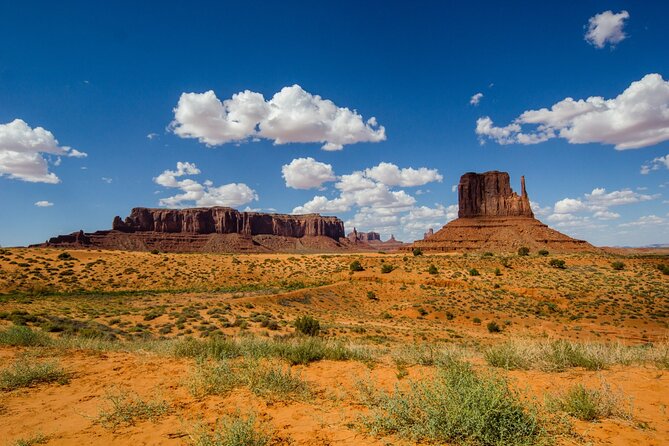
If you want a value-friendly way to connect viewpoints with history and geology, I’d book it. The big win is that you get GPS-triggered stories without driving yourself into a research spiral. For a 1–2 hour window (plus stop time), it’s a strong way to “get it” faster.
You should skip it—or at least be extra prepared—if you hate downloading apps before arrival or you don’t want to deal with phone-to-car audio setup. Also, if you’re the type who plans to drive slowly with lots of detours and never follow the cue locations, the timing can get out of sync.
If you’re visiting Canyonlands anyway and you’d like your day to feel guided but still flexible, this is a smart match.
FAQ
Do I need a Canyonlands park entrance permit for this tour?
Yes. An entrance permit is required to visit Canyonlands National Park, and it is not included with this tour.
How long is the Canyonlands National Park self-guided driving audio tour?
It’s about 1–2 hours for the main route (the tour is over 62 miles with more than 37 audio stories).
Does the audio tour work offline?
Yes. The app includes offline maps, and after you download the tour in strong Wi‑Fi/cellular, it works without needing cellular or Wi‑Fi.
What is the price and who can use it?
It costs $16.99 per group, and it’s valid for up to 4 people in your group.
Where does the tour start?
The start point is Moab Giants Cafe, 112 UT-313, Moab, UT 84532.
Can I use the tour on future trips?
Yes. You get new, lifetime access with no expiry, and you can use it anytime, on any trip, as many times as you want.