REVIEW · SEQUOIA AND KINGS CANYON NATIONAL PARK
Sequoia and Kings Canyon Audio Tour Self Guide National Park Tour
Book on Viator →Operated by Shaka Guide Apps · Bookable on Viator
Giant trees, no tour group to manage. This Sequoia and Kings Canyon self-guided audio tour strings together world-famous sequoias, classic canyon pullouts, and short walks you can handle at your own speed.
Two things I really like: the audio is GPS-activated, so you get turn-by-turn guidance without fumbling with your phone, and the itinerary is built for car-friendly sightseeing with real stops, not just drive-bys. One thing to consider is that a few highlights involve real effort (think steep steps or short but steep cave access), so you’ll want decent shoes and a plan for which hikes you’ll do.
In This Review
- Key highlights you’ll feel right away
- A Self-Guided Audio Route Through Sequoia’s Giants and Kings Canyon’s Depth
- How the GPS Audio Tour Keeps You From Getting Stuck
- Day 1: Big Stump to Grant Grove, Then Kings Canyon Overlooks
- Big Stump Picnic Area and the Mark Twain Tree Story
- Redwood Mountain Overlook: Sequoias on a Grand Scale
- Kings Canyon Overlook: The Quick Math of Canyon Depth
- Kings Canyon Visitor Center and Grant Grove Village Basics
- Grant Grove: General Grant Tree and a Short Paved Loop
- Panoramic Point, McGee Vista Point, and the Fire-Season Learning
- Junction View, Yucca Point, and the Sierra-to-Mount Whitney Angle
- Scenic Byway Viewpoint: Marble and the Park’s Geology
- Boyden Cavern: Guided Time Inside Marble
- Grizzly Falls Picnic Area and the Cedar Grove Break
- Knapp’s Cabin and Roaring River Falls: Quiet Finish to Day 1
- Day 2: Giant Forest Icons, Moro Rock Steps, and Tokopah Falls
- Indian Head River Trailhead and Foothills Visitor Center Warm-Up
- Tunnel Rock and Hospital Rock: Roadside Weirdness and Native Rock Art
- Amphitheater Point, Vista Point, and The Four Guardsmen
- Giant Forest Museum and Big Trees Trail: A Soft Landing
- Moro Rock: 350 Steps That Pay Off
- Tunnel Log: A Fun Photo Stop With a Real Traffic Quirk
- Crescent Meadow Picnic Area: John Muir’s Gem of the Sierras
- General Sherman Tree: The Main Event With Easy Access
- Lodgepole Visitor Center and the Practical Break
- Tokopah Falls: A Longer Walk and a Waterfall That Changes With Season
- Wuksachi Lodge and Halstead Meadow: Soft Landing After the Hike
- Little Baldy Trail: Switchbacks and Big Western Divide Views
- Planning Tips: How to Pace This Route Without Burning Out
- What’s Included, What’s Not, and Where Extra Fees Show Up
- Value for Money: $15.99 per Group and a Private Vehicle-Style Experience
- Who This Tour Fits Best (and Who Might Want a Different Setup)
- Should You Book This Self-Guided Sequoia and Kings Canyon Audio Tour?
- FAQ
- How much is the tour, and is it per person?
- How long is the self-guided experience?
- Do I need Wi-Fi or cell service while I’m driving?
- Is the narration and directions in English?
- Are all park fees and attractions included?
- Can I skip stops or change the order?
- Can I cancel and get a full refund?
Key highlights you’ll feel right away
- Hands-free GPS narration that plays automatically while you drive.
- Offline map included, so you’re not stuck hunting signal in the park.
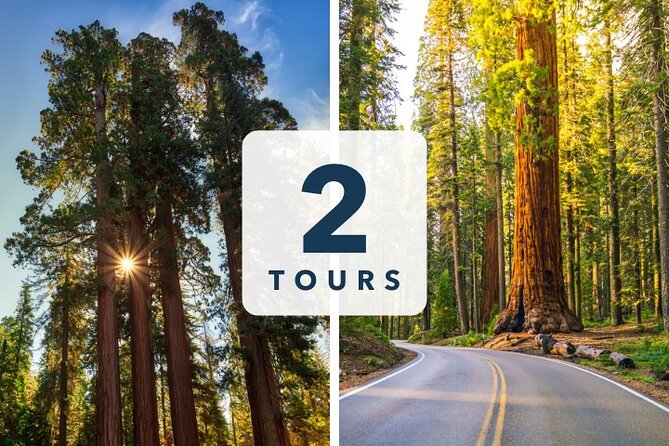
- Two-day route that mixes iconic trees with “pull over and look” overlooks.
- Private, group-only experience (one vehicle/group, up to 15 people).
- Smart flexibility: you can pause, resume, and skip stops.
- Value pricing at $15.99 per group for a full guided-style route.
A Self-Guided Audio Route Through Sequoia’s Giants and Kings Canyon’s Depth
What makes this experience work in a big national park is simple: it turns a long drive into a sequence of small moments. You’re not trying to “master” Sequoia and Kings Canyon in one day. You’re getting a prepared route where the audio tells you what you’re looking at, then hands you the keys to move on when you’re ready.
The best part is that the route balances spectacle with breaks. You’ll spend time at major stops like Grant Grove and the General Sherman Tree, but you’ll also get plenty of short roadside viewpoints. That mix matters when you’re traveling with different energy levels, because not everyone has to do the longer hikes to enjoy the day.
The audio and directions are set up for driving. That means fewer dead stops to check your phone, and more time actually watching the trees and canyon walls go by.
You can also read our reviews of more tours and experiences in Sequoia and Kings Canyon National Park.
How the GPS Audio Tour Keeps You From Getting Stuck
This tour is built on a straightforward idea: you shouldn’t have to constantly navigate. Once you redeem it in the Shaka Guide app, the narration uses GPS so it can play automatically as you move. You also get turn-by-turn directions using GPS, which helps especially on winding park roads where it’s easy to miss a turn or overlook a pullout.
You also get an offline map, which is a big deal in parks where signal can be unreliable. You’re told to download the tour using strong Wi‑Fi ahead of time, then you can use it without needing data while you’re in the trees.
Another plus is the pacing. The stops include tight timing blocks for the viewpoint-style stops (often around 5 to 10 minutes), plus longer windows at places where you might want to read, take photos, or do a short trail. It’s a structure that makes it easier to keep moving without feeling rushed.
Day 1: Big Stump to Grant Grove, Then Kings Canyon Overlooks
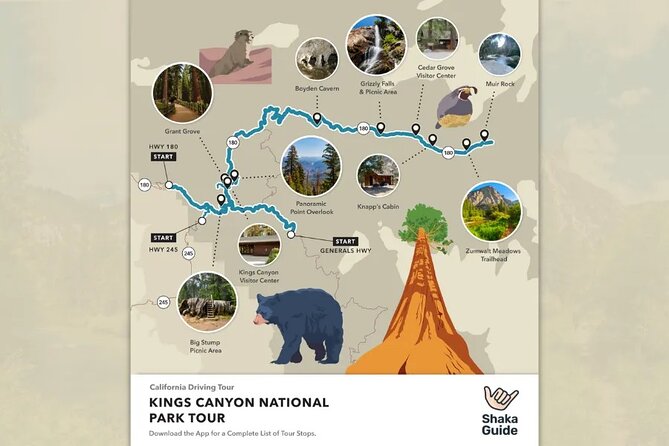
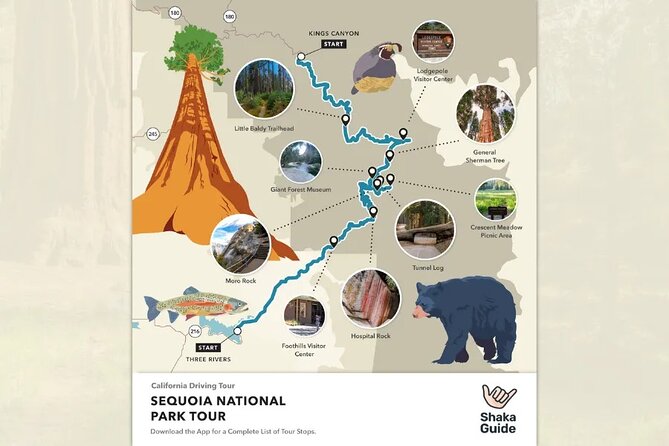
Day 1 feels like you’re driving into deeper and deeper “wow” as the tour moves from giant-tree artifacts to canyon scale.
Big Stump Picnic Area and the Mark Twain Tree Story
Your first stop is Big Stump Picnic Area, followed by an easy two-mile loop to Big Stump itself. This is where you’ll learn the story of the Mark Twain Tree, a giant once chopped down and displayed in major museums overseas. It’s an early hit of context, and it sets the tone for how these parks mix natural scale with human history.
Even if you skip the longer part of the loop, just being at the picnic area and walking the short approach helps you get oriented. For many people, the first stop is where you decide how ambitious the rest of the day will be.
Redwood Mountain Overlook: Sequoias on a Grand Scale
Next up, you pull in at Redwood Mountain Overlook for a view of Redwood Mountain Grove. The audio frames it well: this grove spans almost 2,500 acres, and it’s the biggest sequoia grove in the whole world. That’s the kind of fact that makes you look at the trees differently, like you’re not just seeing a single stand but an entire system.
If you want more hiking, the route mentions trail options in the Redwood Canyon area, but the overlook itself is a quick stop. That makes it a good “fuel-and-camera” moment before you head deeper into Kings Canyon territory.

Kings Canyon Overlook: The Quick Math of Canyon Depth
Kings Canyon Overlook is one of those stops that’s almost unfair. You don’t need a big hike to get an impressive panoramic view, and the tour gives you a comparison that clicks fast. Kings Canyon reaches about 8,200 feet deep, while the Grand Canyon’s depth maxes at around 6,000 feet, making Kings Canyon nearly 2,000 feet deeper.
This is also a stop where you’ll feel why the tour’s short-duration format works. You get a real payoff without committing to hours, then you’re ready for the visitor center and Grant Grove.
Kings Canyon Visitor Center and Grant Grove Village Basics
At the Kings Canyon Visitor Center in Grant Grove Village, you can slow down. The tour points you to a short film, plus the Sequoia Parks Conservancy Store for maps and books. Right next door is the Grant Grove Market, and there’s a restaurant too, which helps if you want a planned meal instead of improvising.
I like visitor centers when a route like this is packed, because they act like a reset button. You can check the info boards, grab essentials, and get your bearings before the big tree moments.
Grant Grove: General Grant Tree and a Short Paved Loop
Grant Grove is where the itinerary gives you an easy win: the General Grant Tree. It’s the world’s second-largest tree, and you can reach it on a third of a mile easy, paved loop trail. The audio also points out other notable features nearby, including the Fallen Monarch, Gamlin Cabin, and the Centennial Stump.
You’re given key stats too, including that the General Grant Tree is about 268 feet tall and 107 feet around. Those numbers help you “scale” the tree without needing a long explanation before you see it.
Panoramic Point, McGee Vista Point, and the Fire-Season Learning
After Grant Grove, you get a run of viewpoint stops that are perfect for quick stretching and photography.
- Panoramic Point is a high-elevation view with Hume Lake included, and the tour also suggests the Park Ridge Fire Lookout trail if you want something longer (about 5 miles, moderately difficult).
- McGee Vista Point is timed for understanding wildfire impacts. The audio highlights damage from the Rough Fire and points you toward the unique relationship between wildfire and sequoia trees.
If you’re someone who likes nature facts grounded in what’s visible, these stops are where the audio adds weight. You’re not just looking. You’re learning what changed and why.
Junction View, Yucca Point, and the Sierra-to-Mount Whitney Angle
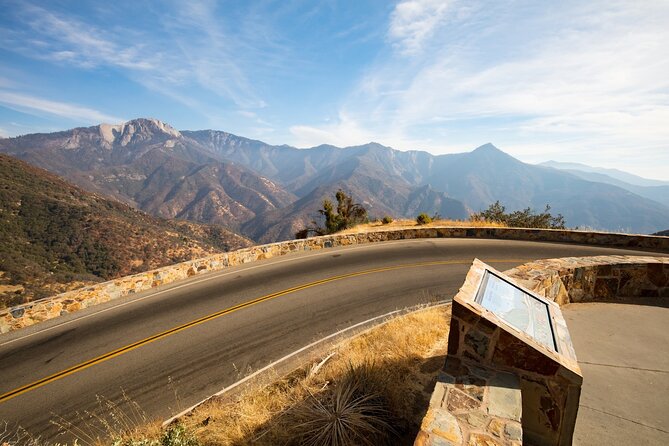
Junction View is a big-horizon moment. From there, you can look across the Western Sierra all the way to Mount Whitney, the tallest peak in the lower 48 states. The overlook name ties directly to the view of the junction of the Middle and South forks of the King River, and you also see Kings Canyon from here.
Yucca Point is another short pullout that helps you keep the drive interesting. It sits above the Kings River, and it gives you a chance to step out and reset without committing to another hike.
Scenic Byway Viewpoint: Marble and the Park’s Geology
At Scenic Byway Viewpoint, you get something different: a geology stop. The audio calls out a limestone vein, also known as marble, running through the park. The trick is to look for the gray stone contrasting with the ground cover around it.
Stops like this are why an audio route can feel better than a checklist. They teach you how to look.
Boyden Cavern: Guided Time Inside Marble
Boyden Cavern is the one stop that clearly asks for an extra activity on top of the audio. You’ll take a guided tour, usually about 45 minutes to an hour, and tours are run by a small company with a small entrance fee not included in the main tour price. The walk from the parking lot is described as short but steep, so plan for that.
If you’re the type who likes a change of pace from trees and open views, this is a strong contrast day-ender. Just budget time so you don’t feel rushed when you get back in the car.
Grizzly Falls Picnic Area and the Cedar Grove Break
Grizzly Falls Picnic Area is where you can settle in. The waterfall cascades about 80 feet in a shaded forest area, and it’s a short walk from the picnic area and parking. Restrooms are available, so it’s also a practical lunch stop.
Then you move to Cedar Grove Visitor Center, the second visitor center of the day. It’s seasonal (around Memorial Day through mid-September). Inside you’ll find information, plus the Sequoia Parks Conservancy Store for souvenirs and practical items.
Knapp’s Cabin and Roaring River Falls: Quiet Finish to Day 1
Knapp’s Cabin adds a historic touch. It’s a riverside cabin associated with George O. Knapp, who brought friends on fishing trips. It’s listed on the National Register of Historic Places and is reachable via a short trail, with canyon views along the way.
Roaring River Falls is a calm close. You reach it via an easy out-and-back trail of nearly a third of a mile. If you have extra time, you can continue onward to Zumwalt Meadows on about a 4-mile trail.
Day 1 ends feeling balanced: major icons, canyon viewpoints, a guided underground stop, and then a gentler nature pace to finish.
Day 2: Giant Forest Icons, Moro Rock Steps, and Tokopah Falls
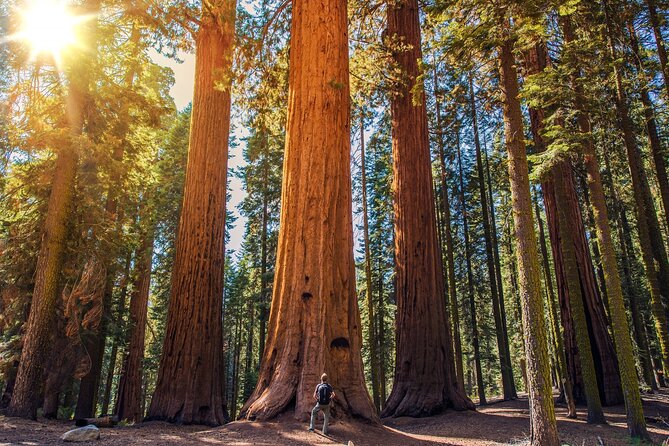
Day 2 is heavier on Sequoia National Park’s signature sights, but it still includes breathing-room stops where you can just look and reset.
Indian Head River Trailhead and Foothills Visitor Center Warm-Up
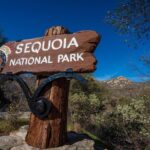
You start at Indian Head River Trailhead, including the historic Welcome to Sequoia National Park Sign. Even if you skip the trail down to the river, the view from the parking area is described as amazing on its own.
Foothills Visitor Center follows, and it’s a practical stop. You’ll find exhibits about park history and wildlife, a souvenir shop, restrooms, and a water bottle filling station. This is a good place to top up before the Giant Forest section of the day.
Tunnel Rock and Hospital Rock: Roadside Weirdness and Native Rock Art
Tunnel Rock is a highlight that’s easy to miss unless you know to stop. The tour notes that Generals Highway used to go right under the rock, but the road was redirected and the rock became a photo spot. Visitors can climb on it or walk under it.
Hospital Rock comes next, with Potwisha Native American rock art on a huge riverside rock. The audio also points to grinding mortars nearby, believed to be where Potwisha women ground acorns into flour. Picnic tables and restrooms are available too, so you can take a short break without losing time.
These stops give you a side of the park that’s more cultural than purely scenic. You’re seeing how people used these places, not just how animals might.
Amphitheater Point, Vista Point, and The Four Guardsmen
Amphitheater Point is a panoramic stop where you can see Moro Rock looming above, along with other peaks and ridges. Vista Point is another short pullout for Sequoia views, with the audio hint that it can sneak up on you, so keep an eye on your map.
Then you have The Four Guardsmen. You can pull over on the right side of the road if you want, and it’s all about the visual lineup of four giant sequoias across the highway welcoming you into the Giant Forest area.
If you’re someone who likes the feeling of arrival, these quick stops help you transition into the main sequoia zone without it feeling like one long drive.
Giant Forest Museum and Big Trees Trail: A Soft Landing
At Giant Forest Museum, the audio frames it as a launching point for area hikes. One of the suggested trails is the Big Trees Trail, an easy half-mile walk past a meadow and sequoias. This is a good choice if you want a gentle warmup before bigger climbs later.
Moro Rock: 350 Steps That Pay Off
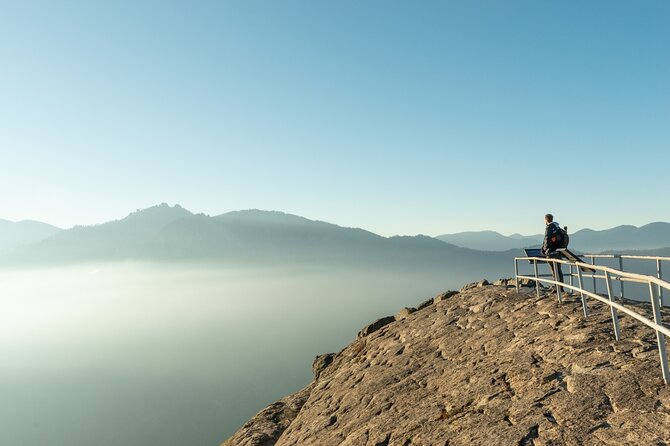
Moro Rock is pure effort for reward. The tour describes about 350 concrete steps leading to the top of a granite dome. It’s short in distance, but steep enough that you’ll feel it. The payoff is the view from the top, described as something you really can’t match from street level.
If you’re balancing hiking abilities within your group, this is one of those places where you might split decisions: some do the steps, others stay at the base and enjoy the surrounding overlooks.
Tunnel Log: A Fun Photo Stop With a Real Traffic Quirk
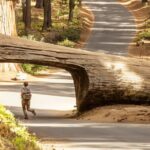
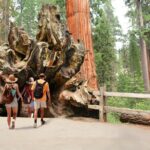
Tunnel Log is another road feature turned icon. Workers carved a passage through a log, so cars eight feet tall can drive through, while others must drive around. It’s brief, but it’s the kind of stop that makes the day feel playful without sacrificing scenery.
Crescent Meadow Picnic Area: John Muir’s Gem of the Sierras
Crescent Meadow Picnic Area centers on Crescent Meadow, described as the Gem of the Sierras by naturalist John Muir. The audio lays out multiple trail options, including:
- An easy 1.5-mile loop around the meadow
- About 1.5 miles to Tharp’s Log on an easy trail
- A route that connects beyond, with High Sierra Trail access starting here
- A shorter turnaround option toward Eagle View (over a mile and a half round-trip)
Even if you only do a short loop, the meadow setting changes the feel of the day from steep domes and canyon walls to open skies and big-tree views.
General Sherman Tree: The Main Event With Easy Access
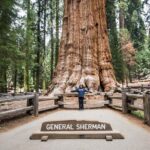
General Sherman Tree is the star. The audio presents its claim as the world’s largest living tree by volume. You reach it via an easy paved 1-mile trail from the parking area through a giant sequoia forest, with benches and other notable trees along the way.
If you want a bit more after seeing Sherman, you can continue on the Congress Trail, which is paved and easy, just under 3 miles round-trip. It takes you to two groups of mature sequoias.
This is one of the best places for a “do the classic, then choose your adventure” approach.
Lodgepole Visitor Center and the Practical Break
Lodgepole Visitor Center is your mid-afternoon pause. It has presentations on natural and human history, and Lodgepole Market next door helps with food and necessities. This stop is useful because it gives you something to do besides stare at trees while your group regroups.
Tokopah Falls: A Longer Walk and a Waterfall That Changes With Season
Tokopah Falls is where you commit to a more serious hike. The trailhead is near campsites, and the hike is almost 4 miles with an easy incline. You’ll mix shady forest with open mountain views, ending at a waterfall about 1,200 feet tall.
The audio also notes seasonality: in early summer it’s heavy from glacial melt, but by late summer it may drop to a trickle. That matters when you’re choosing your dates. If you go late in the season, the falls can still be worth it, but expect less water.
Wuksachi Lodge and Halstead Meadow: Soft Landing After the Hike
After Tokopah Falls, Wuksachi Lodge is a relief stop. The tour points out two restaurants with full menus, an outdoor deck, seating, and a souvenir shop with grab-and-go snacks. Halstead Meadow follows as a restored wetland, with picnic tables and open space that’s described as easy to reach. It’s a good place to decompress before you call it a day.
Little Baldy Trail: Switchbacks and Big Western Divide Views
Little Baldy Trail is the final active stop. The hike is just over 3 miles round-trip with a couple switchbacks up to the dome. It’s described as moderately challenging and rewards you with panoramic views of the Great Western Divide and beyond.
If you’re tired from Tokopah Falls, you can still keep the day from feeling like a death march by skipping this and saving energy for the drive back.
Planning Tips: How to Pace This Route Without Burning Out
This audio tour is flexible, but flexibility still needs strategy. Here’s how to keep it enjoyable:
First, decide early how your group handles effort. There are easy paved walks like the General Sherman Tree access trail, plus moderate options like Little Baldy and the Park Ridge Fire Lookout suggestion. Then there are “short but steep” moments like Moro Rock steps and the Boyden Cavern approach.
Second, treat the quick stops as benefits, not filler. The 5-minute overlooks (Kings Canyon Overlook, Yucca Point, McGee Vista Point, and Junction View) are some of the best chances to see huge scenery without burning time.
Third, build in a lunch plan. Grizzly Falls Picnic Area gives you a practical meal spot with restrooms, and Lodgepole Market plus Wuksachi Lodge make it easier to avoid searching around later.
Finally, download the tour ahead of time. The tour works offline with an included map, but you still need to set it up correctly using strong Wi‑Fi before you start.
What’s Included, What’s Not, and Where Extra Fees Show Up
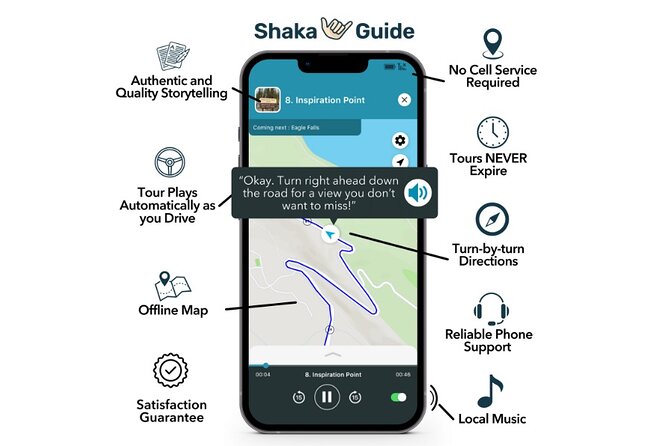
This tour includes audio narration with stories, travel tips, and music, plus automatic playback as you drive. You get offline map access, GPS turn-by-turn directions, and the freedom to explore at your own pace. The tour also doesn’t expire, so you can use it across multiple days if you want.
What’s not included is important for budgeting. Entrance fees and parking fees aren’t included. Meals and refreshments aren’t included either.
Also watch for optional paid activities. Boyden Cavern has guided tours (about 45 minutes to an hour), and the tour data states there’s a small additional fee for entrance. Plan for that if caves sound fun to your group.
Value for Money: $15.99 per Group and a Private Vehicle-Style Experience
At $15.99 per group (up to 15), the value is strongest if you’re traveling with people who would otherwise pay individual fees. This is set up as one tour for the entire vehicle, with no per-person charge mentioned. That makes it easier to justify for families or small groups.
It’s also cost-effective because you’re not “buying a bus ride.” You’re buying guided narration, navigation help, and an organized route that covers two full days of major sights and stop options. Since the audio never expires, you can use it even if your plans shift and you want to return another time.
The one tradeoff is the obvious one: you’re responsible for driving and your own pacing. If you want hands-on interpretation from a live guide at each stop, an audio system won’t replace that. But if you like independence with structure, this is a strong match.
Who This Tour Fits Best (and Who Might Want a Different Setup)
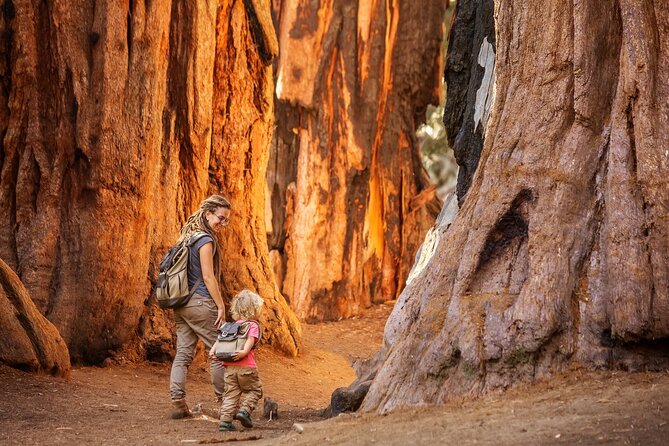
This audio tour fits best if you want:
- Car-based sightseeing with built-in navigation
- A flexible plan where you can stop for photos and walks when it makes sense
- A way to learn while you drive, without managing a group
- An experience that works well across two days
It may be less ideal if your group struggles with moderate climbs or steep steps. Moro Rock’s steps, Boyden Cavern’s steep access walk, and longer hikes like Tokopah Falls or Little Baldy might be tough depending on your comfort level.
It also helps if your group likes music and stories. One of the standout points in feedback is that the audio includes entertaining music plus a lot of interesting information, and it feels “guided” without feeling rigid.
Should You Book This Self-Guided Sequoia and Kings Canyon Audio Tour?
Book it if you’re road-tripping and you want the park to feel “explained” without paying for a live guide or booking a rigid timeslot. The combo of GPS directions, automatic narration, offline maps, and a route that mixes big-tree classics with canyon viewpoints makes it a practical way to cover a lot without chaos.
I’d skip it only if you’re mainly looking for a fully hosted experience, or if your group wants everything to be stroller-easy and fully flat. A few stops demand real steps or a moderate hike commitment.
FAQ
How much is the tour, and is it per person?
It costs $15.99 per group, up to 15 people.
How long is the self-guided experience?
It’s listed as about 2 days.
Do I need Wi-Fi or cell service while I’m driving?
No. You get an offline map, and the narration plays automatically as you drive.
Is the narration and directions in English?
Yes, the tour is offered in English.
Are all park fees and attractions included?
No. Entrance fees and parking fees are not included, and Boyden Cavern has a guided tour with a small entrance fee not included.
Can I skip stops or change the order?
Yes. The tour is described as customizable, and you have the freedom to explore at your own pace.
Can I cancel and get a full refund?
Yes. You can cancel for a full refund if you do it at least 24 hours before the experience start time, and cancellation is free within that window.