REVIEW · SEQUOIA AND KINGS CANYON NATIONAL PARK
Kings Canyon National Park Self-Guided Audio Tour
Book on Viator →Operated by Shaka Guide Apps · Bookable on Viator
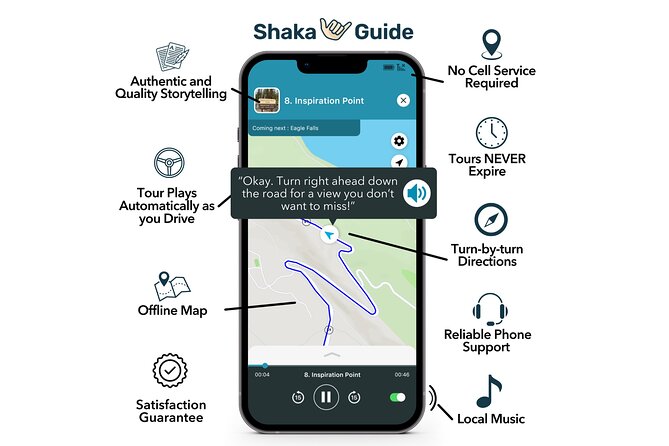
Audio driving feels like having a docent. This self-guided tour strings together major Kings Canyon and sequoia highlights with GPS turn-by-turn directions and stories that start as you roll along. You get quick pull-offs, easy walks, and a couple of real add-ons—without having to line up for a traditional guided group.
I really like two things here: the hands-free autoplay narration (you don’t have to keep tapping your screen), and the flexible pacing that lets you linger at overlooks or skip stops that don’t fit your mood. At $9.59 per group (up to 15 people), it’s also one of those rare deals where the cost doesn’t balloon the moment you travel with family or friends.
One watch-out: not everything is included. Most stops are free, but Boyden Caverns has an extra ticket, and parking/entrance fees may apply along the way.
In This Review
- Key takeaways before you go
- How GPS audio makes Kings Canyon easier (and less stressful)
- Getting set up: Three Rivers start, offline map, and autoplay
- Sequoia warm-up: Big Stump and Redwood Mountain Grove
- Kings Canyon viewpoints that do the work for you
- Grant Grove: General Grant Tree and a walk that’s actually worth it
- Panoramic Point to McGee Vista: views plus the wildfire story
- Junction View, Yucca Point, and the marble vein clue
- Boyden Cavern: the one paid stop (and why to plan it right)
- Lunch-friendly water: Grizzly Falls to Roaring River Falls
- Cedar Grove Visitor Center, Knapp’s Cabin, and the canyon living room
- Zumwalt Meadows and Muir Rock: easy walking, wildlife chances, and river calm
- Price and value: what $9.59 per group really buys you
- How long it takes (and how much walking you’re signing up for)
- Practical tips so the audio tour actually feels effortless
- Should you book this Kings Canyon self-guided audio tour?
- FAQ
- How much does the Kings Canyon National Park self-guided audio tour cost?
- How long does the tour take?
- What languages is the audio offered in?
- Does the tour work offline?
- Do I need to start the tour at the first stop?
- Where does the tour start and end?
- Are there any stops with extra entrance fees?
- Are entrance fees for the park included?
- Does the tour expire after I buy it?
- Is it a private tour?
Key takeaways before you go
- $9.59 per group (up to 15 people) makes this good value for families and small friend groups
- Offline map + GPS-activated audio means you can drive without relying on cell service
- Start options near Big Stump (Highway 180 or Highway 245) help you match your route
- Fast stops plus short walks let you see a ton without committing to long hikes
- Visitor centers built in so you can reset, use restrooms, and grab park info
- Wildfire-to-sequoia context adds meaning to the views, not just pretty scenery
How GPS audio makes Kings Canyon easier (and less stressful)
Kings Canyon National Park is the kind of place where one “wrong turn” can cost time. This tour helps you stay on track with GPS-activated directions and audio that plays automatically as you drive. That means you can concentrate on where you are and what you’re seeing—rather than constantly checking your phone.
Another big plus is the pacing. You’re not locked into a schedule where everyone has to hustle back to a van. If the air is clear and the views pop, you can take an extra minute. If you’re tired, you can move on and keep the day manageable.
The tone is also practical. You’re guided through stops that mix story, history, and clear “what to look for” moments—especially at overlooks where you don’t need a long hike to feel the park’s scale.
You can also read our reviews of more tours and experiences in Sequoia and Kings Canyon National Park.
Getting set up: Three Rivers start, offline map, and autoplay
You begin and end back at the meeting point in Three Rivers, CA 93271, USA. The good news is the system is designed for late-start flexibility: the activity runs 12:00 AM to 11:30 PM, seven days a week between your booking window.
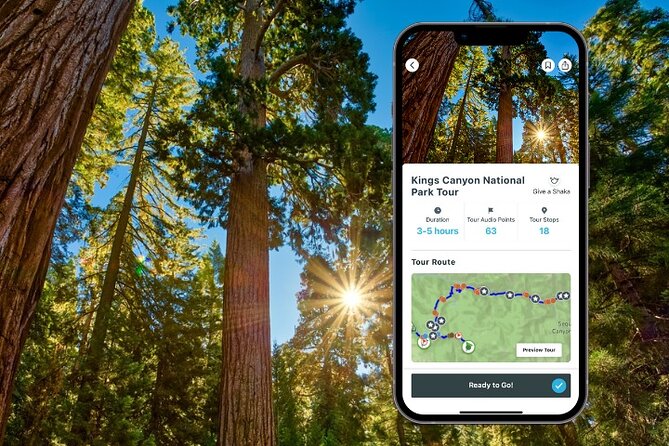
Before you go, you’ll get an email with a redeem code. Then you download the Shaka Guide app and start the tour from the My Stuff tab. The tour is meant to work offline, so you’ll want to download the content using strong Wi‑Fi before your drive.
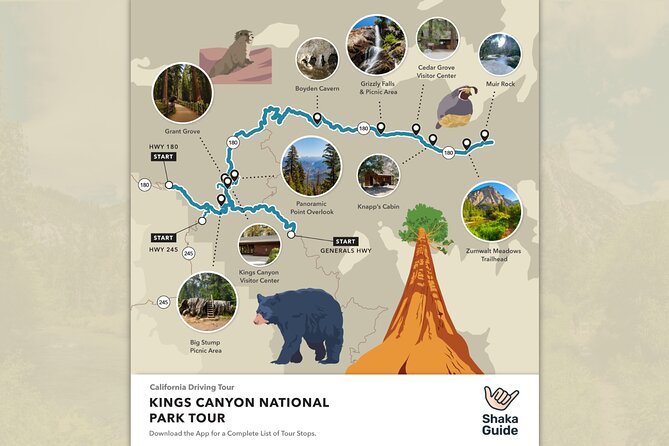
You also get optional starting points near the Big Stump area:
- Highway 180 toward the Big Stump entrance
- Highway 245 toward the Big Stump entrance
Why this matters: it lets you start where it makes sense for your route, instead of forcing you to fight traffic just to hit Stop 1.
Sequoia warm-up: Big Stump and Redwood Mountain Grove
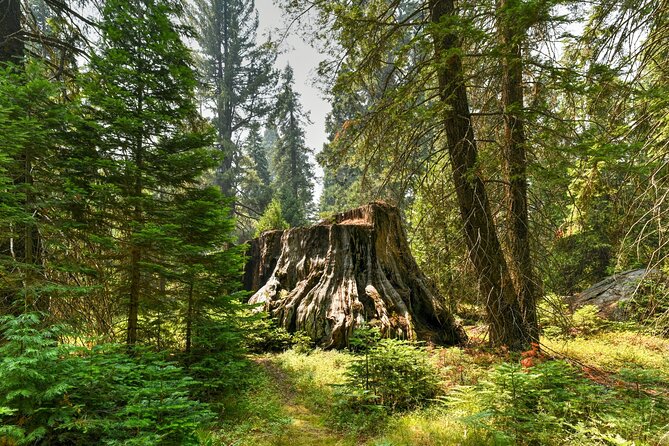
This tour kicks off at Big Stump Picnic Area. From there, you can do an easy two-mile loop to Big Stump itself, the remains of the Mark Twain Tree. The facts here are the kind that make you pause: it reportedly was 16 feet in diameter and over 300 feet tall before it was chopped down and displayed in the American Museum of Natural History in New York and the British Museum in London. Even if you don’t love tree history, this stop gives you a strong sense of scale early.
Practical note: even though it’s an easy loop, you’ll still want decent walking shoes. The terrain is outdoors, and you’ll feel it after a long drive day.
Next is Redwood Mountain Overlook, a quick pull-off designed to take in the Redwood Mountain Grove. This is the biggest sequoia grove in the world, spanning nearly 2,500 acres. If you want to trade your car window for your own two feet, there are two featured hike options mentioned here: the Sugarbowl Loop (6.8 miles) and the Hart Tree Loop (7.3 miles).
If you’re thinking about hiking, the setup is very specific: drive about half a mile east from the overlook, follow signs for Redwood Canyon, then drive about two miles on a dirt road to the trailhead. That means you should plan to check your comfort level with dirt roads and give yourself enough daylight.
Kings Canyon viewpoints that do the work for you
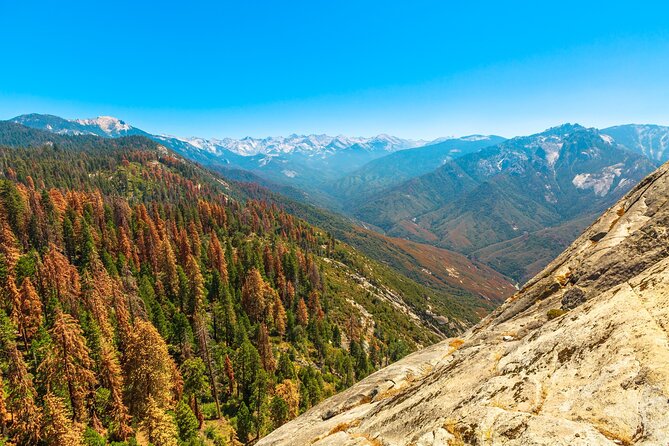
At Kings Canyon Overlook, you don’t need a long route to get the payoff. You pull up and take in a panoramic view of Kings Canyon, which is often described as strikingly deeper than the Grand Canyon. The tour facts compare maximum depths: Kings Canyon around 8,200 feet (2,500 meters) versus the Grand Canyon at about 6,000 feet.
Why this stop is valuable: you get a “big scale” moment early in the day, and it helps you understand what later river and canyon areas will feel like.
A few minutes later, the tour slows down at Kings Canyon Visitor Center in Grant Grove Village. This is one of those stops that pays off if you like being prepared. You can watch a short film, use the Sequoia Parks Conservancy Store for maps/books/souvenirs, and check what’s open at the Market and restaurant next door. It’s also a good time to use restrooms and reset before more driving.
Grant Grove: General Grant Tree and a walk that’s actually worth it
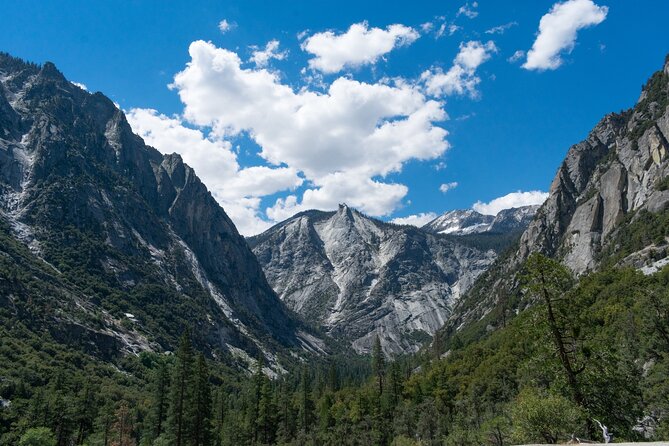
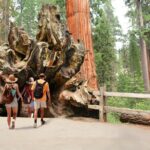
Grant Grove is where the General Grant Tree comes into focus. It’s the world’s second-largest tree, with features like the Fallen Monarch, Gamlin Cabin, and the Centennial Stump in the same area. The loop here is refreshingly easy: about a third of a mile to reach the General Grant Tree on a paved path.
If you like numbers, the details included matter: the General Grant Tree is about 268 feet tall with a circumference around 107 feet. It’s a quick walk, but it hits that sweet spot of not-too-far and very meaningful.
If you’re traveling with people who don’t want long hikes, this is likely one of your favorite stops because it gives you a major “wow” without burning the whole day.

Panoramic Point to McGee Vista: views plus the wildfire story
For Panoramic Point, you get another high-elevation look close to parking. The view also includes Hume Lake, and if you want to stretch your legs a bit, the tour points you toward the trail to Park Ridge Fire Lookout. That hike is about 5 miles (8 km) and described as moderately difficult, with a fire lookout tower destination. This is a great option if you enjoy the effort of a climb and want a payoff that feels specific and not just scenic.
McGee Vista Point is short and focused: another “get out of the car and look” moment. But it comes with something important—an explanation tied to the Rough Fire and the relationship between wildfire and sequoia trees. It’s one of those stops where the story changes how you see the landscape, because you’re not just looking at trees; you’re reading the evidence of disturbance and recovery.
Junction View, Yucca Point, and the marble vein clue
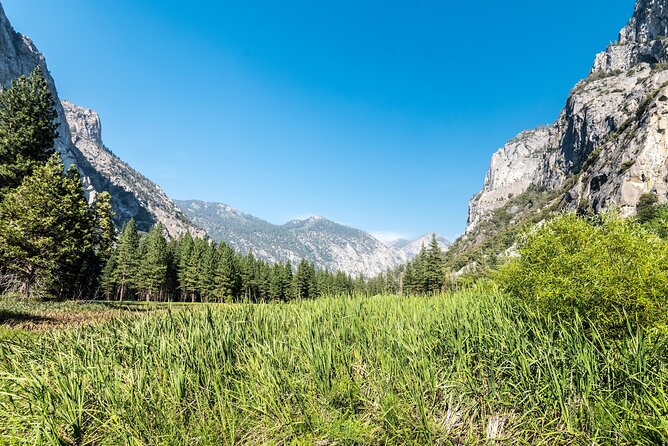
At Junction View, the tour gives you an expansive look across the Western Sierra, toward Mount Whitney. The name connects to geography: the overlook is named for the junction of the Middle and South forks of the King River, and it also provides views of Kings Canyon.
Then Yucca Point shifts the attention to another Kings River perspective. The tour notes the drive into the canyon is twisty, so this is a useful reminder to slow down, pause, and get out when the opportunity pops up.
Finally, Scenic Byway Viewpoint adds a geology angle. Instead of only looking at trees and ridges, you’re asked to look for a limestone vein—also known as marble—running through the park. You’re basically hunting for gray stone that contrasts with the surrounding ground cover. If you enjoy small details, this is fun; if you don’t, you can still enjoy the broader view while keeping an eye out for that contrast.
Boyden Cavern: the one paid stop (and why to plan it right)
The tour includes Boyden Cavern, but this is the clearest place where you’ll spend extra. Boyden Caverns guided tours run about 45 minutes to an hour, and the tour fee isn’t included. The cost range listed is $8–$23 per person, and tours are run by a small company.
Logistically, plan for a short but steep walk from the parking lot to the cave entrance. That matters because you may have already walked at overlooks and visitor centers; this is the part where legs can feel it.
If your group includes anyone who struggles with steep stairs or walking on uneven ground, this is a good stop to treat as optional rather than mandatory.
Lunch-friendly water: Grizzly Falls to Roaring River Falls
For a relaxing pause, Grizzly Falls Picnic Area is hard to beat. The waterfall drops about 80 feet in a shaded forest setting. It’s a short walk from the picnic area and parking lot, and it’s the kind of spot where you can eat lunch without feeling rushed.
Restrooms are listed as available here, which makes it a smart “mid-tour reset” stop if you’ve been driving a while.
Later comes Roaring River Falls, reached via an easy, nearly third-of-a-mile out-and-back trail. You’ll also see how the route connects to longer options: from here, you can continue to Zumwalt Meadows on a 4-mile (6 km) trail. Even if you don’t continue, this stop works as a calm capstone before the final river-area moments.
Cedar Grove Visitor Center, Knapp’s Cabin, and the canyon living room
At Cedar Grove Visitor Center, you get the second and last visitor center stop of the day. It’s located in Cedar Grove Village, and it’s open seasonally—around Memorial Day through mid-September. This is a good place for context about natural and cultural history, plus the Sequoia Parks Conservancy Store.
Next is Knapp’s Cabin, which shifts the tone to human history. The cabin belonged to George O. Knapp, who brought friends on fishing trips. It’s on the National Register of Historic Places, and it’s reachable via a short trail from the parking area. If you like places where the park feels lived-in rather than purely protected, this stop adds a nice layer.
Zumwalt Meadows and Muir Rock: easy walking, wildlife chances, and river calm
Zumwalt Meadow Trail is one of the best “easy nature” options in the later part of the route. The trail to the meadows is described as easy, about 0.75 mile out-and-back. The tour also encourages you to keep an eye out for wildlife, which is exactly what you want to do in a meadow setting—slow down and watch instead of only looking ahead.
Finally, Muir Rock caps the tour at a peaceful, no-hassle spot. It’s described as a flat slab on the Kings River bank, and the tour frames it as a place where local lore says John Muir would hang out and chat with passersby. You can reach it via a short easy walk from the parking area, which makes it a nice end-point if your legs are tired.
This is the kind of stop that feels like closure. After all the overlooks and talking points, you’re left with still water, a bench-like place to sit, and time to just be quiet.
Price and value: what $9.59 per group really buys you
At $9.59 per group (up to 15 people), the headline value is obvious: the price is for the group, not per person. That can be a big deal if you’re traveling with more than two people, because many tour options charge per adult and quietly add up.
Also, the tour is offline and never expires, so you can use it on your schedule rather than squeezing everything into one tight itinerary. If you’re visiting in summer crowds or you want to move at your own speed, this kind of flexibility is worth something.
What you should still expect to pay for:
- Boyden Caverns (ticket not included; $8–$23 per person range is listed)
- Parking fees and entrance fees are listed as not included
- Meals and refreshments are not included
In other words, most of what you’ll do with the audio is free to enjoy, but budget a little for the “optional fee” parts and the practical park costs.
How long it takes (and how much walking you’re signing up for)
The tour is estimated at about 6 to 7 hours. That time makes sense because the day mixes quick stops (often 5–15 minutes for overlooks and short breaks) with a handful of real walking moments.
Here’s the walking reality you’ll face, based on what’s built into the route:
- Easy loops like the Big Stump loop (2 miles) and the paved General Grant Tree area (~0.33 mile loop)
- A few simple out-and-backs like Roaring River Falls (nearly 0.33 mile) and Zumwalt Meadows (0.75 mile)
- More effort options like the Park Ridge Fire Lookout hike (5 miles, moderate)
- The cave walk at Boyden Caverns (short but steep)
If you prefer minimal walking, you can still do plenty here by treating the longer hikes as optional. If your group loves getting out and moving, the route supports that too.
Who it fits best:
- Families and mixed-experience groups who want options
- People who like big views but don’t want a full day of nonstop hiking
- Visitors who want a guided story without committing to a traditional tour schedule
Practical tips so the audio tour actually feels effortless
A few small habits can make a big difference with GPS audio in a park setting.
First, get your phone ready before you reach the park roads. Download the tour content using strong Wi‑Fi so you’re not dependent on data later. Then keep your battery topped off. If you’re using navigation on top of the audio, battery drain can sneak up fast.
Second, treat the “short” stops as real stops. Overlooks are short by design, but you’ll enjoy them more if you park, step out, and take in what the audio asks you to look for. At Scenic Byway Viewpoint, for example, that geology clue is only useful if you’re paying attention on foot.
Third, if Boyden Caverns is on your plan, decide ahead of time whether your group will want the guided tour length and the steep walk. It’s the only clearly paid attraction on this route, and it’s also the place where logistics can affect your timing.
Should you book this Kings Canyon self-guided audio tour?
If you want a cost-effective, hands-free way to see Kings Canyon and major sequoia-area highlights, this is a strong choice—especially for groups. The GPS audio and offline map make the day easier to manage, and the route mixes quick overlooks with a few meaningful short walks.
I’d skip or partially adapt the plan only if your group hates driving plus short hiking, or if you know steep cave access (Boyden Caverns) will be a problem. In most other cases, this tour is exactly the kind of practical “you go at your pace” experience that works well in big national parks.
FAQ
How much does the Kings Canyon National Park self-guided audio tour cost?
It costs $9.59 per group, up to 15 people.
How long does the tour take?
Plan on about 6 to 7 hours.
What languages is the audio offered in?
The tour is offered in English.
Does the tour work offline?
Yes. It includes an offline map, so you don’t need wifi or data to use it during the drive.
Do I need to start the tour at the first stop?
No. You can choose a customizable start point, including options near Highway 180 or Highway 245 toward the Big Stump entrance.
Where does the tour start and end?
The tour starts in Three Rivers, CA 93271, USA, and ends back at the same meeting point.
Are there any stops with extra entrance fees?
Yes. Boyden Cavern is not included, and it has a separate ticket cost listed as $8–$23 per person.
Are entrance fees for the park included?
Entrance fees are listed as not included. Many stops are free to visit, but you should still expect that some park-related costs may apply.
Does the tour expire after I buy it?
No. Tours never expire, and you can take it when you want.
Is it a private tour?
Yes. It’s private, so only your group will participate.