REVIEW · PORT ANGELES
Olympic National Park Self-Guided Driving Audio Tour
Book on Viator →Operated by Adventures with Action · Bookable on Viator
Olympic National Park by audio is smart planning. This self-guided driving tour gives you hands-free stories that start when you reach each stop, plus offline maps so your trip doesn’t fall apart the moment cell service gets weak. The big drawback is simple: it’s not a live guide, so if GPS skips a stop or you miss a turn, you won’t get the same real-time correction you’d get on a tour with a person.
For me, the strongest part is the pacing. You can pause for photos or a short walk at stops like Madison Creek Falls, Lake Crescent, and Hurricane Ridge without keeping an itinerary hostage. Just know it’s a long driving day, and Olympic is huge—some of the best park time is still on foot, not from the car window.
In This Review
- Key things you’ll notice on this Olympic audio drive
- Price and the “per-car” value that actually matters
- Setup: how the app guides you when signal disappears
- The route flow: from Port Angeles waters to Sol Duc trail country
- Stop 1: Olympic National Park Visitor Center—get your bearings fast
- Stop 2: Madison Creek Falls—short, accessible, and scenic
- Stops 3 and 4: Elwha River and Glines Canyon Dam Overlook
- Stops 5 and 6: Lake Sutherland and Lake Crescent—slow down for water views
- Stop 7 and 8: Meldrim Point and Sol Duc Valley
- Pacific coast stops: Rialto Beach and Ruby Beach for driftwood drama
- Forks area culture stops: Forks Timber Museum and Bogachiel State Park
- Hoh Rain Forest and the stop that explains the air
- Hurricane Ridge: big mountain views without the full-day hike
- What I like best about this style of park touring
- Watch-outs so your day stays smooth
- Who this self-guided Olympic tour is best for
- Should you book the Olympic National Park Self-Guided Driving Audio Tour?
- FAQ
- How much does the Olympic National Park Self-Guided Driving Audio Tour cost?
- How long does the tour take?
- Where does the tour start and end?
- Is a park pass included?
- Does the tour work offline?
- When do I need to download the tour?
- What language is the tour in?
- How do I start the audio once I arrive?
- Do I get lifetime access?
- Is there free cancellation?
Key things you’ll notice on this Olympic audio drive
- GPS-triggered audio: the narration plays based on where you are, so you don’t need to keep tapping your phone.
- Offline-friendly design: download the tour while you have solid signal, then keep going without cellular.
- Real value per group: pay $16.99 per car (up to 4), not per person.
- Stop variety in one day: falls, rivers, lakes, temperate rainforest, and beach pullouts.
- A lot of story content: 43+ miles of route and 33+ audio stories (with about 2–3 hours just for the main recording set).
- You end with a trailhead: the route finishes at Sol Duc Trailhead, which helps if you want to keep hiking after the drive.
Price and the “per-car” value that actually matters
At $16.99 per group (up to 4), this tour is priced for families and couples doing the park their own way. That per-car model is the whole point: if you’re splitting costs with a couple friends, you get guided-style narration without paying guided-tour rates.
Duration is listed as about 5–6 hours, which matches what a driving day through this part of the Olympic Peninsula feels like. And there’s a useful extra note: the audio portion is designed to take about 2–3 hours to complete, with the full route stretching longer once you add parking and short walks.
The lifetime access piece is also more than marketing fluff. The tour is described as new, lifetime access with no expiry, meaning you can save it for another season, a second trip, or a future road trip through Washington.
You can also read our reviews of more tours and experiences in Port Angeles.

Setup: how the app guides you when signal disappears

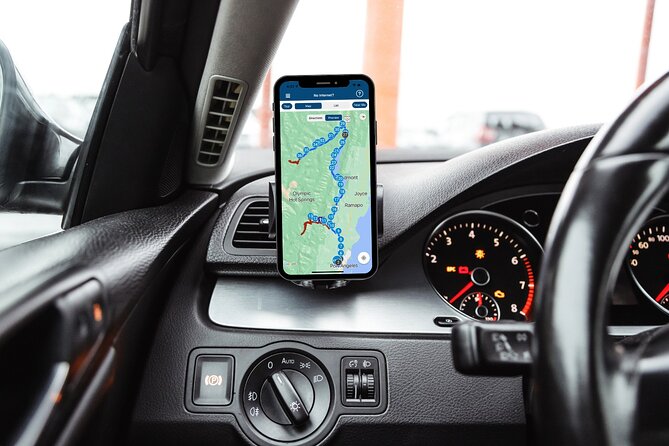
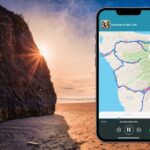
This experience relies on an app called Action’s Tour Guide App. After booking, you’ll get an email and text with setup instructions and a password, and you’re told to download the tour while you have strong Wi‑Fi/cellular—then it works offline after that.
On site, you don’t wait for anyone. You go to the Olympic National Park Visitor Center starting point, open the app, and start the correct tour version. The first story begins automatically and the audio is designed to play as you follow the route.
For audio in your car, playback is described as compatible with Apple CarPlay, and the instructions also recommend connecting your phone via Bluetooth, USB, or AUX. One review flagged CarPlay starting issues, so I’d plan a backup connection method if your car tends to be picky.
Practical tip: if you want smooth GPS-triggered audio, start at the designated first point and follow the tour route closely. When people detour too early or skip a step, the audio can feel out of sync.
The route flow: from Port Angeles waters to Sol Duc trail country
This drive is based around a starting point in Port Angeles and an ending point at Sol Duc Trailhead. You’ll be moving through multiple Olympic zones: the coastal side, temperate rainforest areas, alpine views like Hurricane Ridge, and inland valleys tied to the park’s rivers and lakes.
The route is described as over 43 miles long and designed around 33+ audio stories. That doesn’t mean you need to rush. Think of it as a sequence of small “pull over and learn” moments, with time to step out at each stop.
Also remember: Olympic National Park isn’t a single “one road” attraction. Even if this is a driving tour, you’ll get the most satisfaction by treating the car as transportation and the stops as your main event.
Stop 1: Olympic National Park Visitor Center—get your bearings fast
You start at the Olympic National Park Visitor Center on Mt Angeles Rd in Port Angeles. This first stop matters because the park is made of four big regions and three distinct ecosystems: the Pacific coastline, alpine areas, the west-side temperate rainforest, and the drier east-side forests.
That mix is why Olympic feels like multiple parks in one. Early narration helps you connect what you’re seeing later—falls and rivers on one side, lakes and rainforest on another, and high viewpoints when you turn toward Hurricane Ridge.
If you’re the type who likes context, you’ll appreciate this opening more than you’d expect. It’s the difference between admiring scenery and understanding why it looks the way it does.
Stop 2: Madison Creek Falls—short, accessible, and scenic
At Madison Falls Trailhead, you get a paved walk to the falls that’s described as less than 100 meters and wheelchair accessible. Madison Creek Falls is about 50 feet high, with a light flow in a horsetail shape.
The drawback is that this is a quick stop. If you’re hoping for a long hike, this won’t scratch that itch. But for families or anyone managing limited time, it’s a perfect “stretch your legs and enjoy” moment.
If you want more impact with minimal effort, this is one of the best payoff-to-time ratios on the route.
Stops 3 and 4: Elwha River and Glines Canyon Dam Overlook
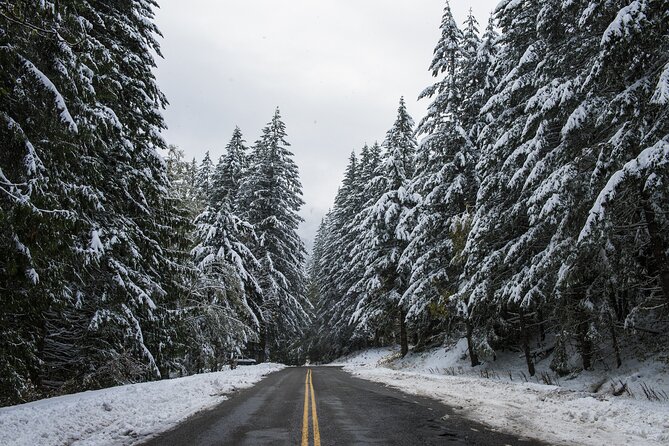
Next you move to the Elwha River, described as a 45-mile river on the Olympic Peninsula. It starts in the Olympic Mountains and generally flows north toward the Strait of Juan de Fuca, with most of its course inside Olympic National Park.
Then comes the Glines Canyon Dam Overlook, also called Upper Elwha Dam, built in 1927 and described as a 210-foot (64 m) high concrete arch dam. Seeing the river system in person, then learning how the dam shaped it, helps the story go from abstract to real.
Even if you’re not a policy or engineering nerd, this pairing is valuable. It connects the park’s natural beauty with the history that influenced how people used the land and water here.
Stops 5 and 6: Lake Sutherland and Lake Crescent—slow down for water views
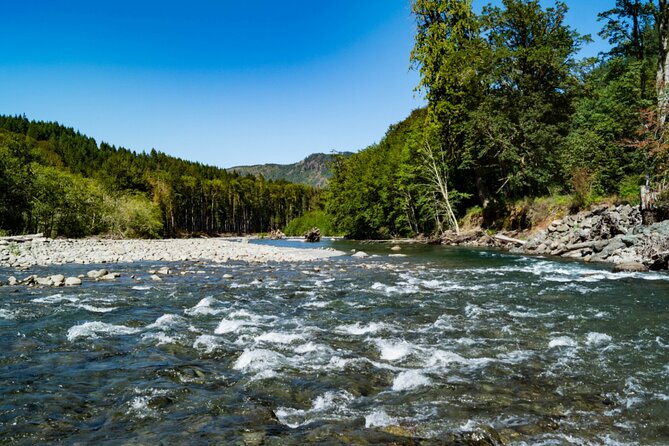
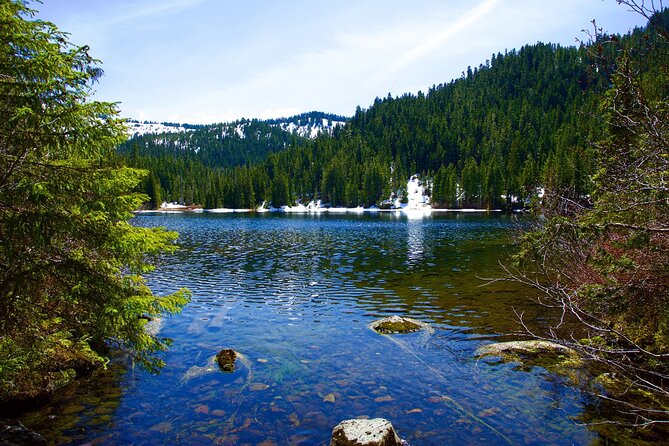
At Lake Sutherland, you’re about 17 miles west of Port Angeles, near Lake Crescent, and the lake drains into Indian Creek (a tributary of the Elwha River). From a driver’s perspective, it’s a great “pause window” spot—enough scenery to feel worth stopping, but not so time-consuming you feel trapped.
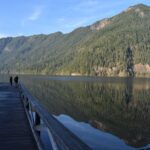
Then you reach Lake Crescent, a deep lake entirely within Olympic National Park. You also have Marymere Falls Trailhead near Lake Crescent, and that’s another place where the audio can be the difference between a quick glance and a meaningful stop.
A small caution: lake-area days can attract more traffic, especially in peak seasons. Start early if you can, park smart, and keep your expectations realistic for parking availability.
Stop 7 and 8: Meldrim Point and Sol Duc Valley
Meldrim Point is described as a cape near Ovington and Lake Crescent. It’s another pull-off style stop—think viewpoint energy rather than hiking epic.
Then you shift toward Sol Duc Valley, described as being in the northwest region of the park. Sol Duc tends to feel like the park opening into a quieter, valley-style environment, and the audio here is designed to keep the story moving rather than repeating what you already heard.
This is where your driving-day rhythm matters. If you’ve been stopping constantly, you may feel a little “photo fatigue.” If you pace it right, these stops make the drive feel like a connected trip rather than a checklist.
Pacific coast stops: Rialto Beach and Ruby Beach for driftwood drama
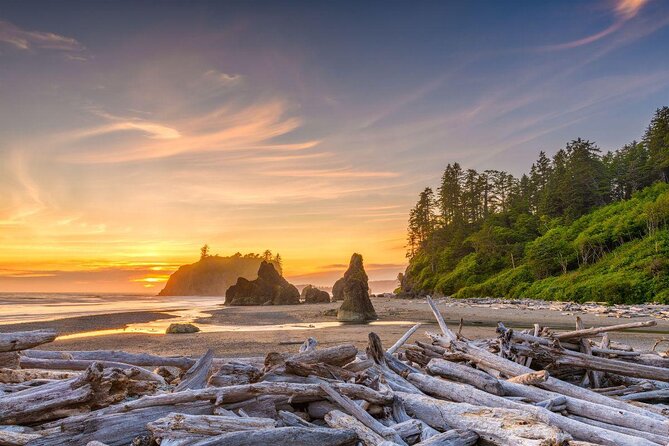
The tour includes beach time, with Rialto Beach listed as a public beach on the Pacific Ocean, and Ruby Beach listed as another northern coast beach known for driftwood and a notable number of sea stacks.
Beach stops are worth it, but treat them differently than waterfalls or lakes. You might not get a “quick in and out” vibe. Wind, shifting light, and that driftwood field can eat time—in a good way.
Practical move: wear layers. Coastal weather can change fast, and you’ll enjoy the stories more if you’re not rushing just to stay comfortable.
Forks area culture stops: Forks Timber Museum and Bogachiel State Park
The route also includes stops that aren’t only nature: the Forks Timber Museum (focused on forestry history in the region) near the local tourist office, plus Bogachiel State Park, a 127-acre park on the Bogachiel River about four miles south of Forks on Highway 101.
These breaks matter because Olympic isn’t just wilderness photos. It’s also communities shaped by timber and land use, plus a region that had to balance work and conservation. If you care about the human side of the peninsula, these stops add depth.
Even if you only spend a short time here, you’ll feel more grounded about what you’re driving through.
Hoh Rain Forest and the stop that explains the air
Next comes Hoh Rain Forest, one of the largest temperate rainforests in the U.S. It includes 24 miles of low-elevation forest and ranges from 394 to 2,493 feet along the Hoh River valley, formed thousands of years ago by glaciers.
This is the kind of place where the audio payoff is big because rainforest ecology can be hard to “see all at once.” With narration guiding you, you’ll likely catch details you’d otherwise miss—like how the river valley and elevation shape what grows and what you notice.
If you’re short on time, don’t feel pressured to do a long hike just because the rainforest name suggests it. The value here is learning how the environment works while you’re physically there.
Hurricane Ridge: big mountain views without the full-day hike
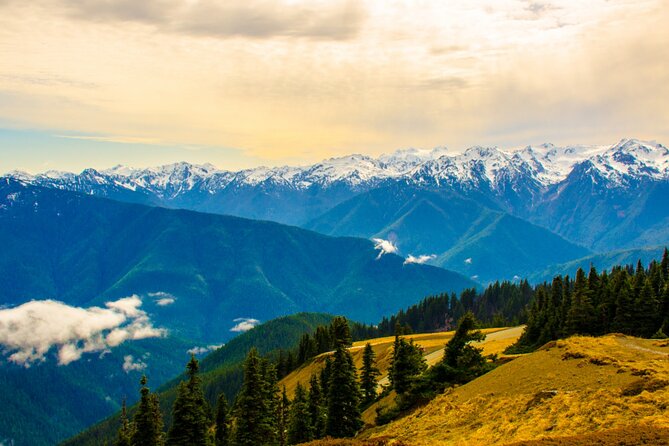
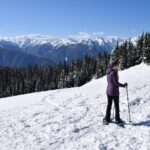
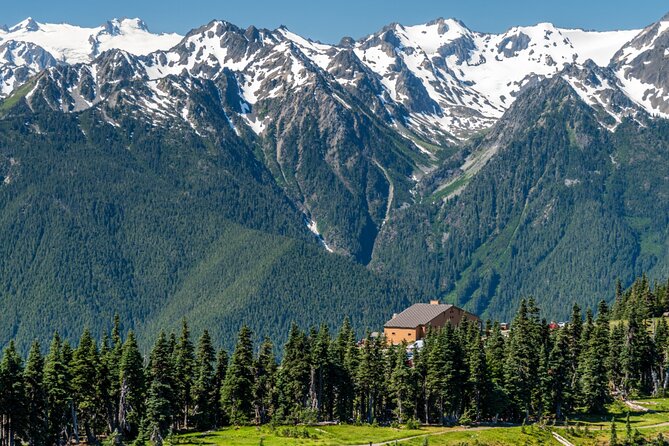
The tour includes Hurricane Ridge, described as a mountainous area in Olympic National Park. Multiple segments in the tour content focus on viewpoints and a short alpine outing with wildlife and wildflowers mentioned, plus a family-friendly vibe.
This is a great place to spend your “best weather window.” Mountain views can turn dramatic quickly, and you’ll appreciate the narration that frames what you’re looking at.
I also like Hurricane Ridge for logistics: it often feels like the closest thing to a high-payoff stop on a driving route like this. You can get serious viewpoints without committing to a full day of trekking.
What I like best about this style of park touring
The best part is the freedom. You’re not waiting for a group. You can stop for a photo, skip a stop, or pause to breathe.
The audio quality is described as professional and pleasant, and the GPS approach is built around hands-free playback. That combo is what makes the experience feel like more than background noise.
Also, the “learn at your pace” model fits Olympic well. Some stops need minutes. Others need longer. With audio, you can match time to mood.
Watch-outs so your day stays smooth
Here are the realities I’d plan for before you drive:
- It’s not a live guide. You won’t get on-the-spot answers to weird questions or local shortcuts.
- GPS stop accuracy depends on you. If you skip turns or start at the wrong place, audio timing can feel off.
- CarPlay may be inconsistent. The instructions mention CarPlay compatibility, but at least one user reported trouble. Use Bluetooth/USB/AUX as a backup plan.
- Expect short story snippets at stops. Some people felt the narration was brief and wanted more deep background. If you want extra detail, the app includes a Learn More section at stops, so you can expand when you care.
If you go in expecting flexible audio guidance rather than a conversation with a park expert, you’ll enjoy it more.
Who this self-guided Olympic tour is best for
This is a strong match for you if you want:
- a cost-effective way to add professional narration to a park drive,
- offline capability for weak-signal areas,
- and the flexibility to stop and move on your own schedule.
It’s also a good fit for families because the stops include short walks like the Madison Falls route, plus car-friendly viewpoint stops.
If you want maximum hikes, ranger-level explanation, or a custom route based on weather, you might prefer a live guided tour or a day built around a specific region instead.
Should you book the Olympic National Park Self-Guided Driving Audio Tour?
Yes—if your goal is smart, affordable storytelling while you drive and you’re okay doing the park your way. The per-car price, offline-first setup, and GPS-triggered audio make this a practical alternative to expensive guided tours.
Book it especially if you want to hit multiple Olympic highlights—falls, rivers, lakes, rainforest, and coastal viewpoints—without spending your day corralling a group.
Skip it or reconsider if you need a highly detailed, stop-by-stop education delivered like a live seminar. This is built to guide you through the route, not to replace expert conversation.
FAQ
How much does the Olympic National Park Self-Guided Driving Audio Tour cost?
It costs $16.99 per group, up to 4 people.
How long does the tour take?
It’s listed as about 5 to 6 hours. There’s also a note that the audio set takes about 2 to 3 hours to complete.
Where does the tour start and end?
It starts at Olympic National Park Visitor Center, 3002 Mt Angeles Rd, Port Angeles, WA 98362, USA. It ends at Sol Duc Trailhead, Sol Duc Rd, Port Angeles, WA 98363, USA.
Is a park pass included?
No. A park pass is required to visit Olympic National Park, and it is not included.
Does the tour work offline?
Yes. The tour includes offline maps, and it’s designed to work without cellular or Wi‑Fi after you download it.
When do I need to download the tour?
You must download the tour while you’re in strong Wi‑Fi/cellular. After that, it works offline.
What language is the tour in?
The tour is offered in English.
How do I start the audio once I arrive?
Open Action’s Tour Guide App once onsite. If there is just one tour, launch it, and the first story begins automatically at the starting point.
Do I get lifetime access?
Yes. The tour is described as new, lifetime access with no expiry.
Is there free cancellation?
Yes. You can cancel for a full refund up to 24 hours in advance.