REVIEW · LAS VEGAS
Premium Small Group 5-Day National Park Tour from Las Vegas
Book on Viator →Operated by Jupiter Legend Corporation · Bookable on Viator
Utah can swap your Vegas glow fast. This 5-day national parks run turns a long Southwest drive into a guided, small-group route with hotel stays included and stops at Zion, Bryce, Moab-area parks, Monument Valley, and Antelope Canyon (or Horseshoe Bend depending on dates).
I like two things a lot. First, park and state-park entrance fees for the listed stops are covered, plus admissions for Four Corners, Monument Valley, and Antelope Canyon. Second, you travel in a small group (max 13) in comfortable vans with Wi‑Fi and charging ports, and you get pickup from major Las Vegas Strip resorts.
One possible drawback: you’re doing a lot of ground in a few days. Even with a relaxed schedule, expect packed days and a handful of short hikes, so good shoes and sunscreen matter.
In This Review
- Key Points Worth Knowing Before You Go
- Price and What $749 Really Buys in the Southwest
- Pickup, Hotels, and the Small-Group Comfort Factor
- Day 1: Zion’s Canyon Overlook Trail and Chessboard Mountain to Bryce Hoodoos
- Day 2: Capitol Reef’s Waterpocket Fold to Canyonlands’ Three Districts
- Day 3: Arches Scenic Drive, Mesa Verde Cliff Dwellings, and Four Corners
- Day 4: Goosenecks, Monument Valley, and Antelope Canyon or Horseshoe Bend
- Day 5: Lake Powell Options, Glen Canyon Dam, and the Final Utah-to-Nevada Drive
- Pace, Comfort, and How to Get the Best Photos Without Burning Out
- Who This Tour Fits Best (and Who Might Want a Different Plan)
- Should You Book This Las Vegas National Park Tour?
- FAQ
- FAQ
- What’s the group size?
- Are hotels included in the price?
- What meals are included?
- Are entrance fees included?
- Is pickup from the Las Vegas Strip included?
- Are optional activities included?
- What sites might change on different dates?
Key Points Worth Knowing Before You Go
- Small group cap of 13 means more attention from guide and easier photo stops
- Entrance fees included for the big-name parks and key special sites like Four Corners and Antelope Canyon
- 4 nights in boutique or scenic-area hotels so you’re not scrambling after each drive
- Guided time on signature trails and viewpoints like Canyon Overlook, Chessboard Mountain, and hoodoo viewpoints in Bryce
- Date-based swap for Antelope Canyon vs Horseshoe Bend so your plan still works when conditions change
- Optional add-ons exist (Monument Valley Jeep, Lake Powell kayaking), but the core sites are covered
Price and What $749 Really Buys in the Southwest
At $749 for about five days, this tour isn’t just “transportation plus stops.” You’re also buying back time and hassle. A big part of the value is that admissions are included for the parks and sites named in the route. In the Southwest, that adds up quickly, especially with places like Monument Valley and Antelope Canyon, plus Four Corners.
You also get 4 nights in hotels in a “boutique” or “scenic area” style (based on availability). That matters because the route spends multiple days in Utah and western Colorado, and staying put makes the logistics easier than doing it solo.
The other value piece is the human one. Guides and bilingual drivers help keep timing tight and explain what you’re looking at—whether it’s hoodoos in Bryce or the way Canyonlands splits into Island in the Sky, Needles, and the Labyrinth area. In one recent group, the guide named Van was praised for staying on schedule and even translating for Chinese passengers, plus helping sort out personal items left in the van after the trip.
For your money, you’ll mainly pay for organization: pickup, hotel, entrance fees, and guided stops—then you handle only the extras like personal snacks, gratuities, and any optional add-ons you choose.
You can also read our reviews of more tours and experiences in Las Vegas.

Pickup, Hotels, and the Small-Group Comfort Factor
This is set up to reduce friction right from Las Vegas. You pick a hotel for pickup, and the tour offers free airport pickup and drop-off if you contact them in advance. The start time is 7:30 AM, and the day runs on a “relaxed schedule” style: depart after 8:30 AM and return by 6:30 PM (or up to 8:00 PM if there’s a dinner stop).
Transportation is designed for a long route without feeling like a cattle car. You ride in new, comfortable 7-seat vans or high-roof vehicles with Wi‑Fi and charging ports. That sounds like a small detail until you’re on hours of desert driving and your phone battery is giving up. It also helps on photo days when you want your battery and maps ready.
Then there are the hotel basics that make the whole trip feel easier: you get 4 nights in quality hotels in the region. Rooms are set up for 2–4 people, generally two full/double beds or one king/queen bed depending on availability.
One practical note: the tour meeting point doesn’t include parking, and transportation to and from that meeting location isn’t part of the fee. If you’re using a rideshare, plan for that.
Day 1: Zion’s Canyon Overlook Trail and Chessboard Mountain to Bryce Hoodoos
Day 1 is where the trip earns its keep. You leave the Las Vegas area, stop in St. George for a break and a lunch of Las Vegas-style sandwiches (included), then head into Zion National Park.
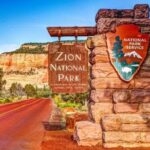
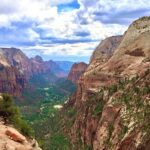
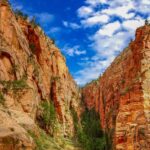
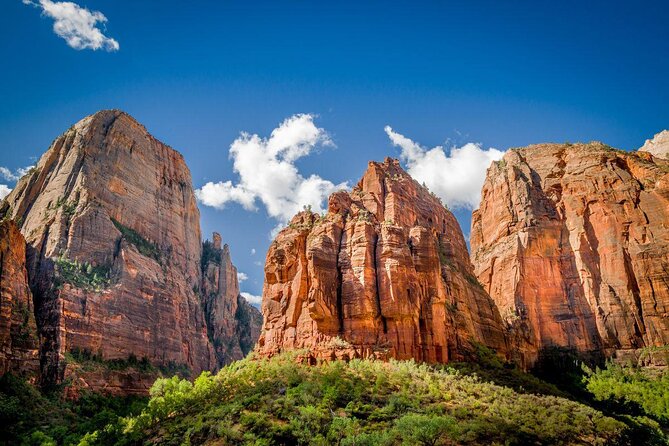
In Zion, you get a guided block (about 120 minutes) that includes hiking Canyon Overlook and visiting Chessboard Mountain. This is a smart choice for a group tour because it hits what most people come for: towering sandstone cliffs and big-time views without demanding a full-day technical hike. Zion’s setting is described as a place shaped by ancient native presence and pioneers, and on this route you’re also walking through that layered sense of place rather than just driving past.
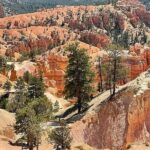
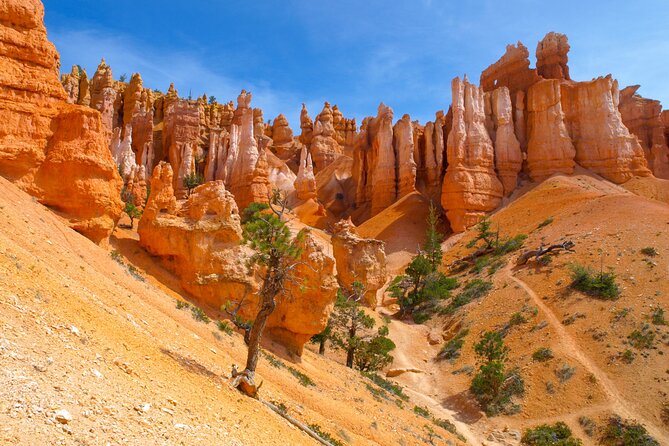
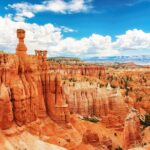
After Zion, you head to Bryce Canyon National Park for another about 120 minutes, focusing on Bryce’s famous “amphitheaters” and its hoodoos—those rock spires formed over time by frost and erosion. If you like geology, Bryce is fun because color and shape are doing the talking: red, orange, white, and cream rock that turns dramatic as light shifts.
Drawback on Day 1: it’s an active start and you’ll be moving all day. If you’re sensitive to long drive days, bring your best “I can handle one early day” attitude.
Day 2: Capitol Reef’s Waterpocket Fold to Canyonlands’ Three Districts
Day 2 builds your sense of scale. It starts again in Bryce Canyon for about 60 minutes, which is useful if you want more time to take in viewpoints or adjust your photo angles without feeling rushed. Then the route jumps into the “red rock country” stretch.
First stop: Capitol Reef National Park (about 90 minutes). The defining feature here is the Waterpocket Fold, described as a geologic wrinkle extending almost 100 miles. In plain terms, you’re seeing how one long set of earth movements can create cliffs, canyons, domes, and bridges all in the same park. Capitol Reef is less famous than Zion and Bryce, but that can be a plus because your time feels a touch less crowded—while still giving you dramatic scenery.
Next comes Canyonlands National Park (about 90 minutes). Canyonlands is split into distinct areas: Island in the Sky, Needle Mountain, and Labyrinth. The tour time is enough to understand the idea behind the park’s division—different mesas and views created by erosion over time by the Colorado River and tributaries. You also get scenic looks toward the river system, which helps connect the dots from one stop to the next.
To cap the day, you visit Dead Horse Point State Park (listed alongside Prancing Horse Bluff). The viewpoint is about 2,000 feet above the Colorado River, and it’s built for that “one view, repeated from a dozen angles” experience. It’s one of the easiest places to feel how erosion carves big shapes, not just small details.
This is a long-ish day, but the structure keeps it from feeling like a blur: Bryce repeat for context, then Capitol Reef, then Canyonlands, then a sunset-style viewpoint moment if conditions allow.
Day 3: Arches Scenic Drive, Mesa Verde Cliff Dwellings, and Four Corners
Day 3 is about two different kinds of “wow,” plus a quirky finish.
You start with Arches National Park on a scenic drive (about 120 minutes). Arches is known for more than 2,000 natural sandstone arches, and the route highlights key names like Delicate Arch, Landscape Arch, Balanced Rock, and Devils Garden. Even if you’re not a hardcore hike person, Arches rewards slow looking. The arches are the headline, but the wider desert shapes help too.
Then there’s a lunch break in Cortez (described as leisurely time to refuel). That’s a good timing choice: Arches can be deceptively tiring in bright sun, and you’ll want energy before Mesa Verde.
Next: Mesa Verde National Park (about 90 minutes). This is a different flavor. Instead of formations, you’re looking at human history in the high deserts—cliff villages built hundreds of years ago. The route mentions the chance to visit cliff dwellings and names major highlights such as Cliff Palace and Spruce Tree House. Mesa Verde is also noted as a UNESCO World Heritage site, which helps explain why the focus is on preservation and interpretation, not just scenery.
Finally, you end at Four Corners National Monument (about 60 minutes). This is the junction of Arizona, Colorado, New Mexico, and Utah—a simple idea that feels oddly satisfying in real life. The landmark is described as a metal structure on a cement floor, and the center has a diagonal line along state lines, with state emblems around the perimeter. It’s a quick stop, but it’s memorable in a silly, fun way.
If you love variety—geology, then archaeology, then a road-trip oddity—Day 3 is a strong day.
Day 4: Goosenecks, Monument Valley, and Antelope Canyon or Horseshoe Bend
Day 4 is where the trip leans into classic Southwest icons.
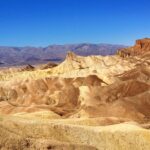
You start at Goosenecks State Park (about 40 minutes). The headline is the San Juan River’s deep, dramatic meanders—about 1,000 feet deep—with winding “three bays” that earned the name. The park is described as not heavily developed, and the best viewing is from above, letting you see the river carve that long curve far below. If you like wide-angle scenery and “how is that even possible” geology, this stop works.
Then it’s Monument Valley for about 120 minutes on the Highway 163 Scenic Drive. You can also take a Monument Valley Jeep ride at your own expense if you choose—useful if you want to get closer to the buttes beyond the drive viewpoints. Monument Valley is famous in movies, and the description points out how filmmaker John Ford used the area for many productions, shaping how people imagine the West.
After that, you go to a slot-canyon or river-bend moment—Antelope Canyon or Horseshoe Bend—depending on dates.
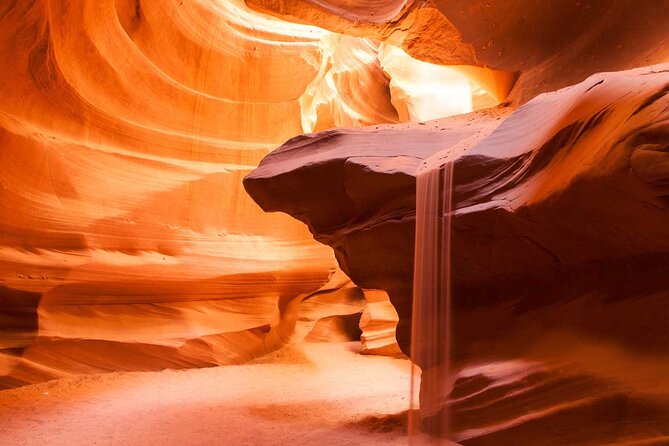
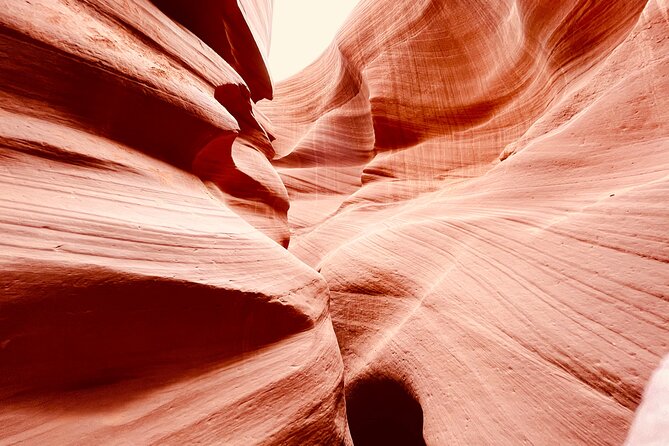
- On many dates (as listed), the tour includes Antelope Canyon (about 90 minutes). The key feature mentioned is the possibility of a light column in Upper Antelope Canyon from the end of March to early October, where sunlight reflects toward the canyon floor.
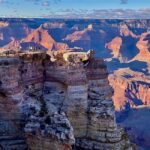
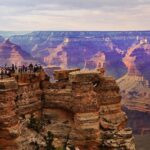
- On other dates (notably during certain closure ranges), Horseshoe Bend becomes the stop (about 60 minutes). It’s described as a famous bend in the Colorado River area, and it’s about nine miles downstream from where Grand Canyon National Park truly begins.
Even if you’ve seen photos, this day is different because the scale is real and the light changes fast. Bring a sun hat. Don’t rely on your phone camera to do the work.
Day 5: Lake Powell Options, Glen Canyon Dam, and the Final Utah-to-Nevada Drive
Your last day brings two big “water in the desert” experiences and then the return.
On many dates, you visit Lake Powell for about 90 minutes. Lake Powell is described as part of the Colorado River system in Glen Canyon National Recreation Area, with nearly 2,000 miles of shoreline, warm water, and lots of sunshine. The tour notes that you can experience kayaking at your own expense if you want, so the time includes a flexible element—either enjoy the view and soak in the scale, or add an activity if it’s offered that day.
Then the route often includes Horseshoe Bend again (about 60 minutes) and ends with Glen Canyon Dam (about 30 minutes on standard dates, or 40 minutes on certain closure ranges).
On dates when kayaking is listed as closed, the last day can shift to include Antelope Canyon, plus a Powell lake lookout point (about 20 minutes) before heading back to Las Vegas.
Here’s the practical takeaway: Day 5 is a “finish strong” day, but the exact stops can flex with seasonal operations. The good news is you still end with the core anchor sites: a Glen Canyon look via the dam, plus a signature bend or canyon experience.
Pace, Comfort, and How to Get the Best Photos Without Burning Out
A small-group tour like this is a balancing act: you want to see a lot, but you also want to enjoy it. This one keeps the pace fairly readable by using short-to-medium guided walking blocks instead of long treks every day.
What helps most:
- Use the included water. Unlimited bottled water is part of the trip, and Utah heat can steal your energy fast.
- Wear shoes that handle uneven rock. Many stops are viewpoint walks. You’re not doing technical climbing, but you are walking.
- Plan for sun. Bring sunglasses and a hat. Sunscreen is listed as something to bring, and you’ll use it.
- Expect car time. Even when schedules feel relaxed, you’re still moving between major parks. Charging ports and Wi‑Fi help, but your body will still feel it.
If you’re the kind of person who likes to linger, you’ll probably love the small group. Stops are timed, but group size makes it easier for the guide to pause for a few extra minutes when conditions allow.
Who This Tour Fits Best (and Who Might Want a Different Plan)
This fits best if you:
- Want a “maximum Southwest hits” route without planning driving days and entry fees yourself
- Like guided explanations during signature stops, from Zion’s viewpoints to Mesa Verde’s cliff dwellings
- Prefer fewer people in the van (max 13) so you can ask questions and move at a human pace
It might not be ideal if you:
- Want complete freedom to wander far beyond short guided blocks
- Dislike early mornings or long drive days between parks
- Plan to rely on optional activities only (because items like Monument Valley Jeep and Lake Powell kayaking are described as optional, and details depend on what’s selected and operational that day)
Should You Book This Las Vegas National Park Tour?
If your goal is to see Zion, Bryce, Moab-area parks, Monument Valley, Antelope Canyon (or Horseshoe Bend), plus Four Corners and Mesa Verde in one smooth package, this is a strong option. The best reasons are practical: hotel included, entrance fees included, and small group organization with real guide time at the places you’ll remember.
I’d book it if you’re traveling with someone who appreciates variety and you want the driving and ticket logistics handled. I’d skip it if you’re set on independent exploration with lots of unstructured time, or if you’re worried about a schedule that moves every day.
FAQ
FAQ
What’s the group size?
The tour has a maximum of 13 travelers.
Are hotels included in the price?
Yes. You get 4 nights in high-quality boutique hotels or scenic area hotels.
What meals are included?
Lunch is included (Las Vegas-style sandwiches). Breakfast is included for 4 days. Other meals and drinks aren’t included.
Are entrance fees included?
Yes. Entrance fees for the national parks and state parks listed are included, and admissions for Four Corners National Monument, Monument Valley, and Antelope Canyon are also included.
Is pickup from the Las Vegas Strip included?
Pickup is offered from major Las Vegas Strip resorts. Free airport pickup and drop-off is available upon flight arrival, if you contact the operator in advance and select your pickup hotel.
Are optional activities included?
Some are optional. Monument Valley Jeep and Lake Powell kayaking are only included if you select the price option for them. Otherwise, those extras are not included.
What sites might change on different dates?
Depending on the date, the tour can swap Antelope Canyon for Horseshoe Bend on Day 4, and it can also adjust Day 5 stops (including how Lake Powell and Antelope Canyon are handled during listed closure ranges).