REVIEW · PHNOM PENH
Phnom Penh & Kirirom National Park Birds Tour
Book on Viator →Operated by Vana Adventure Travel · Bookable on Viator
Bird calls start before the city wakes up. This Phnom Penh & Kirirom birds tour is built around early light and real habitats, with guide Thong helping you track birds you’d miss on your own. You’ll be moving between lotus and rice country and then into forest, usually when the birds are most active.
I especially like the focus on finding birds, not filling time. You spend the morning in the countryside instead of hopping through the usual tourist stops, and that makes the whole trip feel more purposeful. Breakfast is included too, and it’s a welcome reward after getting up so early.
One thing to keep in mind: birding is listed as moderate, and some species can be very tricky—so you’ll want patience. Expect humid lowlands with occasional rain showers, and pack for early mornings at 5:30am.
In This Review
- Key Highlights You’ll Care About
- Sunrise-First Birding From Phnom Penh
- Day 1 at Chambok: Mekong Ferry, Lotus Fields, and Rice Country
- Day 2 in Kirirom National Park: Forest Birds at First Light
- The Species Targets: What You’re Really Trying to See
- What the Included Homestay and Meals Mean in Practice
- Pace, Weather, and What to Bring
- Price and Value: Is $350 Worth It?
- Who This Tour Fits Best
- Should You Book This Phnom Penh & Kirirom Birds Tour?
- FAQ
- What time does the tour start?
- How long is the tour?
- How many people are in the group?
- Is pickup included?
- What meals are included?
- Is there an entrance fee at Chambok?
- What’s the birding difficulty level?
- Can I cancel and get a full refund?
- Will the tour run in bad weather?
Key Highlights You’ll Care About
- Small group (max 8): More time with your guide, less waiting around.
- Targets 50–80 species: From lotus fields to tropical moist forest.
- Guide Thong tracks by call: Especially helpful for birds that stay hidden.
- Two very different habitats: Rice/lake edges on Day 1, Kirirom forest on Day 2.
- Photography should be strong: Good chances to catch birds active at sunrise.
- One-night Chambok homestay included: A community-based ecotourism stay rather than a generic hotel.
Sunrise-First Birding From Phnom Penh
This tour works because it starts where bird activity is highest. The first day begins with a 5:30am pick time, then you’re on the move before the light gets harsh. In Cambodia’s lowlands, mornings can be humid but they’re also when calls carry and birds are actively foraging.
Price-wise, $350 per person for two days is not “cheap,” but it does cover the parts that usually cost you time and transport budget: an air-conditioned vehicle, local bird guidance, and a one-night community homestay with meals. If you’ve ever tried to bird on your own in Cambodia, you’ll know how quickly things get complicated—driving, finding the right habitat, and knowing which call to follow. This tour trades that uncertainty for a plan with a small group and a guide who knows where birds show up.
The experience is also honest about difficulty. Birding is rated moderate, and some species are described as very tricky. In practice, that means you’ll spend time listening, not just scanning. Your best moments often come when you hear something first, then your guide helps you locate it.
You can also read our reviews of more tours and experiences in Phnom Penh.
Day 1 at Chambok: Mekong Ferry, Lotus Fields, and Rice Country
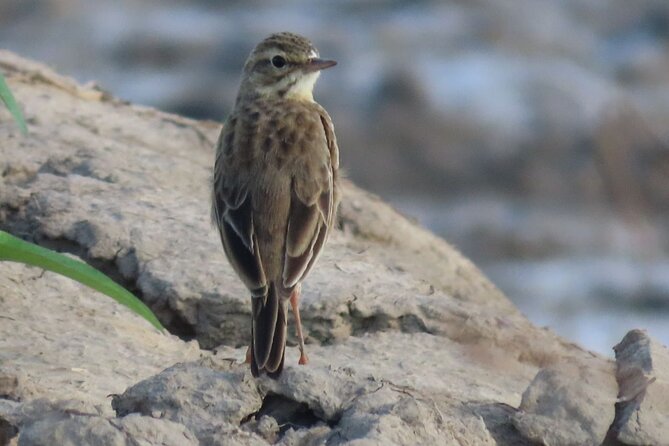
Day 1 starts with a ferry crossing of the Mekong River, followed by a drive to the birding side near Chambok. It’s a long morning block—about 9 hours—but the point is to hit the habitats while birds are active.
The Chambok area is centered on a natural lake edge where local farmers grow lotus, paddy rice, and other vegetables. That combination matters for birding. Lotus fields and rice environments support a mix of water-edge birds and woodland edge species. You’re also likely to find birds that use cultivation as feeding grounds, which is often where you’ll see the most variety.
This is also where the tour’s “small group” format helps. When you’re in marshy or edge habitats, it’s easy for bigger groups to get spread out. With a max of 8 travelers, you can move as a unit and your guide can keep the group listening together for calls.
A standout from the experience is the guide approach. The tour’s guide, Thong, is described as very professional and experienced at locating birds by following their calls. That’s a big deal on Day 1 because many target species won’t pose for long “sit still” views. If you’re a beginner, call-following is one of the fastest ways to understand bird behavior, since you learn what birds sound like before you try to hunt them visually.
Meals and comfort: Breakfast is included, and the homestay night is part of the package. Dinner is not included, and there’s also a $7 entrance ticket fee at Chambok Community Based Ecotourism that you’ll need to budget for.
Possible drawback for Day 1: it’s early and long. You’ll be up before sunrise, then you’ll spend hours outside in humid conditions. If you’re sensitive to heat or wet weather, pack light layers and something that can handle sudden rain.
Day 2 in Kirirom National Park: Forest Birds at First Light
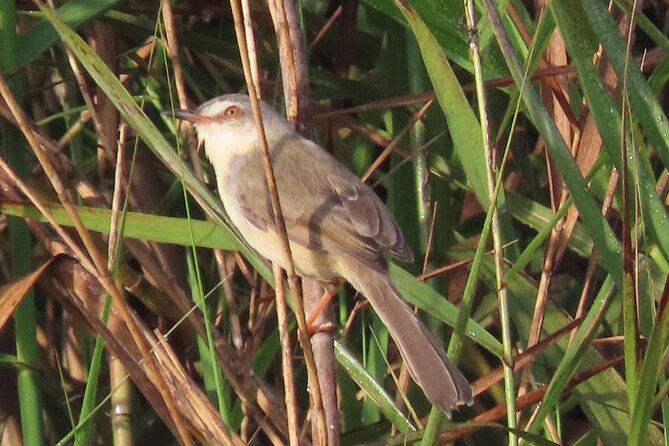
Day 2 shifts from farm edges to forest. You’ll begin with sunrise birdwatching and take an easy pace walk around Kirirom National Park. The day is also about 9 hours, so think of it as another full birding day rather than a quick morning excursion.
Kirirom is where you’ll chase the forest portion of the tour’s bird list. This is the time for species like Greater Racket-tailed, Forest wagtail, White-rumped Shama, and Red-whiskered Bulbul. The tour listing also calls out Puff-throated Babbler and other forest-inclined birds, which is why the “easy pace” walking matters. You’ll be scanning along trails and in the quieter forest edges rather than rushing through.
What you’ll notice here is that calls often matter as much as sightlines. Forest birds can be stubborn—branches block views, and many species keep lower than you expect. This is where a skilled guide earns their keep. Even if you’re not a hard-core birder, you’ll feel the difference when someone can interpret what you’re hearing and then guide you to the right angle and time.
Photography should work well in this kind of sunrise setup, because early light can make movement and feather color easier to see at short distances. Just remember: forest bird photography is still trial and error. If you’re expecting guaranteed close-ups of every species, temper those expectations. You’ll do best if you’re ready to accept short bursts of action.
Included: lunch and breakfast are covered again. Not included: no mention of park entrance fees beyond the Chambok ticket, so you’ll want to follow what your guide says about any additional costs on the park side. The provided details only name the Chambok fee.
The Species Targets: What You’re Really Trying to See
This tour targets a set of birds that spans habitats—so your “win” is variety. The listing includes an impressive range of named species, and many of them are the kind you might not bump into without local knowledge.
A few examples from the target list:
- Cambodian Tailorbird and Dark-necked Tailorbird (tailorbirds often require patience and listening)
- Oriental Pratincole (a bird that can be a challenge depending on conditions)
- Collared kingfisher and Green bee-eater (often easier when you catch the right perches)
- Blue-bearded bee-eater and Blue-eared Barbet (bright, but not always cooperative)
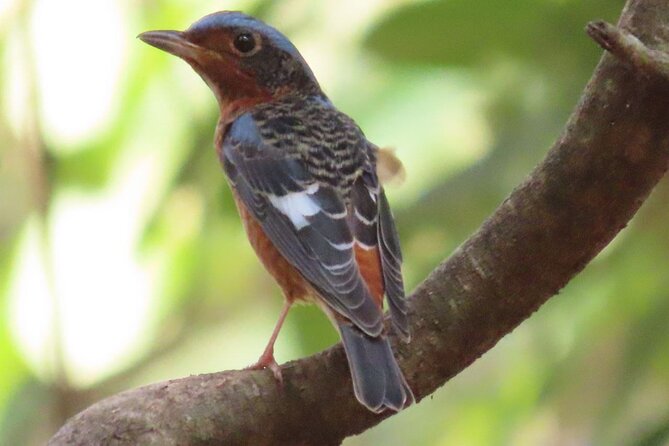
- White-throated Rock Thrush and White-rumped Shama (forest and edge zones can be key)
- Ashy Drongo and Black-naped Oriole
- Greater Racket-tailed (a classic “worth it” forest target)
- Chinese Francolin (one of the ground/understory birds you might only see briefly)
- Mountain Imperial-pigeon and Forest wagtail
The tour also says you can expect 50 to 80 species, with some described as very tricky. I take that to mean the guide is doing real work: finding the right habitat, timing, and call response. If you’ve ever birded without a local, you know that “seeing a bird” is often the last step. The difficult part is knowing where to look and what to listen for.
If you’re traveling as a beginner, this is a good structure. Instead of trying to identify everything instantly, you’ll learn how guides interpret calls and movement, and you’ll likely end up with a more accurate bird list at the end because you’re being led to the right moments.
What the Included Homestay and Meals Mean in Practice
The Chambok Community Based Ecotourism homestay is included for one night, and breakfast plus two lunches are also included. That matters because it cuts down decision fatigue. You don’t have to chase dinner plans after a long Day 1. You’ll just follow the group rhythm: bird, eat, sleep, do it again.
At the same time, one cost reminder: dinner is not included, and there’s that $7 entrance ticket fee at the Chambok ecotourism site. If you like predictable budgets, set aside a little extra for that meal.
Another subtle benefit: homestays like this often put you closer to the farming rhythms that shape the bird habitat. When you’re sleeping in the same community that manages lotus and rice environments, the birds feel less like a “tourist checklist” and more like part of daily life.
The reviews also highlight concerns about conservation—especially forest loss and poaching—and express support for ecotourism. That’s not a minor detail. If you care about where the birds will be next year, you’ll appreciate that your trip is tied to a local approach rather than extracting value with no long-term benefit.
Pace, Weather, and What to Bring
This is not a run-through-a-city tour. It’s a two-day bird outing with a moderate level of ease and some tricky targets. Expect early starts, outdoor walking, and lots of standing still while you listen.
Weather in the lowlands is described as humid with occasional rain showers. So bring:
- A light rain layer (something you can put on fast)
- Breathable clothing for humidity
- Comfortable shoes for uneven ground around lake edges and forest trails
- A hat and sunscreen (even with cloudy mornings)
- Binoculars if you have them, and a camera if you want to work on photography
The guide’s style also shapes the pace. If the guide is tracking calls to locate birds, you’ll likely stop often and wait while the sound “plays out.” That’s normal here. It can feel slow if you’re expecting constant movement, but it’s how you get better results with birds that don’t show well.
Price and Value: Is $350 Worth It?
Let’s do the practical math. At $350 per person for roughly two days, you’re paying for:
- Air-conditioned vehicle and ferry crossing logistics
- A local birding guide plus local guidance
- One night homestay
- 2 breakfasts and 2 lunches
- A small group size that supports more focused birding
You’re also paying for something harder to quantify: reducing wasted time. One review specifically calls out avoiding “silly market” and touristy areas in Phnom Penh, and that’s a real value point. If you’re spending your travel time birding instead of wandering, the cost feels more justified.
Could you do this cheaper with DIY transport? Maybe, but you’d be buying uncertainty: figuring out where to go for specific species, handling the ferry and timing, and dealing with ID challenges. For many visitors, the guide’s call-locating skill is the difference between a frustrating day and a memorable one.
Who This Tour Fits Best
You’ll likely enjoy this tour most if:
- You want a structured birding experience instead of random spotting
- You’re okay with early mornings and a long day outside
- You want to learn birding by hearing and searching, not only by sight
- You’re traveling with patience—because some targets are genuinely hard
If you’re an advanced birder, you may still appreciate the habitat coverage and the guide’s ability to find tricky species. If you’re brand new, this format can be more helpful than you expect, because you’re led to birds and you’re building real familiarity with calls.
Should You Book This Phnom Penh & Kirirom Birds Tour?
I’d book it if you want two focused days in lotus and rice country followed by Kirirom forest, and you care about results more than sightseeing boxes. The small group size and guide-led call tracking—especially with Thong—are the big reasons this tour feels like it has real birding value.
I’d think twice if you need a relaxed schedule, you hate getting up early, or you’re hoping for guaranteed close-up sightings of every species. Birding is still birding: sometimes the bird doesn’t show, and sometimes it shows briefly. But with this setup, you’re giving yourself the best shot.
FAQ
What time does the tour start?
The meeting time is 5:30am.
How long is the tour?
It runs for 2 days (approx.), with each main day activity listed at about 9 hours.
How many people are in the group?
The tour has a maximum group size of 8 travelers.
Is pickup included?
Yes, pickup is offered.
What meals are included?
You get breakfast (2) and lunch (2). Dinner is not included.
Is there an entrance fee at Chambok?
Yes. The Chambok Ecotourism Community entrance ticket fee is $7 USD and is not included.
What’s the birding difficulty level?
Birding is rated moderate, with some species described as very tricky.
Can I cancel and get a full refund?
Yes. You can cancel up to 24 hours in advance for a full refund.
Will the tour run in bad weather?
It requires good weather. If it’s canceled due to poor weather, you’ll be offered a different date or a full refund.