REVIEW · PORT ANGELES
Olympic National Park Self-Guided Audio Tour
Book on Viator →Operated by Shaka Guide Apps · Bookable on Viator
Stories play as you drive the Olympic Peninsula. This self-guided route turns your car into a guided slideshow with GPS-triggered narration and soothing music and history as you pass each stop. I like that it works on your schedule, but one catch is that the tour is offered in English only, so you can’t switch languages on the fly.
What makes this feel worth it is the value per vehicle: the price is per group up to 15, not per person, and the app handles the “where am I” part with turn-by-turn directions. You’ll spend about 10 to 11 hours bouncing between forests, waterfalls, overlooks, and the Pacific Coast, with plenty of short walks mixed in so you’re not stuck doing one long hike all day.
In This Review
- Key things that make this tour practical and fun
- Why an audio tour works so well for Olympic National Park
- Price and what you’ll actually pay (tour vs. park fees)
- How the Shaka Guide app keeps you on track (without constant phone babysitting)
- Stop-by-stop: forests, waterfalls, coasts, and the big views
- Olympic National Park Visitor Center: get your bearings first
- Heart O’ the Hills: old-growth walking in the first mile
- Strait of Juan de Fuca overlook: a quick viewpoint payoff
- Hurricane Ridge: easy loops plus a moderate hike option
- Madison Creek Falls: a 45-foot cascade plus Elwha context
- Lake Crescent: clear water you can see into
- Marymere Falls: a moderate forest walk to a 90-foot cascade
- Salmon Cascades: watch the river do its job
- Ancient Groves Trail: a half-mile loop of moss and ferns
- Sol Duc Hot Springs: soak, but plan for reservations
- Sol Duc Falls: old-growth trail to three cascades
- Second Beach: tide pools and nurse logs at La Push
- Rialto Beach: easy access with a longer Hole in the Wall walk
- Forks: the rainiest town vibe with real history
- Forks Welcome Sign: local info plus the Timber Museum
- Hoh Rain Forest: two easy trails and Roosevelt elk potential
- Ruby Beach: sea stacks, tide pools, and log-climbing fun
- Kalaloch Big Cedar Tree: an icon with a weather story
- Kalaloch Beach 4: short but with a rope scramble
- Tree of Life: admire from a distance
- Kalaloch Lodge: meal break with ocean views
- Quinault Rain Forest: short loop with waterfalls and moss
- Lake Quinault Lodge: history and a lake-view dining room
- World’s Largest Sitka Spruce: a quick walk to a giant tree
- Merriman Falls: see it from the car, then photograph
- Kestner Homestead area: pioneer roots in a rainforest setting
- July Creek Picnic Area: lake views with an easy path
- Best way to choose what to do on the day: match your feet to the stops
- Who this self-guided audio tour is for
- Should you book this Olympic Peninsula audio tour?
- FAQ
- How does the audio work while I drive?
- Do I need Wi‑Fi or cell service?
- Is the price per person?
- How long is the experience?
- What language is available?
- Is the Olympic National Park entrance fee included?
Key things that make this tour practical and fun
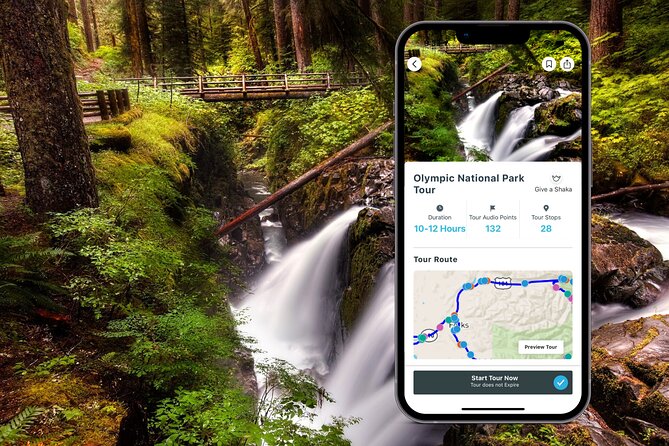
- Auto-play GPS narration so you get the right story at the right pull-off
- One price for up to 15 in your group (helpful for families and friend squads)
- Offline map and no-data driving for remote stretches where signal can be flaky
- A smart mix of stops: short viewing walks plus a few bigger trails
- Tide- and road-awareness built in via visitor center ranger help and interpretive stops
- Tour never expires and you can start when you want, not on a fixed schedule
Why an audio tour works so well for Olympic National Park
Olympic National Park is huge, and the best bits are spread across different corners of the Olympic Peninsula. With this setup, you’re not fighting a bus schedule or trying to herd a group through rain, parking lots, and trailheads.
Instead, you drive your own pace. Want a quick photo at Strait of Juan de Fuca? Or do the full Marymere Falls walk? The audio cues and GPS directions keep you moving, while your feet decide how much effort you want to spend.
You can also read our reviews of more tours and experiences in Port Angeles.

Price and what you’ll actually pay (tour vs. park fees)
The tour price is $15.19 per group for up to 15 people, and it’s set up so your group pays once per vehicle, not separately for each person. That makes a big difference if you’re traveling with kids, grandparents, or a mixed-age crew where splitting into multiple cars would be annoying.
Important budget note: the Olympic National Park entrance fee is not included and is listed as $30.00 per booking. There’s also the Forks Timber Museum fee ($5 per person) if you choose to stop in. In other words, this audio tour is the affordable part; the park entry is the main add-on.
How the Shaka Guide app keeps you on track (without constant phone babysitting)
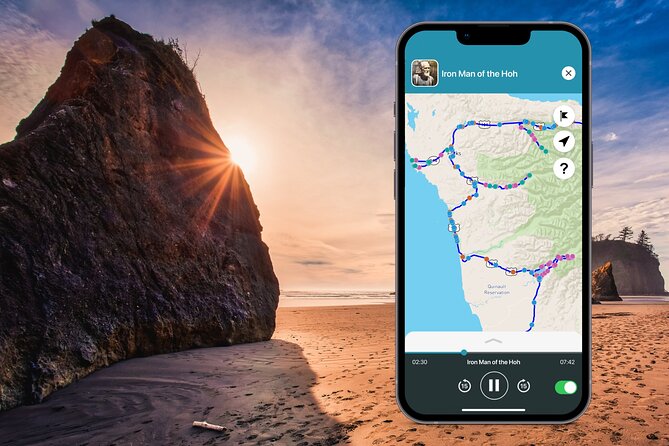
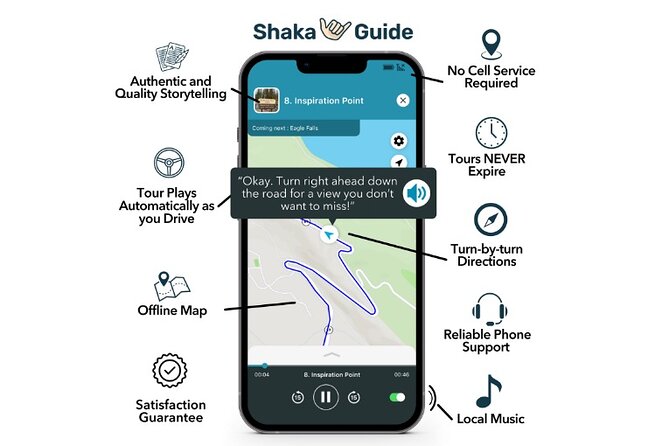
This is delivered through the Shaka Guide app with a mobile ticket. After you redeem the tour in the app using the redeem code from your email, the narration and directions are designed to run hands-free.
Here’s what I’d call the day-saver features:
- Audio plays automatically as you drive using GPS activation
- Turn-by-turn guidance tells you where to go next
- An offline map means you’re not stuck if you lose cell service
- You can pause and resume, and the tour start is customizable
- The tour never expires, so you’re not forced into a single travel day
You should still treat it like an aid, not a replacement for common sense. If roads are closed or tides are changing, follow what the park tells you on-site.
Stop-by-stop: forests, waterfalls, coasts, and the big views
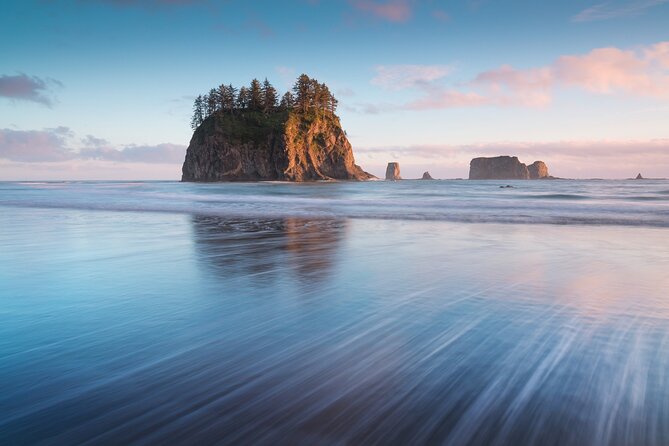
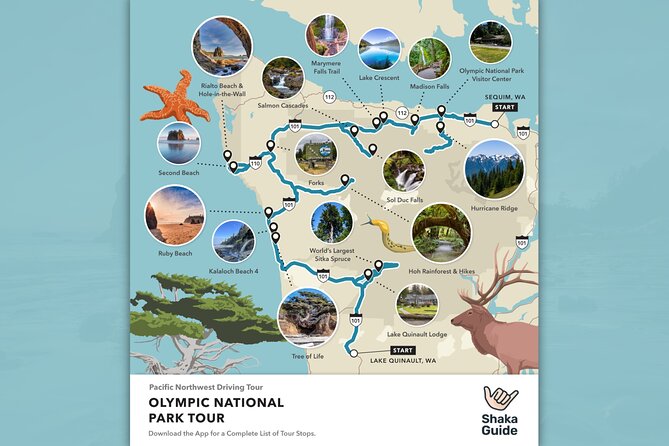
Below is the heart of the drive, in the same order you’ll feel it in real life: start inland near Port Angeles, climb toward mountain views, swing to lakes and waterfalls, then roll down the coast to rainforest and tide pools, and finally wrap with Quinault.
Olympic National Park Visitor Center: get your bearings first
Your first stop is the Olympic National Park Visitor Center near Port Angeles. You’ll get park info, an NPS gift and bookshop, a park film, and exhibits covering Olympic’s natural and cultural story.
Outside, there are short nature trails and restroom buildings, plus the part you’ll be glad you used: rangers and volunteers can answer hiking questions, road conditions, and tide charts. That’s especially useful if you plan to hit the beaches later where timing matters.

Heart O’ the Hills: old-growth walking in the first mile
Next you’ll head to the Heart of the Forest Trail near Heart O’ the Hills campground (Loop E). The full roundtrip is just over 4 miles, but you don’t have to “commit” immediately—this trail rewards the first mile with that classic, mossy old-growth feeling.
Keep your eyes open for Olympic’s small wildlife: banana slugs, rough-skinned newts, and Pacific tree frogs. The drawback? You’re in a rainforest world, so uneven ground and damp footing are normal—good shoes help.
Strait of Juan de Fuca overlook: a quick viewpoint payoff
A short stop brings you to the Strait of Juan de Fuca Scenic Byway overlook. When it’s clear, you can see across the strait toward Victoria, Canada, and sometimes even toward the Cascades Mountains.
This is a fast photo break—just 5 minutes listed—so it’s an easy win even if you’re running behind schedule.
Hurricane Ridge: easy loops plus a moderate hike option
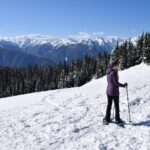
At Hurricane Ridge, you get high-elevation views of the Olympic Mountains and a mix of easy and moderate hiking. From the visitor center parking area you can access the Meadow Loop Trails (easy paved trails), which are great when weather changes fast.
If you want more walking, the Hurricane Hill Trail is described as a moderate 3-mile hike, with the trailhead about 1.5 miles past the visitor center. Watch for wildlife like the Olympic marmot, and plan for changing conditions—this ridge can feel very different from the valleys below.
Madison Creek Falls: a 45-foot cascade plus Elwha context
Madison Creek Falls is a 45-foot cascade reached by a short walk from the parking area near the highway. It’s a peaceful stop where you can actually sit for a minute and let the noise of traffic fade.
Right nearby, you’ll also get a chance to think about the Elwha River returning to its natural state after the removal of two dams. There’s even a nearby homestead stop where park animals help with trail maintenance—Sweet Family Homestead with pack horses and donkeys.
Lake Crescent: clear water you can see into
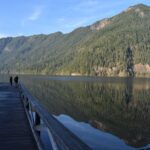
At Lake Crescent, you’re looking at Washington’s second deepest lake. The big hook here is the visibility: the water can be clear enough that you can see down as far as 70 feet, and on the right light it can look like it’s glowing.
There are lodging options around the lake, including Log Cabin Resort (east shore), Lake Crescent Lodge (south shore), and Fairholme Campground (west shore). If you want to stretch the day without committing to a long hike, this is one of the best places to slow down.
Marymere Falls: a moderate forest walk to a 90-foot cascade
Marymere Falls is a popular trail starting near the shore of Lake Crescent. The hike is described as less than 2 miles roundtrip and moderately easy, moving through lush old-growth forest.
The trail follows Barnes Creek, crosses Highway 101, then continues upstream with log bridges along the way. The payoff is a 90-foot cascade with two viewing platforms so you’re not hunting for the best angle in the rain.
Salmon Cascades: watch the river do its job
Now you switch from waterfalls-on-a-trail to wildlife storytelling. At Salmon Cascades, you’re watching the Sol Duc River, which is a busy highway for salmon species like Chinook, coho, and sockeye, plus steelhead trout.
The lookout is ideal for spotting salmon as they migrate upstream, and interpretive signs explain what you’re seeing even when the fish aren’t jumping. It’s short and easy, but it hits hard if you like nature in motion.
Ancient Groves Trail: a half-mile loop of moss and ferns
The Ancient Groves Trail is an easy half-mile loop through old-growth forest. It’s the kind of walk where moss and ferns cover the ground in a way that makes you look down every few seconds, and you get glimpses toward the Sol Duc River canyon below.
This is a good “reset” stop if you’ve been doing longer hikes earlier and want something gentle.
Sol Duc Hot Springs: soak, but plan for reservations
At Sol Duc Hot Springs, you can relax in a freshwater pool plus three mineral pools fed by natural hot springs. The resort also has a restaurant, and the key practical detail is that paid reservations are required for the 1.5-hour soaking sessions, which are first-come, first-served.
So yes, it’s a treat—but don’t treat it like a spontaneous stop. If you’re trying to keep your whole day tight, you might skip soaking and just enjoy the views and facilities.
Sol Duc Falls: old-growth trail to three cascades
If you want your legs to earn the views, Sol Duc Falls is one of the park’s most scenic waterfall walks. The trail is 1.6 miles and described as moderately easy, starting at the end of the Sol Duc Hot Springs Road.
You’ll walk through old-growth forest past creeks and over wooden bridges. The waterfall itself features three separate cascades, with viewing platforms positioned across and above for photos.
Second Beach: tide pools and nurse logs at La Push
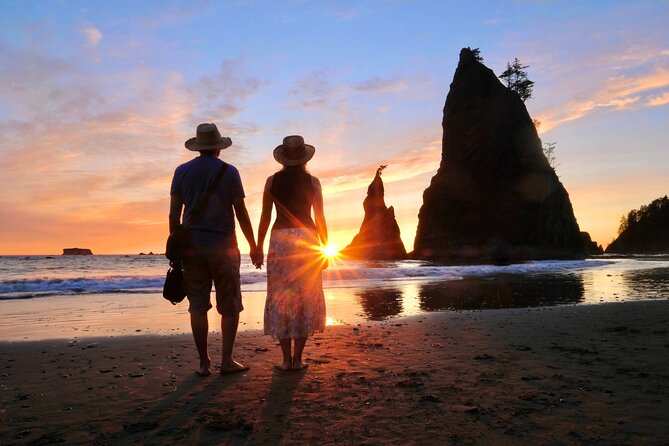
The route then moves to the Pacific coast with Second Beach at La Push. This 2-mile roundtrip trail takes you through forest full of ferns, moss, and nurse logs, then lands you at a flat sandy beach with tide pools and sea stacks.
The listed note to remember: the downhill is easier, but coming back takes more effort because you’re climbing. Also watch parking—if the main lot is full, overflow parking is in a gravel lot up the hill.
Rialto Beach: easy access with a longer Hole in the Wall walk
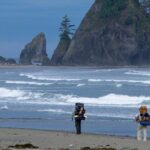
Next is Rialto Beach, known for rugged shoreline, rough surf, and piles of driftwood logs. You’ll get easy access, parking, and vault toilets, which is a welcome relief on a rainy day.
One highlight is the rock formation Hole in the Wall at the north end. Getting there takes a moderate 3.4-mile roundtrip along a pebbly shore, with tide pools and sea stacks waiting once you arrive.
Forks: the rainiest town vibe with real history
You’ll roll into Forks, the town famous for being very rainy. The info here is specific: it gets about 10 feet (120 inches) of rain each year, so the name fits.
Forks also has history beyond pop culture, including the region’s Quileute roots and logging-era development after settlers arrived in the late 1870s. If you’re a Twilight fan, this is where the storyworld meets real streets.
Forks Welcome Sign: local info plus the Timber Museum
This stop points you to the Forks Chamber of Commerce and Visitor Center at the south end of town, where you can pick up hiking and restaurant information and also get the self-guided Twilight driving tour.
The Forks Timber Museum sits next door and costs $5 per person. It’s a nice reminder that Olympic’s forests shaped local livelihoods long before visitors showed up for rain and romance.
Hoh Rain Forest: two easy trails and Roosevelt elk potential
Now you hit one of the most famous areas: Hoh Rain Forest. The narration atmosphere here is mossy, ferny, and quietly dramatic, and the Hoh Visitor Center provides trail information, restrooms, interactive displays, plus two easy trails.
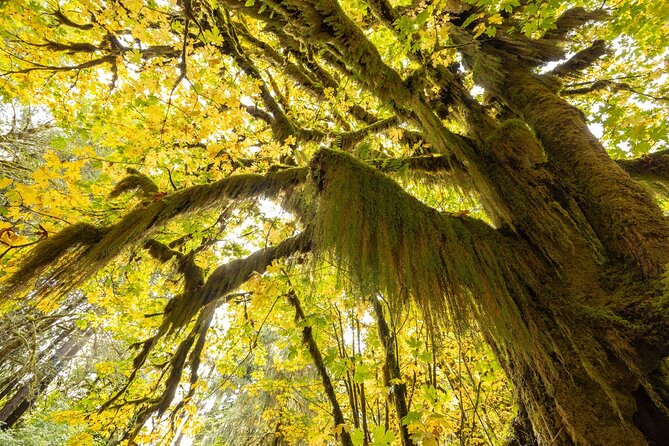
The Trail of Mosses is less than a mile and is great if you want maximum payoff with minimal time. The Spruce Nature Trail loops a bit longer and passes by the Hoh River.
Keep an eye out for Roosevelt elk and banana slugs, and know the area is famous for its legendary Bigfoot lore too.
Ruby Beach: sea stacks, tide pools, and log-climbing fun
At Ruby Beach, you’ll find a spectacular shoreline with sea stacks and tide pools plus driftwood logs and a pebbly beach. There’s a short quarter-mile trail down from the parking area, and then you’ll need to walk through or climb over large driftwood logs to reach the shore.
Ruby’s name comes from tiny red garnet crystals that sometimes wash onto the sand and can give a pinkish hue. Expect it to get busy on weekends and holidays, so give yourself a little patience.
Kalaloch Big Cedar Tree: an icon with a weather story
The Big Cedar Tree stop is a short walk from the highway. A storm split the trunk of this massive Western red cedar, but the tree still inspires awe, and there’s a trail option beyond the main view.
This is one of those stops where the point is less about the length of the walk and more about noticing how time and weather shape these giants.
Kalaloch Beach 4: short but with a rope scramble
If you want a less-crowded coastal vibe, Kalaloch Beach 4 is described as a great choice for tide pools and a larger sandy stretch. The trail is less than a mile roundtrip but includes a short steep descent, interpretive signs, and a driftwood bridge.
There’s also a rock scramble down a rope at the end, which may be challenging for anyone with mobility issues. If the scramble sounds like too much, you can still enjoy the idea of the stop and just keep your expectations realistic.
Tree of Life: admire from a distance
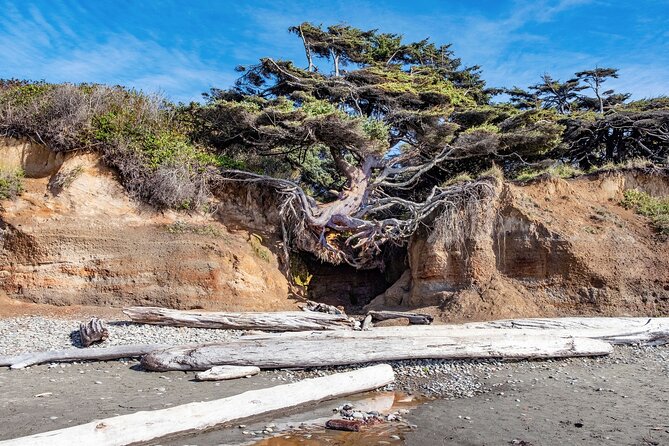
The Tree of Life stop is another Kalaloch icon: a Sitka spruce stretched between two cliffs that looks like it’s hovering. Erosion carved out the space beneath it over time, and the narration here makes a clear point—people can speed up damage, so you should admire it from a distance.
In practical terms: don’t climb around roots or try to get “the perfect angle” by stepping where you shouldn’t.
Kalaloch Lodge: meal break with ocean views
At Kalaloch Lodge, you get a place to sit down with an ocean view. It’s the only coastal lodging in Olympic National Park described here, and you can also grab ice cream from the Kalaloch Mercantile next door.
This is a smart mid-to-late-day stop if your feet are tired and the weather keeps changing.
Quinault Rain Forest: short loop with waterfalls and moss
Your route then turns inland toward Quinault with the Quinault Rain Forest Nature Trail. It’s an easy half-mile loop with waterfalls, creeks, and moss-covered trees, plus interpretive signs.
Restrooms are at the trailhead, which makes it a good “no-stress” stop when you want a rainforest fix without a big hike.
Lake Quinault Lodge: history and a lake-view dining room
At Lake Quinault Lodge, you’re in a classic lakeside setting on the south shore. The Roosevelt Dining Room is the standout for a meal with a view, and you can also walk along the shore or hang out on the back lawn.
This lodge has a time-marker detail: it was built in the summer of 1926 in just 53 days. Even if you don’t eat, it’s a comforting pause after the coast.
World’s Largest Sitka Spruce: a quick walk to a giant tree
This stop is delightfully simple: an easy quarter-mile walk to the world’s largest Sitka spruce. The measurements listed are huge—over 18 feet in diameter and 191 feet tall—and it’s part of the Valley of Rainforest Giants.
This is a great option on a day when rain makes long hikes annoying but you still want one more leg-stretching stop.
Merriman Falls: see it from the car, then photograph
Merriman Falls sits right next to the road. You can see the 40-foot cascades right from where you pull off, and it’s described as a nice photo stop if you’re passing through.
The drawback is also part of the charm: it’s not an all-day hike stop, so don’t count on it to fill a big chunk of time.
Kestner Homestead area: pioneer roots in a rainforest setting
At Kestner Homestead, you’re looking at a historic homestead built around the turn of the 20th century tied to Anton Kestner. You can reach the buildings by parking at the homestead gate and walking a short distance, or you can take a scenic trail from the Quinault Rain Forest Ranger Station.
There’s also a nearby Maple Glade Rain Forest Trail that’s half a mile, so you can turn this into either a quick stop or a longer stroll depending on your energy.
July Creek Picnic Area: lake views with an easy path
Your last stretch includes July Creek Picnic Area Trailhead on the north shore of Lake Quinault. It’s another short path to the shore with lake views, and you’ll find restrooms plus picnic tables.
This kind of stop is perfect if you want to end with something calm instead of racing toward a big final hike.
Best way to choose what to do on the day: match your feet to the stops
This tour works best when you treat the drive as a menu. Keep the short, low-commitment stops if weather is sloppy, and save the longer hikes—like Heart of the Forest or Rialto’s Hole in the Wall walk—for when conditions look steady.
If you’re the type who likes to move fast, you can knock out a lot with the quick stops. If you like lingering, the lake and lodge areas give you built-in “sit and absorb” time without feeling like you’re wasting the day.
Who this self-guided audio tour is for
I’d point you toward this tour if you want:
- A private experience for your group, not a crowded guided bus
- The flexibility to start when you want and pause when you need a break
- A route that mixes big sights with short walks and easy photo stops
- A budget-friendly option that isn’t priced per person
It may be less ideal if you need a non-English narration option, or if you prefer a human guide for questions on the spot when plans change.
Should you book this Olympic Peninsula audio tour?
Yes, if you like the idea of rolling through Olympic National Park at your own pace while still getting real context tied to what you see. The value is strong for groups up to 15, and the GPS-triggered narration is the kind of feature that helps you avoid the usual “we’re here… now what?” problem.
I’d skip it only if you strongly want a live guide, or if English-only narration would be a dealbreaker for your group.
FAQ
How does the audio work while I drive?
The narration is GPS-activated and plays automatically as you drive, with turn-by-turn directions in the app.
Do I need Wi‑Fi or cell service?
No. The tour includes an offline map, and you can use it without continuous Wi‑Fi or data.
Is the price per person?
No. It’s $15.19 per group (up to 15), and the tour is set up as one price for the vehicle.
How long is the experience?
It’s listed at about 10 to 11 hours.
What language is available?
The tour is offered in English.
Is the Olympic National Park entrance fee included?
No. The Olympic National Park entrance fee is listed as $30.00 per booking and is not included.