REVIEW · KUCHING
Night Froggy Adventure at Kubah National Park
Book on Viator →Operated by Sarawak Private Trips & Cooking Class @ Indah House · Bookable on Viator
Frogs sound louder at night. In Kubah National Park, this guided outing turns the rainforest after dark into a real-life frog hunt, with tree frogs and ground-dwellers on full display, plus a small group (max 6) so you get actual help spotting wildlife. I love that headlamps and a set route keep things organized, but the one drawback is the walk is uphill and humid, so it’s not a casual stroll.
You start at 5:30 pm and you’ll be in the park roughly 4 hours total, including pickup from Kuching and the return. The route is 3 km roundtrip with about 100 metres elevation, which helps explain why the tour feels like a proper night hike, not just a gentle wander.
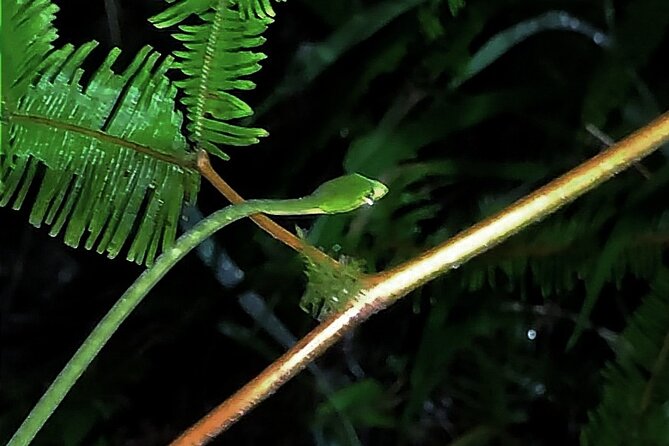
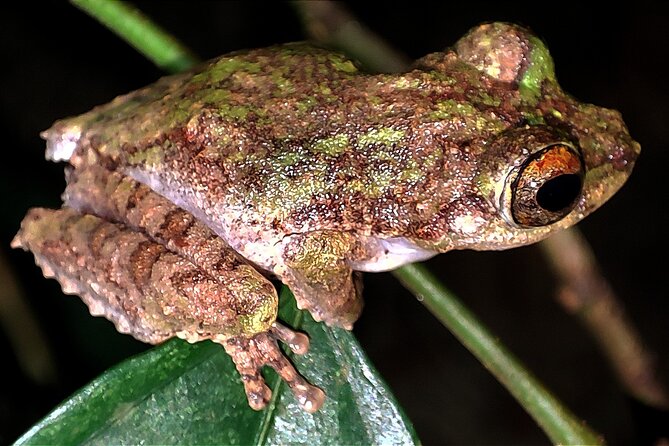
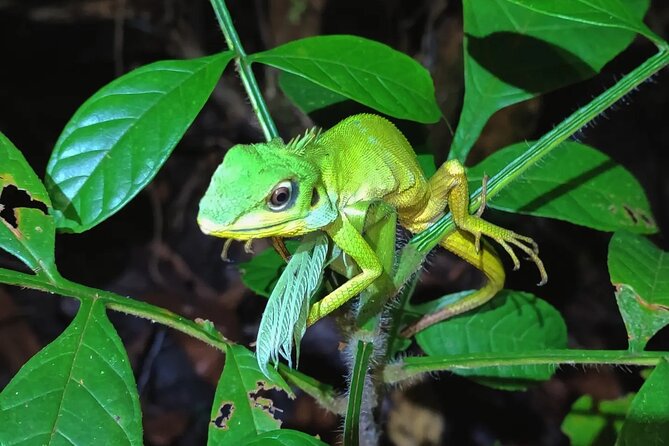
You’ll look for frogs plus other nocturnal animals like spiders, lizards, snakes, geckos, and insects, but sightings aren’t guaranteed. I like that the night is paced around listening and slow scanning, so even if the frogs are shy, you still get a fun, nature-focused experience.
In This Review
- Key highlights worth planning around
- From Kuching pickup to a 5:30 pm start: how the evening begins
- The walk itself: 3 km roundtrip with a 100 m climb (not a flat night stroll)
- Stop by stop: how the guide turns “dark” into something you can see
- Stop 1: Arrive and get set up at the park
- Stop 2: The longer frog-and-critters search
- Stop 3: Frog pond focus for breeding-ground chances
- Stop 4: Return to Kuching and back to your accommodation
- What you might see besides frogs: reptiles and other night surprises
- Value check: is $75.49 a fair price for this kind of night walk?
- What to bring: small prep that makes night spotting easier
- Weather and pacing: when the rainforest cooperates (or doesn’t)
- Who this tour suits best (and who might want to skip it)
- Should you book this night froggy adventure?
- FAQ
- What time does the night walk start, and how long is it?
- Is pickup from Kuching included?
- How long is the walk and how much elevation is there?
- Are headlamps provided?
- Is admission included?
- Can I get a refund if plans change?
Key highlights worth planning around
- Max 6 people keeps the group tight, so the guide can point out small animals you’d miss.
- Headlamps are included, which matters when you’re walking at dusk-to-dark.
- 3 km with ~100 m climb is manageable, but go in expecting effort in humidity.
- Frog pond time focuses on where many frogs breed, so the odds improve at the best moment.
- You’re not rushed: short stops along the way help you actually see the details in leaf litter and foliage.
- Other night creatures show up too, from reptiles to insects, when conditions cooperate.
From Kuching pickup to a 5:30 pm start: how the evening begins
This is one of those Kuching experiences that saves you the hassle of figuring out timing and entry, because you get pickup by air-conditioned vehicle. The drive is about 25 km to Kubah National Park, and the start time is 5:30 pm, which is ideal for catching the rainforest as it shifts from daylight activity to full night energy.
The early portion is simple: you’re transported to the park and you settle in with your group and your guide. Since the tour includes all fees and taxes, you don’t need to worry about entrance math once you’re there.
One practical detail I appreciate: the meeting point is the park area itself (Kubah National Park, 93050 Kuching), and the experience ends back at the meeting point too. The tour also states the operator will send you back to your accommodation after the walk, which is a nice convenience when you’re tired and it’s dark.
You can also read our reviews of more tours and experiences in Kuching.
The walk itself: 3 km roundtrip with a 100 m climb (not a flat night stroll)
Let’s talk about the part that can surprise people: the terrain. You’re doing a 3 km roundtrip walk with about 100 metres of elevation, and multiple comments point out that it’s an uphill stretch in humid conditions.
That doesn’t automatically mean it’s brutally hard. Some folks found the path straightforward and described it as easy or pleasant, especially when they could take breaks every few metres to look around. But other comments say it’s steep enough to feel tiring, especially when the humidity is high and you’re stopping often (which sounds relaxing, until you’re doing short stops while still climbing).
If you want a mental picture, think of a nighttime hike along an access road beside a stream, where you’ll slow down repeatedly to check foliage, fallen leaves, and the edges of wet ground. Wearing decent shoes helps. Also, if you’re the type who gets frustrated by trekking in the dark, give yourself permission to go slow. The best animal spotting comes from patient feet and careful eyes.
Stop by stop: how the guide turns “dark” into something you can see
Stop 1: Arrive and get set up at the park
At the park entrance, you kick off the night walk and start moving toward the areas where frogs show up best. This is also the moment when your guide can set expectations: switch your attention from seeing to noticing.
Even before you reach the frog pond, the process is the point. Your guide will help you scan where animals hide in plain sight: leaves, trunks, stream edges, and low ground cover. This is why the headlamp inclusion is such a big deal. You don’t want to be fumbling for your own torch while your attention should be on what’s moving.
Stop 2: The longer frog-and-critters search
The main chunk of your walk is about 2 hours focusing on spotting frogs and other rainforest night life. The tour description makes it clear you’re not limited to amphibians; you can look for spiders, lizards, snakes, geckos, and insects.
What makes this stop special is that it’s not just one viewpoint. You’re moving through the rainforest and likely making frequent micro-stops. That matters because many animals aren’t “out in the open.” They’re patterned in leaf litter, tucked behind bark, or perched quietly in vegetation. The guide’s job is to notice tiny movements and angles that most people won’t clock.
In real-world terms, this is where the small group size earns its keep. With a max of 6 people, you get time to look and ask questions without feeling like you’re being swept along.
Stop 3: Frog pond focus for breeding-ground chances
Then you shift to the frog pond area, where the tour description highlights that the pond acts as a natural breeding ground for many species. This is a logical design: more frogs are active and present around breeding sites, especially at night when calling and movement increase.
This segment is about 1 hour, and it’s also where your chances of adding reptiles may rise. The tour notes that snakes may be sighted here as well.
One of the best things about frog-pond timing is that it changes the mood. You’re not just walking through darkness anymore; you’re in a concentrated area where frog calls and movement create a “where to look next” rhythm. Even if you don’t see a specific species, you’ll usually come away feeling like you learned how to read the environment.
Stop 4: Return to Kuching and back to your accommodation
After the last viewing period, you head back. The return to Kuching takes about 30 minutes, and the operator states they’ll send you back to your hotel or accommodation. Ending in the same general meeting point area keeps things simple in the dark.
What you might see besides frogs: reptiles and other night surprises
You’re signing up for frogs, yes. But the night walk is built for the full cast of Borneo rainforest night life. The tour description lists frogs plus spiders, lizards, snakes, geckos, and insects. And the guide-led spotting approach means you’re more likely to catch smaller, fast-moving creatures than if you tried to wander on your own.
From the guide names shared in past groups, the guiding can vary by person, but the goal is consistent. Guides like Lucian, Fionara, Danny, and Cornelius are mentioned as being great at picking out animals people would otherwise miss. The common thread across feedback is that they point out critters you’d never notice in time—especially when they’re still, camouflaged, or only visible at the edge of a puddle or leaf fold.
Common types of sightings people talk about include:
- Many frog species, sometimes a surprising number in one night
- Snakes (including the kind of coral-snake mention you only hear when spotting goes well)
- Lizards and gecko types
- Big insects and smaller nighttime bugs
- Occasional “wow” sightings that sound like they belong in a wildlife documentary, when conditions line up
Important reality check: wildlife sightings can’t be guaranteed. That note matters, and it’s fair. What you are paying for is expert night searching in the right habitats, not a promised animal checklist.
Value check: is $75.49 a fair price for this kind of night walk?
At $75.49 per person, this isn’t a “cheap and cheerful” activity. But it also isn’t overpriced for what you get: you’re paying for a guided night experience in a protected area, with included logistics and entry costs.
Here’s what makes the value feel solid:
- Pickup by air-conditioned vehicle from Kuching (drive is about 25 km)
- Headlamps provided, so you don’t need to buy anything extra
- All fees and taxes included
- Admission tickets included during the main park time blocks
- Max 6 people, which usually means more attention per person than a big-group tour
The one thing not included is snacks/food or drinks. That means you should plan to eat earlier and bring what you need if you know you get hungry.
If your goal is purely cost-cutting, this may not beat free nights out on your own. But if your goal is to see more life in one evening and you want a guide actively scanning for camouflaged frogs and hidden movement, this price can feel fair.
What to bring: small prep that makes night spotting easier
The tour includes headlamps and handles the core logistics, so you’re mostly preparing for comfort and patience.
Here’s my practical checklist for a humid rainforest evening:
- Comfortable shoes for uphill, uneven footing in the dark
- Light layers that won’t be a hassle if humidity is high
- A small personal water/snack plan, since food and drinks aren’t included
- Bug protection if you use it regularly (the tour doesn’t list supplies)
- A phone camera strategy: if you want photos, plan for the fact that flash can change animal behavior and ruin night vision
One funny-but-true point from the vibe of the experience: your best photos often come when you forget you’re taking them and just watch. Frogs and other critters can be all about timing and patience.
Also, note the walk can be more tiring than you expect. Even when the path sounds manageable, it’s still an evening of moving uphill while scanning the ground and foliage.
Weather and pacing: when the rainforest cooperates (or doesn’t)
This kind of night walk depends on conditions. The tour description includes the reality note that wildlife sightings can’t be guaranteed, which usually means you should expect some nights to be quieter than others.
Past experiences also show that heavy rain can affect whether the tour runs. If there’s strong weather on your travel dates, treat this as something you try for when you have flexibility. If you get a weather-adapted decision, don’t fight it. Night in the forest plus rain can turn uncomfortable fast.
Pacing is another factor. The best tours slow down often. This one is designed around repeated look-and-stop moments rather than rushing through a trail.
Who this tour suits best (and who might want to skip it)
This is a great match if you:
- Love wildlife and you enjoy learning how to spot animals in the dark
- Want a small-group rainforest experience, not a crowd shuffle
- Are okay with uphill effort in humid conditions
- Like a focused theme night: frogs, pond edges, and nocturnal habitat
It may not be the best match if you want:
- A fully flat, low-effort walk
- Guaranteed sightings of specific animals
- A picnic-style evening with minimal walking
If you’re bringing kids, it could work well if they can handle headlamps and the uphill pace. If you’re older or dealing with mobility limits, you’d want to think carefully about the 100 m elevation and humid stepping before booking.
Should you book this night froggy adventure?
Book it if you want a guided night walk that’s built around where frogs live and when they’re active, and you value that small-group attention. For me, the strongest reasons to book are the included headlamps, the admission handling, and the way the route focuses your time around likely spots like the frog pond.
Skip it or choose a different type of activity if you can’t do uphill in humidity or you’re expecting a relaxed stroll. This tour rewards patience and willingness to walk slowly and look closely.
If you go in with the right mindset—expect effort, expect surprises, and accept that wildlife sightings aren’t guaranteed—you’ll have a fun night out in Sarawak that feels a lot more “real” than a checklist of photos.
FAQ
What time does the night walk start, and how long is it?
It starts at 5:30 pm and runs about 4 hours (approx.), including pickup and the return.
Is pickup from Kuching included?
Yes. The tour offers pickup from Kuching to Kubah National Park by air-conditioned vehicle.
How long is the walk and how much elevation is there?
It’s a 3 km roundtrip walk with about 100 metres elevation.
Are headlamps provided?
Yes. Headlamps are included.
Is admission included?
Yes. Admission ticket is included for the main park parts of the tour, and the drive/pickup portion is listed as free.
Can I get a refund if plans change?
You can cancel for a full refund up to 24 hours in advance. If you cancel within 24 hours of the start time, the amount paid isn’t refunded.