REVIEW · BANFF
Intro to Stand Up Paddleboarding, Banff National Park
Book on Viator →Operated by Bow Valley Stand Up Paddleboarding · Bookable on Viator
Stand-up paddling meets Banff’s mountain mirror. What makes this intro special is the combo of Johnson Lake scenery and a real coaching plan that gets you moving fast without intimidation. It’s built for first-timers, yet the session still feels like an actual training experience, not a random float.
Two things I like a lot: you get all the gear (PFD, SUP, paddle, and leash) and you’re guided by a Paddle Canada–certified instructor. One thing to consider is that it runs only when conditions are right, since the experience requires good weather and may be rescheduled if it isn’t.
In This Review
- Key takeaways before you book
- Why Johnson Lake is a smart first SUP choice in Banff
- What the 90-minute session feels like on the timeline
- Gear and coaching: how this setup helps you succeed fast
- The skills you’ll actually work on (and what they mean)
- Where the scenery fits in (it’s not just a backdrop)
- Price and value: is $73.39 worth it?
- Weather, timing, and what can change day-to-day
- Who should book—and who might not love it
- Practical logistics you’ll care about
- Should you book this Banff SUP intro?
Key takeaways before you book

- Beginner-first coaching that focuses on standing, turning, and water safety
- Small group size (maximum 6), so you get individual attention
- Full equipment provided including a PFD, SUP, paddle, and leash
- Johnson Lake timing and calm water make it easier to learn your balance
- Paddle Canada Certified SUP Guide-led instruction with patient pacing
Why Johnson Lake is a smart first SUP choice in Banff
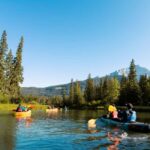
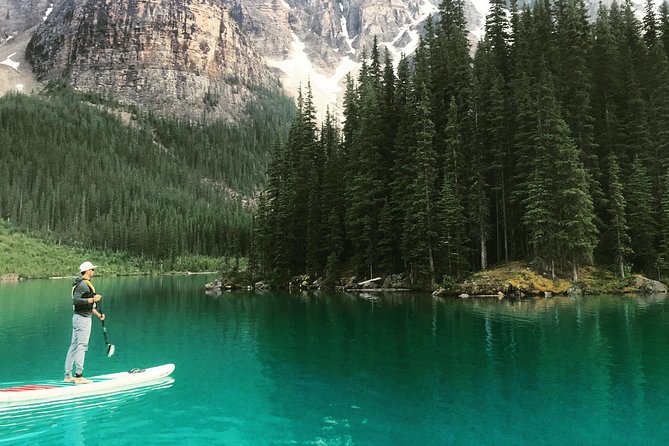
Banff can look like a postcard 24/7, but Johnson Lake is different in the best way for beginners. The water tends to feel calm and forgiving compared to faster, choppier areas—so you can spend your time learning balance instead of fighting the lake.
The biggest value here is that you’re not just getting a pretty background. You’re getting a learning environment. A beginner’s first goal is simple: stand up without panic, then paddle with enough control to stay pointed where you want. A sheltered-feeling lake helps you build that confidence quickly, and it also makes the session more fun instead of tiring in the wrong way.
Also, Banff’s mountains are right there overhead. That matters because a lot of first-timers think they need “technique” before they can enjoy it. Here, you start enjoying the view while you’re still figuring things out.
You can also read our reviews of more tours and experiences in Banff.

What the 90-minute session feels like on the timeline
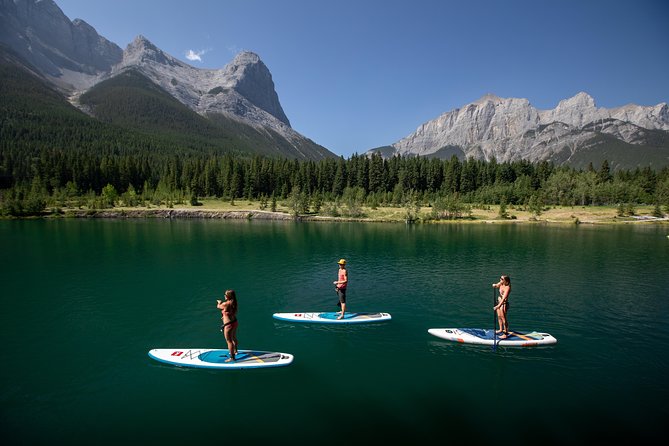
This is an about 1.5-hour intro session led by your guide. It’s long enough to learn basics and try them on the water, but short enough that you won’t leave feeling wrecked or bored.
Here’s the flow you can expect:
You start at Johnson Lake Road (Johnson Lake Rd, Improvement District No. 9, AB T0L, Canada). From there, the guide sets you up with the board and safety gear and walks you through the session plan. This is where you’ll learn how to handle the SUP on land and how the leash and PFD work as part of your safety setup.
Once you’re suited up, you’ll move into water practice. The early focus is not speed. It’s water confidence:
- how to position yourself on the board
- how to stand without rushing
- how to paddle in a way that doesn’t yank you sideways
- simple direction changes
Then you’ll spend time on the water with Banff views and enough pacing to apply what you just practiced. The point is to get you to that moment where standing feels normal—then the guide adds a few more skills so you’re improving instead of repeating the same small drill.
Finally, you’ll return to the meeting point. The session ends where it starts, so you don’t have to think about transportation from the water.
Gear and coaching: how this setup helps you succeed fast
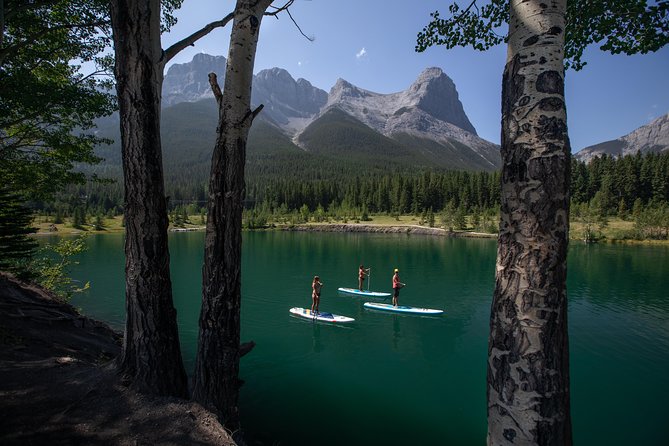
For many first-timers, the hardest part isn’t balance. It’s not knowing what to do when things feel wobbly. This tour removes a lot of that pressure because everything is provided: PFD, SUP, paddle, and leash.
That matters for two reasons:
- You can focus on learning, not shopping or guessing your gear size.
- The guide can teach technique that matches the exact board you’re using.
Another big win is the coaching style. Names that show up again and again include Maggie, Ryan, Brandon, and Spencer. Across those instructors, the theme is consistent: clear, patient instruction that makes you feel safe while still nudging you to try a little more.
I especially like the way these guides tend to keep momentum. You’re not just thrown onto a board and told good luck. You get coaching, then you get to try the next step quickly. One review note highlighted that kids and adults could stand for most of the session once instruction clicked—exactly the kind of outcome you want from an intro.
And because the group is intentionally small (up to 6), you’re more likely to get quick tweaks. That’s the difference between learning something slowly and learning it with confidence.
The skills you’ll actually work on (and what they mean)
If you’ve never SUP’d, “learn to maneuver” can sound vague. In practice, an intro session like this is mostly about a few core skills you’ll keep repeating until they feel automatic.
Here are the skills that make the biggest difference:
Standing up without drama
You’ll work on how to get your balance under control. The goal isn’t perfect form on day one. It’s learning how to stand in a stable, repeatable way.
Paddling that doesn’t pull you off course
Most beginners paddle hard but in a way that steers randomly. You’ll practice using the paddle effectively so turning becomes something you can control instead of something that happens to you.
Water safety that’s practical
You’ll cover basics like staying connected to the board using the leash and how to think about safety on a lake. This is what helps you relax, and relaxation is what lets your balance improve.
Staying comfortable as you push your limits
Good coaches don’t just teach. They also read the room. The reviews you’ll hear from people who did this highlight guidance that’s encouraging, calm, and paced to you—so you can stretch without losing confidence.
By the end, the session should feel less like a first attempt and more like the start of a new hobby.
Where the scenery fits in (it’s not just a backdrop)
Johnson Lake gives you a scenic payoff that also supports the learning. Because you’re out there in a calm setting, you can look up—then get back to the task without feeling overwhelmed.
In Banff, that matters. If you’re on a moving lake or windier water, beginners often spend the whole time with their eyes on the board, trying to survive their own balance. Here, the water conditions (when it’s running) help you alternate between:
- checking where you’re going
- watching the mountains
- enjoying the feel of the paddle strokes
And the “mountains overhead” part isn’t just poetic. It’s part of why people do Banff in the first place. This intro turns that into a real activity, not just a photo stop.



Price and value: is $73.39 worth it?
At $73.39 per person, you’re paying for a guided beginner session, a time slot (start at 9:30 am), and—crucially—gear plus instruction.
Here’s how I think about value for an intro class like this:
- If you had to rent a board, paddle, and safety gear on your own, the cost adds up fast.
- If you had to guess the right technique without coaching, you’d likely spend extra time struggling or lose the motivation to keep going.
- If you’re lucky, you get the experience; if the instruction is good, you get progress—and that’s what keeps you coming back.
With a small-group format (up to 6) and a Paddle Canada–certified guide, you’re not paying just for time on water. You’re paying for guided feedback that helps you stand and paddle with more control.
Also, the session is short enough that it fits into a travel day. You’re not committing to a full half-day adventure to try something new.
Weather, timing, and what can change day-to-day
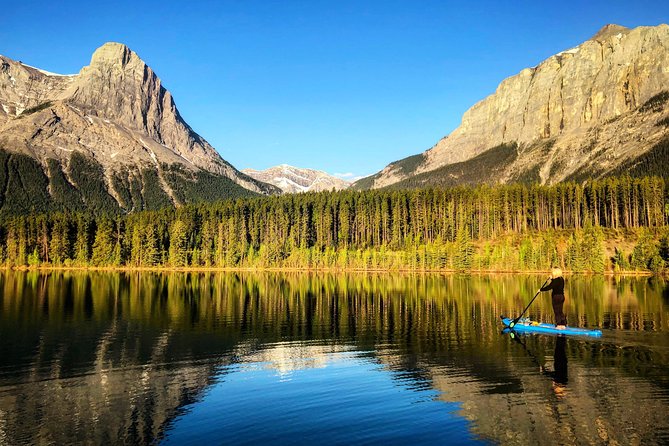
This activity requires good weather. If conditions aren’t right, you’ll be offered a different date or a full refund. That’s a normal reality in mountain areas, and it’s actually a sign the operator is prioritizing safety over pushing through.
The session starts at 9:30 am, which is usually a good time of day for learning activities because you can often avoid the busiest crowds and get more pleasant conditions. Still, plan your day with flexibility. If Banff weather shifts, your SUP session might shift with it.
Who should book—and who might not love it
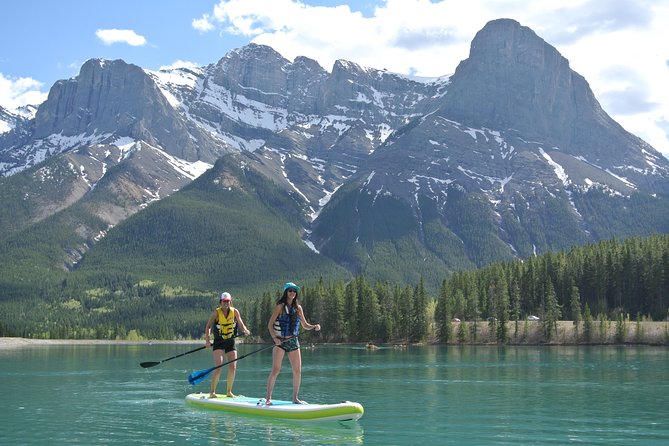
This intro is a great fit if:
- you’re a true beginner or you’ve only watched SUP videos and want to try safely
- you want gear provided so you don’t have to figure out rentals first
- you like small groups and hands-on help
- you want a workout you can also enjoy visually
It may not be the best choice if:
- you’re looking for a long multi-hour paddle. This is an intro session at about 1.5 hours.
- you hate the idea of weather-related changes. The experience needs good conditions to run.
As for comfort level, most people can participate. And service animals are allowed, which is helpful to know if you travel with one.
Practical logistics you’ll care about
Check in happens at Johnson Lake Road, and the tour ends back at the meeting point. You’ll also receive a mobile ticket, and the location is near public transportation.
Because the group is kept small (maximum 6), you’ll have space to learn without feeling lost in a crowd. That’s especially useful when you’re still figuring out how your feet react on the board.
Should you book this Banff SUP intro?
Yes, if you want the fastest path from wobbly to capable—without renting gear or guessing technique. I’d book it when your schedule allows you to be a little flexible with weather, and when you want a morning activity that mixes real instruction with Banff views.
Skip it only if you’re set on a longer paddle outing or you can’t handle the possibility of weather canceling the session. Otherwise, this is one of those beginner experiences that tends to leave people smiling because they actually learn something meaningful in just 90 minutes.