REVIEW · BANFF
Banff National Park- Double Kayak Experience
Book on Viator →Operated by The Banff Canoe Club · Bookable on Viator
Two paddles, two stops, big Banff views.
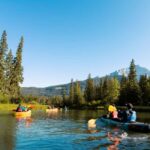
A guided double kayak on the Bow River and Vermilion Lakes turns Canada’s mountain scenery into something you can actually feel, with calm water, wildlife, and river sounds doing most of the entertaining.
I really like the hands-on feel of this trip—gear is handled, and you’ll get a real guide presence, including moments like a beaver dam crossing that turns into a story you’ll remember. I also like the photo angle: guides have been known to take action pics during the paddle, then share them afterward for free.
One drawback: this isn’t a “stand up and try it” experience. It takes moderate physical fitness and it’s not recommended if you have no previous kayaking experience, especially with narrow routes and moving water.
In This Review
- Key things to know before you go
- Why a morning kayak works so well in Banff
- Meeting at Banff Canoe Club and getting on the water fast
- Bow River paddle: turquoise water, mountain views, and wildlife edges
- Vermilion Lakes: mirror-like calm and that wetlands wildlife feeling
- Guides, safety, and the beaver dam surprise
- Price and logistics: what $127.38 really means
- What to pack for a smooth paddle
- Should you book this double kayak experience in Banff?
- FAQ
- How long is the Banff National Park double kayak experience?
- Where do I meet for the tour?
- Is this tour suitable for beginners?
- What’s included in the price?
- What should I bring?
- What happens if the weather is poor or I need to cancel?
Key things to know before you go
- Small group size (max 12) means more attention while you’re learning the flow of paddling
- Double kayak layout for up to 2 keeps you close to your partner on the water
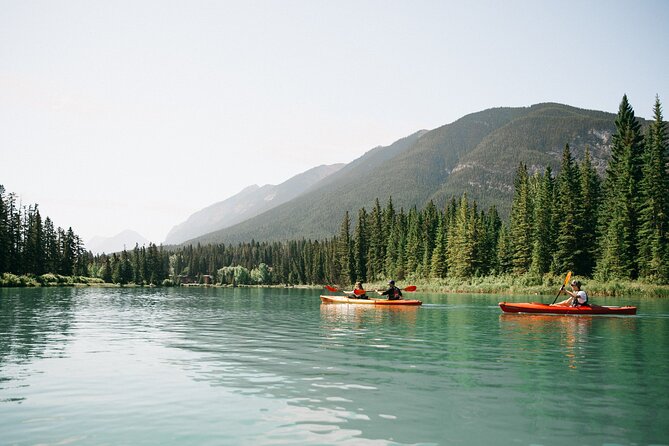
- Bow River turquoise water with mountain-and-forest views gives you a different Banff perspective
- Vermilion Lakes stillness helps you slow down and spot wildlife along the wetlands
- Beaver dam crossing is a real highlight, with guides helping you do it safely
- Bring bug spray if mosquitoes are active (they can be, especially in summer mornings)
Why a morning kayak works so well in Banff
If you’re spending your days hiking and biking, you’ll love having something that gives your legs a different job. A kayak does use your core and arms, but it’s gentler than another trail day. And when the day starts early, the water can feel calmer and the scenery has that clean, crisp morning look.
One group noted an 8am July start as a sweet spot: you’re out before the heat ramps up, and you’re not fighting the busiest crowd energy. Even if you’re not a morning person, you’ll probably appreciate how quickly you get into the rhythm of paddling and looking around, not checking your phone every five minutes.
This kind of outing also helps you see Banff as more than a photo backdrop. You’re in the air and on the water at the same time—listening to the river, watching the shoreline, and noticing how wildlife uses these edges.
You can also read our reviews of more tours and experiences in Banff.
Meeting at Banff Canoe Club and getting on the water fast
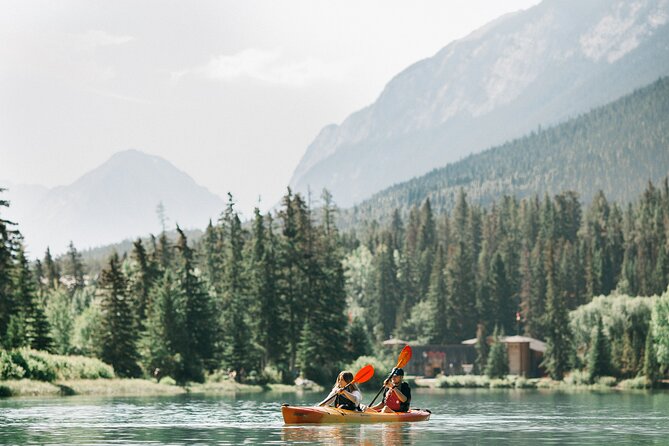
Your starting point is the Banff Canoe Club, at the corner of Bow Ave and Wolf St. The trip ends back at the same meeting spot, so you don’t end up piecing together transport after you’re done.
You’ll be provided with the big essentials: a kayak, life jackets, and paddles, plus a trip leader. Since those are included, you can travel lighter and spend your energy on the paddle. You also get a mobile ticket, which is convenient if you’re already juggling maps, shuttle times, and dinner plans.
Because this is a small-group experience (up to 12), you’ll usually feel like you’re not waiting around for ages. That matters when your day in Banff already includes a few moving parts.
One practical note: the tour is offered in English, so if you need interpretation or translation, plan ahead. And because it’s marked as not recommended for total beginners, you’ll want to show up ready to learn and stay attentive to instruction.
Bow River paddle: turquoise water, mountain views, and wildlife edges
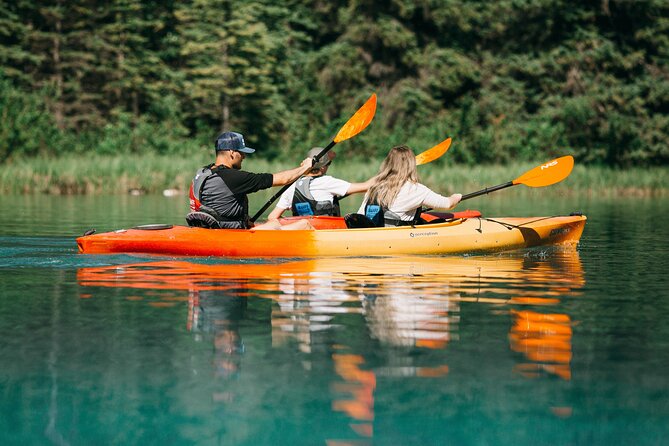
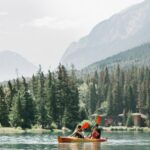
The Bow River is one of those Canadian waterways that feels instantly scenic. Expect that classic mix of turquoise water winding through steep mountain country and forested banks. From a kayak, you don’t just look at the river—you’re surrounded by it. The water is moving, but the pace is yours.
You’ll also get close to the shoreline features that are hard to notice from land. Wildlife tends to use river edges, and the gentle sounds along the banks add to the relaxing feel. In other words, you’re not only sightseeing—you’re doing it from the same environment animals use.
Guides have been getting people through narrow routes and guiding the group safely through tighter stretches of water. That’s one reason the trip asks for moderate fitness and prior kayaking experience: you need enough comfort to control your boat, not just steer with luck.
If you’re a confident paddler, this stop can feel like a scenic cruise with real variety. If you’re less experienced, treat it as a learning moment and don’t fight the guide’s instructions. The goal is smooth, controlled movement, not speed.
Vermilion Lakes: mirror-like calm and that wetlands wildlife feeling
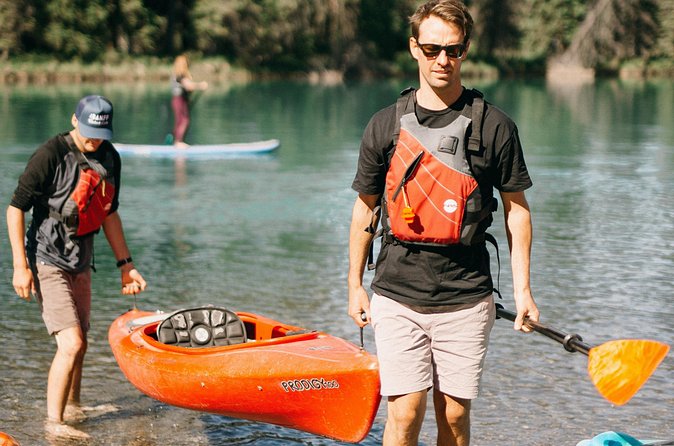
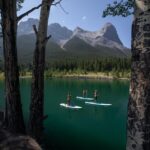
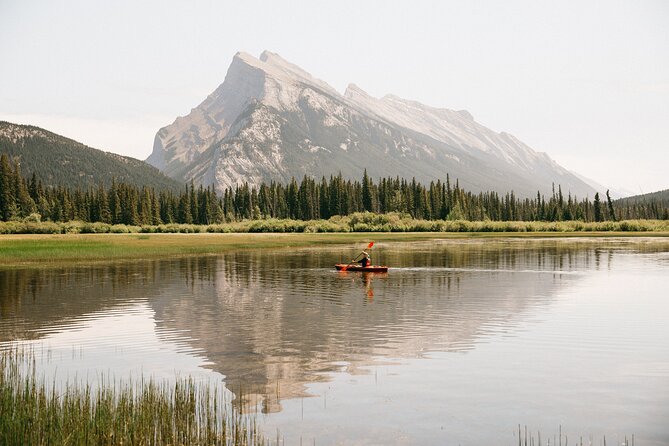
After the river, the vibe often shifts. Vermilion Lakes is where you get the quieter, more reflective side of Banff’s water world. The water here is described as mirror-like, and that sets you up for incredible views of peaks and sky.
This stop is also about the in-between places—the wetlands and lush areas around the lakes. From the kayak, you can pause and look longer because there’s less of the constant river churn. Even when the wind isn’t perfect, the open water and shoreline edges tend to make wildlife watching easier.
There’s also a strong photo payoff. One key tip from the vibe of the trip: take your pictures, but don’t let your phone become your responsibility. A past participant reported a friend lost a phone in the lake during picture-taking, and retrieval was impossible. I’d treat that as your sign to use a secure waterproof case and keep one hand ready for steering.
A lot of the “perfect Banff morning” feeling comes from just being out on still-ish water while your mind slows down. If you want a break from the intensity of hiking, this stop delivers.
Guides, safety, and the beaver dam surprise
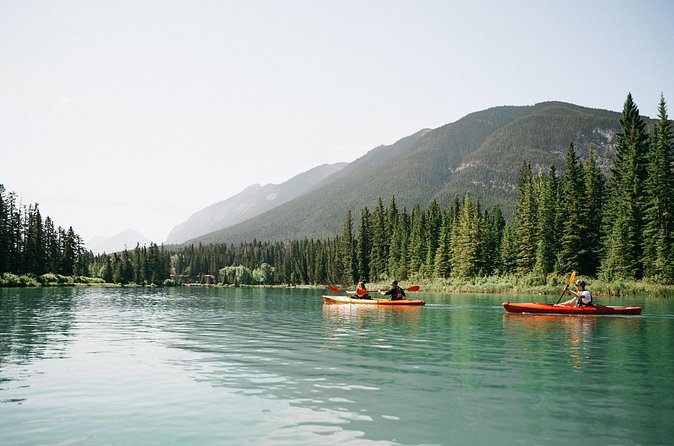
A good guide can make a paddle feel effortless even when the water isn’t. On this experience, the leadership is one of the most praised parts. Names that have led groups include Maddie, Darby, Ben, Amelia, and Abby. People also highlighted how welcoming, patient, and fun the guides were, while still keeping safety tight.
The trip includes moments that are memorable because they’re not cookie-cutter. Crossing a beaver dam is a standout example. It’s described as an unexpected surprise, and guides help you do it safely while the group stays together. If you like learning how nature shapes water flow, this kind of moment gives context that you won’t get from a viewpoint.
Guides have also taken action photos for their groups and shared them at the end for free. That’s a nice value add because you don’t have to play cameraman the whole time.
That said, pay attention to safety around stop-and-start photo moments. If you’re thinking, I’ll just snap a quick shot while moving, you’re exactly the person who should slow down first. Keep your gear secure, and let the guide handle the moment-to-moment pacing.
Also remember: the experience requires good weather. If conditions aren’t right, you’ll be offered a different date or a full refund, which is a fair trade when you’re out on moving water.

Price and logistics: what $127.38 really means
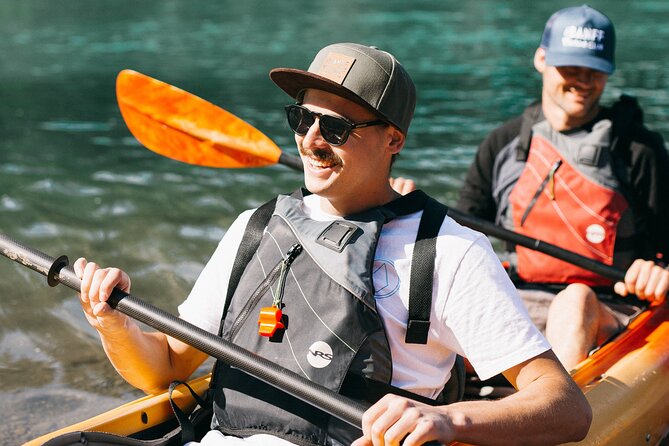
The price is $127.38 per group, for up to 2 people. That’s the main value math: if you come with a partner (or you’re splitting with a friend), the per-person cost effectively drops a lot.
This isn’t a long outing—about 2 hours—but it’s built around two meaningful water environments. You get variety in scenery and water feel: river current and river edges, then the calmer Vermilion Lakes atmosphere. For many people, that mix is exactly what they want: enough time to feel like you did something real, not so long that the day feels swallowed.
Small group size (max 12 travelers) also matters for value. It often translates to more guidance, quicker answers to questions, and better control if you’re still getting comfortable with your paddle rhythm.
Who this is best for:
- Couples or small groups who want an active but not brutal morning
- People who’ve been hiking and biking and want a change of pace
- Kayakers with at least some experience who can follow instructions and manage control
Who should think twice:
- Complete beginners in kayaking, since it’s not recommended without previous experience
- Anyone with limited comfort in moderate physical activity, especially with narrow-water sections
One last practical heads-up: a past participant mentioned a booking mistake (double-booking) led to a refund hassle. You can’t control how every booking system behaves, but you can control one thing—double-check dates and times before you lock it in.
What to pack for a smooth paddle
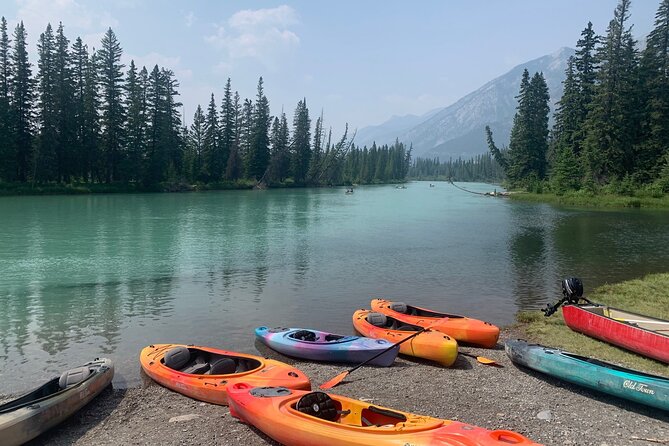
The tour provides the core gear: kayak, life jackets, and paddles. That helps you travel light.
From the most useful on-the-ground advice, I’d focus on two items:
- Bug spray: people specifically noted lots of mosquitoes
- Photo-proof your phone: secure it in a waterproof case and don’t hold it while you’re trying to paddle and aim a shot
Beyond that, dress for water time and expect you might get a bit damp. With a lake and river involved, plan as if your clothes could take some splash and wind chill.
Should you book this double kayak experience in Banff?
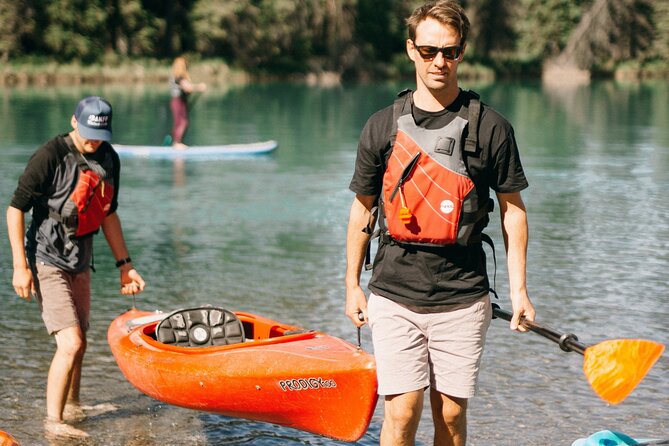
I think you should book it if you want a guided Banff activity that feels hands-on without eating your whole day. The big winners are the mix of Bow River scenery and Vermilion Lakes calm, plus the real-guide feel that keeps the experience safe and fun. The beaver dam crossing is the kind of moment that turns a good activity into a favorite memory.
I’d skip it if you’re brand-new to kayaking. Since it’s not recommended for beginners, you may feel stressed instead of enjoying the views. If you are an experienced paddler and you’re coming in ready to follow instructions, this is a strong value morning outing.
If you’re trying to plan the best Banff rhythm—hiking one day, biking the next, then something lighter—this fits neatly. Add bug spray, keep your phone secured, and you’ll be set for a scenic paddle that’s more about the water than the crowds.
FAQ
How long is the Banff National Park double kayak experience?
It runs for about 2 hours.
Where do I meet for the tour?
You meet at Banff Canoe Club, at the corner of Bow Ave and Wolf St, Banff, AB T1L 1A8, Canada. The tour ends back at the meeting point.
Is this tour suitable for beginners?
It’s not recommended for travelers without previous kayak experience.
What’s included in the price?
You get a kayak, a trip leader, life jackets, and paddles.
What should I bring?
Bug spray is strongly recommended because there can be many mosquitoes. Also be careful with phones while taking pictures.
What happens if the weather is poor or I need to cancel?
The experience requires good weather. If it’s canceled due to poor weather, you’ll be offered a different date or a full refund. You can also cancel for a full refund up to 24 hours in advance.