REVIEW · HONOLULU
Hawaii Volcanoes National Park Experience from Kauai
Book on Viator →Operated by Aloha Sunshine Tours · Bookable on Viator
A day trip to Volcanoes National Park sounds simple, then it gets real. This one strings together round-trip flights from Kauai, guided time in Hawaiʻi Volcanoes National Park, and a few classic Big Island stops like Kona coffee and Punaluʻu black sand.
I especially like the value of having the flight piece handled for you, so you’re not planning schedules, rentals, and parking. I also like that the day is built around the park’s high-impact sights, with narration that helps you connect what you’re seeing—Halemaʻumaʻu, Kīlauea Iki, the Thurston Lava Tube, and steam vents—to what’s happening under the ground.
One big consideration: the schedule is packed into about 8 to 10 hours, and the conditions can change fast. Bring layers and plan for possible cool, wet weather at higher elevations, plus volcanic gases at times that can matter if you have asthma or other respiratory issues.
In This Review
- Key Things You’ll Notice on This One-Day Big Island Hit
- How Kauai to Volcanoes National Park Works in a Single Busy Day
- Volcanoes National Park: Your Must-See Route and Real-World Prep
- Greenwell Farms Kona Coffee: A History Stop on Mauna Loa
- Manuka State Wayside Park: A Short Trail Break That Feels Like Breathing Space
- Punaluʻu Black Sand Beach: Basalt Drama and Sea Turtle Timing
- Punaluʻu Bake Shop Lunch: Sweet Bread, Local Flavors, and Quick Fuel
- Mauna Kea Access Road, Kohala Coast, and Hilo: The Scenic Side Routes
- Price and Value for $589.99: What You’re Really Paying For
- Who This Tour Fits Best (and Who Should Rethink It)
- A Note on Guides, Park Rules, and Cultural Respect
- Should You Book This Kauai to Volcanoes Day Trip?
- FAQ
- How long is the tour from start to finish?
- Are round-trip flights between Kauai and the Big Island included?
- Is Hawaiʻi Volcanoes National Park admission included?
- Are meals included?
- What stops are included besides Volcanoes National Park?
- Will I have cell service in the park?
- Where do I meet for pickup at Kona International Airport?
Key Things You’ll Notice on This One-Day Big Island Hit
- Flights + guided park time, without car hassles: you start by meeting at Kona International Airport and end with the park admission handled.
- Hawaiʻi Volcanoes National Park’s must-see sequence: Halemaʻumaʻu Crater glow, Kīlauea Iki views, Thurston Lava Tube, and active steam vents.
- Kona coffee at Greenwell Farms: a stop tied to Henry Nicholas Greenwell and the Mauna Loa slopes.
- Punaluʻu black sand + sea turtles: dramatic basalt sand and a good chance to spot green sea turtles basking.
- A practical lunch stop at Punaluʻu Bake Shop: Hawaiian sweet breads and sit-down time for plate lunches or sandwiches.
- No cell service + safety reality in an active park: pack water, sturdy shoes, and stay on marked trails.
How Kauai to Volcanoes National Park Works in a Single Busy Day
This tour is designed for people who want the Big Island highlights without spending days commuting or renting a car. You get round-trip airfare between Lihue (Kauai) and Kona International Airport, and then you’re in an air-conditioned vehicle for the sightseeing run.
Pickup is set up at Kona International Airport, meeting in the lot behind Alaska Baggage claim (B-2). From there, you’ll roll through a full route that includes Volcanoes National Park plus other parts of the island like Mauna Kea Access Road, the Kohala Coast, and time in Hilo.
The group stays relatively small, with a maximum of 22 travelers. That size usually helps the guide keep things moving and lets you hear the narration clearly as you bounce between stops. Still, plan on a long day: about 8 to 10 hours, with limited free time at each major stop.
You can also read our reviews of more tours and experiences in Honolulu.
Volcanoes National Park: Your Must-See Route and Real-World Prep
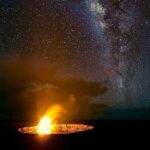
The park portion is the main event, and it’s built like a checklist of big moments. You start at the visitor center to get basic geology and history so the lava landscapes make sense later. Then you head for Halemaʻumaʻu Crater, where you can often see the glow associated with molten lava activity.
Next is the Kīlauea Iki Rainforest Lookout. It gives you a strong contrast to the bare lava feel—lush rainforest around a massive crater, and a short trail option that helps you see the aftermath of eruption-driven landforms.
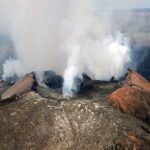
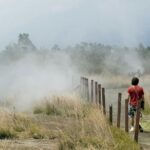
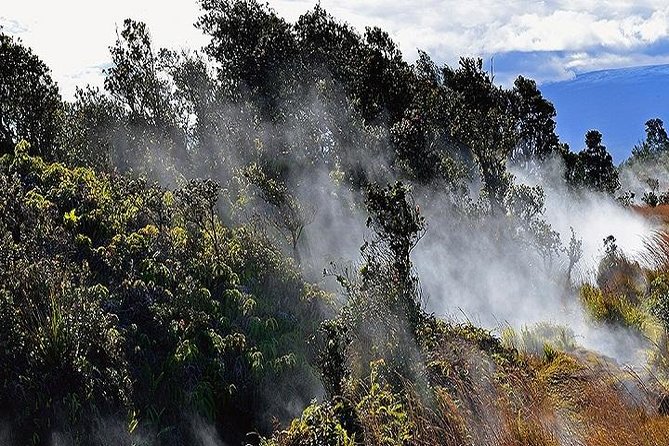
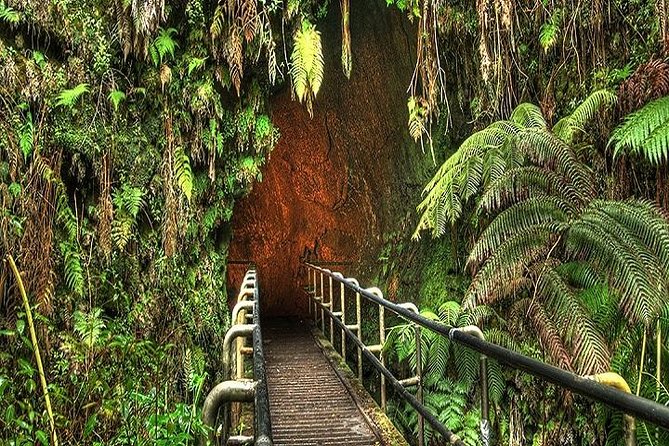
After that comes the Thurston Lava Tube, a natural tunnel formed by flowing lava. This is one of those experiences where the ground looks solid, but you realize it once flowed like a river of rock. Near the end, you spend time at active steam vents where you feel heat rising from the earth.
A few practical points matter here. Cell phone service is limited or nonexistent in many parts of the park, so download what you need in advance and don’t rely on getting signal to navigate. Services inside the park are limited, so bring water and snacks, and wear closed-toe shoes—volcanic terrain can be uneven and sharp.
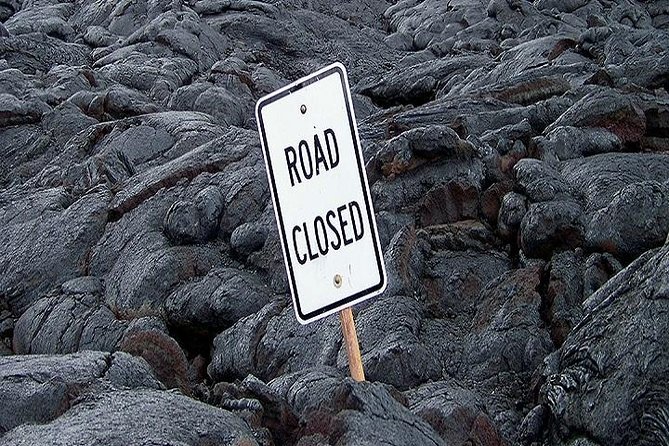
Volcanic gases are also part of the reality. If you have asthma or other respiratory conditions, treat this as a serious factor and follow all safety guidance. The park is active, so stick to marked trails, respect roped-off areas, and keep an eye out for signs about air quality and hazards.
Greenwell Farms Kona Coffee: A History Stop on Mauna Loa
One of my favorite parts of this itinerary is that it doesn’t treat the Big Island like just scenery. You get a coffee-farm stop at Greenwell Farms in the Kona region, on the slopes of Mauna Loa.
Greenwell Farms traces back to 1850, when Henry Nicholas Greenwell started the operation. That timeline matters because Kona coffee wasn’t just a crop—it became a regional identity, tied to volcanic soils and a very specific climate rhythm.
You’ll be visiting in that Kona district setting where the conditions are described as sunny mornings with cloud cover later, plus consistent rainfall and rich volcanic soil. With about 30 minutes here and admission ticket free, it’s enough time to get the idea, look around, and decide whether Kona coffee is something you want to buy or bring home.
The catch is that 30 minutes passes fast. If coffee is your thing and you want extra tasting or browsing time, you’ll want to treat this as a quick, informative stop rather than a long, slow farm visit.
Manuka State Wayside Park: A Short Trail Break That Feels Like Breathing Space
After the park and before—or between—more iconic stops, you get a chance to slow down a bit at Manuka State Wayside Park. This is a peaceful 13-acre park along Hawaii Belt Road (Highway 11), on the slopes of Mauna Loa.
The highlight is the Manuka Nature Trail, a roughly 2-mile route through wet and dry forest ecosystems. You’ll see native Hawaiian plants and features tied to geology and ecology, with interpretive signs along the way.
This stop is also where the island’s wildlife angle shows up. The area is noted for endemic birds, including the Hawaiian hawk and honeycreeper. If you like plants, birds, and simple hiking breaks, this is a solid change of pace from crater lookouts.
It’s only about 30 minutes, and it’s an easier add-on rather than a full hike day. Still, it’s a good time to stretch your legs, eat a snack you brought, and get your bearings before the next big visual stop.
Punaluʻu Black Sand Beach: Basalt Drama and Sea Turtle Timing
Punaluʻu Black Sand Beach is the kind of stop that hits hard visually. The black sand comes from volcanic basalt, and the beach is framed by coconut palms, which makes it feel both tropical and geologically strange—in the best way.
This beach is also a classic spot for Hawaiian green sea turtles. You may see them basking on the shore, especially if you’re there when they’re active and the light is decent. The tour gives this a brief stop (about 30 minutes), which means you’ll want to scan quietly and avoid crowding any wildlife.
Swimming is another matter. The waters can be rough, so this is better treated as a viewing experience than a swim-and-lounge beach day. If you packed beach gear hoping to swim, adjust expectations and plan for photos and turtle watching instead.
Admission ticket is free here, which keeps the stop easy on your budget. The main expense will be your time and a little sunscreen.
Punaluʻu Bake Shop Lunch: Sweet Bread, Local Flavors, and Quick Fuel
Lunch on this tour happens at Punaluʻu Bake Shop, and it’s not just a random roadside stop. It’s described as the southernmost bakery in the U.S., established in 1991, and known for traditional Hawaiian sweet bread in flavors like taro, guava, and mango.
You’ll find a gift shop and a garden, plus options you can actually eat as a full meal. The tour notes that you’ll stop there for lunch where you can choose from items like sourdough sandwiches, kalbi beef, and Hawaiian plate lunches, complemented by their fresh baked goods.
One practical tip: cash can help. The tour specifically advises bringing cash for roadside stands and local shops, and that many places operate on cash-only terms. Even if you normally use a card for everything at home, this is Hawaiʻi, so keep at least a little cash in your day bag.
This stop is also where you reset your energy for the later driving. Because the day is tight, a good lunch matters more than you’d think.
Mauna Kea Access Road, Kohala Coast, and Hilo: The Scenic Side Routes
Even with Volcanoes National Park as the anchor, the tour adds a few major island mood shifts. You’ll include time along Mauna Kea Access Road, which is a steep, winding route from Saddle Road (Route 200) up to the summit area.
As you climb, the road passes through different climates, from grassy plains to more barren volcanic landscapes. Temperature drops as the air thins, and that matters if you’re prone to getting cold quickly. This is where your layers earn their keep—short sleeves at sea level can turn into shivering once you’re higher up.
The schedule also includes a look at the Kohala Coast, known for beaches, scenic views, and luxury resorts. It’s described as drier than other areas, so you may find conditions feel steadier and clearer than on the wetter side of the island.
Then there’s Hilo, which brings back a human scale. You get a sense of history and culture through stops like the Lyman Museum and the Hilo Historic District, plus the Pacific Tsunami Museum. There’s also time at Liliuokalani Gardens, which honors Queen Liliuokalani.
If you want one place that feels like local life, Hilo Farmers Market is mentioned as a lively hub. Even if it’s not a history site, it reflects local culture through goods and produce, which can feel more grounded than just looking at buildings.
The trade-off with these extra stops is time. With a day this full, you’ll get snapshots more than long lingering visits, so keep your priorities straight before you go.
Price and Value for $589.99: What You’re Really Paying For
At $589.99 per person, this isn’t a bargain-basement tour. But the value isn’t just the vehicle and the guide. You’re also paying for round-trip airfare between Kauai and Kona, plus Hawaiʻi Volcanoes National Park admission and guided narration.
If you’ve ever tried to “DIY” the Big Island for a single day, you know the hidden costs: flights, car rental, gas, and the stress of finding parking and timing around crater viewing windows. This package reduces that decision load. It also means you’re not spending your limited time figuring out logistics.
Meals are not included, so you’ll still need to budget for lunch and any snacks you want. The upside is that lunch is built into the schedule at Punaluʻu Bake Shop, so you’re not hunting for food with no cell service and limited park services.
Finally, tipping is mentioned as appreciated. If this is a guide-led, story-heavy day for you, I’d keep some cash set aside. Small tip, big thank-you energy.
Who This Tour Fits Best (and Who Should Rethink It)
This works best if you’re the type who wants the highlights and wants them fast. First-time Big Island visitors often like this because it compresses Volcanoes National Park’s top sights plus Kona, black sand, and a few island-side routes into one day.
It also fits families who can handle walking on uneven volcanic terrain with sturdy shoes. The tour notes that car seats are available for children ages 4 and under, and service animals are allowed.
I’d be cautious if you have breathing issues. Volcanic gases can be a factor, and the tour specifically flags that for respiratory conditions. If you have asthma, consider asking your doctor about exposure limits or talk to your guide before the park portion.
Also, if you’re hoping for a slow, unhurried day with long hikes, this likely won’t feel like that. This is a “see a lot, move a lot” itinerary.
A Note on Guides, Park Rules, and Cultural Respect
The guide narration is part of the experience, and local context really helps you connect the geology to Hawaiʻi’s living culture. That said, one serious concern surfaced about a guide named Kevin.
In a reported experience, Kevin was criticized for gathering tephra or lava rock from inside the national park and taking it away, plus for sharing inaccurate information and speaking in ways that were described as disrespectful toward local food and culture. Removing rocks or lava materials from a national park is against the rules, and your guide should model Leave No Trace behavior.
So here’s the practical takeaway: even with a professional guide, you should watch what’s modeled. If you see anyone collecting rocks, ignoring roped areas, or acting casual about safety or cultural sites, take a step back and follow the guidelines yourself. Hawaiʻi Volcanoes National Park isn’t a souvenir shop.
Should You Book This Kauai to Volcanoes Day Trip?
I’d book it if you want a structured, guided Big Island day with real volcanic sights, no car-planning stress, and classic add-ons like Greenwell Farms and Punaluʻu. It’s also a good match for time-crunched travelers who can handle a long 8 to 10 hour schedule and want short stops that hit the key points.
I’d think twice if you’re sensitive to volcanic gases, dislike fast pacing, or want deep hiking time. Also consider that the overall rating is modest (3.1 from 8 reviews), and at least one account raised a big red flag about Leave No Trace behavior and respect. You can’t control every guide interaction, but you can go in alert, prepared, and ready to follow park rules.
If you go, bring layers, wear sturdy shoes, pack water and snacks, and plan on limited phone service. Do that, and you’ll get a day that’s busy, dramatic, and genuinely memorable.
FAQ
How long is the tour from start to finish?
It runs about 8 to 10 hours.
Are round-trip flights between Kauai and the Big Island included?
Yes. Round-trip airfare is included between Lihue (Kauai) and Kona International Airport (Big Island).
Is Hawaiʻi Volcanoes National Park admission included?
Yes. Park admission is included, and your driver provides the entry tickets on the morning of your tour.
Are meals included?
No. Meals are at your own expense. Lunch is planned at Punaluʻu Bake Shop, and you choose what to order there.
What stops are included besides Volcanoes National Park?
The day includes Greenwell Farms, Manuka State Wayside Park, Punaluʻu Black Sand Beach, Punaluʻu Bake Shop, and additional stops that include Mauna Kea Access Road, the Kohala Coast, and Hilo.
Will I have cell service in the park?
No. Cell phone service is limited or nonexistent in many parts of the park, so plan ahead and download what you need.
Where do I meet for pickup at Kona International Airport?
Meet at the lot behind Alaska Baggage claim, B-2, at Kona International Airport.