REVIEW · NORWAY
Færvik: Raet National Park Sea Kayaking Trip
Book on GetYourGuide →Operated by TrollAktiv Hove · Bookable on GetYourGuide
Cold water. Clear views. Real sea kayaking.
This trip in Agder County gives you a guided way into the Southern Norwegian Skerries, with the extra thrill of being on the water in the Raet marine national park, which is famously 98% below sea level. I like that you get proper paddle training before you start moving, so you’re not guessing with a kayak under you.
One thing to keep in mind: even though it’s beginner-friendly, you’ll still paddle for about 2 to 3 hours total and you need to be able to swim and handle cool, changeable coastal weather.
Raet National Park feels ancient, but the trip is simple to follow. You’ll pass islands like Gjessøya and Merdø, learn how these spots connect to sea routes from the 1500s, and see how the shoreline was shaped by a glacier more than 12,000 years ago. I also like that the guide takes photos for you, so your hands can stay on the paddle.
A possible drawback is that the group may adjust or cancel if conditions turn rough, so check the weather mindset and be ready to adapt if you don’t land exactly on the day’s plan.
In This Review
- Key things that make this Færvik kayaking trip special
- Raet marine national park: what it feels like to paddle over 98% underwater
- Meeting at Hove on Tromøya: your first 20 minutes matter
- Getting out on the sea routes: past St Helena and Badeholmen
- Gjessøya: the short pass that gives you momentum
- Gjessholmen sandy bay: where the trip slows down for real viewing
- Merdø option: lunch or the museum without turning the day into a hike
- Lille Brattholmen and Torjusholmen: finishing with more shoreline rhythm
- Weather and effort: what you should be ready for on a 3-hour sea kayaking day
- Price and value: does $125 make sense for what you actually get?
- Who should join, and who should skip this trip
- Final call: should you book TrollAktiv Hove’s Færvik sea kayaking trip?
- FAQ
- Where does the kayaking trip start?
- How long is the Færvik: Raet National Park sea kayaking trip?
- Do I need any previous kayaking experience?
- What should I bring for the trip?
- What’s included in the price?
- Can you paddle to Merdø for lunch or a museum visit?
- What languages are the instructors speaking?
- What rules should I know before going?
- Who isn’t suitable for this tour?
- Is there free cancellation or flexible payment?
Key things that make this Færvik kayaking trip special
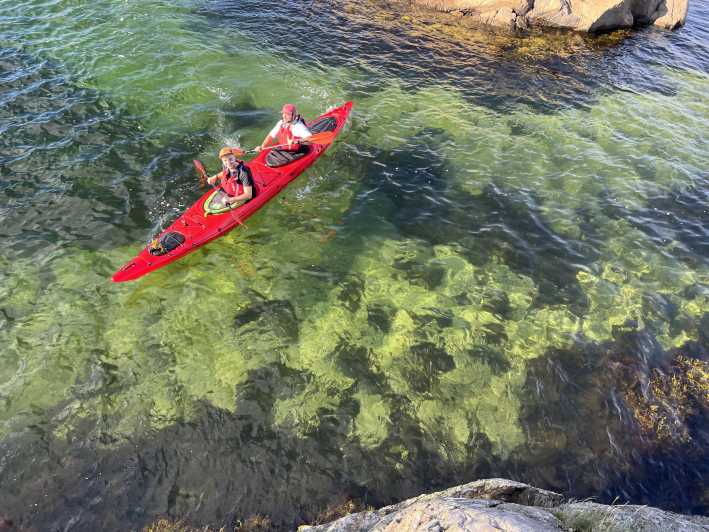
- Raet marine national park, 98% underwater: you’re literally kayaking through a protected seascape, not just around it.
- Beginner coaching first: you get safety talk, paddle practice, then you go.
- Historic sea routes from the 1500s: island-to-island navigation stories give the trip context.
- Gjessøya and Merdø to Gjessholmen: you’re mixing sheltered paddling with open-water effort.
- Merdø option for lunch or museum: you can turn a paddle into a mini outing with local history.
- Guide photo package: the moment you want is already taken care of.
Raet marine national park: what it feels like to paddle over 98% underwater
Most sea kayaking tours sell scenery. This one gives you a specific kind of scenery: Raet National Park, a marine national park where the protected area is 98% below the water. That changes your perspective fast. Instead of looking for “shoreline views,” you’re watching life and rock features right under your hull, in clear coastal water that makes wildlife spotting more realistic.
The trip also leans into deep time. The southern Norwegian coast here was shaped by a glacier that retreated over 12,000 years ago. You don’t need a geology degree to feel it. The water routes, the island shapes, and the way sheltered bays open into wider sea all reflect that older landscape you can’t see from the highway.
And because you’re kayaking rather than cruising, you move at the speed of attention. You’ll notice small changes: where the water goes flatter, where wind starts to push, and where seabirds hover because the food is there. It’s the kind of place where you come away thinking, I understand this coast better now—not just I took photos.
You can also read our reviews of more tours and experiences in Norway.

Meeting at Hove on Tromøya: your first 20 minutes matter
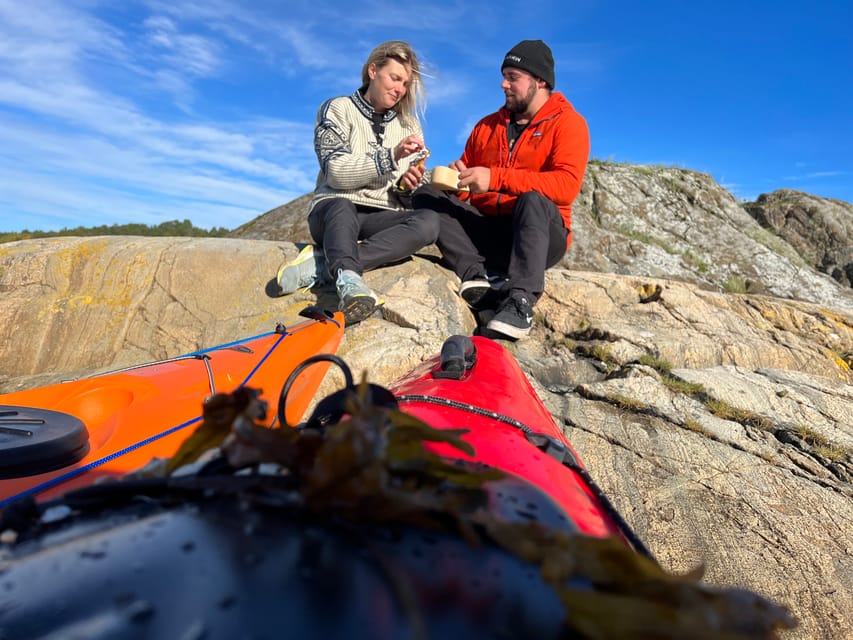
The tour starts at the beach house at Hove on Tromøya, at Hoveveien 108. Right away, the day is set up for confidence. You’ll get protective clothing, then a safety talk that focuses on what you actually need while you’re in the kayak.
Expect roughly a 20-minute briefing and orientation. This isn’t just rules on paper. It’s about how the guide wants you to paddle, where to place your attention, and what to do if conditions shift. Then you’ll get paddle training—about 30 minutes—with a demonstration and time to practice.
That practice block is worth more than it sounds. Sea kayaking looks simple until you’re moving your body for real, holding the paddle at the right angle, and staying balanced without fighting the kayak. A good training start helps you paddle longer with less stress later.
Also, be prepared for Norway-style cold-water planning. You’ll be in a system that assumes you dress for immersion risk even if you don’t get wet. The tour asks you to bring a swimsuit and wool underclothes (yes, even though you’re wearing protective gear), plus a towel and change of clothes so you can warm back up.
Getting out on the sea routes: past St Helena and Badeholmen
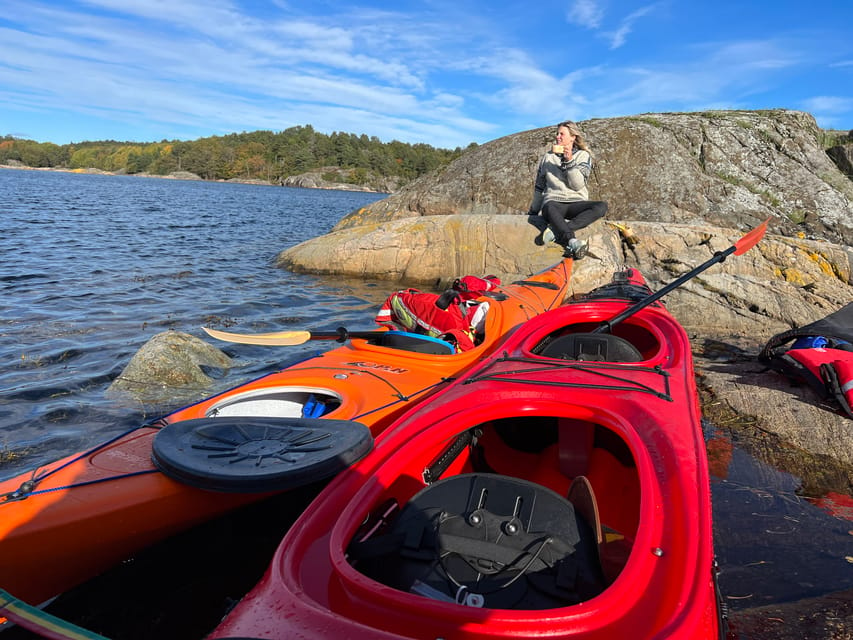
Once you’re on the water, the route heads southwest through the archipelago. The key word in the experience is sheltered. You’ll do a lot of the paddling where islands buffer the wind and chop, which helps beginners build rhythm without feeling constantly “at sea.”
One of the stops along the way is St Helena island, and you’ll also pass Badeholmen. These aren’t named just for geography. The guide uses them to explain how people traveled across these waters long before modern maps, including connections to sea routes dating back to the 1500s. That matters because it turns your paddling line into a story. You start to understand why islands are where they are and why certain routes were useful.
You’ll also hear history tied to the islands you approach—Gjessøya being a main one. The guide points out points of interest, so you’re not just watching water textures. You’re learning what to look for: landforms, sheltered channels, and why certain bays became destinations.
If you’re a beginner, this is where you’ll feel the difference between a tour that moves too fast and one that teaches. The guide’s job here is pacing: get you feeling in control, then gradually increase effort.
Gjessøya: the short pass that gives you momentum
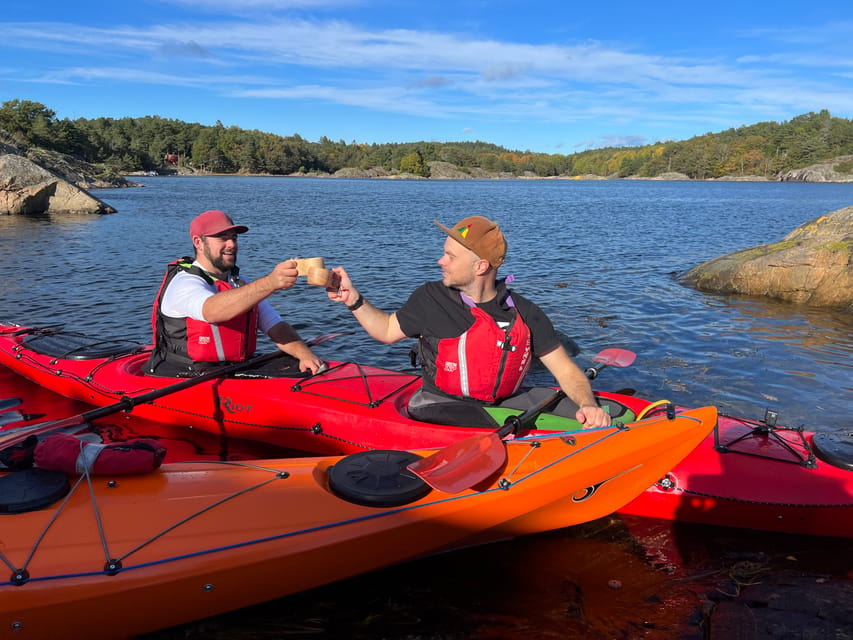
Gjessøya is listed as a “pass by” stop, but don’t underestimate that. A short pass can still be the part where you understand your kayak handling. After your first practice and a bit of sheltered paddling, you’ll recognize the difference between pulling correctly and just flopping a paddle through the water.
This stage is also where you get your first proper sense of the Raet marine park environment. You’re surrounded by islands, but you’re also close to marine life habitat. Clear water helps. When conditions are right, you’ll likely spot activity near the shoreline and around the areas the guide highlights.
The best beginner goal here is simple: keep your strokes smooth and keep your focus forward. If you start looking only at your hands, you lose balance. If you keep your eyes on where you’re going, the paddling becomes easier.
Gjessholmen sandy bay: where the trip slows down for real viewing
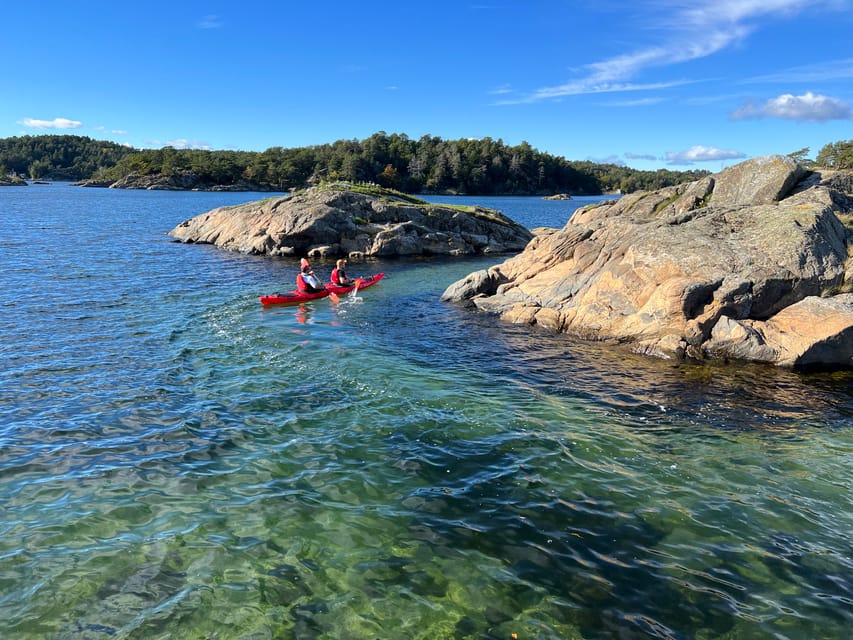
Eventually you’ll enter the sandy bay at Gjessholmen, which is a natural reward in the middle of the route. Sand bays tend to feel different under the boat—more forgiving water movement and a calmer sense of place. This is the time when the experience shifts from “learning the kayak” to “watching the coast.”
This is also where the tour’s marine-national-park angle becomes personal. The area is described as abundant in maritime life, with clear waters and unspoiled nature. Even if you don’t see something dramatic every minute, you’ll feel that the water is doing what it’s supposed to do: feeding birds, revealing life closer to shore, and holding a kind of stillness you can’t get from land.
If you’re someone who likes nature but doesn’t want a hiking sweat-fest, this is a great middle ground. You still work (paddling is work), but you’re not constantly climbing, stepping, or carrying. Your effort goes toward staying stable and moving efficiently.
Merdø option: lunch or the museum without turning the day into a hike
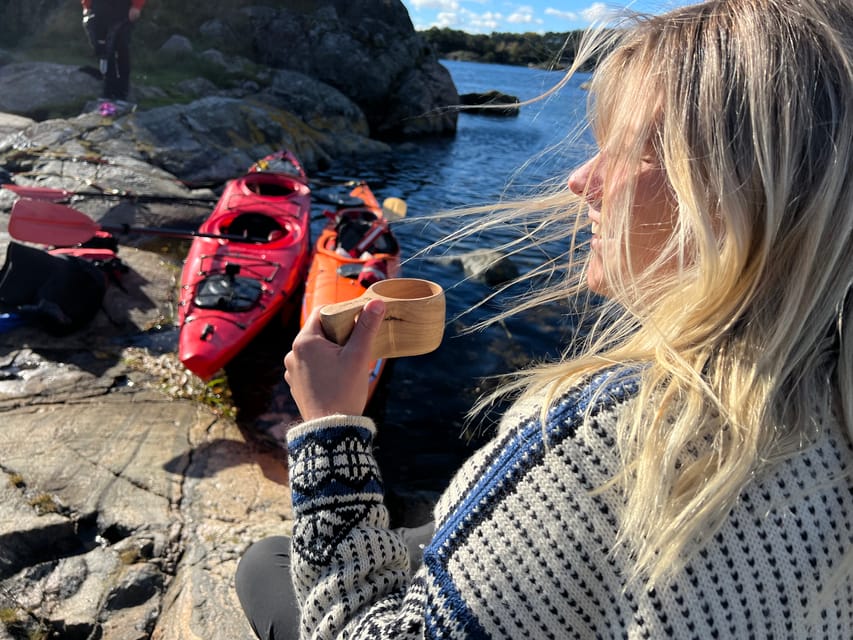
A highlight of the trip is the possibility to paddle to historic Merdø for either lunch or a museum visit. You’ll have time on the water to reach it, and then you get shore time depending on what the guide and conditions allow.
Merdø is important because it gives you a break from pure “sea watching.” You’re on the coast, but you’re also stepping into local culture and preservation. The museum piece matters because it helps tie together what you learned about the islands and sea routes with how people have understood this area.
One practical note: options can affect timing and energy. If you choose the Merdø add-on, your day still stays a 3-hour experience, but you’ll likely feel the total effort slightly more. If you’re a first-timer, I’d think of this choice like ordering dessert. It’s great if you have appetite left, and it’s okay if you decide to stay focused on kayaking.
Lille Brattholmen and Torjusholmen: finishing with more shoreline rhythm
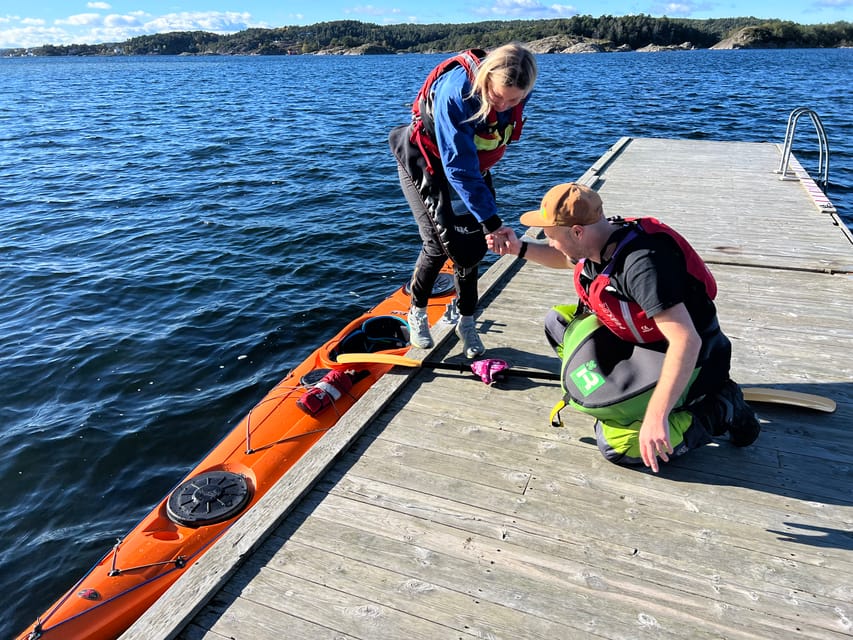
The later parts of the route include stops where you keep practicing your kayak control—Lille Brattholmen and Torjusholmen are both part of the route. These names matter because they mark the transition into the “end stretch,” when your body starts remembering what the paddle can do.
By this stage, you should feel more confident with basic technique. You’ll likely have figured out a comfortable cadence—one that doesn’t overwork your shoulders. The guide will keep an eye on everyone’s form, and if the water changes, you’ll see how the group handles it.
This is also when you’ll appreciate sheltered-coast geography most. The islands aren’t just pretty. They shape your effort. A route that stays in buffer zones gives beginners a chance to enjoy the sea rather than simply survive it.
Weather and effort: what you should be ready for on a 3-hour sea kayaking day
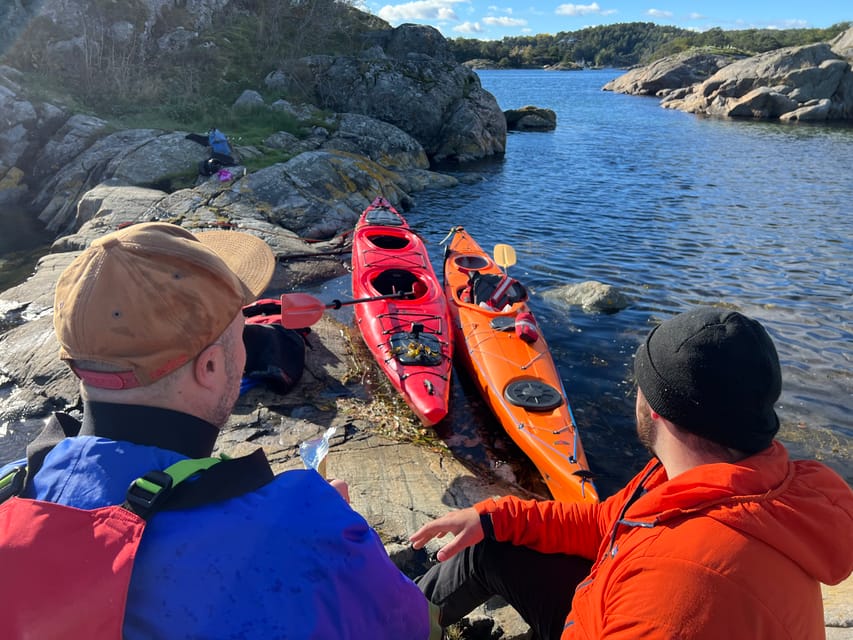
Even with sheltered water, sea kayaking isn’t zero-stress. The tour is suitable for beginners, but the information is clear: you’ll paddle for 2 to 3 hours in open water as part of the overall experience. That means you should be in good physical health and plan on real arm and core work.
You also must be able to swim. The tour isn’t positioned as a sit-on-and-enjoy boat ride, and the safety requirements reflect that.
What about weather? The activity can be moved or canceled due to bad weather. That’s a normal coastal reality, not a marketing line. If you’re going on a windy or rainy day, I’d treat the trip as a plan that depends on the sea behaving enough to keep everyone safe.
A simple strategy: pack like you’ll get cooled down even if you stay dry. Bring the wool layer, a towel, and a full change of clothes. Coastal cold is hard to shake with just willpower.
Price and value: does $125 make sense for what you actually get?
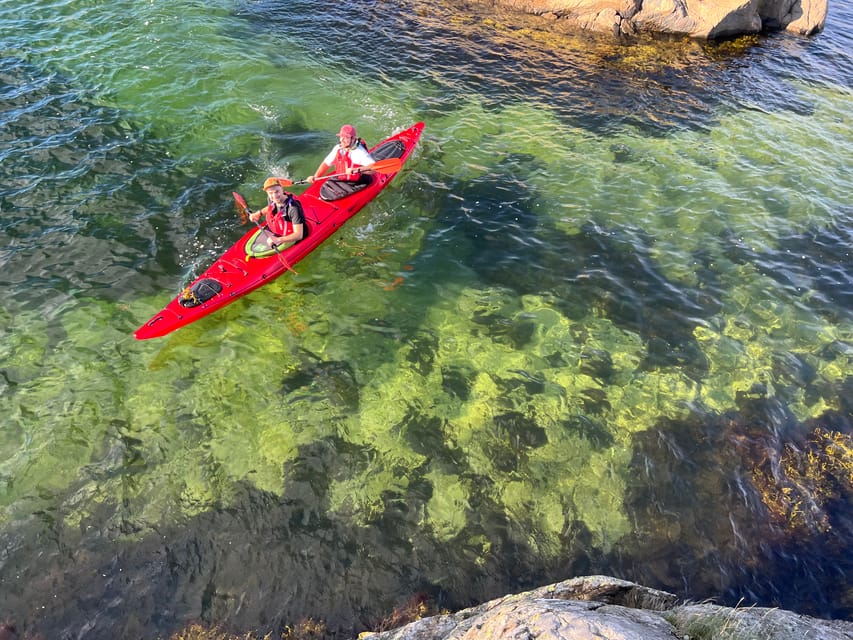
At $125 per person for a 3-hour experience, this isn’t the cheapest activity in the region. But it also isn’t just renting a kayak and hoping for the best.
Here’s what you’re paying for, and why it’s meaningful:
- All water equipment included, plus the protective clothing the tour provides. That removes the guesswork of what gear you actually need for cold water.
- Training on how to paddle, including technique demonstration and practice time before you go further. Skill is part of the product here.
- Local history through island and sea-route storytelling, not just a generic script.
- Pictures taken by your guide, which is surprisingly practical. You get memories without having to stop and wrestle a phone under windy conditions.
- English instruction (along with Norwegian), so you aren’t relying on hand gestures when it counts.
When you add those up, the value comes down to safety + learning + experience capture, not simply the scenic factor. If you want to feel competent in a sea kayak by the time you finish, this price structure fits.
Who should join, and who should skip this trip
This tour is a good fit if you:
- Want a beginner-friendly entry into sea kayaking with real instruction
- Can swim and are comfortable being in cool coastal water for hours
- Prefer a guided route with stops, history, and plenty to look at underwater and along shore
It’s not suitable for:
- Children under 12
- Pregnant women
- Non-swimmers
- People over 243 lbs (110 kg)
My practical advice: if you feel unsure about stamina, don’t think only about running or walking. Think about paddling for 2 to 3 hours in cold conditions. If you can handle that effort, you’ll enjoy the ride more, because you’ll spend less time bracing mentally.
Final call: should you book TrollAktiv Hove’s Færvik sea kayaking trip?
If your dream day includes clear water, island hopping, and learning how this coast worked centuries ago, I’d book it. The combo of Raet’s underwater marine protection, guided paddle coaching, and the option to reach Merdø for lunch or a museum makes it feel like more than a short paddle loop.
Skip it only if swimming or cold-water effort isn’t your strength. Also, if your schedule is super rigid and you can’t handle weather-based changes, plan extra buffer time. Coastal conditions are real here.
FAQ
Where does the kayaking trip start?
The tour starts at the beach house at Hove on Tromøya, at Hoveveien 108, with the water entry at Hoveodden 80.
How long is the Færvik: Raet National Park sea kayaking trip?
The trip lasts about 3 hours.
Do I need any previous kayaking experience?
No. The tour is suitable for beginners, but you should expect paddling for about 2 to 3 hours in open water. You also need to be able to swim and be in good physical health.
What should I bring for the trip?
Bring comfortable shoes, warm clothing, a change of clothes, and a towel. The tour also asks for jogging shoes, a swimsuit, and wool underclothes.
What’s included in the price?
All water equipment is included, along with protective clothing, training on how to paddle, local history, and pictures taken by your guide.
Can you paddle to Merdø for lunch or a museum visit?
The trip description notes that you can paddle to historic Merdø for lunch or to visit the museum.
What languages are the instructors speaking?
Instruction is available in Norwegian and English.
What rules should I know before going?
Smoking, drones, intoxication, alcohol and drugs, chewing gum, and bare feet are not allowed.
Who isn’t suitable for this tour?
It’s not suitable for children under 12, pregnant women, non-swimmers, and people over 243 lbs (110 kg).
Is there free cancellation or flexible payment?
Yes. You can cancel up to 24 hours in advance for a full refund, and you can reserve now and pay later.