REVIEW · CUENCA
Birdwatching Tour in Cajas National Park from Cuenca
Book on Viator →Operated by Polylepis Tours · Bookable on Viator
The birds here feel like they’re on a mission. From Cuenca, you’ll spend a full day hiking through Cajas National Park’s different habitats and chasing high-altitude specialties, with a private bilingual birding guide and pickup included. I love that the route is built around habitat shifts, not a random walk, so you’re far more likely to see a variety of species—especially endemics like the Violet-throated Metaltail. One thing to consider: this is a hike at altitude, so you’ll want solid, moderate fitness and a slow, steady pace.
My favorite part is the focused birding with real guidance—your guide picks targets, helps you read bird behavior, and steers you to the right spots. I also love that the tour isn’t just point-to-point; you can enjoy the trek at your own pace, then shift ecosystems after lunch for more chances at different birds. In the same trip, you’ll also get a bird list of the area and time with provided binoculars if you request them in advance.
The main drawback is straightforward: the elevation is no joke. You’ll be around 12,800 ft (3,800 m) in the first part and then about 10,500 ft (3,200 m) in Llaviuco Valley, so plan for slower movement and take it easy if you’re sensitive to altitude. The tour is best for people who want birds over speed.
In This Review
- Key takeaways before you go
- Cuenca Departure at 6:30 am: How the Day Really Starts
- Entering Cajas National Park’s Habitat Zones (Why This Route Works)
- Stop 1: Middle Park Birding Around 3,800 m (12,800 ft)
- Lunch and the Shift to Llaviuco Valley at 3,200 m (10,500 ft)
- The Guide Factor: Why Eddy and Edison Edy Matter
- What’s Included (and Why It Feels Fair for $99.99)
- Pace, Fitness, and the Altitude Reality
- Who This Tour Fits Best (and Who Might Skip It)
- Should You Book This Cajas Birdwatching Tour?
- FAQ
- What time does the birdwatching tour start?
- How long is the tour in total?
- Is transportation included from Cuenca?
- How many people are in the group?
- Is lunch included, and is there a vegetarian option?
- Are binoculars included?
- Is the tour suitable for kids or people with limited fitness?
Key takeaways before you go
- Private bilingual birdwatcher guide who tailors the walk to what you want to focus on
- Two birding zones in Cajas: a higher middle section and Llaviuco Valley after lunch
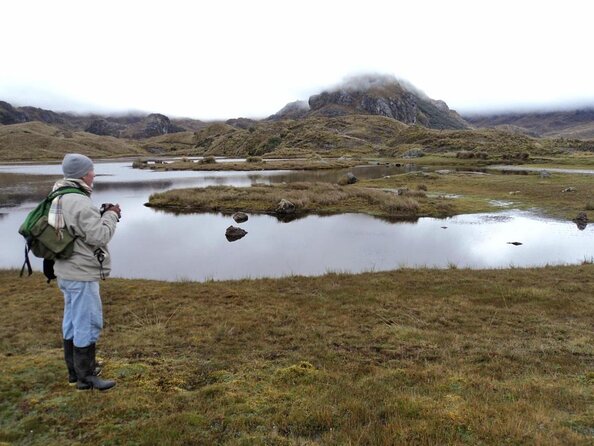
- Habitat variety across moorland, high grassland/paramo, cloudy forest, and polylepis forest
- Endemic species chances, including the Violet-throated Metaltail and Ecuadorian Hillstar
- Small group size (max 10) for more attentive spotting and fewer interruptions
- Binoculars available—ask for them in advance
Cuenca Departure at 6:30 am: How the Day Really Starts
This is an early start day—start time is 6:30 am. Pickup comes from your hotel or residence in Cuenca, and you’ll ride to the middle portion of Cajas National Park (around 3,800 m / 12,800 ft). The total experience runs about 8 hours, and you’ll get dropped back in Cuenca afterward.
That morning timing matters. In higher-elevation birding, conditions can be better earlier in the day for spotting and hearing birds. Even if you don’t think you’ll be a morning person, this schedule helps you spend your energy where it counts—finding birds in the habitats that hold them.
The tour is capped at 10 people, which is a big deal for birding. In a larger crowd, you end up constantly stopping and starting; in a small group, your guide can keep you together without losing time when someone spots something.
You can also read our reviews of more tours and experiences in Cuenca.
Entering Cajas National Park’s Habitat Zones (Why This Route Works)
Cajas National Park is famous because it sits at the intersection of multiple ecosystems. In this tour, you’ll experience that variety in a practical way: moorland, high grassland (paramo), cloudy forest, and polylepis forest. That matters because different birds prefer different plant types and ground cover. If the habitat changes, the bird community changes with it.
Instead of doing one long trek in a single environment, the tour builds in a shift. You’ll begin in the middle part of the park at the higher elevation, then continue after lunch to the Llaviuco Valley at a lower elevation. You’re still in Cajas, but you’re changing your birding “filter.”
If you’re the type who wants value for time, this is one of the smartest ways to spend a day here. You’re not just walking through “beautiful nature.” You’re moving between ecosystems that actually influence which species you can realistically see.
Stop 1: Middle Park Birding Around 3,800 m (12,800 ft)
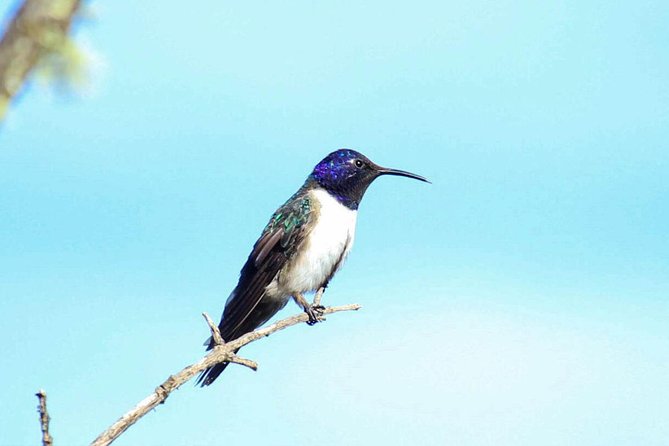
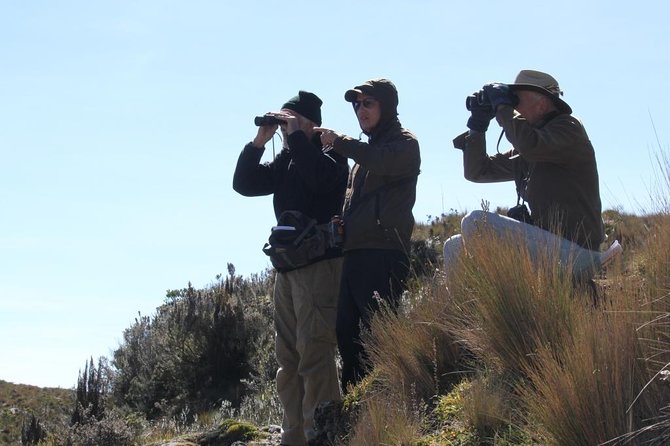
Your first section focuses on a higher-elevation zone near 3,800 m / 12,800 ft, where the park’s moorland and high grassland patterns come into play. This is also where your guide’s scanning and spotting really earn their keep, because birds can be small, fast, and easy to miss if you don’t know what to look for.
On this part of the route, you may see birds such as:
- Tufted Tit Tyrant
- Variable Hawk
- Red-rumped Bush Tyrant
- Plain-colored Seedeater
- Andean Ruddy Duck
- Tit-like Dacnis
- Stout-billed Cinclodes
- Bar-winged Cinclodes
- Brown-backed Chat Tyrant
- Many-striped Canastero
- Andean Tit-Spinetail
- Blue-mantled Thornbill
- Ecuadorian Hillstar
- Giant Conebill
- Violet-throated Metaltail (endemic)
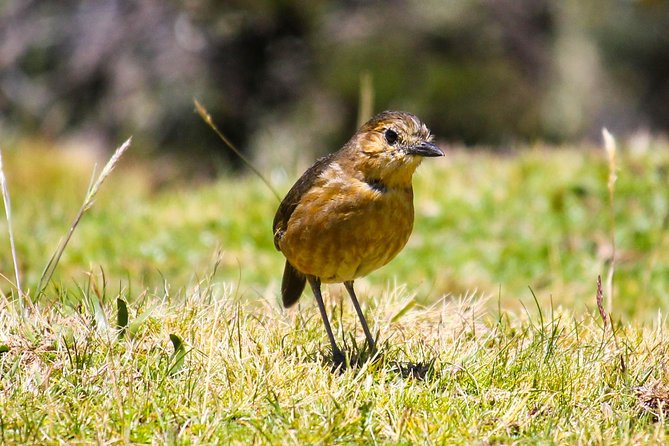
- Tawny Antpita
A key reason this stop is compelling is the mix of behavior types you might encounter. You’re not only looking for perched birds. The list includes birds that can show up in open areas (like finch-like seedeaters), along rocky or grass edges (some cinclodes), and in the air (like hawks). That variety usually makes the walk feel alive instead of repetitive.
One more detail I like: your guide isn’t treating this as a rote checklist. In my experience with guides who do Cajas well, the best birding comes from adapting as the morning unfolds—where birds are vocal, what’s moving, and which microhabitats are productive that day.
Lunch and the Shift to Llaviuco Valley at 3,200 m (10,500 ft)
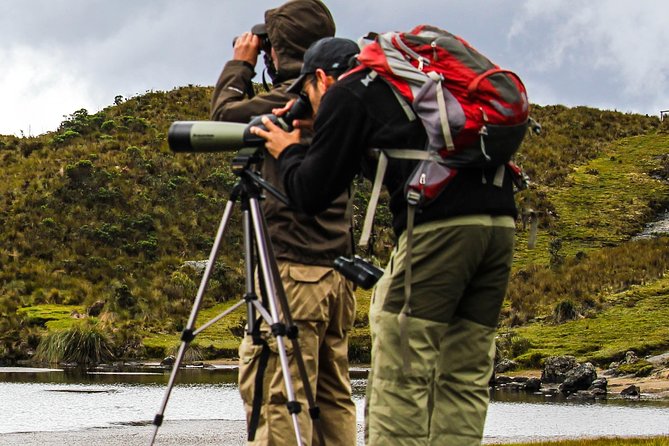
After your higher-elevation birding, you’ll stop for lunch. The tour includes a box lunch or lunch, so you’re not spending time hunting for food or losing daylight. Then you’ll head to the lowest part of the day: Llaviuco Valley, around 3,200 m / 10,500 ft.
This lower elevation doesn’t mean “easy mode,” but it can feel different. You’ll still be at serious altitude, but the habitat rhythm changes. Llaviuco Valley is where the tour’s second wave of specialty birds comes into play, including forest and edge species.
Birds you can encounter here include:
- Masked Trogon
- Gray-breasted Mountain Toucan
- Turquoise Jay
- Black Flowerpiercer
- Grass Wren
- Black-crested Warbler
- Brown-bellied Swallow
- Tyrian Metaltail
- Rainbow Starfrontlet
- Shining Sunbeam
What I appreciate about ending at Llaviuco Valley is the contrast. Stop 1 leans toward high grassland and moorland birds; Stop 2 often brings in more colorful, forest-tending species. If you’re hoping for variety in your photos—different shapes, sizes, and plumage tones—this two-zone structure gives you a better shot.
The Guide Factor: Why Eddy and Edison Edy Matter
This tour lives or dies by your guide’s field skill. The good news: the experience here is built around a bilingual birdwatcher guide, and the names you’ll hear repeatedly are Eddy and Edison Edy.
What stood out in the guide approach is not just bird knowledge—it’s the ability to translate that knowledge into what you can see. With guides like Eddy, you get real instruction on where to focus, how to read movement, and what clues to watch for. One guest highlighted how Eddy led them to views of Ecuadorian Hillstar that would have been hard to find without help.
Edison Edy also comes up for a particular style: he customizes the trip to fit your interests and ability level. That means if you want more time looking carefully, he adjusts. If you prefer steady walking with planned stops, he adjusts too. And if you’re the type who enjoys more than birds, Edy’s knowledge extends to plants and wildlife, which makes stops feel richer without turning the trip into a lecture.
If English is important to you, that’s another plus mentioned: Edy is fluent in English. Birding is easier when you can ask quick questions and get immediate answers—like whether a certain call matches a target bird, or what behavior to watch for.
What’s Included (and Why It Feels Fair for $99.99)
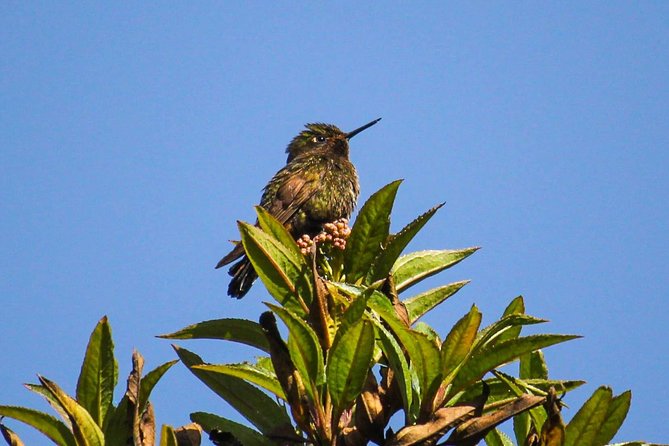
At $99.99 per person, this is priced like a serious guided day, not a budget “drive and hope” tour. And it includes several pieces that reduce your hassle and increase value.
Included highlights:
- Private transportation to and from the park
- Pickup in Cuenca and drop-off back in Cuenca
- Bilingual birdwatcher guide
- Box lunch or lunch
- Bird list of the area
- Binoculars (request in advance)
- Admission ticket is listed as free
That combo matters. Private transport plus a full day with a guide is usually the expensive part of birding outings in the Andes. Here, you’re also getting a bird list, which is useful later when you’re matching what you saw to names. And the binoculars option is practical because they help you make the most of the guide’s work—especially at distance or when birds are quick and small.
Not included:
- Personal expenses
- Tips
In other words, you’re paying mainly for the guide skill, the time, and the transport. If you’re serious about seeing birds (especially rarer and endemic species), the structure is good value.
Pace, Fitness, and the Altitude Reality
The description calls for moderate physical fitness, and that aligns with what you should expect from a full-day trek. The altitude numbers alone tell you this won’t be a flat stroll.
You’ll start near 3,800 m / 12,800 ft, then later go to 3,200 m / 10,500 ft. At these elevations, your body works harder, even if the trail is gentle. Plan to move slowly, take breaks when your guide suggests, and keep your breathing steady.
There are also a couple of practical requirements:
- Minimum age is 12 years
- A current valid passport is required on travel day
If you’re planning this for teens or older kids, that minimum age matters. If you’re choosing this for older relatives or anyone with limited mobility, the moderate fitness requirement is your constraint—this is a walking-focused bird day.
Who This Tour Fits Best (and Who Might Skip It)
This birdwatching day is a strong fit if:
- You care about seeing specific species, not just scenic views
- You want the best odds for high-altitude and endemic birds like Violet-throated Metaltail and Ecuadorian Hillstar
- You like getting real instruction from a guide, with time to look and ask questions
- You prefer a small group (max 10) where it’s easier to track what the guide is showing
It may not be the best fit if:
- You dislike early mornings and long days
- You struggle with altitude or need lots of rest breaks
- You want a purely relaxed, low-effort outing
This is a guide-led day where the effort is part of the payoff. If that matches your style, you’ll likely enjoy it a lot.
Should You Book This Cajas Birdwatching Tour?
I’d book it if your priority is birds in Cajas National Park and you want help finding the specialties. The combination of habitat variety, two major birding zones (higher middle park plus Llaviuco Valley), and a guide who can adapt—especially with the Eddy/Edison Edy style of customizing to your interests—makes this more than a generic outing.
Go for it if you’re comfortable with a trek at altitude and you want value that includes pickup, transport, lunch, and binoculars on request. If you’re chasing endemics and want a realistic plan for a full day, this tour format is exactly how you should spend your time around Cuenca.
If you’re unsure about altitude, consider your fitness honestly. Moderate fitness is required, and at these elevations, even experienced hikers tend to move slower.
FAQ
What time does the birdwatching tour start?
The meeting/start time is 6:30 am.
How long is the tour in total?
The duration is listed as 8 hours (approx.).
Is transportation included from Cuenca?
Yes. The tour includes hotel pickup (or pickup from your residence) and roundtrip transportation, with drop-off back in Cuenca.
How many people are in the group?
The tour has a maximum group size of 10 travelers.
Is lunch included, and is there a vegetarian option?
Yes. You’ll have box lunch or lunch included. A vegetarian option is available if you request it at booking.
Are binoculars included?
Yes, binoculars are included, but you should ask for them in advance.
Is the tour suitable for kids or people with limited fitness?
Minimum age is 12 years, and you should have moderate physical fitness. The tour involves hiking at high elevation, so pace yourself.