Wild rhinos, then temples. This is Assam in tight, efficient days. You get Kaziranga National Park plus a smart Guwahati add-on, with three separate jeep safari drives and all the core logistics handled.
I especially like the focus on Jeep safaris across multiple areas, so your chances aren’t pinned to just one morning. I also really enjoyed the cultural side: Kamakhya temple and the river-time in Guwahati make the trip feel more than a checklist.
One thing to plan for: safari seats are regulated by the Assam forest department, so if availability is tight, your exact timing can feel out of your hands even with a private package.
In This Review
- Key takeaways before you go
- Kaziranga and Guwahati in four days: how the rhythm works
- Your resort base: comfort that actually helps on safari days
- Three jeep safaris across Kaziranga ranges: the main event
- What you can realistically expect to see (and what’s never guaranteed)
- Habitat notes: why Kaziranga feels different from other safari parks
- The Brahmaputra sunset cruise: your evening reset in Guwahati
- Guwahati temples and Umananda Island: Kamakhya plus Navagraha
- Price and logistics: does $652 feel fair for what you get?
- Who should book this package (and who might want a different plan)
- Should you book Kaziranga and Guwahati with this package?
- FAQ
- How long is the Kaziranga National Park and Guwahati experience?
- Are airport transfers included?
- How many jeep safaris are included?
- Are the safari tickets included?
- What sightseeing is included in Guwahati?
- What meals are included during the trip?
- Do I need to pay separately for flights?
- What happens if I need to cancel?
- Is camera equipment covered in the inclusions?
Key takeaways before you go
Three jeep safaris across different Kaziranga ranges give you more wildlife time than a single-day drive.
Naturalist-led forest safaris add context while you’re searching for rhinos, elephants, and birds.
A Guwahati half-day ties in major Shakti and Navagraha temple stops plus Umananda.
Brahmaputra sunset cruise is a relaxing breather after early mornings in the park.
Tigers are never guaranteed—rhinos, elephants, deer, and buffalo are the safer bets.
Kaziranga and Guwahati in four days: how the rhythm works
This package is built around the reality of safari travel: early starts, slow searching, then downtime. Day 1 is arrival and settling in near Kaziranga, so you’re not rushing the moment you land. After that, the schedule becomes a repeating cycle of jeep time, meals at your resort, and recovery time in between.
The best part is that you don’t just do one safari and hope for the best. You’re set up for three jeep drives through Kaziranga, with early mornings getting the priority they deserve. That matters because wildlife sightings follow light and movement patterns, not your itinerary.
And then, once you’ve had your fill of the park, you shift gears to Guwahati—temples and river views. That contrast is exactly why this works as a four-day plan.
Your resort base: comfort that actually helps on safari days
You check in after airport arrival and support in and around Kaziranga National Park. That location choice is practical: it keeps safari mornings from turning into a long commute problem.
The package includes meals that line up with safari energy. You’ll have breakfast and dinner each day during the Kaziranga portion, plus lunch on safari days. Having your meals built in means you can focus on getting to the jeeps on time rather than hunting for food around the park.
One small detail that can make a big difference: bottled drinking water is provided in the car. On safari days, that’s the difference between staying hydrated and feeling rushed.
If you end up at a property similar to Hotel Borgos, the overall vibe can be a nice mix of comfort and local evening entertainment, including dance troops. Even if your exact hotel differs, the point is the same: you’ll want a calm place to recharge before the next jeep drive.
Three jeep safaris across Kaziranga ranges: the main event
Kaziranga is huge, and the park runs on range-based access. Your schedule is designed around multiple ranges, with safaris planned in the early morning and on later parts of the day. That’s smart because animal activity and visibility can vary by area and time.
On Day 2, you’ll do a central range safari early, an eastern range safari on the return, then go for a western range drive after lunch. On Day 3, you go for an early morning safari again, then do another jeep safari after breakfast (either central or western range). In plain terms: you’re spending serious seat-time looking for wildlife.
A practical note that you should not ignore: safari and forest entry rules are regulated by the Assam forest department. The operator can’t freely change or cancel safari seat bookings once they’re made, and jeep safari availability is subject to control through the forest process.
You also get a forest department naturalist with the jeep safaris. That guidance can help you spot what you’d otherwise miss—especially when you’re scanning tall grass and marsh edges where animals like to stay partially hidden.
What you can realistically expect to see (and what’s never guaranteed)
Kaziranga is famous for two headline species: one-horned rhinos and tigers. But if you want to plan with your expectations aligned, the safest approach is to think in layers.
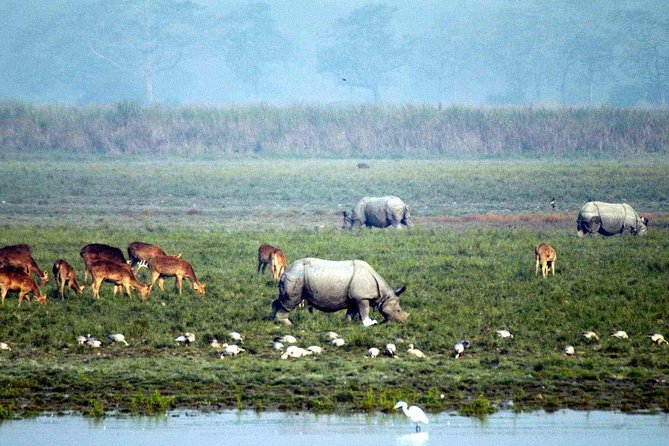
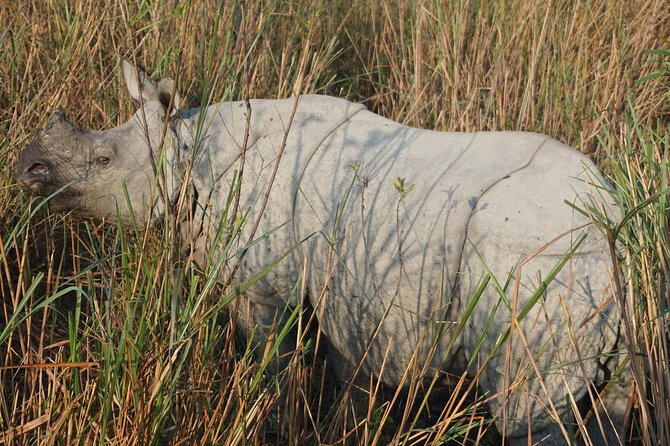
Rhinos and elephants are the most reliable “targets” here, along with animals that share the same wetlands and grassland edges—wild water buffalo, swamp deer, and other mammals. The park is also an Important Bird Area, so you’re likely to see a mix of resident and migratory birds depending on season.
About tigers: the park has strong tiger conservation history and is known for tiger presence in protected areas. Still, the reality is that sightings depend on visibility and luck. Even with three safaris, a tiger can stay out of view.
That’s why I love how this trip spreads time across ranges. It’s not just about adding hours—it’s about increasing the chances of crossing the right habitat in the right conditions.
And yes, sometimes you’ll get a standout close encounter feeling, like seeing swamp deer near your viewing points or noticing elephants in the broader grassland. If your goal is “rhinos and elephants first,” this route makes the most sense.
Habitat notes: why Kaziranga feels different from other safari parks
Kaziranga’s scenery isn’t a single “picture-perfect” biome. It’s tall elephant grass, marshland, and broad-leaf forests, cut by multiple rivers, including the Brahmaputra. Add in small water bodies across the park, and you get lots of edges—the exact places animals tend to move through.
This matters for your safari experience because wildlife viewing often happens at boundaries: grass-to-water, forest-to-open ground, and shallow marsh areas. If your naturalist points out tracks, dung piles, or feeding areas, you’re learning where to focus your eyes.
Kaziranga also sits on the edge of the Eastern Himalaya biodiversity hotspot. That’s why the park can feel surprisingly busy with life, even when you’re not seeing animals immediately. The “stillness” is real, but the habitat is complex.
The park is also recognized as a World Heritage Site and has a long conservation story since its establishment in the early 1900s. If you like understanding why a place is protected, Kaziranga is the kind of park where the mission shows up in the way it’s managed.
The Brahmaputra sunset cruise: your evening reset in Guwahati
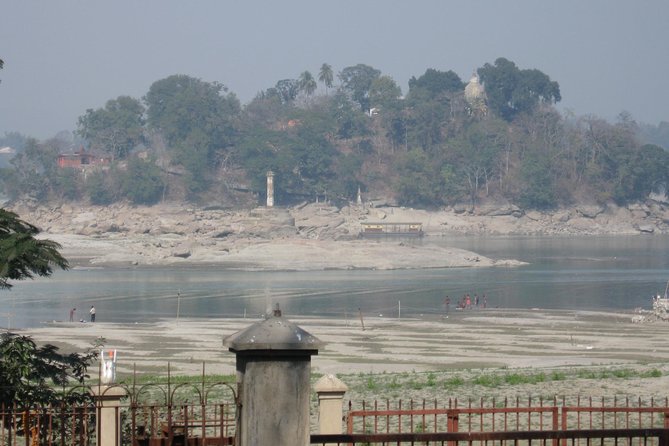
After your second Kaziranga day, you’ll drive to Guwahati and check in. Then you get a sunset cruise on the Brahmaputra River in the evening. This is a great pacing move because it gives your body a gentler activity after early mornings.
A cruise also changes how you see the river. Instead of thinking in terms of land roads and temples, you start seeing how the river shapes daily life and wildlife movement. Even if wildlife wasn’t on the menu that evening, the scenery and light are enough to make the transition feel smooth.
It’s also smart timing: you’ll go into temple time the next morning refreshed rather than dragging yourself from one tight schedule to another.
Guwahati temples and Umananda Island: Kamakhya plus Navagraha
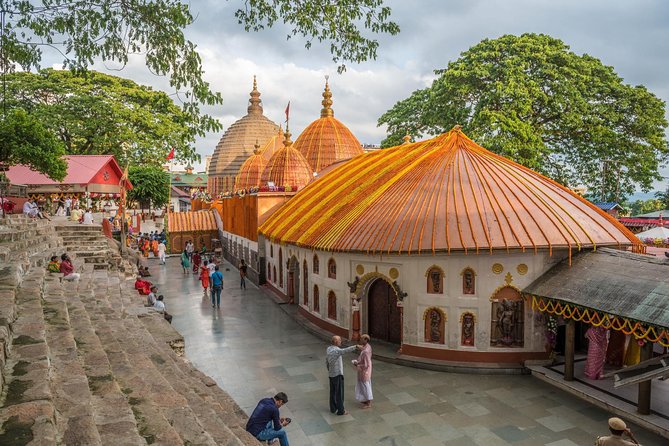
Your half-day city tour is temple-focused, but it isn’t just sightseeing from a distance. You start with Kamakhya Temple, one of India’s most revered Shakti shrines. It’s tied to Shakti Peethams in the legend of Shiva and Daksha Yagna, which gives the visit cultural weight beyond architecture photos.
Next is the Navagraha Temple, dedicated to the nine planets. That’s a different type of spiritual stop than Kamakhya, and it can be especially interesting if you like astrology, astronomy stories, or how different regions interpret the same sky above.
Then there’s Umananda Island, described as one of the smallest river islands in the world. You’ll visit Umananda Temple there, built in 1594 by an Ahom king of Assam. This stop is calmer in feel because you’re literally moving into a smaller, quieter pocket of the river.
The order matters: Kamakhya and Navagraha give you the deeper spiritual context, and Umananda offers a softer landing before you head back to the airport.
Price and logistics: does $652 feel fair for what you get?
At $652 per person, this is not a budget weekend. But it is also not just “a safari ticket.” You’re paying for a private, multi-day plan that includes private transfers, guided sightseeing, safaris, and core meals.
Here’s how the value adds up based on what’s included:
- Round-trip airport transfers with a private AC car/van
- English-speaking guide on sightseeing days and local guidance where needed
- Three jeep safaris with a forest department naturalist
- Monument entrances and activity charges named in the itinerary
- Bottled water in the car plus government taxes
- Breakfasts and dinners during the Kaziranga portion, plus included lunches on safari days
That’s a lot of cost you’d otherwise piece together yourself. The private vehicle is a big deal too—Kaziranga and Guwahati travel times can eat your day if you’re trying to DIY them.
Still, there are trade-offs. Wildlife is wildlife, and tigers are never guaranteed. Also, safari seat availability is controlled through the forest department process, so you don’t have total control over timing.
One more heads-up: camera charges can apply in parks and at points of interest. For example, I saw an example of a 100 Rs DSLR fee for camera use. Your plan covers monument entrance charges listed, but it doesn’t promise that every camera-related fee will be zero.
Who should book this package (and who might want a different plan)
This trip is a strong fit if you:
- want real safari time with three separate jeep rides
- care about conservation-focused wildlife viewing over pure “big bus tour” style travel
- like mixing animals with meaningful cultural stops in Guwahati
- prefer having private transfers and a guide rather than juggling schedules
It may not be the best fit if you:
- need a sure-thing tiger sighting (this plan can’t promise it)
- hate early starts and long seat time on safari drives
- are sensitive to wildlife viewing being weather and visibility dependent
Also, the tour notes a moderate physical fitness level. That usually means you can handle safari days and temple walking without it becoming a strain, but you should still prepare with comfortable footwear.
Should you book Kaziranga and Guwahati with this package?
If your goal is to see Assam’s wildlife through three well-timed jeep safaris, this package is a solid choice. The Guwahati add-on—Kamakhya, Navagraha, and Umananda—keeps the trip from feeling like it’s only about animals, and the Brahmaputra sunset cruise is a genuinely good way to reset your energy.
I’d say book if you’re flexible on the order of sightings and you’re more excited about rhinos, elephants, deer, buffalo, and birds than you are locked on seeing a tiger. And if you value private comfort—AC transfers, guided temple time, meals that match safari schedules—then the $652 price starts to look like good structure, not just a ticket bundle.
If you’re the type who gets frustrated by regulated safari access, keep in mind the forest department controls safari seat availability. It’s still manageable, but it’s not something you can treat like a simple reservation.
FAQ
How long is the Kaziranga National Park and Guwahati experience?
It’s listed as 4 days (approx.), with Kaziranga safari days followed by a half-day Guwahati city tour and airport transfer.
Are airport transfers included?
Yes. The package includes pickup assistance on arrival and private AC car/van transfers for airport pickup and drop-off, plus transportation for sightseeing and excursions.
How many jeep safaris are included?
You get 3 jeep safari rides in Kaziranga National Park, and they are subject to availability. Jeep safaris include a forest department naturalist.
Are the safari tickets included?
Yes. Admission ticket for the Kaziranga National Park safaris is listed as free in the itinerary, and the safaris are part of what’s included.
What sightseeing is included in Guwahati?
You’ll visit Kamakhya Temple, Navagraha Temple, and Umananda Island with the Umananda Temple, along with an evening Brahmaputra sunset cruise.
What meals are included during the trip?
Breakfast is included for 3 days, and lunch and dinner are included on the days specified in the itinerary (2 lunches and 2 dinners).
Do I need to pay separately for flights?
Yes. Flight tickets are not included. You handle your own flights to and from Guwahati.
What happens if I need to cancel?
You can cancel up to 6 days in advance for a full refund, with smaller refund percentages if you cancel closer to departure.
Is camera equipment covered in the inclusions?
Camera charges at monuments are listed as not included if any apply. The itinerary includes monument entrances and activity charges, but camera fees (if charged) would be extra.
If you want, tell me your travel month and whether you prefer lots of early mornings or a slower pace—I’ll suggest what to prioritize for the best chance of rhinos and birds.