REVIEW · YOSEMITE NATIONAL PARK
Yosemite National Park Self-Guided Audio Tour
Book on Viator →Operated by Shaka Guide Apps · Bookable on Viator
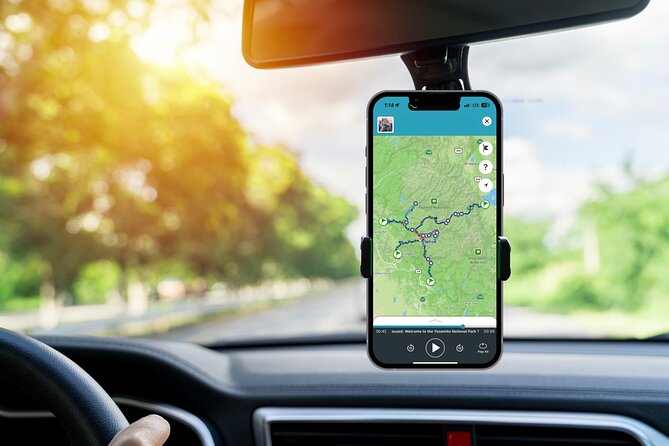
Your car turns into a guide. This Yosemite National Park self-guided audio tour strings together big-name sights with GPS-activated narration and practical context so you know what you’re looking at. I especially like the offline map plus turn-by-turn directions, because Yosemite is the kind of place where you want zero stress about service.
The main thing to watch is audio reliability. In one case, the narration dropped briefly and then returned, and that can happen when GPS signal or phone settings (like battery optimization) don’t play nicely.
In This Review
- Quick highlights worth planning around
- How this Yosemite audio tour actually guides you
- Value and pricing: $13.59 per group can be a real bargain
- The route starts near Groveland and keeps looping back to the good stuff
- Yosemite Valley icons: Tunnel View, Bridalveil Fall, and the Merced River stops
- Don’t sleep on the “simple parking stops” that unlock shuttles
- Yosemite Village and the Ahwahnee: history and a place to reset
- The Yosemite Falls area: short views now, long hikes if you want them
- El Capitan Meadow and the Valley view pull-offs that make you stare
- Mariposa Grove and Wawona: sequoias plus a Victorian-time travel break
- Higher-elevation viewpoints: Taft Point, Glacier Point, and Washburn Point
- Tenaya Lake, Olmsted Point, and Tuolumne’s quieter feel
- Tuolumne groves and dome hikes: choose your ambition
- O’Shaughnessy Dam and the Hetch Hetchy side trip
- Practicalities that matter: audio staying on track in a big park
- Who this tour is best for (and who might feel stuck)
- Should you book this Yosemite self-guided audio tour?
- FAQ
- How much is the Yosemite National Park self-guided audio tour?
- How long does the tour take?
- Does it work offline?
- What language is the narration in?
- Where does the tour start and end?
- Is Yosemite park entry included?
Quick highlights worth planning around
- Audio plays automatically while you drive, so you spend less time tapping screens.
- Offline map + offline navigation, which matters once you’re deep in the park.
- One ticket per group (up to 15 people), so it can be a budget-smart choice for families or friend groups.
- You control the pace, including short walks (like Bridalveil Fall) and longer options (like Yosemite Fall summit hikes).
- You get both Valley icons and quieter zones, including Tuolumne-area viewpoints and sequoia groves.
- Public stops include real infrastructure, like Visitor Centers, historic lodges, picnic areas, and shuttle access.
How this Yosemite audio tour actually guides you
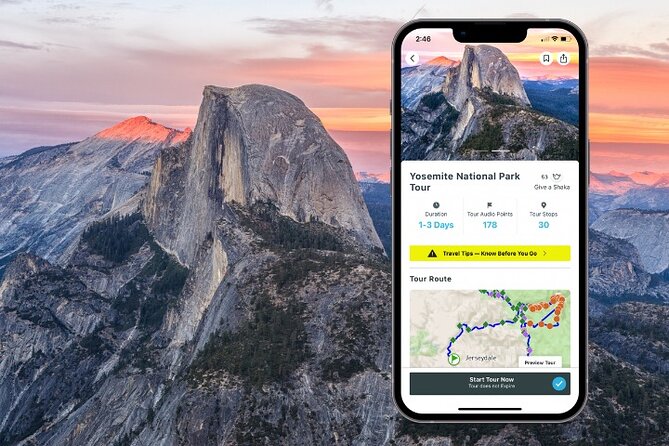
This is a self-guided, mobile audio experience using Shaka Guide Apps. The key idea is hands-free help: as your car moves, the narration triggers and you get turn-by-turn directions with GPS. That means you’re not stuck with a strict bus schedule, and you can linger where the views pull you in.
The tour is designed around a drive-first day. Most stops are pull-offs or parking areas tied to short walks, so the format works well if you want to see a lot without committing to one exhausting hike after another. You’ll also have offline materials, so you’re not begging for cell service just to keep moving.
The “flex” part matters. Since it’s set up so you can pause and resume on your schedule, you can match it to your group’s rhythm—quick photo stops, longer viewpoint time, or a mid-day meal break without losing your place.
You can also read our reviews of more tours and experiences in Yosemite National Park.
Value and pricing: $13.59 per group can be a real bargain
At $13.59 per group (up to 15 people), the math can work in your favor fast. If you’re traveling with family or a small crew, one set of audio guidance covering a major chunk of Yosemite is usually cheaper than paying separately for guided services.
Also notice what’s included versus what isn’t. Your ticket covers hours of narration, automatic audio as you drive, and an offline map with GPS directions. But Park entry fee is not included, so you still need to plan for Yosemite admission separately.
Given the scale of the park and the number of major stops involved, I’d think of this as “pay once for orientation and context.” You get help finding the right pull-off and understanding what you’re seeing—especially helpful if it’s your first Yosemite visit.
The route starts near Groveland and keeps looping back to the good stuff
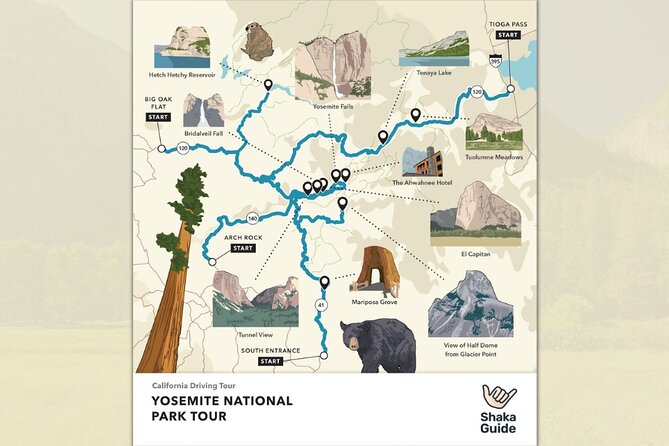
The tour starts in Groveland, CA and ends back at the meeting point. Opening hours are 6:00 AM to 6:00 PM daily, within the overall validity window through 12/20/2026, so you’re typically planning a full daylight window rather than an early-night roam.
You’ll often park, walk a little, then drive again. That’s the rhythm from the first big viewpoints to the Valley floor stops, then onward to sequoias and higher-elevation overlooks. The tour’s total time is listed as 10 to 14 hours (approx.), and that range makes sense because you control how long you stay at each spot and whether you choose the longer hike options.
There are also optional starting points mentioned for people coming in from different directions, including CA-41 from Oakhurst, CA-140 from Mariposa, and Tioga Pass from Lee Vining. That flexibility can save you time if you don’t want to backtrack to Groveland.
Yosemite Valley icons: Tunnel View, Bridalveil Fall, and the Merced River stops
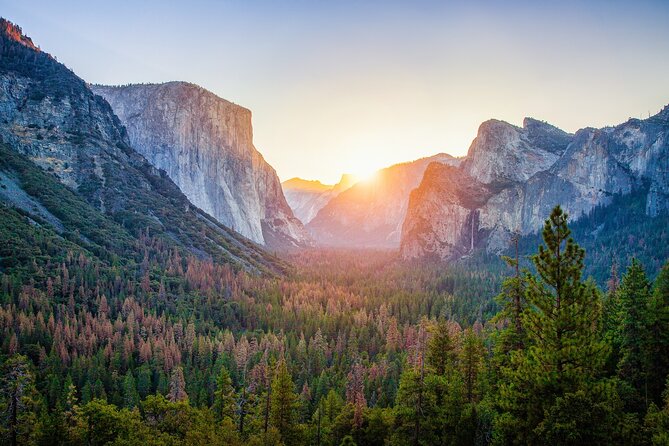
If you like the classic Yosemite photos, this route hits them early. At Tunnel View, you exit the mile-long Wawona Tunnel and immediately face the whole Yosemite Valley. El Capitan and Bridalveil Fall frame the panorama, with Half Dome showing in the background. It’s popular, so expect parking delays, but the stop is designed for a quick hit—you don’t usually linger for hours.
Next up, Bridalveil Fall is a low-commitment walk with a big payoff. You take about a 0.5-mile paved trail to reach the base of the 620-ft waterfall. This waterfall is noted as flowing reliably year-round because it isn’t dependent on snowmelt. If it’s spring, expect wet ground and a bit of splash zone action—so bring shoes that can handle damp.
From there, the tour rotates through picnic and river-view breaks. Cathedral Beach Picnic Area and the Swinging Bridge Picnic Area both give you close access to the Merced River. Cathedral Beach is another short paved walk to the base area, while the Swinging Bridge area adds the charm of a footbridge plus a view connected to Yosemite Fall. Even if you’re not swimming, picnic tables and river air make these stops feel like a breather.
Don’t sleep on the “simple parking stops” that unlock shuttles
One of the smartest parts of this route is that it doesn’t only send you to dramatic pull-offs. It also provides practical parking hubs that can reduce driving stress and help you move between key areas.
At the Valley parking area near Yosemite Village, you can hop on a free shuttle to Yosemite Village or onward toward trailheads linked to the Mist and Mirror Lake areas. If you want to keep your legs fresh, this kind of connection is gold. You also get options like grabbing food at Curry Village Dining Pavilion and renting a bike nearby for the next stretch.
This is the hidden value: you can “do the sights” without turning every stop into a long walk.
Yosemite Village and the Ahwahnee: history and a place to reset
At Yosemite Village, the tour gives you a full hour to cool down, learn a bit, and re-stock basics. This stop is built for real downtime: the Valley Visitor Center, a Yosemite Museum, and the Ansel Adams Gallery offer a mix of interpretive and cultural experiences. You can also handle simple logistics—shopping at the Village Store or grabbing food at Degnan’s Deli.
If you want a more elegant break from the outdoors routine, head to Ahwahnee Historic Building. This is a grand national-park lodge atmosphere even if you’re not staying there. You can browse public spaces, step into the gift shop or sweets shop, and—if you want an actual meal—aim for the Dining Room. Breakfast and lunch are easier; dinner is described as requiring reservations and a dress code that doesn’t include sweaty hiking clothes.
Even if you just wander the public lounge areas, this stop helps break up the drive-and-hike cycle so the rest of the day feels more enjoyable.
The Yosemite Falls area: short views now, long hikes if you want them
Lower Yosemite Fall is a great “starter waterfall” stop. You’ll do a paved, easy hike—about half a mile—to the base. The tour notes it’s the tallest waterfall in North America, but also that it depends on rainfall and snowmelt and may thin out by mid-to-late summer. If your trip is in dry-season timing, go in expecting that the roar might be more variable.
There’s also a nearby parking stop that helps you reach the trailhead with less backtracking. Around Yosemite Valley Lodge, you can grab a bite at the Base Camp Eatery or a coffee at Starbucks, plus there’s bike rental by a pool area and access to the Upper Yosemite Fall Trail.
That Upper Yosemite option is strenuous at 7.2 miles, and it goes toward the top with a mention of Columbia Rock for a magnificent view. You’ll decide how ambitious you feel once you’re there—this is exactly the kind of “choose your energy level” decision that makes a self-guided format work.
El Capitan Meadow and the Valley view pull-offs that make you stare
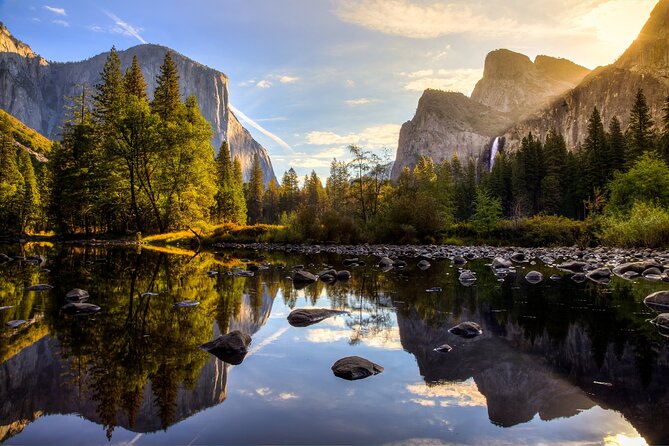
El Capitan Meadow is one of those spots where you sit down, look up, and forget about your schedule. It’s between El Capitan and Cathedral Rock, with climbers sometimes ascending the granite face. The tour specifically calls out that sunrise and sunset are especially good times—so if you can time your day, try to visit then.
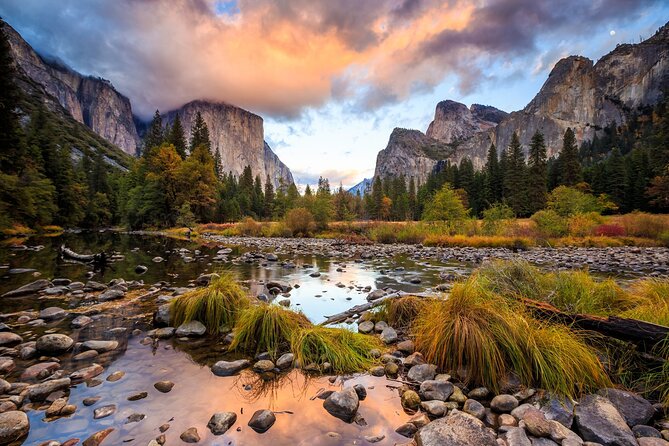
From there, you get additional angle variety with Yosemite Valley View, a small pull-off on Northside Drive. It gives a similar view to Tunnel View but from a lower vantage point along the Merced River, still framing El Capitan and Bridalveil Fall.
Other quick perspective stops include Southside Drive (linked to a historical camping discussion involving Theodore Roosevelt and John Muir) and the Wawona Tunnel mouth viewing. There’s also a small El Capitan Viewpoint pull-off to preview Half Dome.
Even if these stops are brief—often 5 to 10 minutes—they add up. You start noticing how different angles change the way the granite dominates the valley.
Mariposa Grove and Wawona: sequoias plus a Victorian-time travel break
The tour doesn’t only focus on Yosemite Valley. It pushes you into sequoia country with Mariposa Grove, including shuttle access from the Welcome Center. Trails range from easy to strenuous, and the tour recommends going at least as far as Grizzly Giant, highlighted as one of the largest sequoias in the world. If your group has mixed hiking levels, this is a good place for flexible choices.
Then there’s Wawona Hotel, a Victorian-era landmark that predates the park itself and became part of the park system later. You’ll find the Yosemite History Center with relocated pioneer buildings and interpretation. If you want lunch or dinner without packing a picnic, the hotel dining room is called out as a solid option.
This section works especially well if you’ve been seeing mostly granite views and waterfalls all day. Sequoias add a different kind of scale.
Higher-elevation viewpoints: Taft Point, Glacier Point, and Washburn Point
If you want the “wow” factor without necessarily committing to a huge hike, this route gives you multiple lookout options.
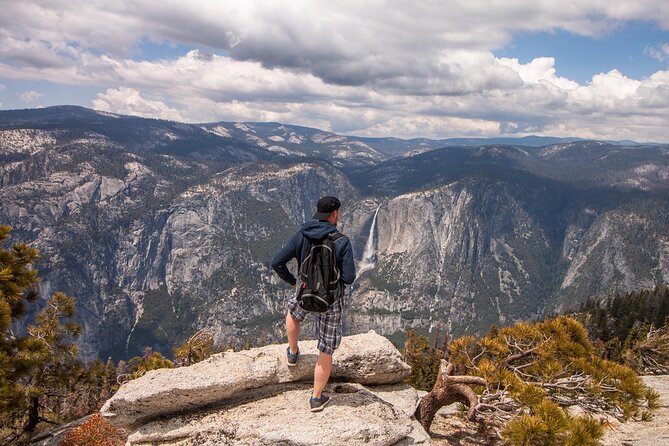
Taft Point offers two trail access options and a typical hike of about 2.2 miles to a stunning valley look including El Capitan and Yosemite Fall. It’s described as easy to moderate. This is a sweet spot if you want effort, but not a day-long grind.
Washburn Point serves as a teaser for Glacier Point. You’ll see Half Dome as the focal subject, with Nevada and Vernal Falls below, plus broad Sierra Nevada views.
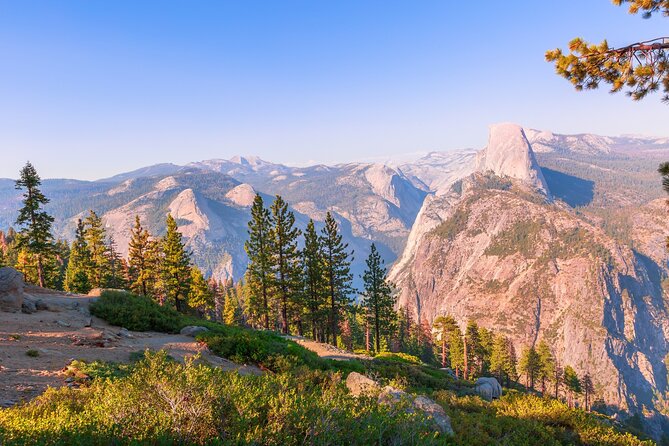
Then comes Glacier Point—one of the standout stops on the list. A short walk from the parking area leads to views from over 3,000 feet above the valley floor. You’re meant to wonder at Yosemite Fall and Half Dome, with fellow granite peaks in the Sierra Nevada. The stop is described at around 30 minutes, which is about right for soaking in the perspective without overheating.
Tenaya Lake, Olmsted Point, and Tuolumne’s quieter feel
As the route shifts toward the Tuolumne area, you get a more alpine tone. Olmsted Point provides an unusual angle on Yosemite Valley, with Half Dome clearly visible, plus open granite where you can walk to explore angles. The tour also notes a view of Tenaya Lake to the left.
Tenaya Lake Picnic Area is framed as a top viewpoint for crystal-clear water. If you feel like stretching your legs further, there’s an easy Tenaya Lake Trail with an expectation of spending another 1 to 2 hours depending on whether you do an out-and-back or loop.
These stops aren’t just for photos. They help you reset your brain. After hours of pounding through car pulls and waterfall walks, water-and-granite scenery gives your feet a calmer rhythm.
Tuolumne groves and dome hikes: choose your ambition
The itinerary includes a mix of quick lookouts and optional hike add-ons. Pothole Dome is described as about an hour max to get to the top for a panoramic look at Tuolumne Meadows and surrounding Sierra scenery. It’s not meant to be brutally steep, so it’s an “active viewpoint” that many groups can handle.
Tuolumne Meadows Visitor Center is another informative reset. You can grab what you need, learn about the meadow, and use a nearby trailhead to Soda Springs. There’s an easy 1.6-mile round trip option through the meadow that can add another hour.
If you’re in hike mode, the route points to Lembert Dome Trail. There are options including a roughly 1.8-mile dome climb for a look at Tuolumne Meadows and granite domes. If you’d rather not summit, it also suggests a longer hike path to a point about 30 minutes in for a scenic twin-bridges area near Tuolumne River.
The tour also lists Carlon Falls Trail (about 3 miles out-and-back), mostly easy but with a climb at the end. The falls are smaller than Yosemite standards, yet the trail is described as shaded, and the base pool can be a fun payoff.
O’Shaughnessy Dam and the Hetch Hetchy side trip
One of the more “Yosemite but not Yosemite” moments on the list is O’Shaughnessy Dam. The tour invites you to stand atop the dam—over 400 feet—and view Hetch Hetchy Valley as a second Yosemite-like area, but with a reservoir of clean water.
The highlight is a hike to Wapama Falls. The described option is a 5-mile trail, aiming for a waterfall listed as over 1,000 feet tall. Expect spray, which is exactly what you want on a hot California day.
If your group is split—some want epic waterfalls, others want shorter steps—this is where a self-guided route lets you make the call without derailing the whole day.
Practicalities that matter: audio staying on track in a big park
This tour’s biggest advantage is that it’s built around automatic audio triggers and offline navigation. That helps you keep your eyes on the road and your attention on what matters.
To prevent the kind of brief audio dropouts described in one of the feedback notes, plan around two realities: GPS coverage can fluctuate under tall granite, and phone settings can interfere with app behavior. Before you set out, download the tour using strong Wi-Fi, and check your phone’s power-saving/battery optimization settings so the app stays active.
Also, keep in mind that many stops are short walks and pull-offs. If you’re constantly stopping and restarting the phone, you increase the chance of technical hiccups. Let the app do its job while you move, and treat it like a co-pilot, not a constant tech project.
Who this tour is best for (and who might feel stuck)
This experience fits best if you like structure without rigidity. You want a plan that points you to the right places, explains what you’re seeing, and then gives you freedom to spend 10 minutes or 60 minutes based on your energy.
It also works well for groups because it’s per vehicle/group rather than per person. If you’ve got a mix of ages and hiking styles, the route’s combination of short paved walks, picnic areas, and optional strenuous trails makes it easier to keep everyone included.
You might feel less happy if you hate driving between stops or if your group only wants a single hike day. The itinerary covers a lot of ground, including higher viewpoints, and even though you can skip stops, the overall concept is “see Yosemite by car.”
Should you book this Yosemite self-guided audio tour?
Book it if you want a budget-friendly way to get smart context and directions across multiple Yosemite zones—Valley views, waterfall walks, sequoias, and Tuolumne-area scenery—without paying for a guide per person. The offline map and auto-playing narration are exactly the kind of tools that reduce stress in a big park.
Skip it only if you know you want just one core area and no car hopping at all. In that case, you might do better with a single shuttle-and-walk plan.
If you’re willing to download before you go, keep an eye on battery settings, and use the route as your backbone (not a prison), this is a strong way to experience Yosemite with your own pace and still feel confidently guided.
FAQ
How much is the Yosemite National Park self-guided audio tour?
It costs $13.59 per group (up to 15 people). Park entry fee is not included.
How long does the tour take?
The duration is listed as 10 to 14 hours approximately, depending on how long you spend at stops.
Does it work offline?
Yes. The tour includes an offline map, so you do not need continuous Wi-Fi or data.
What language is the narration in?
The audio narration is offered in English.
Where does the tour start and end?
The tour starts in Groveland, CA, and ends back at the same meeting point.
Is Yosemite park entry included?
No. Admission ticket/park entry is listed as free for each stop, but the tour’s Park entry fee is noted as not included.