REVIEW · SPRINGDALE
Winter in Zion: The Famous Narrows River Hike
Book on GetYourGuide →Operated by Green Valley Hiking · Bookable on GetYourGuide
Snow in the Narrows still feels wild. I love how this tour turns Zion’s most famous wade-hike into a calmer winter experience, with snow-topped mountains over high red-and-white cliffs and guides like Kim, Megan, Carly, and William bringing the canyon to life.
The two biggest wins for me are the private, no-strangers-in-your-group format and the way the guide handles the details so you focus on the hike, not the logistics.
One thing to plan for: in winter you’ll likely need rental gear for staying warm and dry, and you’re also paying Zion’s park entry fee on top of the tour price.
In This Review
- Key reasons this Narrows experience works so well
- Winter in Zion’s Narrows: Why this timing feels different
- The 7 a.m. start and how you actually get on the river route
- Riverside Trail: the quiet runway before the wading begins
- Entering the Virgin River: wading upstream without white-knuckle stress
- Wall Street break: snacks, a narrower feel, and a good reset
- Turning around: why the return trip feels like a different hike
- Winter gear that keeps the hike enjoyable (and not miserable)
- If The Narrows closes: how this tour handles high flow days
- Price and value: what $750 per group really buys you
- Who this Narrows tour fits best
- Should you book this winter Narrows tour?
- FAQ
- How long is the Winter in Zion Narrows River Hike?
- Where do I meet for the tour?
- What is the price, and what does it include?
- Do I need water shoes in winter?
- What happens if The Narrows is closed due to high water flow?
- Is this hike suitable for children or pregnant travelers?
Key reasons this Narrows experience works so well
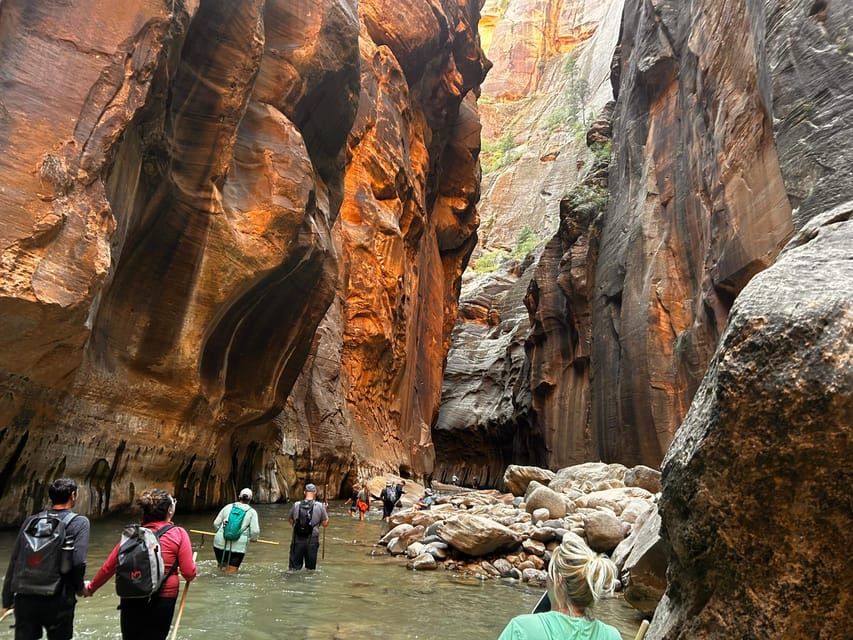
- Winter scenery + lower crowds: You get the snow-and-cliff look without the summer crush.
- Shaded warm-weather strategy (yes, even in winter): The hike still feels pleasant thanks to shade and controlled timing.
- A real guide makes the canyon easier: You’ll get help reading the water, staying balanced, and understanding what you’re seeing.
- Pick-your-distance wading: The upstream portion can be one or two miles based on fitness level.
- Snack-and-rest rhythm: Mandarin oranges, granola bars, and chips at Wall Street keep energy steady.
- Contingency plans for flow and safety: If The Narrows is closed due to high water flow, you’ll use alternate routes.
Winter in Zion’s Narrows: Why this timing feels different
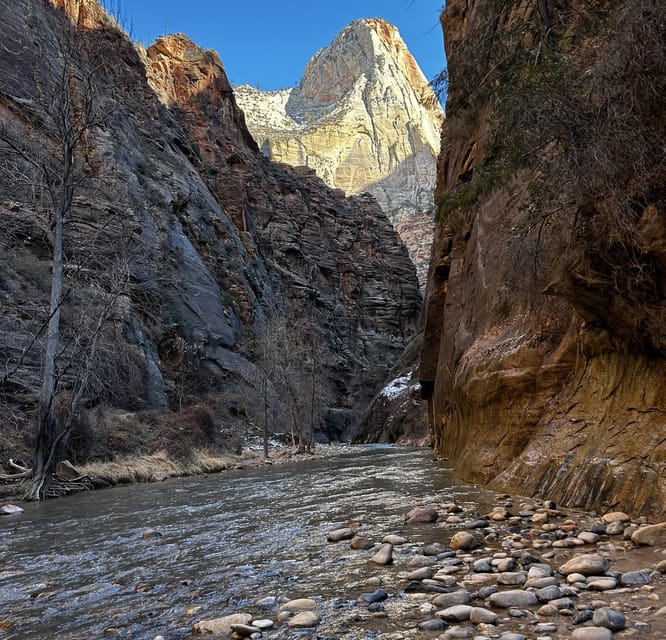
The Narrows is famous for a reason: you’re literally walking in a canyon cut by the Virgin River, with walls rising fast on both sides. In winter, that fame gets a new layer. The snow-topped mountains overhead and the pale light inside the canyon create a look that feels more dramatic than the classic postcard season.
This is also an all-weather hike in the sense that it can be adjusted to how you’re feeling and what conditions are doing that day. In summer, heat and sun are big factors; in winter, cold and dryness become your main issues. Your guide’s job is to keep you comfortable and moving at the right pace so the canyon stays the star.
I like that this tour doesn’t treat the Narrows like a one-size-fits-all checklist. You’ll wade up through the Virgin River for one or two miles depending on fitness level, then turn around for a return trip where the views change completely. Same canyon, different angles. It’s one of those hikes where the round-trip is not repeating itself.
You can also read our reviews of more tours and experiences in Springdale.
The 7 a.m. start and how you actually get on the river route
The day begins early: you meet at 7 a.m. at the Zion Visitors’ Center area, just past the South Entrance in Springdale, Utah. The exact meeting spot is in the open area in front of the public restrooms next to the Visitors’ Center (GPS: 37.200043, -112.987622). You’ll know your guide because they wear a bright yellow windbreaker for easy spotting.
From there, you’ll ride the shuttle to the Riverside Trail area. The shuttle time is about 25 minutes, and then you’ll walk to Temple of Sinawava for a short hop of about 35 minutes. This doesn’t feel like random moving around. It’s how you position yourself so you start the Narrows section when the canyon will be at its best—especially in winter when you’re trying to avoid the busiest times.
Early start is also practical value. Zion can get packed in peak season, and the Narrows is the main magnet. Starting with a plan means less waiting, less crowd pressure, and more time for the part you came for: the water and the canyon walls.
Riverside Trail: the quiet runway before the wading begins
Before you step into the Virgin River, you’ll do a shady warm-up: the Riverside Trail is about 2 miles round trip and it’s described as beautiful and shady. This is a big deal because it gives you time to get set up—walking rhythm, traction, and gear confidence—before you commit to the wet part.
You’ll be walking in a canyon corridor where the walls rise toward dizzying heights (around 2,000 feet). Even before the water, you get that “how is this so narrow?” feeling as the canyon begins tightening up.
A smart tip here: treat the Riverside portion as your gear check. Make sure your socks and shoes are how you want them, make sure you’ve got a plan for keeping a phone dry (your guide brings zip-lock plastic bags), and confirm your walking staff use if you rented one. The staff isn’t required, but it can reduce fatigue when you’re balancing in moving water.
Entering the Virgin River: wading upstream without white-knuckle stress
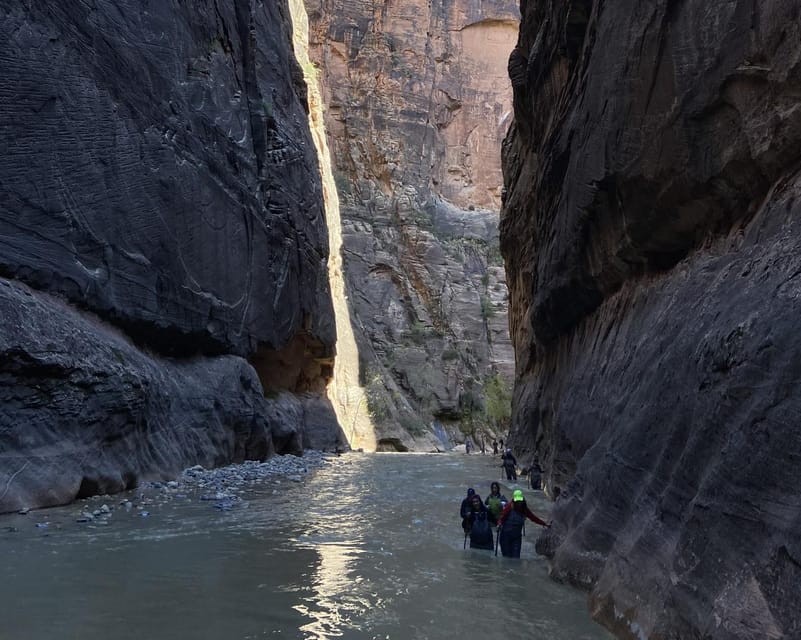
The main act is wading upstream through the Virgin River for one or two miles depending on your fitness level. The tour is paced so you’re not just slogging. You’re moving through some of the most amazing scenery you’ll see in Zion—tight canyon sections, tall walls, and that constant sense of being guided by the river’s path.
This is where the private guide matters most. The canyon can be deceptively tricky: water depth and footing can change as you go. Your guide is there to help you choose where to place your feet and how to keep stable. In the reviews, people praise how guides handle navigation and safety calmly—exactly what you want in knee-deep or shin-deep water when the current is doing its own thing.
And you’ll get context along the way. The tour includes expert instruction on history, geology, plant, and animal life, so the hike isn’t just scenery. It’s an explanation of how this canyon formed and what you’re likely seeing in the river corridor.
One more winter-specific note: your guide will give advice on how to stay dry and comfortable during the tour. In this environment, staying comfortable isn’t a luxury. It’s what lets you enjoy the canyon instead of thinking about your toes for the entire walk.
Wall Street break: snacks, a narrower feel, and a good reset
At the beginning of Wall Street, you’ll stop for a break and snacks—mandarin oranges, granola bars, and chips. That might sound like small-town picnic stuff, but on a river hike it’s practical. You’ll need quick energy and a moment to catch your breath before you continue upstream and then prepare for the turnaround.
Wall Street is also where the canyon vibe intensifies. The walls rise on both sides of you to dizzying heights, and the canyon itself becomes narrower and narrower. That tightening is part of what makes The Narrows so memorable: the canyon feels like a moving corridor with sky narrowing into a thin strip overhead.
This is also one of the moments where you can choose your day’s flavor. The tour description mentions that at this point, you can explore Orderville Gulch, which is even narrower, or go further up the Virgin River if you have energy and desire. If your group wants a shorter, more relaxed day, you’re not stuck. The guiding approach includes maximum flexibility—your guide shares opinions, but the plan can match your group’s wishes.
Turning around: why the return trip feels like a different hike
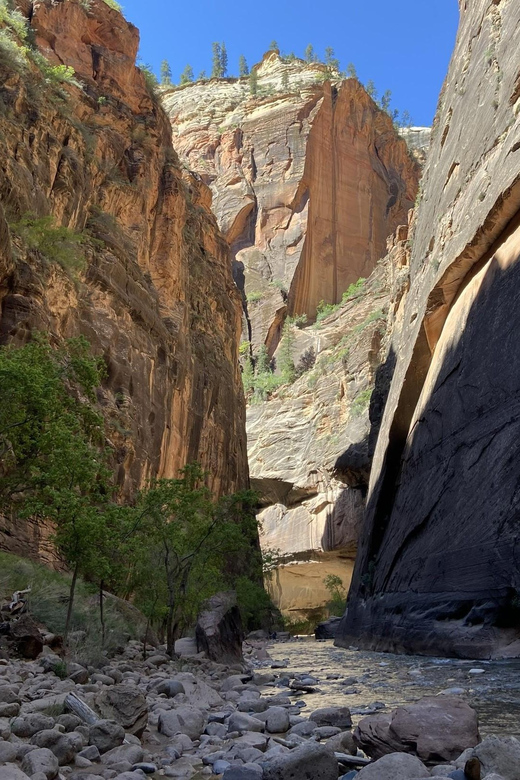
You’ll turn around after your chosen upstream point, then head back to the Riverside Trail and return via shuttle to the Visitors’ Center.
Here’s the reason this matters: deep canyons change the way you experience light and perspective. The tour notes that the views on the return trip are completely different from those coming out. That’s not just poetic. It’s a real hiking benefit. You’ll feel like you’re seeing new angles instead of simply backtracking through the same scenes.
So even though the route is technically an out-and-back wade, the experience doesn’t feel repetitive. In fact, it’s often the return direction that leaves people staring a little longer, because you’re now noticing details you missed the first time.
Winter gear that keeps the hike enjoyable (and not miserable)
Winter Narrows is totally doable, but you need to think about comfort. Cold water and wind can sap energy fast, and if you’re too uncomfortable, your brain stops caring about the canyon.
Your guide recommends renting waterproof waders and boots during the winter months. The suggested rental shop is Zion Outfitters, just outside the Zion pedestrian entrance. In summer, water shoes can be rented and they’re not necessary in the warmer months for most people, but in winter you should assume you’ll want proper wet-weather gear.
Layering is also key. Zion in winter can get quite cold, and the tour description emphasizes wearing layers. Bring socks and closed-toe shoes. You cannot wear sandals or flip-flops, and bare feet are not allowed.
Other practical items:
- Sunglasses matter in a canyon with bright light.
- Your guide can bring zip-lock plastic bags for protecting phones and small items.
- Walking staffs can be rented in Springdale, and your guide can provide a limited number for free (about six). Even if you don’t need one, it can reduce fatigue.
One more safety/health detail you should know: there is an alert for toxic algae blooms. Five years ago, one pet dog died after drinking the water, but the note says there haven’t been problems since even though thousands hike The Narrows everyday. You still want to treat the water as off-limits for drinking.
If The Narrows closes: how this tour handles high flow days

Zion National Park can close The Narrows when water flow exceeds a threshold: specifically, volumetric flow over 150 cubic feet per second. The tour notes this usually happens only after extreme rainfall or snow runoff.
High rainfall is infrequent, but runoff can happen each year from about April to June (sometimes March too). That timing matters if you’re traveling in late spring. Even in those months, the guide plans for it.
The good news is you’re not left stuck. When high flow occurs, the guide will find alternate trails for your enjoyment. In case of flash flood conditions (infrequent but not unknown), you’ll also be offered alternate hikes.
This is one of those “value is in the contingency planning” moments. You’re paying for a guided plan, and the plan includes responses to changing water conditions.
Price and value: what $750 per group really buys you
The tour price is $750 per group up to 10 people, with a duration of about 5 hours. That’s not cheap on a per-person basis if you’re traveling solo, but it can be a very good value if you’re splitting it among a small group.
Here’s what the price covers:
- Expert instruction on history, geology, plant, and animal life
- Expert logistical help and expert guiding
- Advice on anything in the park
- Hiking snacks like mandarin oranges, granola bars, crackers, etc.
- Private guiding, meaning no strangers
- Maximum flexibility for pace and choices
- Pickup and drop-off in St. George, Hurricane, and Springdale
What you’ll pay separately:
- Zion National Park entry fee, about $20 per person
- Optional or needed rental gear: in winter, waterproof waders and boots can run $55–$70 (while summer rentals may be $0 if water shoes aren’t necessary)
So the value equation looks like this: if you want the Narrows experience but you also want someone handling timing, safety, gear recommendations, and in-canyon interpretation, this price starts to make sense. If you’re hiking alone and don’t need private guidance, you might compare alternatives. But for families, friend groups, and anyone who wants a smooth day with less stress, private guiding is often worth the premium.
Who this Narrows tour fits best
This is a winter-friendly hike and it’s described as an all-weather option. Practically, it fits best if you:
- Want fewer crowds and dramatic snow-and-cliff views
- Like learning as you hike (geology, plants, animals, canyon formation)
- Prefer a guide who sets a comfortable pace and gives safety coaching for wading
- Are traveling in a group that can split the total cost
It’s not suitable for children under 12 and it’s not advised for pregnant women. It also bans sandals/flip-flops and bare feet, so plan footwear accordingly.
Should you book this winter Narrows tour?
If your goal is to see Zion’s most famous canyon hike with less crowd pressure and more comfort planning, I’d lean yes—especially for a small group. The combination of private guiding, in-canyon context, and built-in contingencies for flow closures is exactly what makes the Narrows less intimidating.
I’d hesitate only if you hate wet feet and cold conditions, or if you’re hoping for a fully dry experience in winter. The tour centers on wading upstream, so you should expect to get wet and plan gear with care.
If you book, do one thing that pays off immediately: arrive ready for winter—layers, rentals if needed, and shoes you trust in water. Then show up early, keep your snack break energy, and let the canyon narrow around you. That’s when The Narrows earns its reputation.
FAQ
How long is the Winter in Zion Narrows River Hike?
The tour duration is listed as 5 hours.
Where do I meet for the tour?
You meet at the open area in front of the public restrooms next to the Visitors’ Center just past the South Entrance in Springdale, Utah (GPS: 37.200043, -112.987622). The meeting time is 7 a.m.
What is the price, and what does it include?
The price is $750 per group up to 10 people. It includes expert guiding and instruction, logistical assistance, park advice, and hiking snacks. Pickup and drop-off in St. George, Hurricane, and Springdale are also included.
Do I need water shoes in winter?
In winter, waterproof waders and boots are advisable and rentals may be needed. In summer, water shoes can be rented but are not necessary in the guide’s opinion.
What happens if The Narrows is closed due to high water flow?
Zion National Park closes The Narrows when volumetric flow exceeds 150 cubic feet per second, usually after extreme rainfall or snow runoff. When high flow occurs, the guide will find alternate trails for your enjoyment, and alternate hikes are also offered in flash flood conditions.
Is this hike suitable for children or pregnant travelers?
No. It is not suitable for children under 12, and it is also not suitable for pregnant women.