REVIEW · SPRINGDALE
Zion National Park: The Famous Narrows River Trail Hike
Book on GetYourGuide →Operated by Green Valley Hiking · Bookable on GetYourGuide
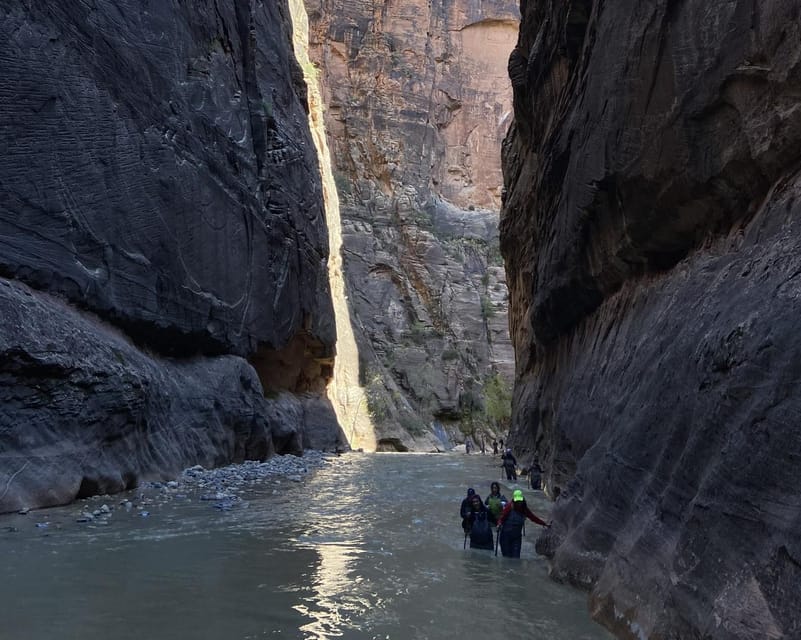
The Narrows feels like walking inside a giant funnel. This is Zion’s famous wading hike, where cool water and near-vertical canyon walls turn a simple walk into a true bucket-list moment. You’ll see about 2,000-foot cliffs rise on both sides as the Virgin River squeezes into a slot canyon.
I love how the experience is both awe-filled and well run. With guides like William and Kim (patient, safety-conscious, and genuinely fun), you get private guiding that keeps things moving at your pace. One key consideration: the park can close The Narrows when water flow is too high (150 cubic feet per second), and you’ll switch to alternate options.
This is also one of those rare Zion hikes that works in summer because of shade and water temperature—and it can be a very different (and quieter) experience in winter too.
In This Review
- Key things that make this Narrows hike worth it
- Walking into The Narrows: what makes it unforgettable
- Your day flow: from Zion’s tram system to Temple of Sinawava
- Riverside Trail: the shady setup that makes the Narrows feel easier
- Wading the Virgin River: how far you go depends on you
- Wall Street and the orange-and-granola break
- The return trip: why it doesn’t feel like a repeat hike
- Summer vs winter: heat management and gear choices that actually matter
- What to pack (and what you can’t wear) so the day stays fun
- A quick safety note about algae
- Safety, closures, and alternate plans when water flow changes
- Price and value: is $750 per group up to 10 worth it?
- Meeting point, guide spotters, and how to find your group fast
- Who should book this Narrows hike—and who should skip it
- Should you book the Zion Narrows River Trail with this private guide?
- FAQ
- Where is the meeting point for The Narrows hike?
- What time does the hike start, and how long is it?
- How much is Zion National Park entry?
- Is this a private tour or a group hike?
- Do I need water shoes in summer?
- What gear should I rent for winter?
- What happens if The Narrows is closed due to water flow?
- Are children or pregnant women able to join?
Key things that make this Narrows hike worth it
- A 7 a.m. start from the Zion Visitors’ Center area, with shuttle time built in so you’re not racing the day
- Shady Riverside Trail warm-up to get to the Narrows entry without cooking in the sun
- Wading up the Virgin River typically 1–2 miles depending on fitness (and how you feel once the canyon tightens)
- Breaks at Wall Street with snacks like mandarin oranges and granola bars, plus optional add-ons if you have energy
- Safety plans for changing conditions, including alternate trails if flows run high or conditions get unsafe
Walking into The Narrows: what makes it unforgettable
The Narrows isn’t just scenic. It’s physical. You’re in the Virgin River, up to your shins or knees depending on water level, and the canyon doesn’t sit politely beside the trail—it rises fast on both sides and squeezes narrower as you go.
I like that the hike gives you a “hot weather strategy” built in. In summer, shade and cooler water temperatures make it feel much more doable than many Zion trails. And even when it’s warm outside, the deep shadows inside the canyon help you keep a steady rhythm.
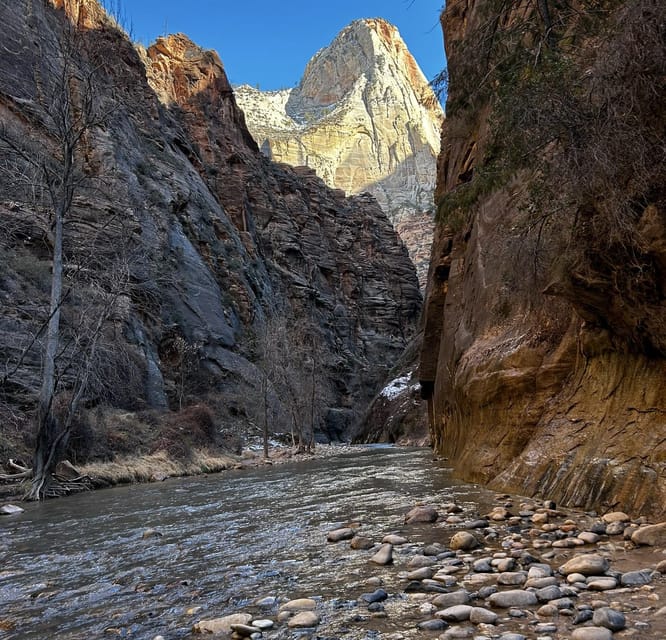
The other thing I really appreciate is the way the canyon changes what you notice. Upstream views and return views can feel like different hikes. On the way out, you’ll see the canyon’s bends and walls from a totally new angle, and the river itself becomes a moving frame for the cliffs.
Your day flow: from Zion’s tram system to Temple of Sinawava
You meet at the public restrooms area by the Zion Visitors’ Center just past the South Entrance in Springdale (the coordinates are 37.200043, -112.987622). The plan starts early—7 a.m.—because this is one of Zion’s most popular hikes, and you want cooler temperatures and better light.
From the Visitors’ Center, you’ll ride the shuttle to the Riverside Trail area. You’ll also spend time around Temple of Sinawava as part of the route flow, with a tram segment and a short hiking stretch before you get fully into the Narrows portion. The point of this structure is simple: you spend your energy where it counts, inside the canyon.
A small but helpful detail: your guide keeps the day flexible. If you’re pacing slower, moving as a team, or taking a few extra breaks for photos, the whole plan adjusts to you rather than forcing a rigid “everyone matches my speed” pace.
Riverside Trail: the shady setup that makes the Narrows feel easier
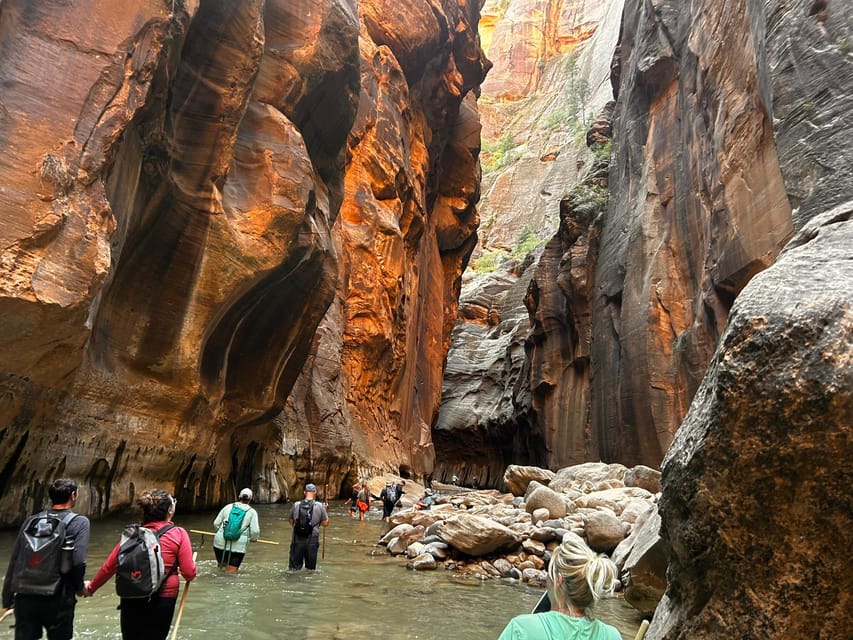
Before you even touch deeper water, you do a shady warm-up. You’ll head out on a beautiful, shaded Riverside Trail stretch to reach the start of The Narrows. It’s about a 2-mile round trip to get in position, so you’re not stuck hiking long distances outside the canyon where the sun can hit harder.
This part matters more than you might think. It’s your time to:
- check your footing and shoe fit
- confirm you’re comfortable with wet conditions
- get into a calm rhythm before the canyon tightens
Also, it’s a chance to mentally switch gears. The Narrows is less about trail walking and more about balance and careful steps. Getting used to that feel here makes the main wading section far more enjoyable.
Wading the Virgin River: how far you go depends on you
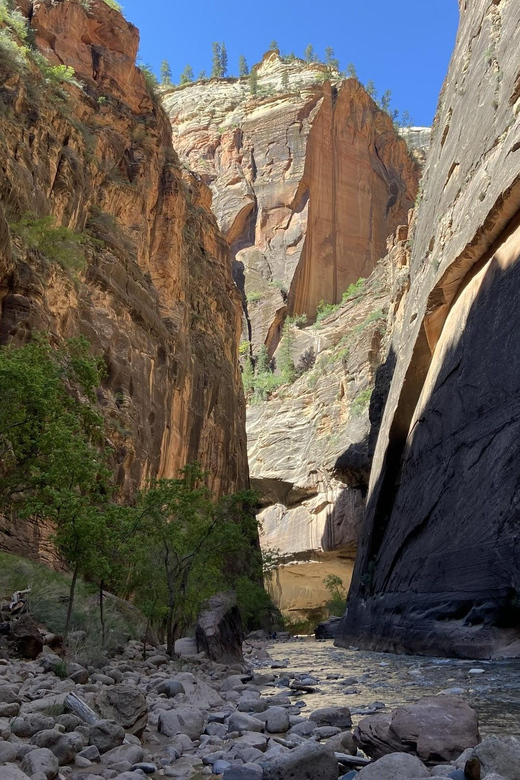
Once you start upstream in the Virgin River, you’ll wade about 1–2 miles depending on fitness level. That “range” is good news, because The Narrows isn’t a one-size-fits-all hike. If you want more time in the water, you can push farther. If you’d rather save energy for views and stops, you can turn around earlier.
As you go, the canyon becomes narrower and narrower. The walls rise to dizzying heights—around 2,000 feet—and you’ll feel it in your body. Even when you’re focused on stepping, your attention keeps getting pulled upward, because the cliff geometry is so dramatic.
I also like how the guide’s knowledge adds value here. You’re not just watching rock. You get expert instruction on history and geology, and you’ll learn what to look for in plants and animal life you might otherwise ignore.
Wall Street and the orange-and-granola break
At the beginning of the Wall Street section, you’ll pause. This is a prime spot to catch your breath and notice how the canyon “walls” can feel closer and higher than you expected.
The snack stop is practical, not a gimmick. You’ll have mandarin oranges, granola bars, crackers, and similar trail-friendly food. After wading, it hits right—quick energy without feeling heavy.
From Wall Street, you may also have options depending on energy and conditions. One possibility is exploring Orderville Gulch, an even narrower canyon. Another is going further up the Virgin River if you want more time before turning back.
Turnaround matters here. The nature of deep canyons is that your return views are different from your inbound views. So even though you’re retracing steps, it doesn’t feel like “same scenery twice.” The light and angles shift, and the river keeps changing your perspective.
The return trip: why it doesn’t feel like a repeat hike

Coming back to the shuttle isn’t a slog if you pay attention. The canyon bends, the walls change their shape from new angles, and the river’s movement helps you “read” the route differently.
This is one of those hikes where you’re rewarded twice: once for getting there, and again for how the canyon looks while you’re leaving it. If you take a few extra moments on the return—slow down, look up, check footing—you’ll see details you missed on the way in.
Summer vs winter: heat management and gear choices that actually matter
This hike is especially popular in summer because of shade and water temperature. You still need to plan for warm conditions outside the canyon, but once you’re wading, the canyon’s deep shadows do a lot of the work for you.
In winter, it’s doable and the crowd levels tend to be lower. The tradeoff is cold. The water and air can feel sharp, and you’ll want proper protection and layering. For winter, water gear becomes a real cost item.
Here’s what I’d plan for:
- In summer: water shoes can be rented in Springdale, but you may not need them (the guide’s take is that they’re not necessary in summer).
- In winter: rent waterproof waders and boots. The guidance is to rent from Zion Outfitters just outside the Zion pedestrian entrance.
- Bring layers in winter, since Zion can get quite cold.
What to pack (and what you can’t wear) so the day stays fun
You’ll enjoy this hike more when your gear doesn’t fight you. Bring:
- comfortable shoes
- hiking shoes (closed-toe)
- socks
- sunglasses
Closed-toe matters for a reason: you’ll be in slippery, wet canyon conditions. Sandals or flip flops aren’t allowed, and bare feet are also not allowed. Alcohol and drugs aren’t allowed either.
One practical tip I love: your guide brings zip lock plastic bags so you can protect phones and cameras. If you prefer your own setup, you can bring protective coverings for phone cameras too.
If you’re worried about balance, walking staffs can be rented in Springdale, and your guide can provide a limited number for free (about six). That’s a nice touch if you want extra stability without committing to buying anything.
A quick safety note about algae
There’s an alert for toxic algae blooms. The information shared is that four years ago one pet dog died after drinking the water, but since then there have been no problems reported even though thousands hike The Narrows every day. I’d still treat it seriously: don’t let pets (or anyone) drink the river water.
Safety, closures, and alternate plans when water flow changes
The Narrows is controlled by water conditions. Zion National Park closes The Narrows when volumetric flow exceeds 150 cubic feet per second. That usually happens only after extreme rainfall or snow runoff.
Runoff timing is typically from about April to June, sometimes as early as March. When the flow gets high, you won’t force your way into a situation that’s unsafe. Instead, you’ll find alternate trails for your enjoyment.
Flash floods are infrequent, but not unknown. The guide plan includes alternate hikes if flash flood conditions show up. The overall message is clear: your hike isn’t just about seeing the canyon; it’s about handling conditions responsibly.
Price and value: is $750 per group up to 10 worth it?
This tour costs $750 per group, up to 10 people, and it’s private. That means you’re not squeezed into a big herd where you lose your questions and your pacing. For families or small groups, that private value can add up fast because you’re paying for expertise and logistics, not just access to a trail.
What’s included helps justify the price:
- expert guiding on history, geology, plants, and animals
- expert logistical assistance and advice in the park
- hiking snacks (mandarin oranges, granola bars, crackers, etc.)
- private guiding with maximum flexibility
- pickup and drop-off in St. George, Hurricane, and Springdale
What’s not included is also important for budgeting:
- Zion entry fee: about $20 per person
- water gear rentals if needed: summer may be $0 because you might not need rentals, but winter can run about $55–$70
If you’re traveling as a group, the private format is usually the best deal. If you’re solo, it can still be worth it for the safety coaching and local expertise—but do the math against the entry fee and any winter gear rentals.
Meeting point, guide spotters, and how to find your group fast
You’ll meet in the open area in front of the public restrooms next to the Visitors’ Center. The guide is easy to spot: a garishly bright yellow windbreaker for identification. If you like details, the guide described in the provided info is 5’10” tall, about 165 lbs, with long hair.
The end point is the same as the meeting point, after the shuttle and tram segments bring you back to Zion’s Visitors’ Center area.
Who should book this Narrows hike—and who should skip it
This hike fits best if you want a signature Zion experience with expert support and you’re comfortable wading in water. It’s especially smart in summer because shade and water temperature make it much more manageable than many other hot-weather hikes.
It’s also described as doable in winter, though it’s colder and gear matters more.
A few people should think twice:
- children under 12 aren’t suitable
- unaccompanied minors aren’t allowed
- pregnant women aren’t suitable
If you’re unsure about your fitness level, that 1–2 mile wading range is there for a reason. You can choose how far you go based on how your body feels once you’re in the canyon.
Should you book the Zion Narrows River Trail with this private guide?
Yes, if you want the real Narrows experience with a guide who’s focused on safety, local knowledge, and pacing. The price makes the most sense for small groups, and the included snacks, pickup/drop-off, and expert instruction help you get more out of the time you spend in the canyon.
I’d pass or reconsider if:
- you’re not comfortable wading in moving water
- you need a kid-friendly option for under-12 ages
- winter conditions or gear costs would feel stressful
But if you’re aiming for that moment when the cliffs rise straight up and you realize you’re walking in one of North America’s deepest slot canyons, this is a strong way to do it. You get the hike plus the know-how to make it safer, smoother, and more enjoyable.
FAQ
Where is the meeting point for The Narrows hike?
You meet at the open area in front of the public restrooms next to the Zion Visitors’ Center. The provided GPS coordinates are 37.200043, -112.987622.
What time does the hike start, and how long is it?
The plan meets at 7 a.m. at the Visitors’ Center. The experience duration is about 5 hours, and you should check availability for starting times.
How much is Zion National Park entry?
Entry to Zion National Park is not included and is approximately $20 per person.
Is this a private tour or a group hike?
It’s a private group experience, with private guiding and no strangers allowed.
Do I need water shoes in summer?
Water shoes can be rented in Springdale, but in summer the guidance is that they are not necessary in the guide’s opinion.
What gear should I rent for winter?
In winter, it’s advisable to rent waterproof waders and boots. The guidance is to rent from Zion Outfitters just outside the Zion pedestrian entrance, and to wear layers.
What happens if The Narrows is closed due to water flow?
The Narrows can be closed by Zion National Park when volumetric flow exceeds 150 cubic feet per second, which usually happens after extreme rainfall or snow runoff. If that happens, you’ll use alternate trails for your enjoyment.
Are children or pregnant women able to join?
The hike is not suitable for children under 12. It’s also not suitable for pregnant women. Unaccompanied minors are not allowed.