REVIEW · KILLARNEY
Guided Killarney National Park Walking Tour
Book on Viator →Operated by Killarney Guided Walks · Bookable on Viator
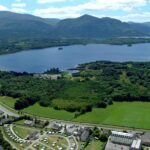
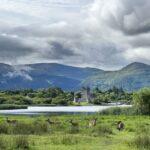
Killarney feels wilder fast. You start by St. Mary’s Cathedral and walk into Killarney National Park with a local guide who mixes history, plants, and wildlife into a relaxed loop. I especially love the up-close deer time and the way the route comes with local stories that you’d miss on your own, from Pugin’s famine-era shelter to what’s happening with the deer herds. The main thing to plan for is that it’s a real walk (moderate fitness), and weather can mean wet ground and mud.
This experience runs about 2 hours from an 11:00am meeting time, and you can ask to extend the walk if you want more time outside. It’s a small group (up to 12 people), led in English (and some Irish may come up with translation), and it uses a mobile ticket. You’ll end back at the meeting point—so it’s a good reset in the middle of a day of Killarney sightseeing.
In This Review
- Key things that make this walk work so well
- Meeting St. Mary’s: where your 11:00am start actually begins
- Pugin’s St. Mary’s and famine shelter stories on your first stretch
- Deenagh Lodge tea rooms and Queen Victoria’s railway-era visit
- Deer time near Loch Léin: sika and native red deer
- Charles De Gaulle and movie magic: history threaded through the trail
- How hard is the walk: paved paths, minor hills, and muddy weather
- Is €/$19.36 good value? Why this guided route beats DIY
- Should you book this Killarney National Park guided walk?
- FAQ
- Where do I meet the guide?
- How long is the walk?
- Is food included?
- What should I wear or bring for footwear?
- Is this suitable for everyone physically?
- What’s the cancellation policy?
Key things that make this walk work so well
- Small-group feel with a max of 12 people, and in practice it can seem close to private
- Local guide stories that connect buildings, famine history, and modern park life to what you’re seeing
- Deer spotting focus with sika deer and the native red deer herd in the national park
- Easy-to-moderate walking with mostly paved stretches, plus some off-path exploring
- Route flexibility so you can request a longer walk if you want more nature time
- Worth it at a budget price when you factor in the guide and the time saved getting to the right spots
Meeting St. Mary’s: where your 11:00am start actually begins
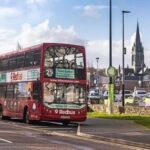
You meet at 11:00am outside O’Sheas Funeral Home, on Cathedral Place, directly opposite St. Mary’s Cathedral in Killarney. It’s helpful that this is near public transportation and right in town, so you’re not spending your whole morning on logistics just to start walking.
This matters because the tour is built around a smooth transition: city landmark to quiet trails. You get your bearings fast, then you’re inside the park where things slow down and you can actually pay attention to birds, plants, and animals.
Also, since the tour ends back at the same meeting point, you can plan dinner or the next stop without guessing how far you’ll be from central Killarney.
You can also read our reviews of more tours and experiences in Killarney.

Pugin’s St. Mary’s and famine shelter stories on your first stretch
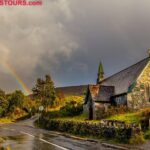
The walk starts with a big piece of context: St. Mary’s Cathedral was designed by Augustus Welby Pugin, and building began in 1842. During the Great Famine, the unfinished structure became shelter for starving people arriving from the countryside.
Even if you only catch a quick look at the cathedral at the start, your guide’s storytelling gives the area weight right away. It turns the park from a pretty place into a place with scars, recovery, and long memory.
The vibe here is practical. You’re not being lectured for an hour; you’re getting the background as you move. And because the route is short (about two hours), the stories land without turning into an exhausting museum tour.
Deenagh Lodge tea rooms and Queen Victoria’s railway-era visit
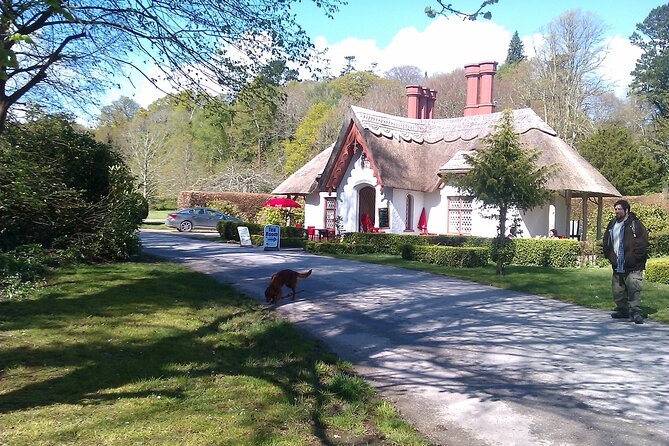
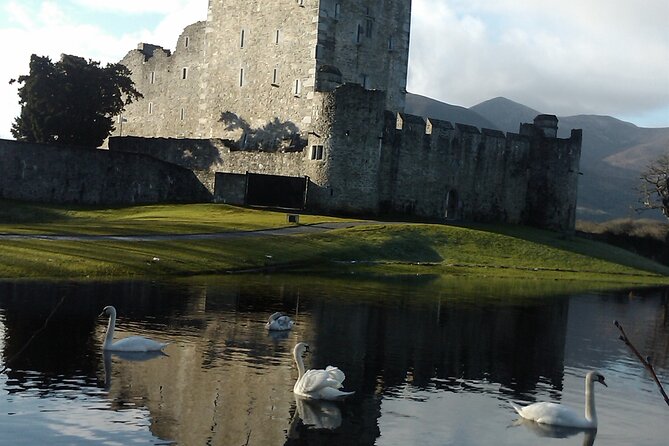
One of the character buildings your guide points out is Deenagh Lodge, a thatched cottage that once served as a gate lodge. In summer months, it’s known as popular tea rooms, which gives you an easy mental image of how this area shifts between calm nature and everyday Killarney life.
Then your guide connects the region to rail travel. Queen Victoria visited the area in 1861, arriving by train—the railway in Killarney first opened in 1853. That detail helps explain why this part of Ireland became a destination for travelers long before modern road trips.
If you like history that connects to the ground you’re standing on, this section delivers. It also sets you up for the wildlife talk later, because the park is not only about scenery—it’s about land use, visitors, and how people shaped the area over time.
Deer time near Loch Léin: sika and native red deer
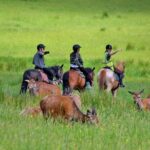
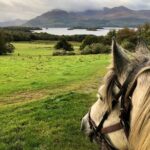
This is the reason many people choose the walk. The park has a herd of sika deer introduced from Wicklow in 1865, and there’s also the native red deer herd. Your guide will highlight what’s going on with these animals and where they tend to roam.
In real-world terms, this part of the walk usually feels like a calmer nature safari than a bus tour. Several people mention deer sightings close enough to be exciting, including moments when a deer comes very near before moving on. No one can promise you’ll see wildlife on a specific minute—animals roam—but the guide’s local instincts help you spend time where deer actually pass.
The guide also tends to connect wildlife to the landscape details you can spot in the moment. You might hear about vegetation, water edges, and the kind of spots deer prefer. That makes your photos better too, because you’re not just snapping in random directions.
One small note: if it’s been windy or rainy, paths can be slick, and deer may be a little harder to spot because you’ll be focusing on footing. Bring the right shoes and stay patient—wildlife rewards calm attention.
Charles De Gaulle and movie magic: history threaded through the trail
Killarney National Park has famous chapters, and the guide brings them into the walk in a way that feels like local storytelling rather than trivia dumping. In 1969, Charles De Gaulle spent nearly two weeks in a nearby cottage, with a big security presence.
You’ll also get a film detail that people remember. While the movie Ryan’s Daughter was filmed in Dingle, the love scene was done in the national park. That kind of connection matters because it shows how the park’s scenery has drawn attention from outsiders for decades.
What I like about this approach is that it turns the route into a moving timeline. You’re not stuck on one “big attraction.” Instead, you’re seeing small places and learning why they became important—politically, culturally, and in popular film.
If you care about Irish culture and local legends, you’ll likely get plenty of that too. In past walks, guides have mixed humor, story, and even music into the route, which keeps the two hours from feeling like a checklist.
How hard is the walk: paved paths, minor hills, and muddy weather
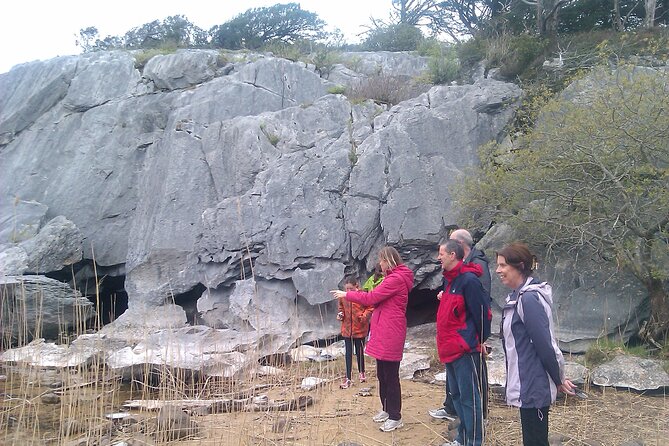
The walking effort is usually described as relatively leisurely, with only a few minor hills. Some stretches are paved, and you may also explore off the path a little, which is often where the best quiet and wildlife energy comes from.
Still, don’t treat this as a flat stroll. You’ll want moderate physical fitness, and you might get wet and muddy depending on conditions. One strong practical takeaway from the experience is to wear hiking shoes if you have them, even though special footwear isn’t required.
Here’s what you should plan for:
- Pack layers for sudden weather changes, especially in the south-west Irish wind
- Expect damp ground when conditions are wet
- Keep a steady pace; if you rush, you’ll miss both plants and animals
This is also a good tour for families when kids can handle a 2-hour outdoor walk. Several people mention it works well with children, partly because the group stays small and the guide keeps things lively.
Is €/$19.36 good value? Why this guided route beats DIY
At $19.36 per person for about two hours, the value comes from what you’re buying: time, local direction, and a guide who connects the dots while you walk. The route is short enough that it won’t steal your whole day, but long enough to feel like you got beyond the obvious parking-lot look.
The biggest value is the small-group setup. With a maximum of 12 people, the guide can actually talk to you, adjust pace, and point things out without feeling rushed. In many real cases, the group is so small that it becomes very close to a private stroll.
And you’re not just paying for directions. The guide’s background often includes history of the cathedral area, what was happening during the Great Famine, how the deer herds came to be, and where animals tend to appear. People often say they learned spots they would not have found alone—and that’s exactly the kind of value you want from a guided walk.
It’s also flexible. The tour can be extended to a longer walk if you ask for more time. That helps if you love slow nature time and want to keep going instead of turning around right after you get into the rhythm.
Should you book this Killarney National Park guided walk?

I’d book it if you want a short, guided nature break that also teaches you something real. This is a strong choice for first-timers who want deer time close to town, and for people who get more out of a walk when a local explains what you’re actually looking at.
I would think twice if your top goal is a very strenuous hike, because this is more about easy-to-moderate walking plus storytelling than big elevation effort. Also, if you’re hoping to guarantee wildlife sightings, remember animals move on their own schedule.
If you’re deciding between a bus tour and a guided walk in the park, this tends to win for people who want quiet paths, fewer crowds, and history that you can connect to the ground right in front of you.
FAQ
Where do I meet the guide?
Meet outside O’Sheas Funeral Home, Cathedral Place, directly opposite St. Mary’s Cathedral in Killarney. The start time is 11:00am.
How long is the walk?
The walk is about 2 hours. You can request an extended walk if you want more time.
Is food included?
No. Food and drinks are not included, so plan on having meals separately.
What should I wear or bring for footwear?
Special footwear isn’t required, but if you have walking boots, the advice is to wear them. The walk can be wet or muddy depending on conditions.
Is this suitable for everyone physically?
It’s best for people with moderate physical fitness. The route is generally described as relatively leisurely, but it is still a real outdoor walk.
What’s the cancellation policy?
Free cancellation is available up to 24 hours in advance for a full refund. If you cancel less than 24 hours before the start time, the amount paid is not refunded.