Tigers are a timing game in Ranthambore. This 4-hour tiger safari from Sawai Madhopur pairs hotel pickup/drop-off with a shared ride into Ranthambore National Park, where you’re assigned one of 10 zones for about 3 hours. You can choose a smaller group jeep (up to 6 total) or a cheaper canter (up to 20), depending on how you want to experience the reserve and what you’re hoping to see.
Here’s the tradeoff: your tiger odds depend heavily on which zone you’re placed in, and sightings can vary even on the same day. Add to that the reality of shared vehicles and guides who may have limited English, and you’ll want to set expectations that this is as much about the park itself as it is about the tiger.
Key things to know before you go
- Two vehicle styles: pick a jeep for a smaller group or a canter for more budget-friendly seats
- One zone, one chance: you’re limited to a single zone out of 10 based on availability
- You spend about 3 hours inside: total trip time is closer to 4 hours including pickup/return
- Tiger sightings aren’t guaranteed: even with a strong tiger population, it’s still luck
- You’ll likely see more than tigers: deer, monkeys, sloth bears, hyenas, and leopards are all on the radar
- Language may be basic: some guides may use simple English and hand signals rather than full commentary
In This Review
- Ranthambore National Park: Tigers, Fort Views, and a Very Wild Neighborhood
- Your 4-Hour Game Plan: Pickup, Assignment, and the 3-Hour Safari Window
- Jeep vs Canter: What Changes When You Share the Ride
- Jeep safari (up to 5 other guests)
- Canter safari (bus, up to 20 people)
- What stays the same
- Zone Assignment: The Real Reason Tiger Chances Vary
- Wildlife Beyond Tigers: What You Can Keep Your Eyes On
- The Fort-Edge Feeling: Why This Park Feels Different
- Price and Value: What $40.26 Actually Buys You
- Mobile Ticket and Pickup: Simple, But Watch the Time
- Guide Language and the Human Factor
- Who Should Book This Safari (and Who Might Want a Different Plan)
- Should You Book Tiger Safari in Ranthambore National Park?
- FAQ
- How long is the tiger safari?
- Where does pickup happen?
- What vehicle options are available?
- Is there a mobile ticket?
- Are tickets and permits included in the price?
- What’s the cancellation policy?
Ranthambore National Park: Tigers, Fort Views, and a Very Wild Neighborhood
Ranthambore National Park is the big tiger name in India, and it earns that label for one simple reason: it has one of the strongest populations of Royal Bengal tigers. The park covers about 1,400 square km, with roughly 75 tigers noted in that same area, and the forest is set up in dry-deciduous style—trees shed leaves during the dry season, which changes how visibility works when you’re searching for movement.
One part I always think is underrated is how the park sits beside the Ranthambhore Fort, a 10th-century structure that rings the wilderness with history. Even when you’re focused on wildlife, that fort presence adds a sense that you’re not just driving through a random patch of greenery—you’re in a landscape that humans have watched for centuries.
For your safari mindset, that matters. A tiger reserve isn’t a zoo. You’re not walking to a guaranteed spot. You’re driving through habitat where animals decide whether they want to show themselves.
Your 4-Hour Game Plan: Pickup, Assignment, and the 3-Hour Safari Window
Your day is built around one main activity: a shared safari inside Ranthambore. The total time is about 4 hours, and the timeline includes transportation between your hotel/lodge in Sawai Madhopur and the park gates. In practice, it’s useful to think of this as a half-day commitment that’s mostly about getting you into the right place at the right time.
Once you’re in the park, you’ll spend about 3 hours on your safari route. During that time, you’re not jumping between zones. You’re working within one zone assigned for your permit. That single detail shapes everything:
- It limits your tiger options to the animals that happen to be using that slice of habitat.
- It also determines what “good sightings” look like. Sometimes that means you get a tiger. Sometimes it means you get a lot of other animals, which can still be memorable.
Good to know: the experience is capped at a maximum of 20 travelers, which helps keep the group from turning into a mobile crowd-control event.
You can also read our reviews of more tours and experiences in Sawai Madhopur.
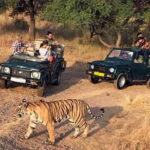
Jeep vs Canter: What Changes When You Share the Ride
You get two vehicle options, and they change the vibe more than you’d think.
Jeep safari (up to 5 other guests)
A jeep safari is shared, but it’s a smaller shared safari. You’ll be in a vehicle with up to 5 other guests, for 6 people total. That usually translates to more breathing room for everyone in the vehicle, and it often feels more like you’re on a focused wildlife search than on a bus tour through a parking lot.
Canter safari (bus, up to 20 people)
A canter is the more economical option, with up to 20 people in the vehicle. Bigger group means a louder, busier energy, and it can make it harder for everyone to get the same kind of viewing angle. If budget is your top priority, this is the practical choice—but it can feel less intimate.
What stays the same
No matter which vehicle you choose, you’re still limited to one zone and you’re still doing roughly 3 hours inside the park. So the decision is mostly about comfort and group size, not about guaranteeing wildlife.


Zone Assignment: The Real Reason Tiger Chances Vary
Ranthambore is split into 10 available zones, and your permit is valid for just one of them. When availability is tight, the zone you get can feel like a coin flip. And that’s not a dramatic way to put it—zones genuinely have different outcomes depending on where tigers are active at the time you’re in there.
This is why some safaris feel like jackpot days, while others feel more like a wildlife lesson where the tiger politely stays off-camera. If you’re the type who wants the highest probability of seeing a tiger, you’ll need to accept that nothing in this kind of safari can fully control zone assignment.
Still, you can make better choices:
- If you’re going with the expectation that you might not see a tiger, you’ll enjoy the ride much more.
- If tiger-only is your goal, you may want to plan for flexibility in how you think about success. In a reserve with roaming animals, success can also mean excellent views of deer, predators in the distance, or tiger signs.
Wildlife Beyond Tigers: What You Can Keep Your Eyes On
Even when the tiger doesn’t show, Ranthambore usually delivers wildlife variety. Your safari route has the chance to turn up:
- Deer (often the most frequent “moving target” for wildlife-spotting)
- Monkeys
- Sloth bears
- Hyenas
- Leopards
This list matters because it changes how you enjoy the safari. You can’t just stare at one potential direction and wait for a single animal. In a dry-deciduous setting, movement patterns and animal behavior matter. If you watch for deer first, you’ll often get the best clues about where activity clusters.
Also, the season style (dry-deciduous with leaf-shedding) can affect what you see from a vehicle. Less undergrowth and fewer leaves can mean visibility, but it can also mean that animals are more exposed—so their comfort levels decide whether they stay visible.
The Fort-Edge Feeling: Why This Park Feels Different
One reason Ranthambore is so well-known is that it blends wildlife drama with a strong sense of place. The fort’s 10th-century presence around the park gives you a background that feels more cinematic than generic forest roads.
As you ride through, that contrast can help you stay engaged even during quieter stretches. You’re not just scanning trees. You’re moving through a well-known tiger reserve that has become iconic for both ecology and history.
It’s also a helpful mental trick: when you’re waiting for wildlife, you can look for habitat details—open areas, edges where animals might cross, and places where movement would be easiest to spot—rather than forcing a tiger sighting on demand.
Price and Value: What $40.26 Actually Buys You
At around $40.26 per person, this safari is priced for access. You’re paying for the core experience: a shared safari permit and hotel/lodge pickup and drop-off.
What you should notice about the value:
- The safari itself is the expensive part in many tiger trips, because permits and vehicle access are tightly managed.
- Here, pickup and drop-off are included, so you aren’t juggling extra transport.
- Meals and accommodation are not included, so think of this as the wildlife ticket, not a full day package with lunch.
Also, it’s listed as having admission ticket free for the park portion in the basic outline, so your money is mostly going to the safari permit and access.
Where value becomes less clean is when tiger sighting expectations are very strict. If you’re hoping for a guaranteed tiger, this price is still fair, but the outcome is not predictable. This isn’t a critique—it’s the nature of tiger safaris.
Mobile Ticket and Pickup: Simple, But Watch the Time
This experience uses a mobile ticket, and confirmation happens at the time of booking. Pickup is offered from your hotel or lodge in Sawai Madhopur, and the safari return is included.
There’s one practical point to keep in mind: the safari timing includes transportation, and the schedule can include waiting time for the canter/vehicle if you’re the only non-standard pickup in the group (this kind of thing can happen in shared setups). If you’re on a tight itinerary, give yourself a buffer before and after the 4-hour window.
If you’re sensitive to delays, you’ll enjoy the experience more if you plan it on a day where you can relax after the safari instead of racing to the next booking.
Guide Language and the Human Factor
The most important thing to know about guides here is simple: not all guides will provide full English narration. Some safaris can involve guides who use basic English and hand gestures rather than a detailed spoken commentary.
That doesn’t automatically mean the safari is worse. Wildlife spotting still depends on the road, the zone, and the driver/guide’s ability to read the habitat. But if you want richer explanations—species behavior, track interpretation, and ongoing context—then you should set expectations that the communication style may be basic.
A practical way to handle this: think of the safari as a shared wildlife hunt first, and treat guide talk as a bonus rather than the main event.
Who Should Book This Safari (and Who Might Want a Different Plan)
This safari fits best if you:
- Want an affordable, permit-included way to do Ranthambore
- Are okay with sharing and accepting zone-based variability
- Like the idea of seeing multiple species, not only one animal
- Prefer a half-day plan with pickup and drop-off handled for you
You might want to consider other options if you:
- Only care about seeing a tiger and are unable to enjoy the rest of the wildlife if the tiger doesn’t appear
- Need a fully English-guided experience with constant narration
Also, the experience asks for moderate physical fitness. You’ll be in vehicles for the safari, and comfort depends on vehicle type and road conditions.
Should You Book Tiger Safari in Ranthambore National Park?
Yes, if your goal is a straightforward tiger-reserve safari that gets you into the park with pickup, a shared permit, and a realistic shot at Royal Bengal tigers in a top-tier reserve. The price is strong for what’s included, and even on days without a tiger sighting, Ranthambore’s wildlife list gives you plenty of chances for sightings and surprises.
No, or at least rethink it, if you’re treating a tiger sighting as a guaranteed outcome. The zone assignment system and animal behavior mean the day can swing either way. This is a wildlife experience built on luck and timing as much as on planning.
If you can accept that, you’ll likely enjoy the ride, the park setting, and the chance to spot predators and other animals in one of India’s most famous tiger landscapes.
FAQ
How long is the tiger safari?
The safari itself is about 3 hours inside Ranthambore National Park, and the whole experience is roughly 4 hours including pickup and return time.
Where does pickup happen?
Pickup and drop-off are included from your hotel or lodge in Sawai Madhopur.
What vehicle options are available?
You can choose between a jeep safari (up to 5 other guests, 6 people total) or a canter safari (up to 20 people shared).
Is there a mobile ticket?
Yes, this experience uses a mobile ticket.
Are tickets and permits included in the price?
You get a shared safari permit included for the option you select (jeep or bus/canter), along with hotel/lodge pickup and drop-off.
What’s the cancellation policy?
This experience is non-refundable and cannot be changed for any reason. If you cancel or request an amendment, the amount paid will not be refunded.