REVIEW · CHIANG MAI
Chiang Mai: Doi Inthanon National Park Eco-Friendly Tour
Book on GetYourGuide →Operated by TripGuru Thailand · Bookable on GetYourGuide
One day in the high country. Then coffee and culture. This Doi Inthanon tour mixes cloud-forest sights with hands-on hill-tribe encounters, plus big views at the park’s top. I especially love the Wachirathan waterfall stop and the way the day is paced with short, clear guided walks instead of a marathon.
The main drawback is that this isn’t a hardcore trekking day. You’ll spend meaningful time in the van and most walking is light—great for comfortable sightseeing, but not ideal if you’re hunting for strenuous hikes.
In This Review
- Key things that make this tour worth your attention
- Doi Inthanon from Chiang Mai: what you’re really buying for $46
- The 9-hour rhythm: van time, short stops, and how it feels
- Ang Ka Nature Trail: the easy 360-meter nature break
- Twin Pagodas: royal memorials with big viewpoint payoffs
- The hill-tribe village visit and coffee brewing: what to expect
- Wachirathan Waterfall: why the 80-meter drop is worth the detour
- Eco-friendly details that actually matter on a day trip
- Food and timing: what’s included and what you’ll pay for
- Price vs. value: where the $46 really goes
- Guides and group feel: small-group energy and friendly direction
- Who this tour is perfect for—and who should look at something else
- Tour logistics that can trip you up (so you can avoid the hassle)
- Should you book the Chiang Mai: Doi Inthanon Eco-Friendly Tour?
- FAQ
- How long is the Chiang Mai to Doi Inthanon tour?
- Where is the meeting point if I choose not to use hotel pickup?
- Does the tour offer hotel pickup?
- Is entrance to Doi Inthanon National Park included?
- What is the Angka Nature Trail like?
- What food is included in the tour price?
- Is the tour eco-friendly?
- What languages do the guides speak?
- What should I bring for the day trip?
Key things that make this tour worth your attention
- GSTC-style eco approach: glass-bottle water plus carbon offset credits are built into the experience
- Wachirathan Waterfall (about 80 meters) with a good chance of rainbow mist
- Twin Pagodas tied to the late King and Queen, with strong viewpoint energy for photos
- Ang Ka Nature Trail: only ~360 meters, so it’s an easy nature break, not a full hike
- Hill-tribe village visit with cultural learning and a coffee-brewing moment
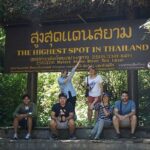
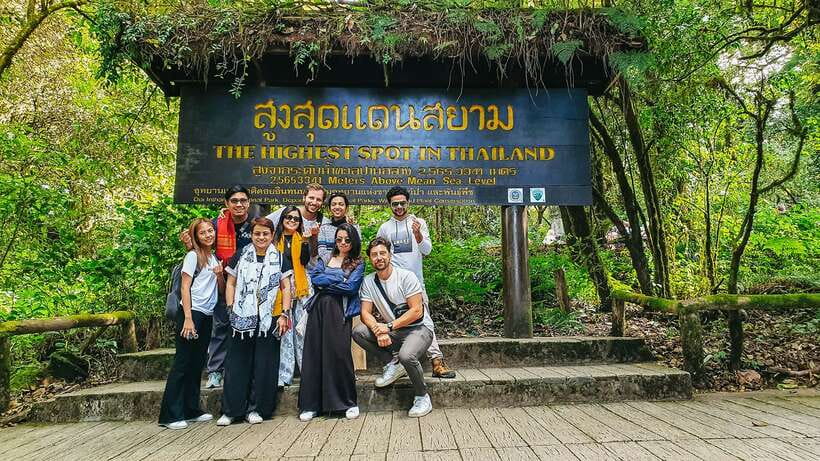
- Real variety in one day: summit sign, boardwalk, pagodas, waterfall, and village life
Doi Inthanon from Chiang Mai: what you’re really buying for $46

For $46 per person, you’re paying for one big thing: a guided, efficient route to Northern Thailand’s most famous mountain park. You’re not just getting a random bus ride to a single viewpoint. This day strings together multiple “why people come here” stops—highest peak area, royal pagodas, a waterfall, and a village visit—so you can see a lot without having to plan the logistics yourself.
And it’s not only sightseeing. The tour adds a cultural component through a hill-tribe village stop (with a coffee-brewing demo). That’s the part that turns the day from scenery-only into a more rounded Northern Thailand story.
If you’re the kind of traveler who likes “one day, several best-of moments” in a country where distances can be deceiving, this format is a win.
You can also read our reviews of more tours and experiences in Chiang Mai.
The 9-hour rhythm: van time, short stops, and how it feels
The trip runs about 9 hours total. You’ll start with transportation out of Chiang Mai (roughly 1.5 hours), then the day is structured around guided segments and photo breaks.
Here’s what that means for you on the ground:
- You’ll have time to look, take photos, and move at a human pace.
- The day won’t feel like nonstop hiking. Even the nature walk is short.
- You should expect a lot of “arrive, park, walk a bit, guided explanation, photo time, repeat.”
If you’re sensitive to long rides, it helps to think of this as a full-day guided sampler. It’s great for first-timers to the park. It’s less great if your top goal is a sweaty workout.
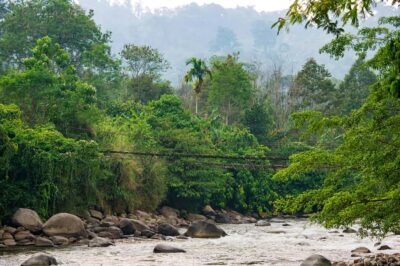
Also, because you may do multiple stops in cooler highland air, dress in layers. The park area can feel different from Chiang Mai’s city heat—especially once you’re up in the mountains.
Ang Ka Nature Trail: the easy 360-meter nature break
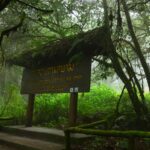
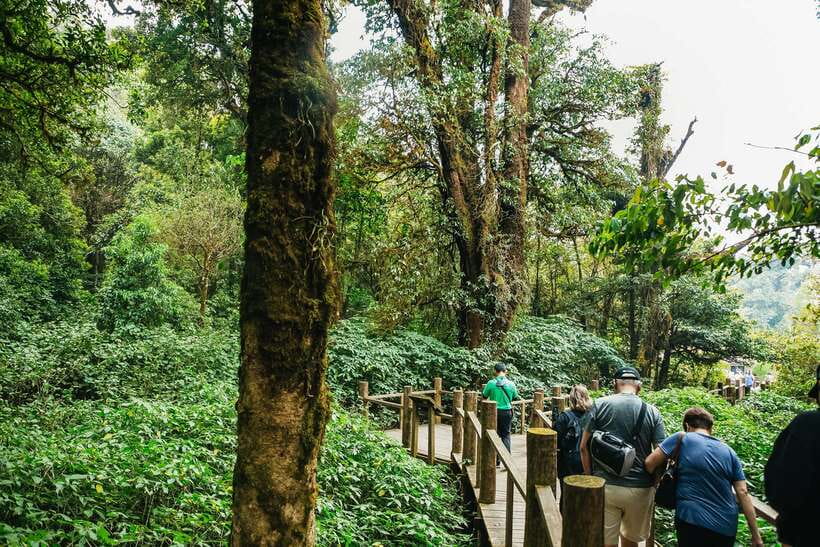
This is not a long trek. Ang Ka Nature Trail is a short boardwalk, about 360 meters. You’ll be guided, and the experience is designed as a calm stretch of nature where you can slow down and notice what’s around you.
Why I like this stop for most people:
- It’s easy enough for beginners and older knees.
- You still get the feeling of walking through a forest environment rather than only looking from a viewpoint.
- It keeps the day balanced. You don’t spend the entire time either in the vehicle or at steep stairs.
If you’re expecting a deep hike, you’ll be disappointed. But if you want a gentle “walk-and-breathe” segment between bigger sights, this fits perfectly.
Practical tip: even on a short boardwalk, wear comfortable shoes. Wet patches and slick boards happen in forest areas.
Twin Pagodas: royal memorials with big viewpoint payoffs
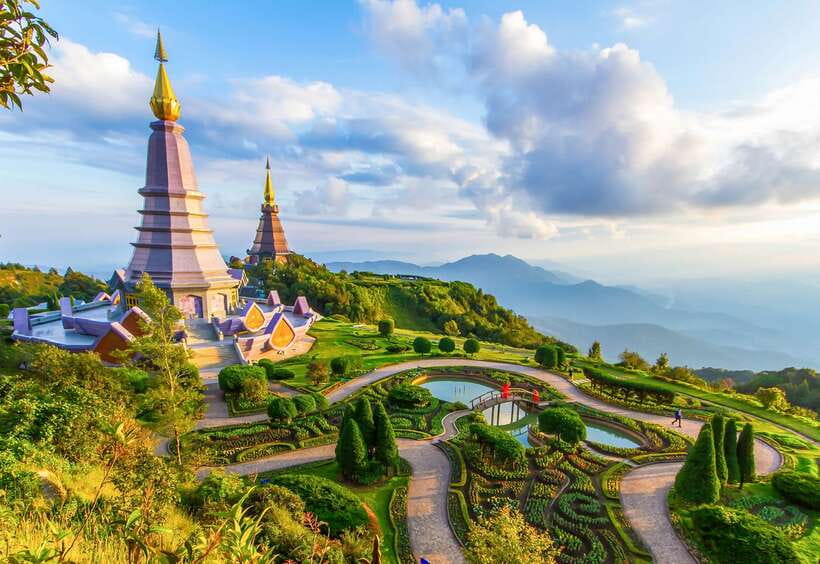
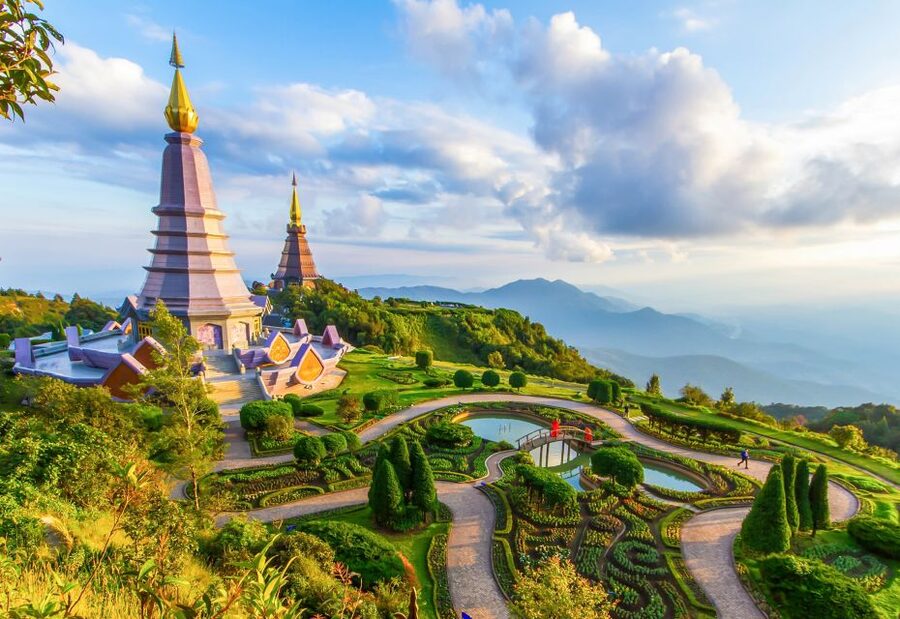
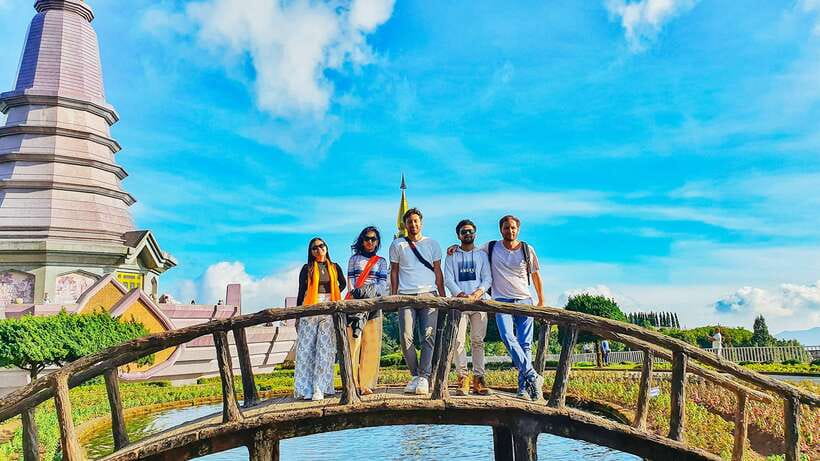
One of the stops is the Twin Pagodas, dedicated to the late King and Queen. In plain terms, it’s a temple-and-view combo. The pagodas sit so you can look across the park area—great for photos and for catching that sense of scale you only get when you’re up high.
The day’s best part here is that you’re not just ticking a box. You get guided context about the symbolism behind the pagodas, and then you get time to take pictures from the surrounding viewpoint areas.
If you’re traveling with someone who loves temples but also wants scenery, this stop makes both camps happy.
The hill-tribe village visit and coffee brewing: what to expect
After lunch, the tour goes to a local hill-tribe village (via Mae Klang Luang). This is where the day becomes more personal.
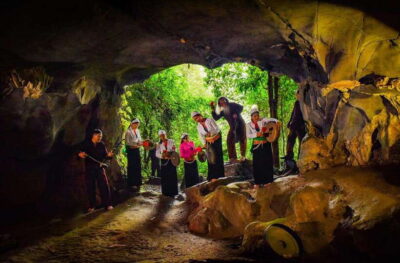
You’ll learn about hill-tribe life and participate in a traditional coffee-brewing moment. The tour focus is cultural learning rather than a high-energy show. You’re given a window to understand daily life and how people relate to their environment.
Two notes so you can set expectations:
- The exact hill-tribe community highlighted can vary by the village stop and the guide’s explanation.
- This is a short visit, so it won’t replace longer community-based programs. Think of it as an introduction.
What I consider a smart way to approach this part of the day: ask your guide questions about what you see—tools, routines, how coffee is made, what the land provides. Your guide (English options are available) can turn the stop from “watch and walk” into “make sense of what you’re seeing.”
Also, bring cash. There are usually opportunities to purchase locally made items or coffee, and having money on hand keeps you from missing out.



Wachirathan Waterfall: why the 80-meter drop is worth the detour

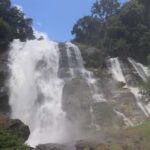
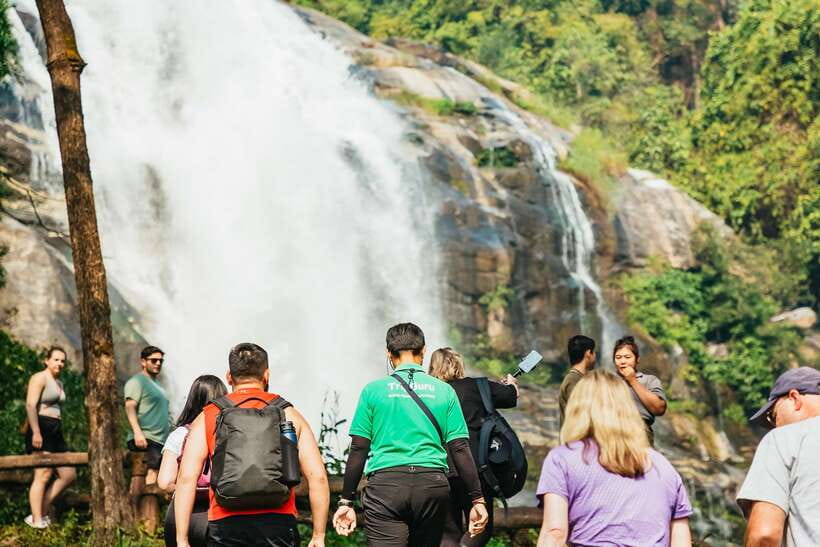
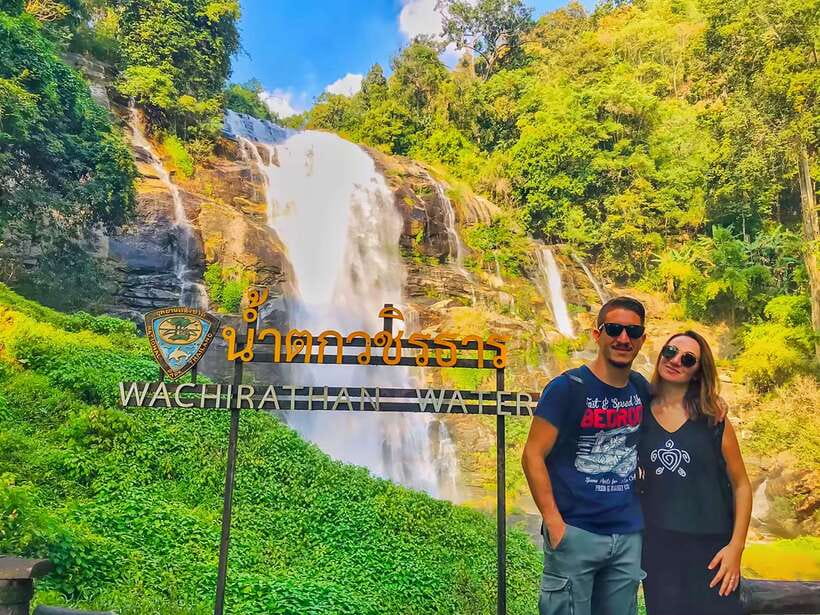
Then comes the star attraction: Wachirathan Waterfall, about 80 meters. This is where Northern Thailand starts to feel dramatic. The waterfall is a natural spectacle, and your guide sets you up to notice the right vantage points.
The tour also highlights a classic possibility: rainbows in the mist. Even when you don’t see one, the spray and sound are still the main event.
A few realistic tips:
- Bring an umbrella or a light rain layer. You don’t have control over the weather.
- Wear insect repellent if you’re sensitive to bites.
- Keep an eye on slippery ground near water edges.
If you’re choosing just one “must-see” stop in the whole day, make it this one.
Eco-friendly details that actually matter on a day trip
This tour is presented as eco-friendly and is GSTC-certified, with practical sustainability touches.
Two things stand out:
- You get water in a glass bottle, not a stack of single-use plastic.
- Carbon emissions offset credits are included with the tour.
It’s not the kind of marketing that should replace real conservation work—but as a traveler, I like when small choices are baked into the itinerary. For a one-day trip, these are concrete steps you can feel good about without changing how you travel.
If you’re trying to travel with a lighter footprint, this is one less thing to worry about.
Food and timing: what’s included and what you’ll pay for
You’ll have a lunch stop, but food isn’t included. That’s a key value point to understand up front. The tour is priced around sightseeing, guiding, and transport, not feeding you.
So do this:
- Plan to pay for lunch and any extra drinks yourself.
- Bring cash for snacks or meals if needed.
If you’re prone to “I forgot and now I’m stuck eating overpriced airport snacks” moments, pack a small snack in advance. Even if lunch is available, you’ll appreciate having a backup.
Price vs. value: where the $46 really goes
At $46, you’re not paying for a private guide. You’re paying for access, route planning, and a guided day across several major sites.
Here’s what you get as part of the experience:
- Air-conditioned transportation
- A tour guide
- Insurance
- A glass bottle of drinking water
- Carbon offset credits
- Hotel pickup and drop-off only if you pick the option that includes it
- Park entrance fees only if you select the option that includes them
And park fees are worth budgeting for if you didn’t choose the entry-included option:
- Doi Inthanon National Park entry fee: 300 Thai Baht
- Twin Pagodas entry fee: 100 Thai Baht
That means your true total depends on the option you choose. Still, the overall package tends to make sense if you want a guided “best-of” day without doing the planning math.
Guides and group feel: small-group energy and friendly direction
The tour is offered as a small group, and the guide experience is a big part of why the day works. You’ll get live guiding in English, French, Spanish, or Japanese, depending on what’s scheduled.
Across the guides you might meet, the common theme is clear explanations and keeping the day moving. Some guides known for running the day smoothly include people like Nom, Sunny, Lila, Jackie, and Nuttaya. It’s the kind of trip where a good guide can turn each stop into a story instead of a checklist.
One more practical angle: if you like taking pictures, guides often help you with timing and viewpoints. That matters at places like the pagodas and the waterfall, where conditions can change quickly.
Who this tour is perfect for—and who should look at something else
This tour is a strong match if you:
- Want a first-time Doi Inthanon day with multiple highlights
- Prefer guided sightseeing over self-driving in mountain traffic
- Like a mix of nature plus culture (waterfall + village learning)
- Don’t want a heavy hike, since the nature walk is short
It may be less ideal if you want:
- A trekking-focused day or long hikes
- More free time to explore on your own without the tour rhythm
- A food-inclusive meal plan (you’ll be paying for lunch)
If your schedule allows only one day outside Chiang Mai’s city feel, this is a smart use of it.
Tour logistics that can trip you up (so you can avoid the hassle)
Pickup is optional, and it depends on what you select:
- If you choose hotel pickup, it’s only from hotels or registered accommodations. Pickup from roadside or shopping malls isn’t offered.
- If you choose the meeting point option, you meet at the McDonald’s at Thapae Gate in Chiang Mai Old City. The guide holds a TripGuru sign, and you should show up about 10 minutes early.
Your pickup time and meeting point are confirmed by email the evening before.
One more detail that helps: the tour includes three drop-off locations, one of which is listed as McDonald’s at Im Thapae. So even if you don’t get hotel pickup, there’s still a structured return.
If you’re arriving late in Chiang Mai or you’re booking close to departure, same-day booking may be possible for the meeting point option depending on availability.
Should you book the Chiang Mai: Doi Inthanon Eco-Friendly Tour?
Book it if you want one efficient, guided day that hits the park’s top sights: highest-point area, royal pagodas, an easy nature boardwalk, a real waterfall payoff, and a hill-tribe village coffee stop. The eco-friendly touches (GSTC-style approach, glass bottle water, and carbon offset credits) add a feel-good layer without making the day complicated.
Skip it or consider another tour if you want a long, strenuous hike or a food-inclusive day. Also, if you hate van time, this still includes travel hours—just plan around that reality.
If you want the best “chiang mai north-of-the-city” experience in a single day with a guide doing the heavy lifting, this one is easy to recommend.
FAQ
How long is the Chiang Mai to Doi Inthanon tour?
It runs for about 9 hours.
Where is the meeting point if I choose not to use hotel pickup?
Meet your guide at the McDonald’s at Thapae Gate in Chiang Mai Old City. The guide will be holding a TripGuru sign.
Does the tour offer hotel pickup?
Yes, pickup is offered only from hotels or registered accommodations. Pickup from roadsides or shopping malls is not available for safety and traffic-law reasons.
Is entrance to Doi Inthanon National Park included?
Entrance fees are included only if you select the option with entry fees included. Otherwise, the Doi Inthanon National Park entry fee is 300 Thai Baht and the Twin Pagodas entry fee is 100 Thai Baht.
What is the Angka Nature Trail like?
It’s a short 360-meter boardwalk, not a full hiking trail.
What food is included in the tour price?
Food isn’t included. You’ll have time for lunch, but you’ll need to pay for meals and extra drinks yourself.
Is the tour eco-friendly?
Yes. It’s described as responsible exploration, is GSTC-certified, provides water in glass bottles, and includes carbon emissions offset credits.
What languages do the guides speak?
The live guide is available in English, French, Spanish, and Japanese.
What should I bring for the day trip?
Bring comfortable shoes, sunglasses, a hat, an umbrella, a camera, sunscreen, insect repellent, cash, and a jacket.