REVIEW · UTAH
Capitol Reef National Park Self-Guided Driving Audio Tour
Book on Viator →Operated by Guide With Action · Bookable on Viator
Capitol Reef teaches you to look closer. This self-guided GPS audio tour turns your car into a moving history lesson, with stories that trigger as you drive. I especially liked the offline maps option, since you can keep rolling even with spotty cell service. One thing to watch: road closures (like seasonal or construction detours) can limit access to some scenic segments and stops.
The format is simple and low-stress: start at the provided spot in Torrey, park when you want, then restart without losing your place. At $14.99 per group (up to 4), it can feel like strong value for a family car or friends road trip, especially if you want to cover more of the park than you would on a quick walk-only plan. Just note that you still need a park pass, and it’s not included.
In This Review
- Key points that make this tour work
- How the self-driving audio tour works at Capitol Reef
- Twin Rocks and Chimney Rock: a quirky opener that sets the tone
- Panorama Point to The Castle: viewpoints, time markers, and a solid break
- Fruita homesteads, petroglyphs, and the best trail moments
- Danish Hill, Ferns Nipple, Golden Throne, and the fun of weird names
- Sunset Lane at Sunset Point, plus the Pioneer Register
- Price, value, and the practical stuff that makes or breaks it
- Should you book this Capitol Reef self-guided driving audio tour?
- FAQ
- What does the Capitol Reef National Park self-driving audio tour cost?
- How long does the tour take?
- Is a park pass included?
- Does it work offline?
- When should I download the tour?
- Where do I start the tour?
- Do I need a guide to meet me?
- What if the audio doesn’t work?
- What are the opening hours for the tour?
Key points that make this tour work
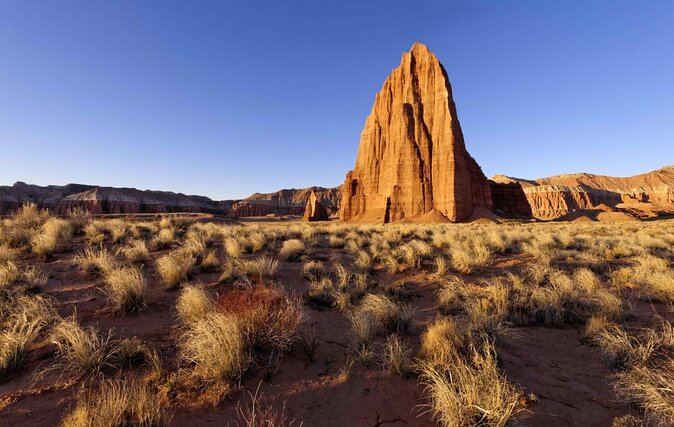
- Hands-free GPS audio that plays based on where you are, so you can focus on driving and pulling over
- Offline-ready experience after downloading on strong wifi/cellular before you go
- 30.5 miles of stops with 35+ audio stories, designed for a smooth 1–2 hour loop
- A mix of big photo stops and short walks, so you get value whether you hike or not
- Geology and human history together, from ancient petroglyphs to Mormon-era sites
- Lifetime access, no expiry, so you can use it again on future trips
How the self-driving audio tour works at Capitol Reef

This is not a bus tour. No guide meets you. You just show up at the start point in Torrey (79 E 1600 S, Torrey, UT 84775), open the app at the park, and the audio begins automatically at the first story location.
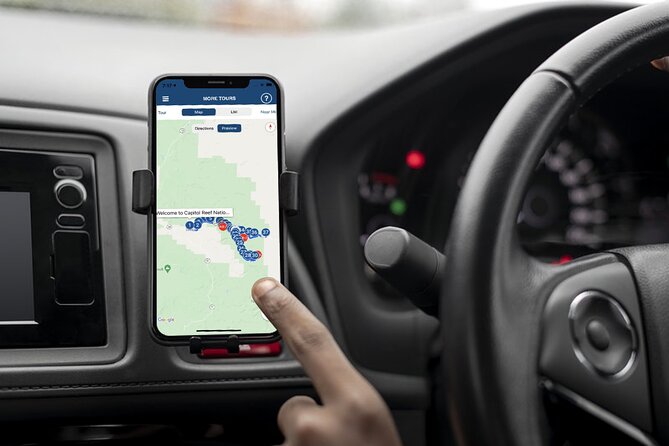
The app uses your phone’s GPS to start each audio segment as you reach each stop. That means you’re not constantly hunting for numbers or tapping through screens. When you want a break, you can park, listen to the next part later, and get back in the car when you’re ready.
You’ll download the tour using the separate Action’s Tour Guide App, then use the downloaded content offline. The important practical catch is that you must download while you’re on strong wifi/cellular before you arrive. Once it’s saved, you can keep going without signal.
For audio quality in the car, you can connect your phone to your stereo via Bluetooth, USB, or AUX. If you’re getting out for short walks, headphones can help you keep the audio comfortable and clear without straining in wind.
Capitol Reef is a place where timing matters, and this tour is built for flexible pacing. The route length is listed at over 30.5 miles, with more than 35 audio stories. Most people finish in about 1–2 hours, depending on how many stops you actually turn into short excursions.
You can also read our reviews of more tours and experiences in Utah.



Twin Rocks and Chimney Rock: a quirky opener that sets the tone
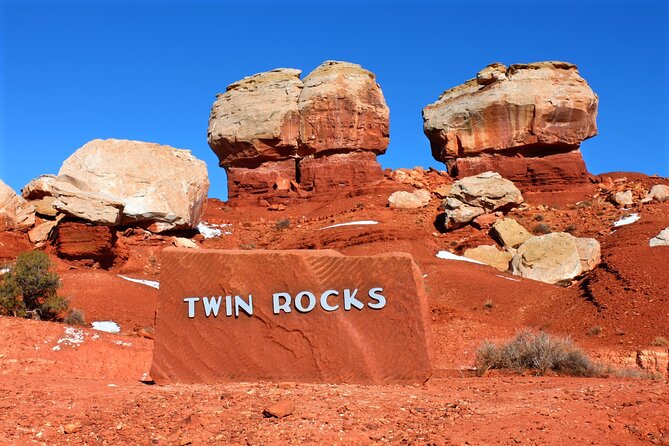
The tour’s first big landmarks are the kind you point out to each other before you even pull over. At Twin Rocks, you’ll meet a funky formation people describe like a pair of molars. It’s a great opener because it’s visual, memorable, and easy to locate—perfect for getting oriented without any stress.
From there, you continue to Chimney Rock, a bright red pillar of rock that looks like a chimney. Here’s the first “walk option” style moment of the tour: there’s a 3-mile hiking trail you can start from near this stop. If you want to keep things light, you don’t need to do the whole hike to enjoy the area. Even a partial walk helps you slow down and take in the rock color and surrounding bends of the road.
What I like about starting here is that the audio doesn’t rush you into the history too quickly. It gives you a visual anchor first, then you can appreciate the longer story beats that come later—petroglyphs, homesteads, and the park’s deep geological timeline.
Possible consideration: since this is self-guided driving, you’ll want to keep your eyes on the road first and let the audio prompt you to pull over when it’s safe. If you’re planning to do any longer trail portions, give yourself extra time beyond the 1–2 hour average.
Panorama Point to The Castle: viewpoints, time markers, and a solid break
Next comes a stretch built around viewpoints and recognizable rock features.
If Panorama Point piqued your curiosity, the route brings you to Goosenecks Overlook. It’s another chance to see how Capitol Reef’s rock layers create dramatic angles and sudden drop-offs. These stops are ideal for photos, but they’re also useful for understanding the park as a set of connected viewpoints rather than isolated attractions.
Then you’ll reach Fluted Wall, described as a cliff face that lets you look back in time—up to 240 million years. That kind of number can sound like trivia until you’re standing where the rock layers are exposed. The audio helps you translate what you’re seeing into something more meaningful than just color and texture.
Right after that, The Castle looms over the drive. It’s an imposing rocky fortress shape, and it works as a visual reset after the more interpretive geology moments.
From there, the visitor center is next on the drive. This is a practical stop you’ll be glad to have built into your route. It’s where you can handle restroom needs, grab snacks, and get your bearings before continuing.
A short side stop opportunity appears too: the route passes Ripple Rock Nature Center, which is positioned for educational time, especially if you’re traveling with kids. Even if you don’t stay long, it’s a helpful “pause point” in a driving tour rhythm.
If you’re the type who likes to understand a place, this section is where the audio and the scenery start feeling like one story line. You’ll leave with more than photos—you’ll have a sense of what each rock feature is doing in the wider park picture.
Fruita homesteads, petroglyphs, and the best trail moments
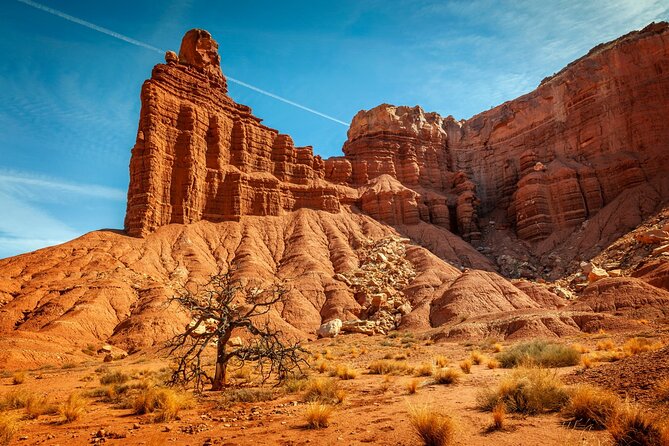
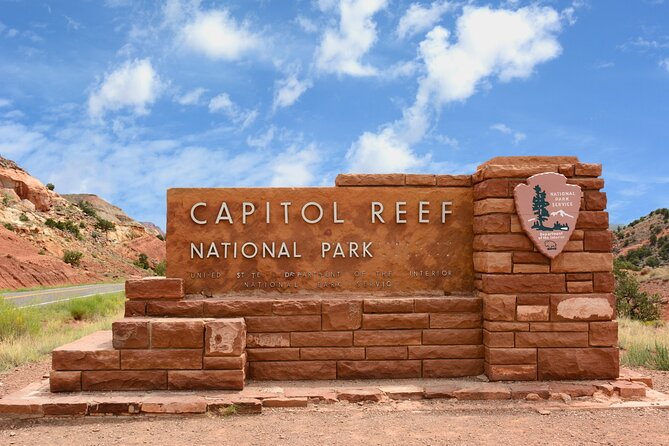
This is where the tour becomes more than a highlight reel. You’ll get the mix of human history and hiking-friendly trailheads that make Capitol Reef feel different from many other Utah parks.
You’ll pass The Gifford Homestead, described as a perfectly preserved glimpse of what life looked like for early Mormon pioneers who founded this remote town. After that is Fruita Barn, another stop that continues the time-machine feeling of the Fruita area.
Then the route moves toward Cohab Canyon Trailhead, a place tied to “seriously strange history,” along with the promise of stunning canyons. Even if you only stretch your legs briefly, the area sets expectations for narrow, sculpted rock and older-than-you-think human marks.
A major highlight on the drive is the Capitol Gorge Trailhead. This is one of the most popular trails, and for good reason: it leads into a gorgeous canyon and it includes ancient petroglyphs along the way. That combo matters. You get movement through the canyon, plus a direct connection to ancient inhabitants and their rock art.
Back toward the north side, you’ll stop at Fruita Schoolhouse, where the tour notes a detail that really lands: children of all ages were taught by a 12-year-old. That’s the kind of grounded human detail that makes the park feel lived-in, not just dramatic.
After that you’ll have another chance to see ancient petroglyphs. Some drawings are described as clearer than others, with meanings that are not fully deciphered. That uncertainty is worth respecting. If you’re used to museums where everything has an answer key, this is a different style of history—one you interpret and then accept you can’t fully solve it.
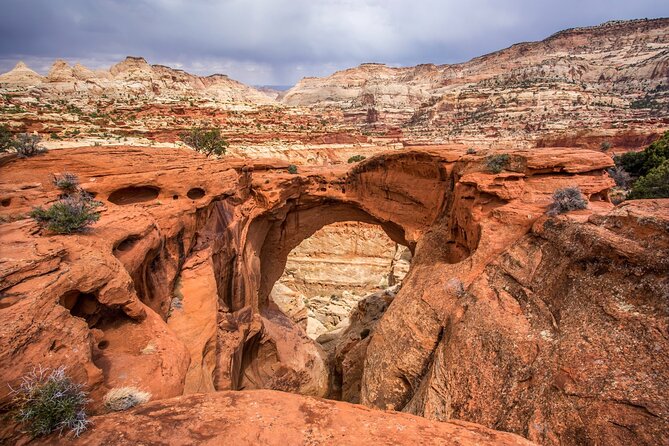
For a classic “walk to a wow feature,” the route includes Hickman Bridge Trailhead, leading to a natural bridge. The audio describes it as a part of the landscape that seems to defy gravity. If you’ve never seen a natural arch-style feature in person, this is the kind of destination where the hike feels like the price of admission.
Then comes a big “first-timer” opportunity: Grand Wash Trailhead, which leads into narrow slot canyons. If you’ve never seen a slot canyon up close before, this is the part of Capitol Reef that often turns a calm drive into a memorable walk.
The route also includes Behunin Cabin, with information about natural history and the park’s geology, trees, mammals, birds, and other plants and wildlife. Even if you’re not a hardcore biology fan, the way the tour frames living things against the park’s rock time helps you notice more once you’re out there.
A practical tip: if you’re trying to do several trails, keep your plan realistic. The audio tour is designed for a smooth drive plus optional walks. Picking one “big hike” and one short walk can keep the day fun instead of rushed.
Danish Hill, Ferns Nipple, Golden Throne, and the fun of weird names

Capitol Reef has rock features with names that sound like they came from a comedy sketch, but they’re tied to real geography. The tour leans into that in a way that makes you want to remember what you saw.
You’ll reach Danish Hill next, which is noted for some of the best views in the park. Even short stops here pay off because the hilltop perspective helps you understand how the road threads through layers and ridges.
Then comes Ferns Nipple, identified as a 7,065-foot summit about 4 miles southeast of the visitor center. Whether you think it looks like a nipple or not, the point is elevation and visibility—this is the kind of feature where you’ll appreciate the view more after you understand its location and elevation context.
The route continues to Teasdale and then to Slickrock Divide, described as a miniature continental divide that helps ensure flora in the reef can flourish. If you like nature facts tied to what you can actually see, this stop can help you spot how small shifts in terrain matter.
You’ll also hit Golden Throne, a 7,041-foot mountain and a rock formation dome made of gold-colored stained Navajo Sandstone. The tour notes that normally Navajo Sandstone appears creamy white or red, which makes this coloration especially notable.
One consideration: when you’re driving through viewpoints and higher areas, temperatures can change. Even if the drive is short, be ready for cooler air at higher elevations and bring layers.
This section is also where the audio becomes useful even if you’re not doing long hikes. The stories connect the named features to where you are in the park, which helps you avoid the common problem of seeing impressive views but forgetting where they fit.
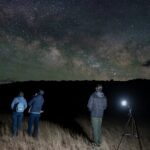
Sunset Lane at Sunset Point, plus the Pioneer Register
Near the end of the route, the tour gives you a natural closer: Sunset Lane and Sunset Point.
The audio here is straightforward. If you’re in the park around sunset, Sunset Point is where you should plan to stop. The tour frames it as a place where watching the sinking sun becomes a memory you’ll keep. I like ending with a visual ritual like this because it makes the day feel complete instead of like a checklist.
There’s also an optional extra: the Pioneer Register, described as a historical relic with the names of the first European-Americans who arrived in Capitol Reef centuries ago. It’s a small stop that adds meaning to the big rock scenery. If you’re the kind of person who likes to connect names and dates to place, it’s worth the quick pause.
If road conditions or daylight are tight, you can choose. That’s the beauty of an audio tour with GPS triggers: you can prioritize what matters most to you.
And remember the road-closure lesson from real-world use: if certain scenic roads are shut for construction or seasonal reasons, some stops may be inaccessible. Before you drive out, check current park road status so you don’t build your whole plan around a segment you can’t reach.
Price, value, and the practical stuff that makes or breaks it
At $14.99 per group (up to 4), this is priced like a practical add-on for a car trip. The biggest value angle is that you’re paying per group, not per person, which helps when you’re traveling with a small family or a couple of friends.
It’s also lifetime access with no expiry, meaning you can reuse it on another visit. Capitol Reef is the type of park where you might return for different seasons, different light, or different hiking goals, and the tour doesn’t force you into a one-and-done mindset.
The tour’s routing design matters too. The route length is about 30.5 miles and the time estimate is 1–2 hours, which makes it realistic for a “we’re not staying all day” plan. If you want a full day with multiple long hikes, you’ll likely stretch beyond that, but you can treat it like a backbone driving loop that gives structure.
Two things I’d call out to protect your experience:
1) Download before you arrive. The instructions are explicit: download while you’re on strong wifi/cellular, then use it offline.
2) Test audio setup early if you can. Pairing your phone to your car stereo can be quick, but it’s easier to troubleshoot before you’re deep in the park.
From a comfort standpoint, the audio is designed to be clear and easy to follow, with stories that keep you engaged without requiring constant screen time. That matters for driving safety and for keeping your day relaxed.
Lastly, don’t forget the basic park requirement: a park pass is required to visit Capitol Reef, and it’s not included in the tour price. Build that into your trip budget so nothing surprises you at the gate.
Should you book this Capitol Reef self-guided driving audio tour?
Book it if you want a flexible driving day where you can learn as you go. It’s especially good for families or mixed-experience groups: some people can do the longer trail options while others stay with the car and still get the same story context. I also think it’s a strong choice if you care about geology and human history, because the route connects both instead of treating them as separate attractions.
Skip it or reconsider if you have a tight schedule that depends on access to specific scenic roads or segments that might be closed. Since closures can happen, you want a plan that can adapt. Also, if you know you struggle with app downloads or offline setup, give yourself extra time at the start to make sure everything is working.
If you’re planning a Torrey-to-Capitol Reef road day and you want an easy way to turn driving into learning, this tour is one of those “press play, then just enjoy” options that can actually improve your day instead of adding hassle.
FAQ
What does the Capitol Reef National Park self-driving audio tour cost?
It costs $14.99 per group, up to 4 people.
How long does the tour take?
Most people complete it in about 1 to 2 hours.
Is a park pass included?
No. Park passes are not included, and you need one to visit Capitol Reef National Park.
Does it work offline?
Yes. The tour includes offline maps, and it’s designed to work without cellular or Wi-Fi after you download it in advance.
When should I download the tour?
You must download the tour while you are on strong wifi or cellular. After download, it works offline.
Where do I start the tour?
You start at 79 E 1600 S, Torrey, UT 84775, USA.
Do I need a guide to meet me?
No. This is self-guided. No one meets you at the start.
What if the audio doesn’t work?
If you face audio issues, contact support for troubleshooting.
What are the opening hours for the tour?
The opening hours listed are Monday through Sunday, 9:00 AM to 4:30 PM.