REVIEW · NEW DELHI
7-Day Golden Triangle & Ranthambore Tiger Safari from Delhi
Book on Viator →Operated by Holiday Tours And Travels · Bookable on Viator
Tigers at sunrise change the whole trip. This 7-day Golden Triangle route—Delhi, Jaipur, Agra—then out to Ranthambore for wildlife days, is built for first-timers who want big sights without constant self-planning on the road, on a private tour.
I love how the trip is structured around comfort and certainty: six nights of accommodation with daily breakfasts keep you fueled for early starts and long drives. I also like that you get local guides in Jaipur and Agra, so the talking points go beyond photos and you actually understand what you’re seeing.
One drawback to plan for: some of the big monuments have admission tickets not included, so you’ll want a little extra budget and patience for ticket lines and optional upgrades—especially during peak seasons.
In This Review
- Key Things That Make This Tour Worth Your Time
- Why This Golden Triangle + Ranthambore Combo Works
- Price and What $550 Really Covers
- Day 1: Arrive in Delhi and Ease Into the Trip
- Day 2: Jaipur’s Pink City Tour With the Real Landmarks
- Day 3: Amer Fort Area, Nahargarh Views, and Jal Mahal Moments
- Day 4: Heading to Ranthambore National Park
- Day 5: Sunrise Safari in Ranthambore Plus Fatehpur Sikri
- Day 6: Agra Highlights With Taj Mahal at Sunrise
- Day 7: Delhi’s Major Sights Before Your Flight
- Before You Go: Tickets, Season Closures, and Comfort
- Should You Book This Tour?
- FAQ
- What is included in the price?
- Do I get picked up in Delhi?
- Is this a private tour or a group tour?
- Are Ranthambore safari costs included?
- Are tickets for monuments included, like the Taj Mahal?
- Does the itinerary include sunrise visits?
- When is Ranthambore closed?
- What passport information do I need to book?
Key Things That Make This Tour Worth Your Time

- Six nights + daily breakfasts means fewer mornings spent figuring out food
- Local guides in Jaipur and Agra help you see more than the postcard version
- Sunrise safari in Ranthambore is the best shot at wildlife activity
- Taj Mahal at sunrise is scheduled before breakfast for softer light and calmer crowds
- Private-group format keeps the pace more controllable than open-ended group tours
Why This Golden Triangle + Ranthambore Combo Works
If this is your first real run through North India, this route makes a lot of sense. You cover the Golden Triangle highlights—Delhi, Jaipur, Agra—then you trade monuments for something totally different: the chance to spot a tiger in Ranthambore. That change of pace is the secret sauce. One day you’re walking Mughal-era marble and fort walls. The next you’re listening for movement in the jungle.
You also get a “car-and-guide” setup. That matters in India. Driving yourself, timing multiple entrances, and juggling local buses can eat your energy fast. Here, the plan is designed around smooth transfers by vehicle, with guided stops in the two cities where context really boosts the experience.
The overall feel is: you get the big hits, but you still get enough time to look, ask questions, and slow down where it counts—like Jaipur viewpoints and sunrise moments.
You can also read our reviews of more tours and experiences in New Delhi.


Price and What $550 Really Covers
At $550 per person for 7 days, the value depends on what you already plan to pay for. This price includes six nights of accommodation (double/twin/triple sharing), transport with tolls/parking/fuel/driver allowances, and breakfasts every day of the trip.
It also includes national park fees, tied to the safari vehicle arrangement based on your hotel option (the data specifies 1 canter safari if you book a 3-star option, and 2 canter safaris if you book a 4-star option). In plain terms: Ranthambore is already baked into the cost, not an extra surprise.
What is not included is the one thing you’ll feel immediately: many monument admission tickets. Taj Mahal admission is listed as not included, and several other major stops also show admission not included. Food and drinks aren’t included either, aside from what’s clearly part of breakfast.
So, if you’re the type who always buys tickets and wants the full experience at each stop, budget a bit more than the base price. If you travel light on paid add-ons and mainly want the must-sees, $550 can feel like a solid deal for the amount of ground you cover.
Day 1: Arrive in Delhi and Ease Into the Trip
Day one is simple: you land, meet a representative at Indira Gandhi International Airport, and get transferred to your Delhi hotel. That matters more than it sounds. Jet lag plus city navigation can turn day one into a headache.
The rest of the day is basically set up for you to recover and get oriented. Since the next days involve driving to other cities and early starts (Jaipur sightseeing and later sunrise options), this arrival buffer is a smart start.
Practical tip: keep your essentials easy to grab—passport, a small bottle of water, and a layer for indoor air-conditioning. You’ll likely be moving in and out of cars for most days.
Day 2: Jaipur’s Pink City Tour With the Real Landmarks
You drive from Delhi to Jaipur after breakfast, check in, then hit a highlights-focused circuit. This is a great way to get your bearings in Jaipur quickly, especially if you’re visiting for the first time.
What you’ll see is the classic Jaipur set:
- City Palace: built by Maharaja Sawai Jai Singh II when the court moved to Jaipur in 1727. Even if you’re not a palace person, this is the kind of place where the city’s power story clicks.
- Jantar Mantar: an astronomical instrument collection completed in 1734. It’s not just architecture—it’s math made visible.
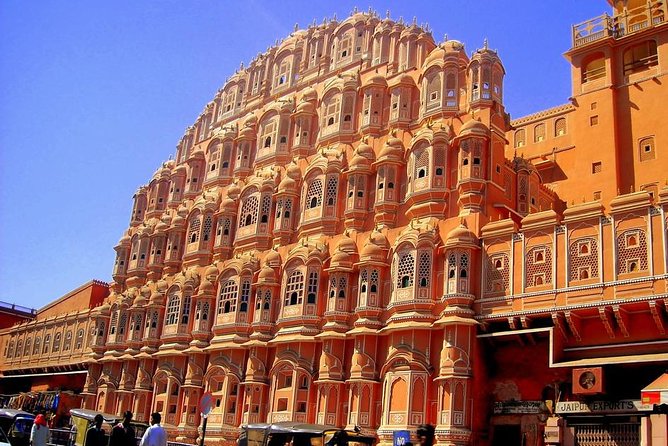
- Hawa Mahal: the Palace of Wind, designed with red and pink sandstone and built along the edge of the City Palace, extending toward the women’s chambers.
You’ll notice a pattern here: these stops aren’t just pretty walls. They connect to how rulers planned a city, tracked the sky, and built a look-with-function façade. If you’re the kind of person who likes understanding why something exists, a local guide in Jaipur is a big win.
Downside: this day can feel like a “hit list” if you rush. To avoid that, slow down for details—doorways, carvings, and how the buildings line up in the streets around them.
Day 3: Amer Fort Area, Nahargarh Views, and Jal Mahal Moments
Day three goes deeper into Jaipur’s surrounding forts and viewpoints. You’ll visit:
- Amber Palace (Amer Fort): the main attraction in Jaipur’s Amer area. You’ll spend a few hours here, and it’s worth treating like an experience rather than a quick stop. Look at the fort’s position on the hill and imagine daily life inside walls like these.
- Nahargarh Fort: on the edge of the Aravalli Hills, overlooking Jaipur. Fort views are where the work pays off—especially when the light softens later in the day.
- Jal Mahal: the palace in the middle of Man Sagar Lake. It’s a visual pause point—less about walking and more about that stop-and-look energy.
This is one of the more memorable days for many people because it shifts from city monuments to the broader geography of Rajasthan. You get the sense of how forts watched the routes and protected the city.
Consideration: this day involves multiple sites and some walking on uneven ground around forts. Comfortable shoes are not optional.
Day 4: Heading to Ranthambore National Park
Today you’re moving from the pink-city world to something completely different: Ranthambore National Park near Sawai Madhopur. The plan lists a park visit block of about five hours.
This is travel-day energy mixed with waiting-day energy. Even without a tiger sighting guarantee, getting into the rhythm—park rules, safari timing, and vehicle positioning—starts here.
Also: this tour is clearly designed around early wildlife windows later. So it helps to use today to get ready for mornings that start early enough to feel slightly rude to your sleep schedule.
Day 5: Sunrise Safari in Ranthambore Plus Fatehpur Sikri
This is a standout day. You get a sunrise national park safari session (listed as about three hours). Sunrise matters in tiger-country. Activity tends to be higher, and the light is better for spotting movement and for the photos you’ll actually want to keep.
A quick reality check: you’re on a safari, not a theme-park ride. Tigers are wild animals. Still, the early timing in the schedule is exactly what you want if you care about your odds.
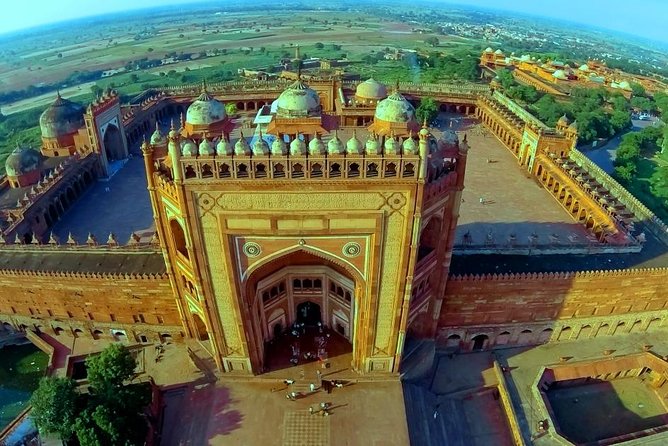
Later, you head to Fatehpur Sikri, a Mughal-era city west of Agra. It’s described as red sandstone buildings clustered at the center and includes Buland Darwaza as the gateway to the Jama Masjid area. This stop works well because it breaks up the wildlife day with a culture stop that feels different from Jaipur.
Practical note: this is another day where time is tight. Bring snacks if you rely on them, but remember food and drinks aren’t listed as included beyond breakfast.
Day 6: Agra Highlights With Taj Mahal at Sunrise
Agra is where you slow down and stare. The plan includes an Agra sightseeing day plus a special sunrise Taj Mahal visit before breakfast.
Key stops:
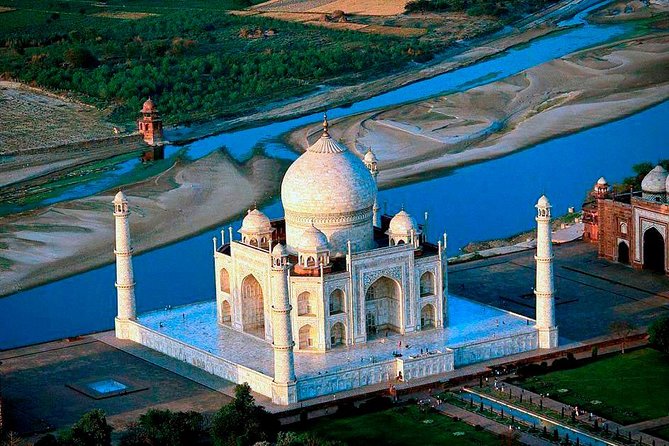
- Taj Mahal at sunrise: UNESCO World Heritage site, described as built by a great emperor in memory of his wife. Admission is listed as not included, so plan for that cost if you want the full entry experience.
- Agra Fort: built by Emperor Akbar, made of red sandstone, another UNESCO World Heritage site.
- Itmad-ud-Daula: often called a draft or earlier step toward the Taj Mahal style.
- Agra bazaar tour: focused on handicrafts, including marble and soft-stone inlay work.
This day is powerful because the Taj Mahal timing is doing real work. Sunrise typically gives you softer light and a calmer feel than midday. Even if you’ve seen photos before, walking up to the building in person hits differently.
Consideration: the day is packed. If you’re easily overwhelmed, give yourself permission to pause. Spend extra time on the details at Itmad-ud-Daula, where the craftsmanship can be easier to absorb without sprinting.
Day 7: Delhi’s Major Sights Before Your Flight
Your final day brings Delhi back into focus with a long list of classic stops:
- Jama Masjid (one of the largest mosques in India)
- Red Fort
- Raj Ghat, the memorial dedicated to Mahatma Gandhi
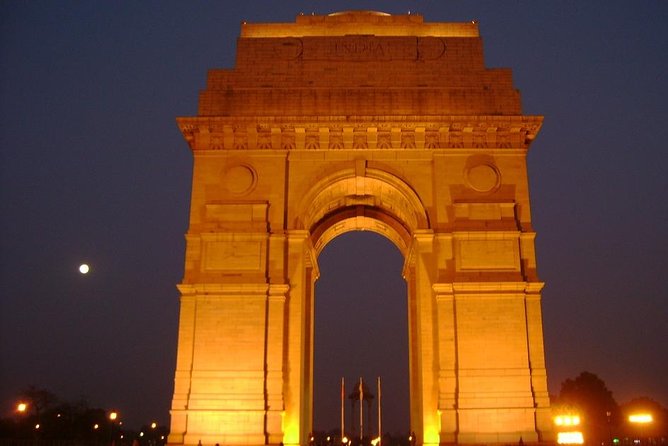
- India Gate
- Humayun’s Tomb
- Lotus Temple
- Qutub Minar (part of a UNESCO World Heritage site)
Then you transfer to the airport for onward travel after the sightseeing.
This is a fast, concentrated Delhi finale. It’s great if you want the “Greatest Hits” map, and it’s also where you need to watch your energy. Some of these are quick stops by design, while others reward lingering.
If you have one personal preference—history, architecture, or city-scale monuments—decide what you’ll slow down for. Otherwise you’ll end up doing the mental equivalent of speed-walking through a photo book.
Before You Go: Tickets, Season Closures, and Comfort
A few things to keep straight so the trip stays smooth:
Ranthambore season closure: Ranthambore National Park is listed as closed from 1st July to 30th September, depending on weather. If your travel window falls in those months, your best move is to confirm operations before you commit.
Admissions: Many monuments have admission tickets marked as not included—Taj Mahal, and several others like City Palace and Jantar Mantar. Build a budget for those entries.
What’s included at the park: National park fees are included, with the safari vehicle count tied to the hotel option. The exact safari schedule still depends on how operations run day to day.
Comfort basics: Comfortable walking shoes are recommended, and you’ll do a fair amount of walking around forts and monuments. Also, keep your passport handy; passport name and number (plus expiry and country) are required at booking, and you need a valid passport on the day of travel.
One more small thing: the experience is marked as a private tour/activity where only your group participates. That often means less waiting around with strangers and a pace that feels more natural.
Should You Book This Tour?
I think you should book this tour if you want a smart first-timer route that covers the Golden Triangle highlights and still gives you a serious wildlife day. The balance is good: monuments in daylight, then wildlife at sunrise, then back to the big-name sites in Delhi.
You may want to pass or adjust expectations if:
- you’re traveling in July–September and Ranthambore operations are uncertain
- you hate paying separate admission fees for major sights
- you prefer a slower pace with more free time in each city
If you fit the first category—especially if you’re excited about sunrise safari and sunrise Taj Mahal—this is the kind of trip that makes North India feel doable. It’s not subtle, but it is effective.
FAQ
What is included in the price?
The tour price includes six nights of accommodation (double/twin or triple sharing), transportation with tolls/parking/fuel/driver allowances, local taxes, national park fees, and breakfast (7). Local guides are included for Agra and Jaipur only.
Do I get picked up in Delhi?
Yes. The start point is Indira Gandhi Intl Airport, and you’ll be met on arrival for transfer to the hotel in Delhi.
Is this a private tour or a group tour?
It’s private. Only your group will participate.
Are Ranthambore safari costs included?
National park fees are included, with safari arrangement depending on your hotel option: 1 canter safari if you choose the 3-star option, and 2 canter safaris if you choose the 4-star option.
Are tickets for monuments included, like the Taj Mahal?
Not always. The tour lists several stops with admission tickets as not included, including the Taj Mahal. Other monuments on the route also show admission not included.
Does the itinerary include sunrise visits?
Yes. There’s a sunrise national park safari in Ranthambore, and the Taj Mahal is scheduled for an early sunrise visit before breakfast.
When is Ranthambore closed?
Ranthambore National Park is listed as closed from 1st July till 30th September, and whether it opens depends on weather.
What passport information do I need to book?
You need your passport name, number, expiry, and country at booking, and you must have a current valid passport on the day of travel.