REVIEW · WEST YELLOWSTONE
Yellowstone National Park Self-Guided Audio Tour
Book on Viator →Operated by Shaka Guide Apps · Bookable on Viator
Yellowstone feels huge, but this tour makes it feel manageable. You get a GPS-activated audio drive that points you to the park’s best hydrothermal stops and big-view viewpoints, without locking you into a bus schedule. It’s built for a long day (often 10 to 14 hours), with the freedom to skip ahead or linger.
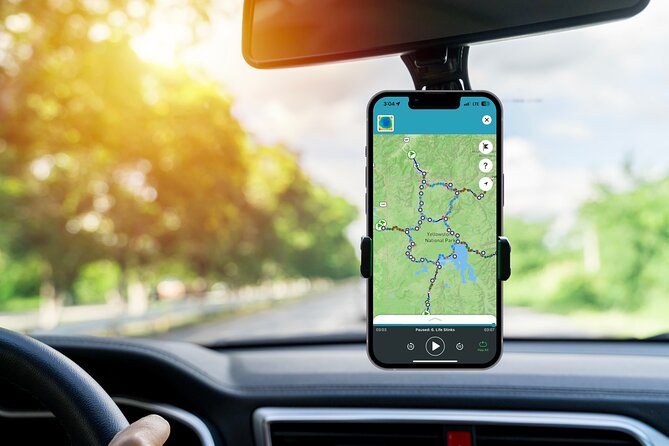
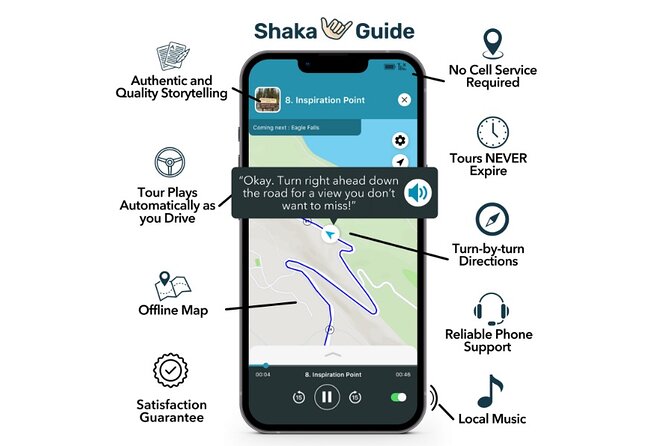
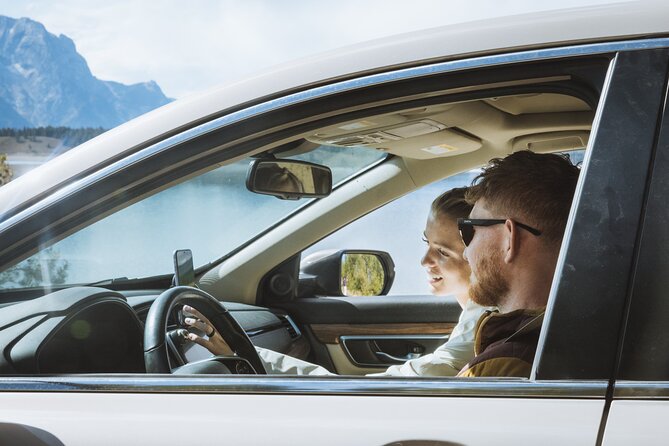
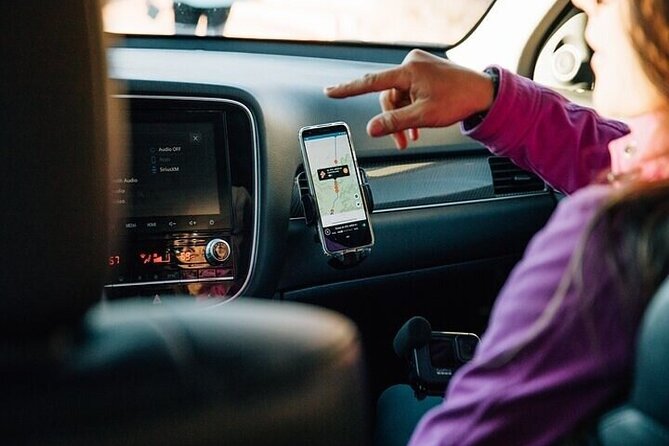
Two things I really like: first, it works offline with a map and turn-by-turn GPS directions, so you can keep going even when cell service disappears. Second, you can run it hands-free—audio narrations and directions play automatically as you drive, plus you can pause and resume on your own timing.
One drawback to consider: Yellowstone is still Yellowstone. Even with guided cues, you’ll be spending most of the day in the car and on short walks, and the park’s own parking and entrance fee can add cost on top of the tour price.
In This Review
- Key highlights you’ll care about most
- How this Yellowstone audio tour actually helps your day move
- Value check: $15.19 per group, plus the park’s real costs
- Using it smoothly: download, redeem, and play through your car
- Timing your day: 10 to 14 hours, and why that range matters
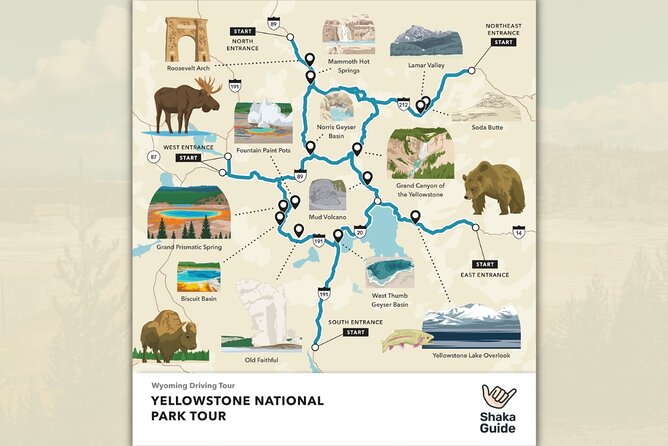
- Stop-by-stop: the highlights you’ll hit without feeling rushed
- Madison River to Firehole area: start with scenery and steam
- Midway Geyser Basin and Grand Prismatic Spring: your best photo anchor
- Old Faithful, Kepler Cascades, and more steam right where you need it
- Continental Divide at Isa Lake: a weird fact you’ll remember
- Yellowstone Lake area: Fishing Cone and a birding-style loop
- Gull Point and Fishing Bridge: picnic and trout watching
- Hayden Valley and LeHardy’s Rapids: wildlife timing and early-spring action
- Mud Volcano, Dragon’s Mouth, and the feeling of Yellowstone being more extreme
- The canyon day: Upper Falls, Artist Point, and Uncle Tom’s Trail
- Hot springs, towers, terraces, and all the geology in between
- Norris and Artists’ Paintpots: Yellowstone at its hottest and messiest
- Waterfalls, cliffs, and the ranger museum stop
- Getting back out: West Yellowstone at dusk
- Who this self-guided audio tour is best for
- Should you book it?
- FAQ
- FAQ
- Is this Yellowstone tour self-guided or led by a person?
- What language is the audio narration in?
- Do I need Wi-Fi or cell service in Yellowstone for the audio and map?
- How long does the Yellowstone audio tour take?
- How much does the tour cost, and what fees are not included?
- Can I skip stops or spend more time at certain places?
- Where does the tour start and can I choose a starting point?
- Can I cancel and get a full refund?
Key highlights you’ll care about most
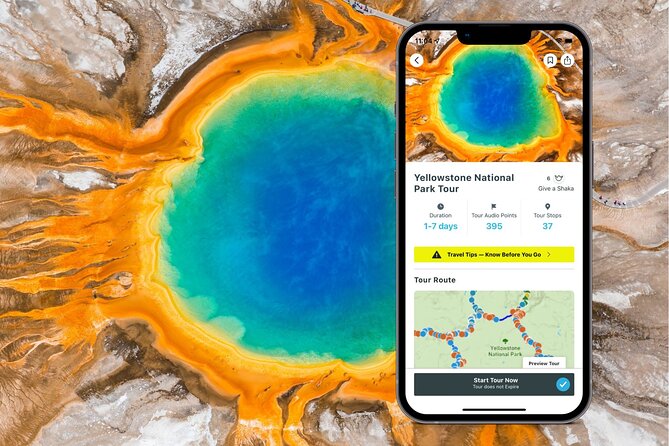
- Offline map + GPS directions: download ahead, then drive without relying on data
- Auto-play narration: stories and tips trigger as you approach stops
- One price per vehicle group: meant for up to 15 people in your group
- Start point is customizable: you choose where to begin in the app
- Tour format is flexible: skip stops, stay longer, and repeat routes on your schedule
How this Yellowstone audio tour actually helps your day move
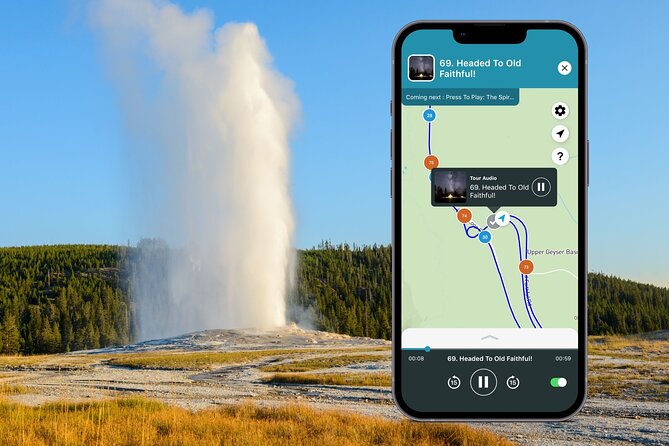
Yellowstone is the kind of place where you can lose an entire morning just trying to figure out what’s next. This audio tour solves that with turn-by-turn GPS guidance and narration that kicks in as you drive. In practice, that means you’re not flipping between a map app and a guidebook while everyone is scanning for elk.
You also get planning energy without losing spontaneity. If a stop looks crowded, you can skip it. If a viewpoint is better than expected, you can stay. That matters in Yellowstone, because weather, animal sightings, and lineups can change your best route hour by hour.
There’s another practical win: this is a private tour for your group. You’re not squeezed into a herd-style experience where you have to match someone else’s pace.
You can also read our reviews of more tours and experiences in West Yellowstone.

Value check: $15.19 per group, plus the park’s real costs
The tour price is $15.19 per group (up to 15 people). That’s unusually good value for Yellowstone, where guided options often charge per person or force a fixed schedule.
But you should budget for Yellowstone itself:
- Entrance fee for private vehicle: $35 per booking (not included)
- Parking fees: not included
So the question becomes this: do you need a human guide for interpretation and timing? If your goal is to see the park’s big-name sights plus the “why does this happen?” science behind them, this audio format is often the sweet spot. It’s also cheaper than a paid bus tour when you’re traveling as a group.
One more money reality: the app works best when you download properly before you lose service. That’s not a fee issue, it’s a setup issue—handle it once before you enter, and you keep your value.
Using it smoothly: download, redeem, and play through your car
This tour is delivered through a mobile app. After booking, you get a confirmation and instructions by email, including a redeem code. The key step is downloading the tour using strong Wi‑Fi, so you’re not stuck hunting for bars once you’re inside the park.
In the car, audio can play through your phone speakers or your car setup (including Bluetooth). If your vehicle supports phone integration like CarPlay or Android Auto, you can route navigation too, but the essential point is simple: make sure your phone is set up before you start driving.
You’ll also want a simple routine:
- Start the tour in the app
- Follow the GPS route and suggested speed
- When you arrive at a stop, park when it makes sense for your timing
- Let the narration and directions guide you again once you’re back in the car
If you’ve ever tried to do Yellowstone with just a website map, this feels like training wheels. Not because it’s limiting, but because it helps you stop overthinking the route.
Timing your day: 10 to 14 hours, and why that range matters
A Yellowstone day is rarely “10 hours and done,” unless you’re laser-focused and you skip some areas. This tour’s typical duration is 10 to 14 hours, and that makes sense given how often you’ll stop for:
- short boardwalks
- parking pullouts and overlooks
- waterfalls and canyon viewpoints
- a couple of longer scenery walks (like prismatic spring access)
The smart move is treating it as a menu, not a checklist. Even the best route can feel like a blur if you try to do everything. If you want maximum quality, build in breathing room at the hydrothermal zones. The geyser basins reward slow glances.
Stop-by-stop: the highlights you’ll hit without feeling rushed
Madison River to Firehole area: start with scenery and steam
Your loop begins on the Madison River, famous for fly fishing and clear water. You’ll pass notable features along the way, including Talus Mountain, Mount Haynes, and National Park Mountain. This is a good opener because it gets you into Yellowstone’s rhythm—watch, then drive, then watch again.
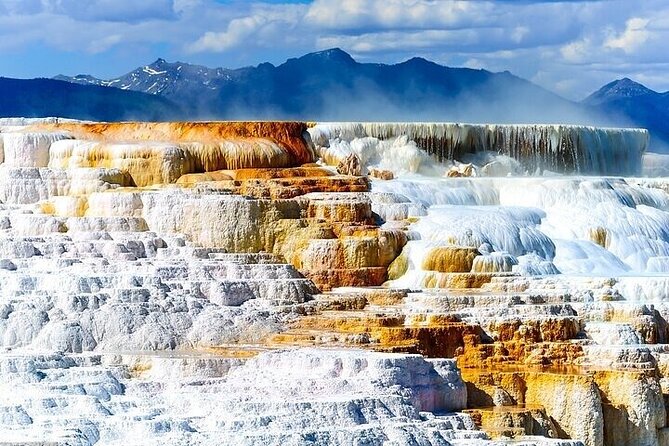
From there, you’ll move into the Firehole Canyon Drive zone and the white travertine terraces area. The quick drive is framed by Orange Spring Mound, Angel Terrace, and Aphrodite Terrace—those bright, mineral-stepped surfaces that make Mammoth Hot Springs look unreal.
A short detour on Fountain Flat Drive adds even more personality. You’ll find a meadow feel, small hot springs, and the Maiden’s Grave area. If you’re here during the right season, you’ll also get a good look at the Firehole River and its trout activity.
Then come the hydrothermal big hits on Firehole Lake Drive, with quick access to several features from roadside lookouts or short boardwalk walks. The White and Pink Dome Geysers and the Great Dome Geyser are the kind of stops that make you stop talking for a minute.
Why this early sequence works: you’re stacking “wow” with manageable driving time. If you start too late, you’ll likely miss some of the later basins—but this order helps you bank the best visuals while daylight is still strong.
Midway Geyser Basin and Grand Prismatic Spring: your best photo anchor
The Midway Geyser Basin stop centers on the boardwalk that circles Grand Prismatic Spring. It’s the giant color palette of Yellowstone—steam, mineral edges, and that constant, shifting look of geothermal life.
If you have time, you can branch off toward the Grand Prismatic Overlook via a 0.6-mile one-way hike. And if you want more, the trail continues another 1 mile each way to Fairy Falls.
This is one place where I’d plan your effort. If you rush, you’ll miss the meaning of it—the way the steam and color gradients change with the angle. If you slow down, you get a better sense of scale.
Old Faithful, Kepler Cascades, and more steam right where you need it
No Yellowstone day feels complete without Old Faithful. The big geyser erupts about every 60 to 110 minutes. The practical trick is timing: if you arrive early, use the nearby Visitor Center area and the surrounding loop features before the eruption window.
Then you’ll move to Kepler Cascades, a multi-tiered drop with segments that can reach around 50 feet. The boardwalk access makes it a low-effort stop with high payoff—especially if you’re trying to keep your legs fresh for later driving.
Continental Divide at Isa Lake: a weird fact you’ll remember
Next is Isa Lake at the Continental Divide, where water flows to two different oceans. It even drains backward: one end heads toward the Atlantic, the other toward the Pacific. It’s a small stop time-wise, but the fact is so odd that it sticks in your brain.
Yellowstone Lake area: Fishing Cone and a birding-style loop
You’ll also swing into a lesser-timed zone around Yellowstone Lake, including the Fishing Cone Geyser. If you have extra minutes, the Yellowstone Lake Overlook Trail is a 1.7-mile loop, and it’s popular with birders—so it’s a good pause if you’d rather watch than rush.
Gull Point and Fishing Bridge: picnic and trout watching
On Gull Point, you can make it a real break—pull in for a picnic style stop. Then you’ll head to Fishing Bridge, where there’s a ranger station and a general store.
At Fishing Bridge, do the simple thing: walk along the bridge and scan for cutthroat trout below. This is the kind of stop where the audio helps with context, but your eyes do the work. If you see trout movement or birds hanging around, you’ll feel like you earned the moment.
Hayden Valley and LeHardy’s Rapids: wildlife timing and early-spring action
Drive into Hayden Valley, a wildlife haven where grazing animals attract predators. The audio cues help you know where you are and what to watch for, but this section’s value depends on your patience. Keep your eyes moving—scope the open areas, then look closer to the edges.
Then comes LeHardy’s Rapids. There’s a short boardwalk down to the river and roaring rapids. In early spring, the rapids can be full of jumping, spawning cutthroat trout—so if you’re visiting at that time, this stop can turn into a real show.
Mud Volcano, Dragon’s Mouth, and the feeling of Yellowstone being more extreme
Before you reach the canyon area, you’ll hit the Mud Volcano hydrothermal zone, known for being unique and often overlooked. The key detail is that it’s acidic, which changes how it feels compared with cleaner-looking geyser basins.
Right near it is Dragon’s Mouth Hot Spring, a roaring, sloshing, bubbling hot spring full of motion.
If you like your geothermal features loud and chaotic, this is the section that delivers the right attitude before the canyon viewpoints.
The canyon day: Upper Falls, Artist Point, and Uncle Tom’s Trail
Your big scenic payoff is Grand Canyon of the Yellowstone, with viewpoints like Upper Falls View and Artist Point. If you want a hike, Uncle Tom’s Trail is the one most people add when they have energy.
Plan for at least an hour here if you want to take it in properly. These are the kind of places where you’ll keep stepping to a new angle, especially as you realize the color and rock layers tell time.
There’s also an additional Upper Falls viewpoint after you circle around, right at the brink. You walk just over a quarter mile on an easy trail to get to the viewing platform.
At Canyon Village, don’t skip the Visitor Center. The exhibits, including a lit diorama of Yellowstone, help you visualize the geology—how the canyon and caldera get shaped over time. It’s the kind of learning that makes the canyon make more sense, not less.
Hot springs, towers, terraces, and all the geology in between
After the canyon, you’ll stretch your legs at Washburn Hot Springs Overlook, with a viewpoint over the caldera and a chance for a restroom break. Then there’s the drive up toward Mount Washburn, which can feel steep and narrow-road intense, but the payoff is the wide view over river, peaks, and valleys.
You’ll also stop at Tower Falls, with a general store, boardwalk overlooks, and a one-mile there-and-back option that reaches the river and passes bubbling cauldrons.
Next is Soda Butte, the hot spring cone that’s no longer active, but still worth a stop. A neat bonus: cliff swallows have turned it into a kind of bird condo, so keep an eye on the activity.
At Tower Junction, you can reset with a restroom and, if you’re hungry, refuel at Roosevelt Lodge. Then you’ll swing to the Petrified Tree, a fossilized reminder of Yellowstone’s warmer, forested past.
If conditions are right, Blacktail Drive can be a nice side route. It’s accessible to all vehicles, but you should be careful after rain because it’s a gravel road. It can feel more private than the main roads, and it gives you a better shot at wildlife. It’s one-way, so if you go in, you may need to turn around later to return.
Then comes Undine Falls, where a few wooden steps take you down to the overlook area. Nearby pullover access also points you toward the Lava Creek Trail and Picnic Area.
Now the day turns back to Mammoth Hot Springs Terraces. You’ll visit the Lower Terrace (those snow-white terraces), then drive the Upper Terrace loop with Orange Spring Mound, Angel Terrace, and Aphrodite Terrace again. This repeat isn’t a mistake in the experience—it’s how the park lets you see the same geologic story from different angles and lighting.
Norris and Artists’ Paintpots: Yellowstone at its hottest and messiest
Later, you’ll reach Norris Geyser Basin, described as Yellowstone’s hottest and oldest geyser basin. There’s a 2.9-mile looping boardwalk, and it includes features like the tallest geyser in the world.
If you’re trying to avoid crowds and still enjoy geothermal color, you’ll also hit Artists’ Paintpots, a 0.6-mile boardwalk through pine woods into mud pots with swirling colors. Even short boardwalks can feel like a different planet in Yellowstone.
Nearby, Beryl Spring is a fast roadside stop with a striking blue look—one of those quick pulls that’s easy to justify because it adds variety without draining your energy.
Waterfalls, cliffs, and the ranger museum stop
Your route keeps mixing thermal sites with river music and geology. Gibbon Falls comes with a Gibbon Picnic Area close by, and it can pair nicely with lunch timing.
Then you’ll stop at Tuff Cliffs Picnic Area, where compacted, welded volcanic ash is visible. There are picnic tables and a restroom at the pullover, which makes it a practical recharge point.
On the cliff and sulfur side, you’ll encounter:
- Sheepeater Cliffs, a geometric basalt wall with hexagonal columns formed over about 1.3 million years ago
- Obsidian Cliff, where direct walking isn’t allowed, but you get a great view from the drive plus an exhibit and a short 5-minute walk for another viewpoint
- Roaring Mountain, with fumaroles that steam and “roar,” plus a science explanation for why the mountain looks ash-gray
Finally, add time for the Museum of the National Park Ranger. A side road leads to a film, historical exhibits, and the chance to talk with current or retired park ranger staff. This stop is valuable because it connects what you see in the wild to the people managing it.
Getting back out: West Yellowstone at dusk
Toward the end, you’ll head back toward West Yellowstone via the west exit. A scenic dusk drive can be a good closing move, especially if you want one last look for animals before you call it a day. The tour ends back at the meeting point.
Who this self-guided audio tour is best for
This experience fits best if you:
- want a self-guided Yellowstone day without a rigid group schedule
- prefer hands-free learning while driving
- like seeing a lot of variety: geysers, terraces, canyons, wildlife valleys, and waterfalls
- travel as a group where one vehicle license makes sense
It’s less ideal if you need constant human interaction for navigation or if your phone setup isn’t reliable. Most problems are avoidable with one prep step: download and test audio before entering the park.
Should you book it?
If you’re trying to do Yellowstone in one big day and you want the park’s science and stories without paying for a guided bus day, I think this is a strong yes. The value is clear at $15.19 per group, and the real win is that offline GPS + auto-play narration keeps you from wasting time.
Book it if you’re comfortable driving yourself and making quick decisions at pullouts. Skip it only if you’re the type who needs an instructor to manage every turn, because Yellowstone rewards flexible pacing and short walks you choose yourself.
FAQ
FAQ
Is this Yellowstone tour self-guided or led by a person?
It’s a self-guided offline audio tour. The audio narration plays automatically as you drive using GPS turn-by-turn directions, so you explore at your own pace.
What language is the audio narration in?
The tour is offered in English.
Do I need Wi-Fi or cell service in Yellowstone for the audio and map?
No. You get an offline map and the tour works without continuous wifi or data, as long as you download it before your drive.
How long does the Yellowstone audio tour take?
The duration is typically 10 to 14 hours (approx.).
How much does the tour cost, and what fees are not included?
The tour is $15.19 per group (up to 15 people). Not included are meals, refreshment, parking fees, and the park entrance fee for private vehicle ($35 per booking).
Can I skip stops or spend more time at certain places?
Yes. The tour gives you freedom to explore, including the ability to pick stops you want and skip ones you don’t, and to stay as long as you want at a stop.
Where does the tour start and can I choose a starting point?
Your tour start is customizable, and you launch it in the app by selecting the starting point and following the GPS instructions. The activity ends back at the meeting point.
Can I cancel and get a full refund?
Yes. You can cancel for free up to 24 hours in advance of the experience start time for a full refund.