REVIEW · POMPEII
Wine Tasting and Winery Tour in Vesuvio National Park with Lunch
Book on Viator →Bookable on Viator
Volcanic soil, great wine, and food pairings in one tight 2-hour stop make this experience worth planning around. I like the focus on Lacryma Christi wines paired with classic Neapolitan dishes, and I also like the small-group feel (max 10) paired with a real vineyard-and-cellar walk. One thing to think about: you’ll likely need your own transportation to get to the winery area, since the meeting point is in Trecase, not inside Pompeii proper.
The setting is not a gimmick. This is a family-run winery inside Vesuvius National Park, which is recognized as a Biosphere Reserve and has UNESCO status since 1995. You’ll see how the volcanic rock shapes both the vines and the winemaking—then you’ll taste it in the glass, from rosé through reds.
In This Review
- Quick hit highlights
- Vesuvius National Park vineyards: why the setting matters
- Vineyard walk and lava-stone cellar: what you’ll do on the ground
- What you taste: 4 Lacryma Christi wines with Neapolitan dishes
- The winemaking story: organic vines, ungrafted stock, and Caprettone
- Price and value: what $79.94 buys you in the real world
- Timing, group size, and how to plan your day
- Who this tour suits best (and who should think twice)
- Should you book this Vesuvius winery tour?
- FAQ
- What is the meeting point for the winery tour?
- What time does the tour start, and how long is it?
- How many wines and dishes are included?
- Is Lacryma Christi included?
- How large is the group?
- Do I receive a mobile ticket?
- What is the cancellation policy?
Quick hit highlights
- Family winery in Vesuvius National Park, recognized as a Biosphere Reserve and UNESCO site
- Vineyard walk plus cellar tour (including a cellar carved from lava stone)
- 4 wines and 4 Neapolitan dishes paired together for a full meal-style tasting
- Lacryma Christi as a star of the tasting lineup
- Organic vineyard practices across 12 hectares, using native ungrafted vines
- Caprettone grape, a rare vine that grows only here
Vesuvius National Park vineyards: why the setting matters
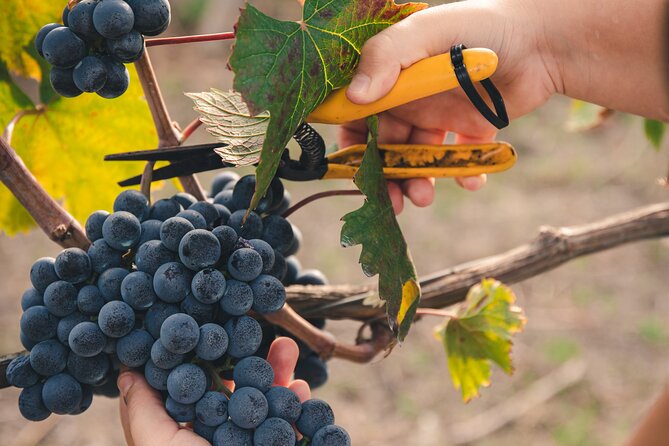
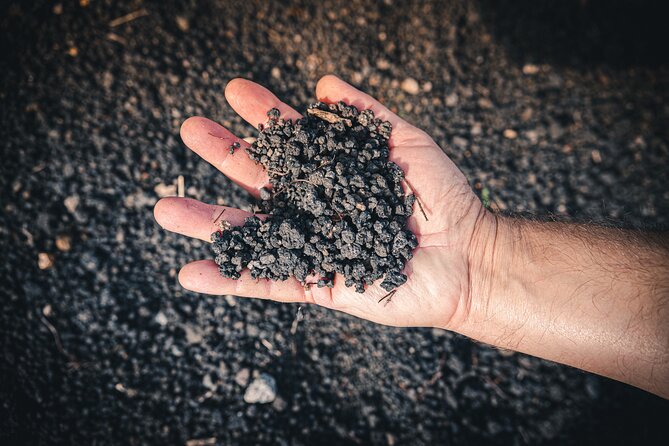
If you’re the type who likes your wine with a side of geography, this tour makes sense fast. You’re tasting in Vesuvius National Park, where the vines grow on volcanic soils at different altitudes and exposures. That matters because it changes how grapes ripen and how the final wine tastes—especially for the local styles that people come here for.
This winery is also tied to the bigger story of the area. It’s a family operation using organically cultivated vineyards, with native vines trained from ungrafted stock. That means you’re not just tasting “wine from Italy.” You’re tasting grapes that are part of this specific place.
And the vines include some names you won’t run into everywhere. You’ll hear about Aglianico, Falanghina, Piedirosso, and Caprettone—a rare vine that grows only here. If you’ve ever wondered why some local bottles feel harder to find and more distinctive, native varieties like this are a big reason.
One more practical angle: this is set up as a walk-and-taste visit, not a bus tour with rushed stops. That keeps it more personal. You can look at the vineyard, get the basic winemaking background, then eat and drink while it’s still fresh in your mind. No frantic schedule. No running. Just a focused couple of hours.
Vineyard walk and lava-stone cellar: what you’ll do on the ground
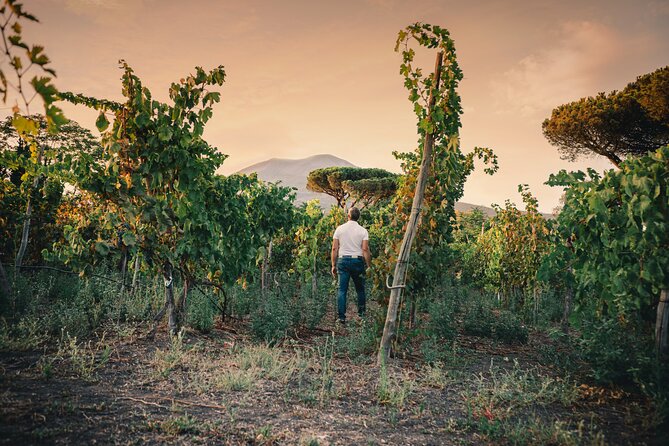
The experience is built around two main movement points: a stroll through the vineyard and a guided look at how wine becomes wine in the cellar.
First, you walk in the vineyard. This is where the tour earns its credibility. You get to see the vines where they grow—on volcanic soils with varying conditions—so the tasting doesn’t feel like a lecture in a room. Even if you don’t consider yourself a wine expert, you’ll understand why the host keeps talking about soil, exposure, and altitude.
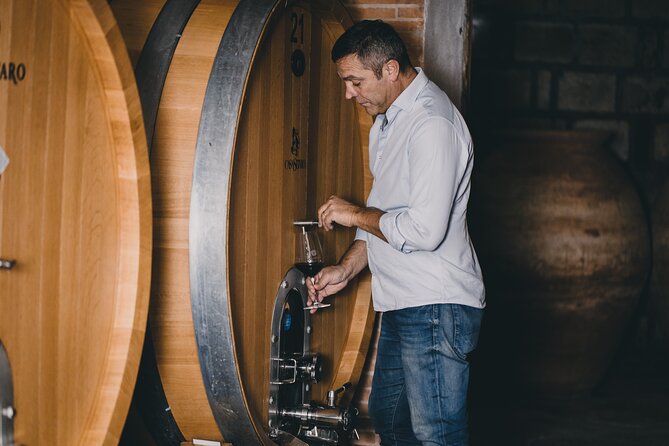
Then you step into the cellar. Here’s the detail that makes people lean in: the cellar is dug out of lava stone from the last major eruption of Mount Vesuvius. That isn’t just a cool photo fact. Volcanic rock holds temperature and humidity in a way that can make fermentation feel more stable than in a standard surface cellar. And the tour ties that physical reality to the winemaking process you’ll see explained.
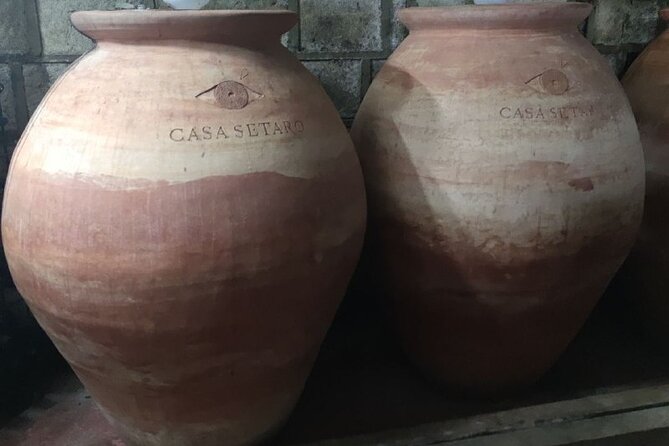
Inside, you’re shown the methods used for vinification and fermentation—specifically in large steel vats and also in amphora. That split matters because steel and amphora can lead to different flavors and textures. Even if you can’t identify every technical term, you can taste the difference during the pairing sequence.
The tour is capped at 10 travelers, so it doesn’t feel like a factory line. The host can point out things and answer questions without shouting over a crowd. Based on what you’ll experience with the guidance style of Marco, the vibe is friendly and focused, with a strong emphasis on the vineyard story and how pairings are chosen.
What you taste: 4 Lacryma Christi wines with Neapolitan dishes
The tasting portion is the heart of the value here: 4 wines (starting with rosé and moving into reds) paired with 4 Neapolitan dishes. That pairing format matters. If you’ve done tastings that are only about sipping, this one gives you a reason to pay attention to flavor balance. Food changes the way wine tastes—especially with local dishes, where the seasoning and ingredients can either amplify or flatten certain notes.
Lacryma Christi is the standout category you’ll want to track while you taste. This is the local wine identity of the Vesuvian slopes, and this tour builds the experience around it. You’ll likely notice how the rosé sets the tone—lighter, fresher—before the reds show more depth. The order from rosé to reds is a smart structure for a short tour, because it keeps your palate from getting overwhelmed.
The food side is Neapolitan, which is great if you want a taste of regional comfort rather than generic “tourist snacks.” The point isn’t fancy plating—it’s pairing food that locals actually eat with the wines grown nearby. That’s where the tour’s gastronomic angle becomes real.
Also, this is hosted in a way that connects the dots. Marco’s style, as described in participant feedback, puts extra energy into explaining the vineyard history and the thinking behind each pairing. You don’t just drink. You leave with a framework for why each pairing works.
A small planning note: with 4 wines, you’ll want to treat this like a real lunch tasting, not a quick snack. If you’re continuing your day around Pompeii, plan a slow, non-strenuous second half.
The winemaking story: organic vines, ungrafted stock, and Caprettone
Here’s what you’re really getting beyond the wine itself: a winemaking approach shaped by local conditions.
The vineyards cover 12 hectares and are organically cultivated. Organic farming isn’t automatically better, but it often pairs with a more traditional, place-focused philosophy—especially when the winery leans into native grapes and volcanic characteristics.
The grapes here are described as native varieties grown as ungrafted vines. That’s important. Ungrafted vines can be harder work and not every region keeps that tradition alive. When a winery preserves native ungrafted vines, it’s usually because the team believes those vines reflect the land in a way that’s worth maintaining.
You’ll hear about several native varieties:
- Aglianico (often associated with structure and depth)
- Falanghina (commonly linked with bright, aromatic flavors)
- Piedirosso (a local red variety)
- Caprettone (a rare and precious vine that grows only here)
Caprettone is the one that sparks curiosity. If you enjoy rare grapes, this is the part you’ll remember. It’s not the kind of grape you can simply hunt down elsewhere, so it gives this tour a unique identity.
The winery itself is built into a family house structure, with wine spaces obtained below it. That sounds like a house detail until you connect it to volcanic conditions. After the last great eruption, the volcanic rock contributes to naturally favorable temperature and humidity for winemaking. In plain terms: the cellar environment supports fermentation and storage in a steadier way than rooms designed without that rock foundation.
So when you taste your wines in the lava-stone cellar, you’re tasting more than a winemaker’s technique. You’re tasting a system: volcanic soil + native grapes + a cellar carved into rock + fermentation done in steel vats and amphora.
Price and value: what $79.94 buys you in the real world
At $79.94 per person, this isn’t the cheapest way to drink wine around Pompeii. But it’s also not priced like a high-volume tasting bar. The value comes from the combination of things included in the cost.
You’re paying for:
- A guided vineyard walk
- A guided cellar tour carved from lava stone
- 4 wines (rosé plus reds)
- 4 Neapolitan dishes paired to the wines
- A small group size (max 10), which usually means more time and interaction
The “hidden” value here is that you get context. When the host explains how volcanic soils and winemaking choices connect to what’s in your glass, the tasting feels like a learning experience instead of a transaction.
Where the price can feel less fair is in transportation. One of the downsides you’ll want to plan for is getting yourself to the winery. The tour starts at Via Cifelli, 10, Trecase, and ends back at the same meeting point. If you’re coming from Pompeii without a clear ride, you can easily spend time and money solving transport on your own. Bring a plan for that before you book.
If you already have a way to get to Trecase (or you’re traveling in a group and can share a ride), the price starts to feel more reasonable because the cost is basically covering a full guided tasting meal plus the vineyard/cellar access.
Timing, group size, and how to plan your day
This experience runs about 2 hours and starts at 12:00 pm. It’s a midday slot, which is ideal if you want a structured break in your Pompeii day. Eating and drinking earlier also reduces the risk of feeling wrecked when you’re trying to walk ruins afterward.
Group size is capped at 10 travelers. That keeps things from feeling crowded, and it usually helps with pacing. In a small group, it’s easier for the host to track your questions and for you to actually hear explanations in the cellar.
The tour ends back at the meeting point, so treat the meeting location as your anchor. If you’re using public transportation, you’ll want to confirm how you’ll return after the tasting.
One more practical point: this is a mobile ticket experience. That’s convenient, but still keep your battery charged. Vineyards and cellars are not always the best places to hunt for reception.
Finally, because the tasting includes multiple wines, think about your post-tour plans. Choose something with relaxed walking, not a marathon of stairs.
Who this tour suits best (and who should think twice)
This tour is a strong match if:
- You want a wine tasting with real place-based context, not just sipping
- You like food and wine pairings where the food is clearly local
- You’re curious about regional grapes, including rare ones like Caprettone
- You prefer small groups and an experience that stays organized over 2 hours
It’s less ideal if:
- You don’t have an easy way to reach the meeting point and winery area (transport is the main friction point)
- You want a pure sightseeing day with no food/wine component
- You need a very long, unhurried schedule—this one is structured and time-efficient
If you’re the kind of traveler who enjoys short, high-quality experiences more than big checklists, this fits your style.
Should you book this Vesuvius winery tour?
I’d book it if your priority is a guided tasting meal in a volcanic setting that connects grapes, soil, and cellar conditions. The pairing of 4 wines with 4 Neapolitan dishes, plus the vineyard-and-cellar tour, gives you a complete package for the time.
I’d pause if transport is your weak spot. Make sure you have a realistic plan from Pompeii (or your lodging) to Via Cifelli, 10, Trecase and back. Once that’s solved, the rest of the experience is straightforward.
If you’re looking for a fun, not-too-long way to taste Vesuvian wine identity and local flavors, this is the sort of tour that leaves you with something you can actually remember when you’re back home.
FAQ
What is the meeting point for the winery tour?
The meeting point is Via Cifelli, 10, 80040 Trecase NA, Italy. The tour also ends back at the meeting point.
What time does the tour start, and how long is it?
It starts at 12:00 pm and lasts approximately 2 hours.
How many wines and dishes are included?
The tasting includes 4 wines (from rosé to reds) paired with 4 Neapolitan dishes.
Is Lacryma Christi included?
Yes, the tasting includes Lacryma Christi wines paired with local delicacies.
How large is the group?
The experience has a maximum of 10 travelers.
Do I receive a mobile ticket?
Yes, the tour uses a mobile ticket.
What is the cancellation policy?
Free cancellation is available. You can cancel up to 24 hours in advance of the experience start time for a full refund. Changes within 24 hours aren’t accepted.