REVIEW · CHARLOTTESVILLE
Shenandoah National Park Self-Guided Driving Audio Tour
Book on Viator →Operated by Guide With Action · Bookable on Viator
Skyline Drive gets a lot more interesting. This self-guided driving audio tour uses your phone’s location to play stories as you roll past major overlooks and trailheads in Shenandoah National Park. I love how it turns a long ribbon of road into a clear route with real context for what you’re seeing, especially if you’re coming from the Charlottesville area.
My favorite parts are the hands-free audio and the offline-ready setup. The app plays automatically as you reach each story point, and the included offline maps help when cell service gets spotty.
One thing to consider: you still need a Shenandoah entrance pass (not included), and you’ll want solid signal only for downloading the tour before you start. Also, a few people reported playback issues when the app needed you to keep to the tour’s speed cues, so drive normally and let the audio do its job.
In This Review
- Quick hits: what makes this audio tour work
- Why a self-guided audio drive is perfect for Skyline Drive
- Price and value: $16.99 per group can add up fast
- Setup that matters: download first, then let the car handle the rest
- The route in plain English: north entrance to the end near Rockfish Gap
- Starting strong at Fort Royal and the Skyline Drive intro stops
- Dickey Ridge to Range View: trails, visitor essentials, and big-picture context
- Signal Knob to Hogback: Civil War strategy and panoramic photo stops
- Easy hikes near the overlooks: Stony Man and Limberlost for low-stress walking
- Steadier short climbs: Bearfence Mountain and Blackrock Summit for the determined
- Waterfalls and moderate treks: South River Falls and Jones Run Falls
- Dog-friendly and big elevation: Cedar Run Trail if you’re up for effort
- History-heavy stops: Rapidan Camp, Franklin Cliffs, and the human stories in the park
- Science and old industry: Crimora Lake, Turk Mountain, and the geology thread
- Ending the day: Calf Mountain sunset and Rockfish Gap’s story finish
- Practical tips so you don’t lose time (or signal)
- Should you book this Shenandoah National Park audio tour?
- FAQ
- How much does the Shenandoah National Park self-guided audio tour cost?
- How long does the tour take?
- Do I need cell service during the tour?
- What do I need besides this tour?
- What device do I need for the audio tour app?
- How do I start the audio while I’m driving?
- Can I listen through my car stereo system?
Quick hits: what makes this audio tour work
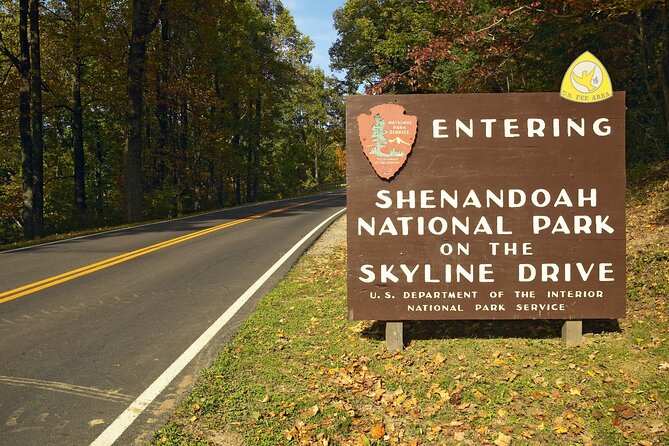
- GPS-triggered narration plays based on where your car is, so you’re not constantly tapping.
- Offline maps and downloadable audio mean you can keep going when service drops.
- One purchase per car (up to 4 people) is a strong value for families and small groups.
- Stop-for-photos flexibility: you can pause your drive style without feeling like you’re falling behind.
- History plus nature facts at overlooks like Signal Knob and Crescent Rock keeps it from being only scenery.
- A 120+ mile route with 100+ story points fits a relaxed half-day (or longer if you hike).
Why a self-guided audio drive is perfect for Skyline Drive
Shenandoah National Park is huge, and Skyline Drive alone is long enough to eat an entire day if you’re not careful. A guided tour helps, sure. But a self-guided audio route like this is often a better fit because Shenandoah rewards slowing down.
This one does two smart things. First, it keeps you moving along the park’s main spine (Skyline Drive) while still giving you permission to stop. Second, it explains what you’re looking at—history at Civil War points, and practical context at visitor centers and trailheads—so you don’t end up staring at a view and guessing the story behind it.
If you’re the kind of traveler who likes to hop out for a quick photo, stretch your legs, then get back in the car without a rigid schedule, you’ll likely enjoy this format. It’s private for just your group, and the pace is yours.
Price and value: $16.99 per group can add up fast

At $16.99 per group (up to 4 people), this tour can be cheaper than parking-and-going with a paid guide, especially if you’re traveling with a partner and one or two friends. The key value isn’t just the price tag—it’s that the tour is purchased for the car, not per person, and it’s meant to run for a 4–5 hour loop.
Also, you get lifetime access with no expiry. That matters in Shenandoah because weather and fog can change the entire experience. If you do a partial drive this trip (or you want a redo in clearer conditions), you can come back without buying again.
And yes, you’ll still need a park entrance pass, but that’s true for most Shenandoah options. The audio part is the deal here: clear storytelling attached to the route you’ll already drive.
Setup that matters: download first, then let the car handle the rest
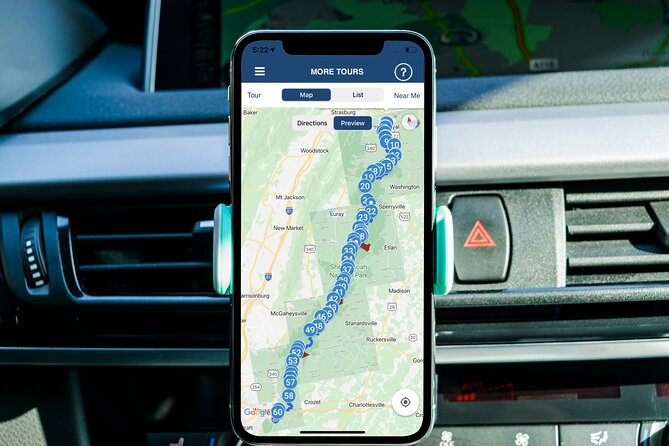
Plan your first 20 minutes like a pro and the rest of the day becomes easy.
Here’s what you should do:
- Download the tour while you’re in strong wifi or cellular.
- Then head into the park, where it’s designed to work offline after that download.
- Use the Action’s Tour Guide App on your phone, enter the password you receive by email/text, and start the tour at your chosen direction.
Audio output also matters. You can connect your phone to your car stereo using Bluetooth, USB, or AUX. It’s compatible with Apple CarPlay, with Android Auto support coming. If you plan to walk a lot at overlooks and trails, headphones can help too.
A practical tip from real-world use: if you’re trying to start right at the entrance but the download isn’t ready, you lose time inside the park when signal is unreliable. Download before you enter so you’re not doing tech troubleshooting while your group’s hangry.
The route in plain English: north entrance to the end near Rockfish Gap

This tour is built for Skyline Drive and runs about 120+ miles. Typical time is 4 to 5 hours, but the real range depends on how often you jump out, take photos, or do short hikes.
Your drive follows a north-to-south arc:
- You start at the park’s north entrance near Fort Royal.
- Then you move along Skyline Drive past major overlooks and trail access points.
- Your southbound tour crosses Rockfish Gap, finishing just beyond the gap at the southern end of Skyline Drive.
One nice thing: you don’t have to start at the same time every day. You can start anytime, pause anytime, and resume later. So you can do a relaxed morning loop, take a break, and finish in the afternoon—without feeling trapped by a group tour clock.
Starting strong at Fort Royal and the Skyline Drive intro stops

When you first get into the rhythm of Skyline Drive, the audio helps you get oriented fast. Instead of wandering from pullout to pullout with only signage, you’ll get a narrative thread that connects views to the people and events tied to them.
A great early anchor on this route is Crescent Rock Overlook at about 3,550 feet. The audio points out why it’s a standout: it faces due west, so it’s a strong sunset candidate. It also connects the spot to religious revival services from earlier times, which changes how you see the view—you’re not just looking down a valley; you’re looking through layers of time.
This early part of the day also sets you up for the kind of stops you’ll get later: overlooks with stories, trailheads with context, and visitor-area stops where the facts are useful even if you’re only staying out for 10 minutes.
Dickey Ridge to Range View: trails, visitor essentials, and big-picture context

Once you hit the middle of the drive, Shenandoah starts to feel like a place you can actually explore, not just pass through. The tour builds in that feeling with trail access and visitor support points.
At Dickey Ridge Visitor Center, you can pick up what you need: maps, snacks, and park info. It’s also where the Fox Hollow Trailhead begins. That matters because many visitors want to stretch their legs but don’t want to hunt for details.
Fox Hollow Trail is one of Shenandoah’s popular short walks, roughly a mile. The audio adds a layer that’s easy to miss otherwise: the route passes the Fox family cemetery, dating back to the early 1800s. Even if you’re not a history person, that cemetery detail is exactly the kind of “oh wow” moment that makes a short hike feel meaningful.
Next up, you’ll spend time around major overlooks like Hogwallow Flats Overlook and Range View Overlook. Hogwallow Flats gives you a sense of geologic scale: the audio explains monadnocks and notes they’re older than the nearby Blue Ridge Mountains. It also brings in information about the Six Nations who once occupied the territory.
At Range View Overlook, the emphasis shifts from geology to storytelling about the origins of the Appalachian Trail—why it became the nation’s most famous thru-hike. Even if you don’t plan to hike the AT, this is a helpful framing that connects Shenandoah to the wider trail world.
If you’re deciding whether to stop or keep driving, these segments are the sweet spot. They deliver enough to make the pullout worthwhile, without requiring you to commit to a long hike.
Signal Knob to Hogback: Civil War strategy and panoramic photo stops
Some overlooks are famous for views. A few are famous because the view mattered to people in conflict. Signal Knob Overlook is one of those. The audio notes that it had strategic importance for both the Union and Confederacy during the Civil War. That gives you something fresh to watch for: you’ll start imagining lines of sight and approach routes instead of just scanning for the prettiest angle.
Then you’ll move toward sweeping viewpoints like Hogback Overlook, described as the longest overlook in the park—ideal if you want a full panoramic frame for photos. The audio also shifts into Iroquois-related information, including sports and wars. The point isn’t to turn the view into a lecture; it’s to make sure you know this area has always had people, not just scenery.
A few other stops in this stretch keep the day varied:
- Bacon Hollow Overlook: paired mountain views (Flattop and Brokenback) plus Civil War history.
- Swift Run Overlook: a birdwatching-oriented stop where the audio talks about spotting Shenandoah birds.
- The Point Overlook: Blue Ridge and Shenandoah Valley views plus history tied to Elkton, including its connection to the first permanent European settler in the valley.
This is also a good time to remember a practical reality: fog can swallow views early in the day. If your first attempt at a pullout feels underwhelming, that’s not your fault. Wait 30–60 minutes and check again. Shenandoah weather can clear up and suddenly make every overlook worth the parking spot.
Easy hikes near the overlooks: Stony Man and Limberlost for low-stress walking

If your group wants to stretch without burning half the day, two stops are built for that.
Stony Man Overlook has an easy, roughly one-mile trail. It’s a family-friendly choice and a strong option when you want tremendous views without steep climbing. Keep the camera ready because the payoff is on the walk, not only at the destination.
Limberlost Trail is another easy win. It’s about a 1.2-mile loop with almost no elevation change, built along a boardwalk. The audio adds educational plaques along the way, so the experience works even when you don’t want to rely only on your phone. If you’re traveling with anyone who gets tired on climbs, this is one of the easiest ways to still feel like you used your time wisely in the park.
Steadier short climbs: Bearfence Mountain and Blackrock Summit for the determined
Not every hike here is gentle. Two short trails pack serious effort.
Bearfence Mountain Trail is about a mile but described as a steep, gravelly scramble. This is for ambitious hikers who don’t mind uneven footing and a stronger burn. The payoff is at the top with views the audio frames as worth the climb.
Blackrock Summit Trail is shorter and heads to a rocky viewpoint. Here’s the cool part: the trail follows part of the Appalachian Trail, which gives you a direct feel for the larger thru-hike story that you’ll also hear about at other overlooks. Even if you’re not hiking far, it connects Shenandoah’s road route to the famous long-distance trail network.
If you’re deciding what to do, ask yourself one question: do you want your day to feel like mostly driving with side stops, or do you want at least one “work for it” moment? These two trails are your answer.
Waterfalls and moderate treks: South River Falls and Jones Run Falls
If you want more than views, the tour gives you waterfall options, and they’re perfect for a reset break.
South River Falls Trail is a moderate trek of about 4.6 miles and includes an 83-foot waterfall. The audio also leans into birdwatching as you hike, and it notes dogs are welcome. If you’re traveling with a pup and still want a real hike, this one is built for that situation.
Jones Run Falls Trail is another gorgeous hike with waterfall payoff. It’s also known for hidden swimming holes, so keep an eye out as you walk if you like to explore water features.
These aren’t quick 10-minute strolls, so I’d treat them as half-day commitments. That said, waterfall hikes can make a Skyline Drive day feel like more than a scenic drive through a park you only “watched.”
Dog-friendly and big elevation: Cedar Run Trail if you’re up for effort
For dog lovers, the tour includes Cedar Run Trail, which is dog-friendly. The catch is the effort: it’s about 5.8 miles with roughly 2,700 feet of elevation gain. The audio framing makes it clear this is primarily for experienced hikers.
So if you’re bringing a dog and you’re feeling strong, it’s a great option. If you’re not, you’re better off choosing one of the easier hikes earlier in the day, because Shenandoah can be deceptive—short distance doesn’t always mean easy legs.
History-heavy stops: Rapidan Camp, Franklin Cliffs, and the human stories in the park
One of the main reasons people enjoy this tour is that the narration doesn’t treat the park like it was empty before the overlooks were built. It keeps pulling in the people behind the landscape—Civil War strategy, early European settlement, and historic sites in the park.
A standout is Rapidan Camp, also called Camp Hoover, built by U.S. President Herbert Hoover and Lou Henry Hoover. It served as their rustic retreat during Hoover’s administration from 1929 to 1933. If you’re the type who likes to connect presidents and ordinary places, this stop gives you that.
Franklin Cliffs Overlook offers glimpses of Stanley and links the town’s story back to the 1700s. The Oaks Overlook is a different style of history: it contrasts wilderness and surrounding farmland, and it introduces Miriam M. Sizer, an anthropologist tasked with studying regional people almost 100 years ago.
You’ll also hear about settlement and geography at places like The Point Overlook near Elkton, and the audio connects Moormans River Overlook to multiple named mountain ridges and the nearby Charlottesville Reservoir. It even notes how the Moormans River is known for frequently overflowing its banks and affecting the surrounding land.
Science and old industry: Crimora Lake, Turk Mountain, and the geology thread
Shenandoah isn’t only about big views. Some of the most interesting moments are when the audio explains what’s underneath your feet.
Crimora Lake Overlook sits near 3,000 feet and points you toward Wildcat Ridge and dark waters. The audio also connects the lake to industrial use in the 1800s, including manganese mining remnants you can still see.
Turk Mountain Overlook centers on quartzite-covered peaks and a named family whose identity is partly lost to time. It’s brief, but it makes the area feel less like a generic scenic stop and more like a real place with real names attached.
If you like geologic context, this tour’s rhythm helps. You’ll get geology, then history, then birds or trails, so you don’t get bored staring at only one type of fact.
Ending the day: Calf Mountain sunset and Rockfish Gap’s story finish
As your Skyline Drive day winds down, the audio keeps you pointed at what’s worth your time at the end of the day.
Calf Mountain Overlook is famous for sunset views and is positioned as one of the last stops. The logic is simple: you’ll be high enough and far enough along the drive that the horizon does its job. The audio sets expectations so you can arrive, get your photo, and avoid rushing.
Finally comes Rockfish Gap—an important passage into the mountains. The narration adds history here too, including the so-called Paul Revere of the South and how Rockfish Gap connects to his story and to Thomas Jefferson. It’s a strong final note because it brings the drive back to people, not just peaks.
Practical tips so you don’t lose time (or signal)
Here are the small things that tend to make a big difference in Shenandoah:
- Fill up before you enter. One helpful comment from real usage was to go in with a full tank, because spacing between stops can make it annoying to plan on the fly.
- Download before you drive. Offline is the point, but download time depends on decent connectivity.
- Keep normal driving speed so the audio can track location cues.
- If fog hides views, don’t judge the overlook too quickly. Wait a bit and check again.
Should you book this Shenandoah National Park audio tour?
Book it if you want:
- A self-paced Skyline Drive day that still has structure.
- History plus nature context attached to each overlook and trailhead.
- A cost-friendly option for a car group, since it’s per group up to 4.
Skip it (or at least go in with lower expectations) if:
- You want a purely flora-and-fauna-focused interpretive experience. The audio includes wildlife and birdwatching, but if you’re hunting detailed plant and animal ID, you might want additional on-site materials.
- You hate tech setup. This works best when you download first and connect audio properly in the car.
FAQ
How much does the Shenandoah National Park self-guided audio tour cost?
It costs $16.99 per group, up to 4 people.
How long does the tour take?
Plan for about 4 to 5 hours to complete the full route.
Do I need cell service during the tour?
No. The tour includes offline maps and works after you download it, so inconsistent service inside the park shouldn’t stop playback.
What do I need besides this tour?
You need a Shenandoah National Park entrance pass, and it is not included with the tour.
What device do I need for the audio tour app?
The guide recommends an iPhone with iOS 15 or later, an Android device version 9 or later, or an iPad/tablet with GPS and cellular connectivity.
How do I start the audio while I’m driving?
After you arrive, open the Action’s audio tour guide app on-site, enter the password from your email/text, then start at the first story point. Audio begins automatically and continues hands-free.
Can I listen through my car stereo system?
Yes. You can connect your phone to the car stereo using Bluetooth, USB, or AUX. Audio playback is compatible with Apple CarPlay.