REVIEW · DEATH VALLEY NATIONAL PARK
Self-Guided Audio Driving Tour in Death Valley National Park
Book on Viator →Operated by GuideAlong (GyPSy Guide) · Bookable on Viator
Death Valley can feel like another planet, and this GPS-triggered audio driving tour is a smart way to experience it at your own pace. You drive your route, and the commentary cues itself as you move, so you can spend more time where you’re actually interested.
I really like the value of one low price per vehicle (up to 8 people), plus the fact that the tour is built around practical directions, stories, and tips. The main drawback to plan for is heat and distance: some of the best stops need real driving time, and the dunes especially demand water and caution.
In This Review
- Key Points I’d Focus On
- Why Death Valley Loves a Self-Drive Audio Format
- Price and Value: $19.99 Per Group Actually Makes Sense
- Offline Audio That Works When Cell Service Doesn’t
- How Long Should Your Death Valley Day Be?
- Stop-by-Stop: What You’ll See and How to Use the Time
- Stop 1: Death Valley National Park
- Stop 2: Artist’s Palette (Artist’s Drive detour)
- Stop 3: Badwater Basin (lowest point in North America)
- Stop 4: Dante’s View (the 13-mile side trip with big elevation payoff)
- Stop 5: Devil’s Golf Course (salt crystals that change with temperature)
- Stop 6: Father Crowley Vista Point (western side panorama)
- Stop 7: Mesquite Flat Sand Dunes (wind shapes, scalding sand)
- Stop 8: Ubehebe Crater (remote roads and optional extensions)
- Stop 9: Zabriskie Point (famous badlands views and easy hikes)
- Practical Tips: Heat, Water, Charging, and Photo Timing
- Who Should Book This Audio Driving Tour?
- Should You Book This Death Valley Audio Driving Tour?
- FAQ
- How much does the Death Valley self-guided audio driving tour cost?
- How long is the tour?
- Does the audio require cell service during the drive?
- Is the audio triggered by where I am?
- Can I start and end anywhere along the route?
- What is included in the tour?
- Do I need a National Park pass?
- What should I bring for the drive?
- Can I cancel for a refund if my plans change?
Key Points I’d Focus On
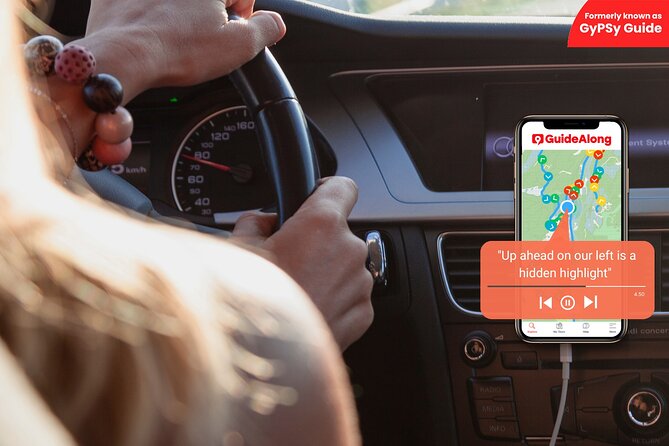
- GPS location-based audio that plays automatically as you reach each viewpoint
- 220+ points of stories, tips, and directions across major Death Valley stops
- Offline-ready after you download on Wi‑Fi or cellular
- One purchase covers everyone in your vehicle (up to 8 people)
- Flexible route pacing: stop for photos, skip what you want, and resume later
- Includes big-name hits like Badwater Basin, Dante’s View, Zabriskie Point, and Devil’s Golf Course
Why Death Valley Loves a Self-Drive Audio Format
Death Valley is huge, low, and full of sharp changes in elevation. That makes it ideal for a tour where your phone listens to where you are and then tells you what you’re looking at next. With location-based autoplay, you’re not trapped in a rigid order. You can go with the flow of the road, linger at a viewpoint, and then move on when you’re ready.
The best part is that the narration doesn’t just label places. It helps you understand what’s going on there, and that turns quick pull-offs into real moments. Badwater Basin is more than a sign. A salt flat and a small pool can suddenly make sense once you hear what rare rain events do and why the water is undrinkable.
Price and Value: $19.99 Per Group Actually Makes Sense
This tour costs $19.99 per group (up to 8 people) and you can use it all day, from about 8 to 16 hours depending on how many stops you add. That’s the big value story here: instead of paying per person, you’re paying for the experience once per vehicle.
Also, the tour starts with the most important question: what do you need to see. It includes major stops that many visitors aim for in one trip, so you’re not paying just for navigation. You’re paying for guided context on the drive itself—practical and photo-friendly.
One cost consideration: a National Park pass is not included. The info lists optional National Park passes at $30 per vehicle (prices can vary by stay length, ages, and group size). So your total cost depends on whether you already have a pass.
Offline Audio That Works When Cell Service Doesn’t
Death Valley is famous for long stretches where your phone might struggle. This tour is designed around that reality.
Here’s how to set yourself up:
- Download the tour on the GuideAlong app ahead of time (over Wi‑Fi or cellular).
- Sign in using your Apple or Google account and redeem your voucher code.
- Once downloaded, the audio works offline, so you can relax and keep driving without losing the narration.
I’d also bring a car USB charger and make sure your phone is fully charged before you roll out. Location-based audio is simple, but it still needs a powered device.
Tip: in the app, you can preview start locations and the trip planner. If you’re the type who likes to plan your stops around daylight and photo timing, this preview helps you decide where to spend your time first.
How Long Should Your Death Valley Day Be?
The tour runs roughly 8 to 16 hours. That range matters because Death Valley isn’t a “hit every stop and still feel relaxed” place.
If you want a lighter day, focus on the big viewpoints near the main roads:
- Artist’s Palette
- Badwater Basin
- Dante’s View
- Devil’s Golf Course
- Father Crowley Vista Point
- Zabriskie Point
If you’re building a full adventure, add:
- Mesquite Flat Sand Dunes
- Ubehebe Crater (and the remote roads in that direction)
The audio is flexible, so you can start when you want and pause when you need a break. It’s also listed as running 12:00 AM to 11:59 PM within the active date range, which gives you options for early starts or late-day color.
Stop-by-Stop: What You’ll See and How to Use the Time
Stop 1: Death Valley National Park
This is your main entry point into the park drive experience. Death Valley is the hottest, driest, and lowest national park in the country, and it’s also the largest in the contiguous U.S. That combination is exactly why this works so well as an audio road trip: the narration helps you connect what you’re seeing to why it’s happening here.
Even if you only spend a short time at the first area, it sets the stage. You’ll learn the “rules” of this place: extreme dryness, big elevation swings, and a lot of geology packed into a relatively small driving region.
Time to budget: enough to get settled and start listening before you hit the famous turnoffs.
Stop 2: Artist’s Palette (Artist’s Drive detour)
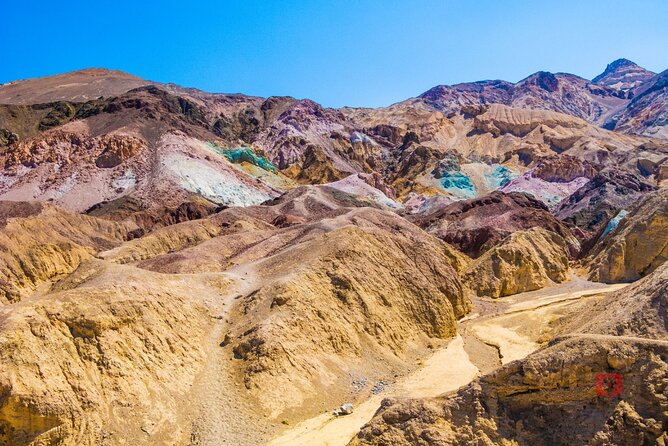
Artist’s Palette is one of those “keep pulling over for just one more photo” spots. The road is described as narrow and one-way, with a zig-zag feel off Badwater Road. You’ll see multicolored rock mounds in repeating bands.
The colors can look almost candy-like: coppery green, terra-cotta yellow, brick red, and pink. The audio helps you understand that this is a mineral story—pigments come from different mineral deposits.
Two practical notes:
- The road is tight, so park with care and don’t block traffic.
- It’s photo-heavy, so expect you’ll want more time than you planned.
Time to budget: about 30 minutes if you’re moving; plan longer if photography is your thing.
Stop 3: Badwater Basin (lowest point in North America)
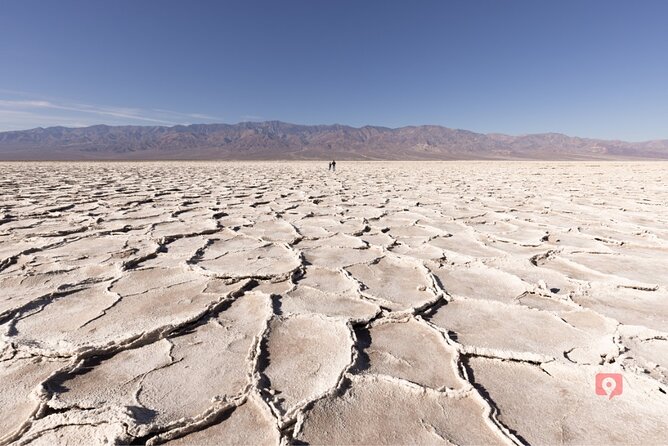
This is the classic “stand here” stop. Badwater Basin is 282 feet below sea level and is a large salt flat. Beside the road, there’s a small natural pool of undrinkable water.
The key detail to listen for is how it changes. After rare rain events, you may see more standing water, but it evaporates quickly and leaves patterned salt flats behind. That turns the area into a living geology lesson rather than a static postcard.
Time to budget: about 30 minutes. You can walk a bit, take photos, and still keep the day moving.
Stop 4: Dante’s View (the 13-mile side trip with big elevation payoff)
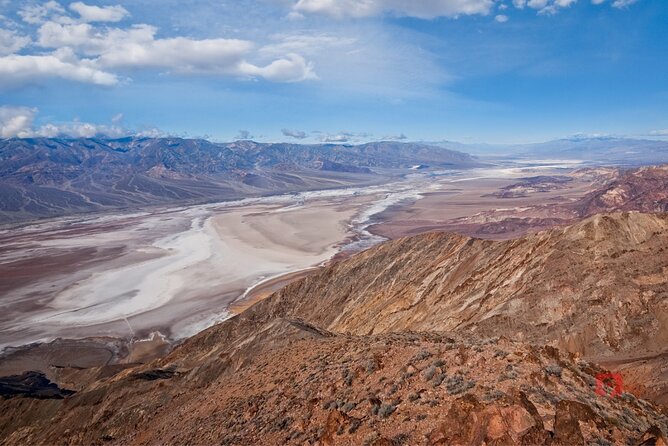
Dante’s View is the kind of stop you’ll feel glad you didn’t skip. It’s reached via a 13-mile side trip and sits at just over 5,000 feet elevation. The payoff is looking down into Badwater Basin while also seeing the Panamint Mountains rise to peaks of over 11,000 feet.
On a perfect day, the info even points out that you can spot Mount Whitney at 14,505 feet from this viewpoint. Whether you see it or not, the main value is that you’re absorbing how quickly elevation changes in this region.
Time to budget: about 20 minutes. This is usually enough for a slow look, a few photos, and a couple of audio points.
Stop 5: Devil’s Golf Course (salt crystals that change with temperature)
Devil’s Golf Course is a vast area of giant salt crystals that expand and shrink as temperatures shift. If you listen closely, you might even hear the crystals popping.
This stop is worth your time because the visuals can feel strange even to first-timers. But with the audio context, it’s easier to connect the heat, the salt, and the way the surface responds.
Time to budget: about 30 minutes. Keep your walk short and purposeful; the area is exposed.
Stop 6: Father Crowley Vista Point (western side panorama)
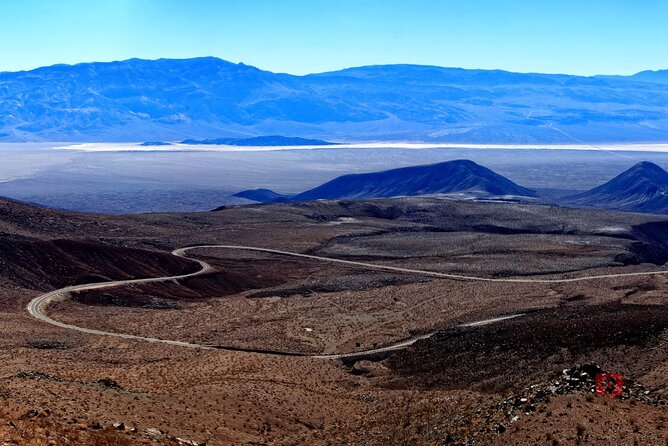
If you arrive from certain angles, Father Crowley Vista Point may feel like the “big view” you were waiting for. It’s described as perhaps the best panorama across Death Valley on the western side of the park.
From here, you can also glimpse Rainbow Canyon to the north, and you’ll see prominent red oxidized volcanic rockfields. The audio adds the human story too: Father Crowley was an Irish Catholic priest called the Padre of the Desert, serving local communities in the first half of the twentieth century.
This stop is great for two things:
- Orientation: you get a mental map of where you are.
- Context: you learn why this rock looks the way it does.
Time to budget: about 30 minutes.
Stop 7: Mesquite Flat Sand Dunes (wind shapes, scalding sand)
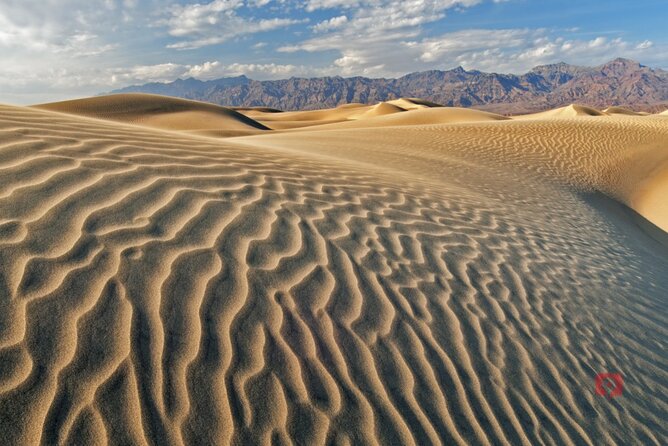
Death Valley has dunes, which already sounds like a joke until you see them. Mesquite Flat Sand Dunes have zero foliage, and the dunes change shapes in the wind. That shifting surface makes the place feel alive, even though nothing grows there.
The practical warning is important: the sand can be scalding hot, and you should be very careful about venturing too far without enough water—especially in peak heat.
Time to budget: about 1 hour. I’d use part of that for slow walking close to the safer edges and part for photos from pull-offs.
Stop 8: Ubehebe Crater (remote roads and optional extensions)
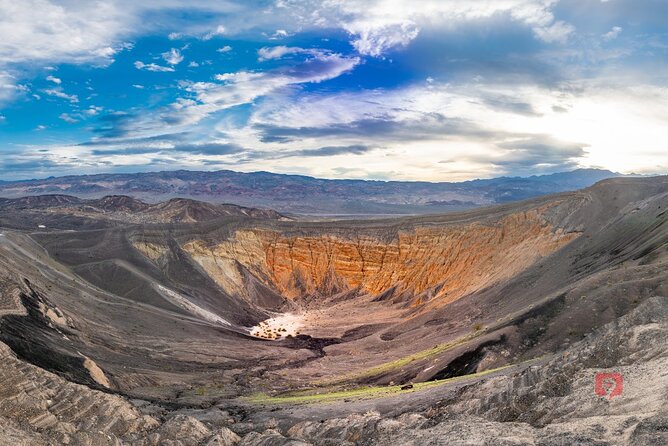
Ubehebe Crater is in the remote northern corner of the park. Plan on driving an hour or more on an unpaved road to get there. The info also notes that commentary won’t cover every stretch of road, so don’t expect narration for the full journey.
What makes Ubehebe worth it is the crater origin story. It’s described as one of a dozen craters formed when groundwater met hot magma, creating explosive activity.
You’ll also see how this area connects to other ambitious plans:
- Going further requires a strong will and an appropriate 4×4 to reach Racetrack Playa, famous for moving 600-pound boulders.
- Scotty’s Castle is also mentioned nearby as a remote ranch, but you’re told to check the current pre-booking requirement and road status before attempting it.
This is the stop you add if you want a real “we went out there” feeling.
Time to budget: about 2 hours.
Stop 9: Zabriskie Point (famous badlands views and easy hikes)
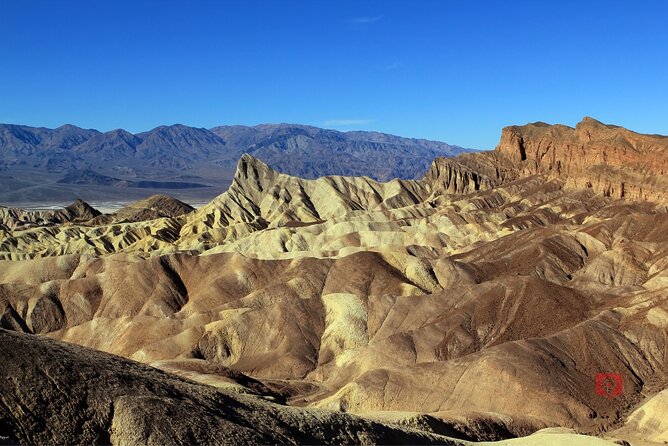
Zabriskie Point is one of the park’s most famous viewpoints. The views stretch over badlands with colors and contours that change with the sun. That’s a nice reminder that Death Valley isn’t only about “seeing the famous spot.” It’s about seeing how light plays across the terrain.
The tour info also notes a hiking option: a 3.5-mile trek to Golden Canyon. If you want a little exercise, this is a good place to fit it in.
Time to budget: about 30 minutes if you’re mostly viewing, longer if you hike.
Practical Tips: Heat, Water, Charging, and Photo Timing
Death Valley isn’t hard because of complicated trails. It’s hard because of the environment. Your best tools are planning and common sense.
- Bring plenty of water, especially for Mesquite Flat Sand Dunes. The info explicitly warns that sand can be scalding hot and you shouldn’t wander far without water.
- Bring a car charger and keep your phone battery high.
- Use short time windows. Many stops are built around pull-offs or short walks. If you try to do everything too quickly, you’ll just feel rushed.
- Don’t assume commentary covers every road segment. Ubehebe is specifically called out as having limited commentary on the approach road.
- Be realistic about remote diversions. Racetrack Playa and Scotty’s Castle come with conditions like road status and, for Racetrack Playa, the need for an appropriate 4×4.
If you plan your day around these points, the audio tour becomes stress-free.
Who Should Book This Audio Driving Tour?
This is a great match if you:
- Prefer the freedom of starting and stopping on your own schedule
- Want guided context without spending time coordinating with a group
- Like road trips and want your phone to do the “where am I?” work using GPS
It’s also ideal for groups in one vehicle because the price is per group, not per person.
You might want a different style of tour if you:
- Don’t plan to drive much (because some of the best stops require actual driving time)
- Don’t want to manage phone charging and audio setup
- Are uncomfortable with exposure in hot desert conditions
Should You Book This Death Valley Audio Driving Tour?
I think you should book this if you want iconic viewpoints with storytelling, but without committing to a strict schedule. The GPS-triggered autoplay, the offline download, and the one purchase per vehicle pricing make it practical value. And the stop mix gives you both the famous hits (Badwater, Zabriskie, Dante’s View) and the “real effort” option (Ubehebe Crater).
Skip it only if you strongly prefer a live guide who can adapt on the spot, or if you don’t want to handle the basics of phone audio and desert timing.
FAQ
How much does the Death Valley self-guided audio driving tour cost?
It costs $19.99 per group (up to 8 people).
How long is the tour?
The duration is listed as about 8 to 16 hours, depending on how you pace your stops.
Does the audio require cell service during the drive?
No. After you download the tour ahead of time in the GuideAlong app, it works offline and does not require internet or cell service while driving.
Is the audio triggered by where I am?
Yes. The commentary plays automatically based on your GPS location, so it cues stories and tips as you reach stops.
Can I start and end anywhere along the route?
You have flexibility because commentary is location-based. The start and end are listed as anywhere along the tour route.
What is included in the tour?
The tour includes the GuideAlong (GyPSy Guide) audio tour with 220+ points, location-based stories, suggested routes, and trip planning tools (in-app, web, and PDF).
Do I need a National Park pass?
A National Park pass is optional and not included. The info lists $30 per vehicle, varying depending on length of stay, ages, and group size.
What should I bring for the drive?
You should bring a charger (USB car charger is suggested) and make sure your phone is fully charged. For the dunes, the info also warns to carry ample water.
Can I cancel for a refund if my plans change?
Yes. You can cancel for a full refund up to 24 hours before the experience’s start time. If you cancel less than 24 hours before, the amount paid is not refunded.