REVIEW · UVA PROVINCE
Lunugamvehera National Park Private Safari
Book on Viator →Operated by Travceylon Leisure · Bookable on Viator
An elephant corridor you can actually drive through. Lunugamvehera National Park is built for spotting wildlife in motion, especially elephants traveling between Yala and Udawalawe, and it also supports water birds thanks to its reservoir catchment system. I love the 4×4 game-vehicle format because it gets you onto the right terrain quickly, and I also like the small, max-6 passenger setup that keeps things calm. One thing to keep expectations realistic: leopards and other big cats can be hit-or-miss, and your sightings depend a lot on the day and timing.
This is a simple, focused safari: you go in for about 3 hours, stay close to the park entrance area on the A2, and come back to where you started. You’ll get pickup and drop-off if you’re within 5 km of the park gate, plus a water bottle, but food and entrance fees for jeep-only bookings are on you.
Key points at a glance
- Elephant corridor focus: a dry-zone route linking Yala and Udawalawe during drought season
- 14% underwater terrain: part of the park sits under water, which helps attract birds and wildlife
- Small 4×4 jeeps: up to 6 passengers per jeep for a more relaxed search
- Experienced driver/guide: your driver also acts as a tracker in the vehicle
- Wildlife variety: elephants, crocodiles, birds, and more are realistic targets
- Good-weather dependent: the experience may be rescheduled or refunded if weather turns
In This Review
- Why Lunugamvehera Works for Wildlife (Not Just a Checklist)
- The 3-Hour Plan: What You’ll Actually Do
- Your 4×4 Safari Jeep: Logistics That Affect Comfort
- Inside the Park: Reservoir Terrain and the Elephant Corridor
- What You Can Expect to See in Real Life
- How to Maximize Your Chances (Without Overthinking It)
- Price and Value: Is $47.50 Worth It?
- Who This Safari Fits Best (And Who Might Want Another Option)
- A Few Practical Tips Before You Go
- Should You Book This Private Lunugamvehera Safari?
- FAQ
- How long is the Lunugamvehera National Park private safari?
- Is the park entrance fee included?
- What kind of vehicle do you use?
- Do you offer pickup and drop-off?
- Is the tour private?
- What’s included in the price besides the safari?
- Are food and drinks included?
- What happens if the weather is poor?
- Can I cancel for a full refund?
Why Lunugamvehera Works for Wildlife (Not Just a Checklist)
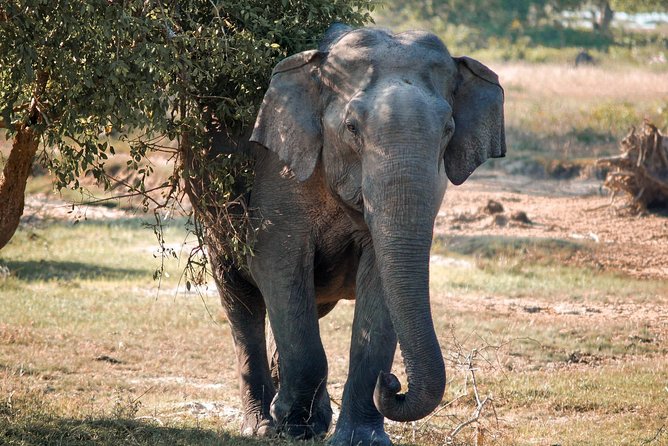
Lunugamvehera National Park isn’t famous only because of elephants. It was created in 1995 to protect the catchment area of the Lunugamvehera reservoir and the wider wildlife of the region. That matters because water management directly shapes what animals can live there year-round.
Here’s the clever part: the park sits in Sri Lanka’s southern dry zone, between Yala National Park and Udawalawe National Park. During drought season, Lunugamvehera acts as a migration corridor for elephants moving between those bigger parks. When elephants move, everything around them shifts too—birds gather, predators adjust, and the whole landscape feels alive.
The 3-Hour Plan: What You’ll Actually Do
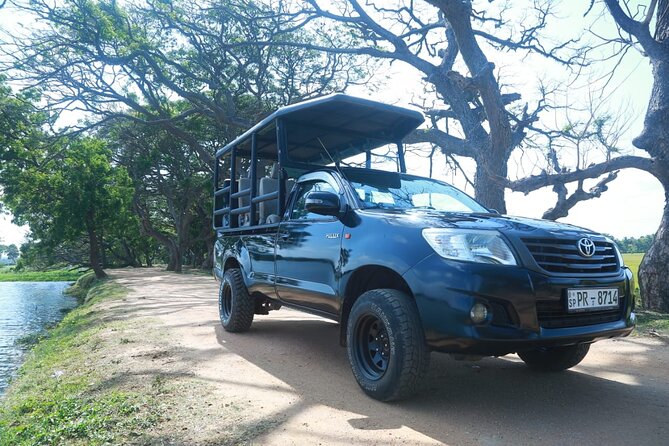
Your safari is about 3 hours, and it’s structured around one main stop: going into Lunugamvehera National Park and driving a circuit in a multi-terrain 4WD game vehicle. The tour is private in the sense that it’s just your group participating, but your jeep still caps at 6 passengers, so you don’t get crushed into a large crowd.
This format is great if you don’t want an all-day drive. It also gives you a window where you can be flexible—your driver/guide can adjust the route when sightings happen. The park is large (about 22,000 hectares), and when wildlife turns up, minutes matter.
Your 4×4 Safari Jeep: Logistics That Affect Comfort
You’ll ride in a 4×4 safari jeep with a maximum of six people per jeep. That small size changes the feel immediately: you can spread out a bit, scan better, and you’re less likely to miss something because of someone’s head in your line of sight.
Two practical notes from the way this safari is set up:
- You get a water bottle per person, but food and beverages aren’t included. If you get thirsty or hungry easily, bring a snack that fits your day.
- Entrance fees for jeep-only bookings aren’t included and are paid in cash. This is normal for some park entry setups, but it’s one reason I always budget a little extra.
Pickup and drop-off are also very location-dependent. If you’re within 5 km of the park gate, pickup/drop-off is free. Outside that radius, you’ll likely need to arrange your own transport to get to the entrance.
Inside the Park: Reservoir Terrain and the Elephant Corridor
Lunugamvehera includes the Lunugamvehera reservoir and two other reservoirs. That’s not just geography trivia. The park protects the catchment area that helps maintain water levels in downstream systems, including five tanks connected through Kirindi Oya, and wetland characteristics linked to Bundala National Park.
Also, more of the park than you’d guess is water-influenced. The park has over 14% underwater, and that changes how wildlife uses the space. Birds tend to concentrate where water stays available, while elephants may move based on both water and forage.
The key wildlife logic you should keep in mind: the main portion of the park functions as an elephant corridor during the drought season. That means you’re not just waiting for animals to appear in random places. You’re driving through a route animals actually use.
What You Can Expect to See in Real Life
Let’s talk targets, based on what people have actually reported here. Elephants are a consistent highlight, especially when they’re traveling through the corridor. In past safaris, sightings have also included crocodiles, plus a mix of mammals such as buffalo, spotted deer, jackals, and rare birds and tortoises.
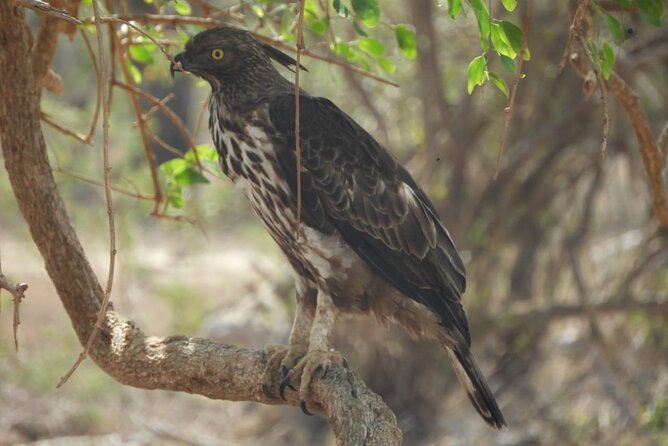
Bird lovers get plenty to do too. Guests have reported storks, eagles, kingfishers, hornbills, peacock, and other water and woodland species. When the park is calm and the jeep isn’t crowded, bird spotting becomes its own mini-adventure—quiet scanning, sudden wing flashes, and short moments where the whole vehicle pauses.
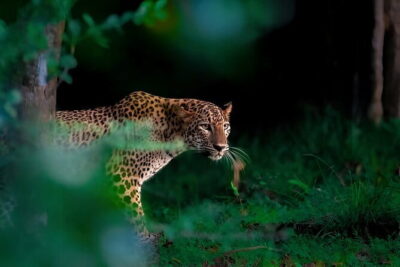
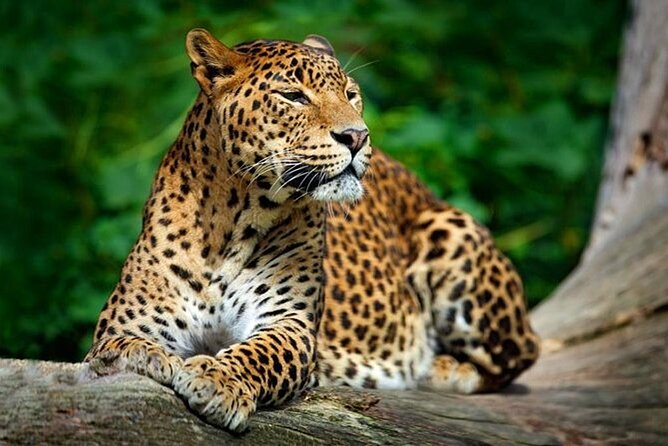
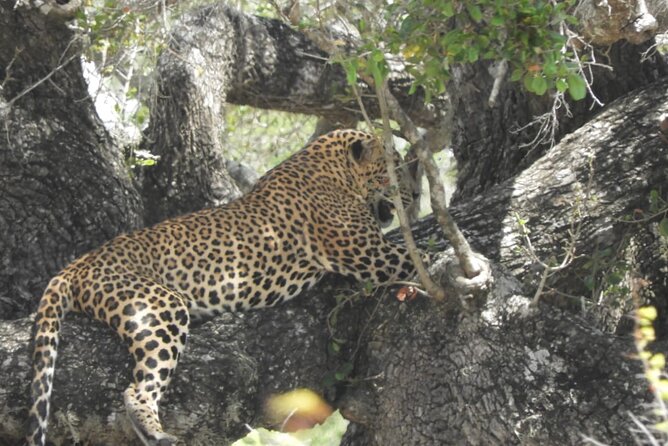
Big cat sightings are possible but not guaranteed. One helpful reality check from within the park: some people didn’t see leopard even though there are leopards in the area. That doesn’t mean your chances are zero—just that you shouldn’t plan your day around a single species.
How to Maximize Your Chances (Without Overthinking It)
A short safari can feel stressful if you try to control everything. I prefer a simpler approach: let your driver/guide do the heavy lifting and give yourself the right habits for spotting.
Here’s how to play it smart for Lunugamvehera:
- Be ready to scan fast. On a 3-hour loop, action can appear and vanish.
- Stay flexible with where you look. If elephants are moving, concentrate around the routes and water edges that support them.
- Expect wildlife to be spread out. The park is huge, and even with good spotting, sightings can come in clusters.
- Keep noise down. You’re in a vehicle on animal time. Sudden excitement can ruin your ability to notice subtle cues.
If you’re hoping for reptiles and birds, remember the park includes water-influenced zones and reservoir terrain. Those areas often reward patient looking rather than frantic searching.
Price and Value: Is $47.50 Worth It?
At $47.50 per person, this private safari is positioned as a budget-friendly way to get into a less-overcrowded park experience. The value comes from a few things that matter on the ground: the 4×4 vehicle, the experienced driver/tracker, and the small up-to-6 jeep size.
What makes the pricing feel reasonable is that you’re paying for time in the park with a guide who can respond to sightings. A longer safari might cost more, but here you’re getting a tight, practical window—about three hours—without paying for a full day of transport.
What can affect your final cost:
- Jeep-only entrance fees paid in cash
- Food and drinks, since those aren’t included
- Transport to the gate if you’re outside the free pickup/drop-off radius
Even with those extras, this can still pencil out well if you’d rather spend your day inside the park than stuck in long transit.
Who This Safari Fits Best (And Who Might Want Another Option)
This is a strong fit if you:
- Want a focused, half-to-three-quarter day wildlife outing
- Prefer a small vehicle over large group tours
- Care about elephants moving through a real corridor, not just random animal sightings
- Like birds and wetland-associated species as much as mammals
You might reconsider if you need guaranteed leopard sightings. Even when leopards are present, conditions and chance influence whether you see one in a short window.
Also, the tour notes moderate physical fitness is recommended. You’re not doing hiking, but you may still deal with getting in and out of the jeep and uneven ground near the entrance area.
A Few Practical Tips Before You Go
You’ll get a water bottle, but don’t assume the rest is handled. Since food isn’t included, plan for a simple snack and basic comfort items. Bring:
- A light snack if you get hungry
- Sunglasses and sun protection (Sri Lanka’s dry-zone areas can be bright)
- Binoculars if you own them (birds and distant mammal spotting can benefit)
- Cash for any jeep-only entrance fees
On the planning side, confirmation is received at booking, and the experience uses a mobile ticket. If you’re trying to connect this safari with other activities, keep in mind it needs good weather. If weather is poor, you’ll be offered a different date or a full refund.
Should You Book This Private Lunugamvehera Safari?
If your goal is a real safari ride in Lunugamvehera, focused on elephants as corridor travelers plus birds and other wildlife, I’d say this is a solid booking. The short duration works, the jeep size keeps things manageable, and your driver/tracker role makes the search feel active instead of passive.
I’d book it especially if you want a calmer feel than large tours and you’re happy to chase a range of animals rather than betting everything on one species like leopard. Pay the entrance fees you need in cash, bring a snack, and give your driver room to do their job. In a park like this, that’s usually the winning formula.
FAQ
How long is the Lunugamvehera National Park private safari?
It’s approximately 3 hours.
Is the park entrance fee included?
Entrance fees for jeep-only bookings are not included and must be paid in cash.
What kind of vehicle do you use?
You ride in a 4×4 safari jeep (multi-terrain). The jeep carries a maximum of 6 passengers.
Do you offer pickup and drop-off?
Yes, free pickup and drop-off are included for any location within 5 km of the park gate. If you’re outside that radius, hotel pickup/drop-off is not included.
Is the tour private?
Yes. This is a private tour/activity, and only your group participates.
What’s included in the price besides the safari?
Included are the 4×4 jeep, an experienced driver who also acts as your tracker, free pickup/drop-off within 5 km of the gate, and a water bottle per person.
Are food and drinks included?
No. Food and beverages are not included.
What happens if the weather is poor?
The experience requires good weather. If it’s canceled due to poor weather, you’ll be offered a different date or a full refund.
Can I cancel for a full refund?
Yes. You can cancel up to 24 hours in advance for a full refund.