REVIEW · HILO
Hilo: Hawaii Volcanoes National Park Flight
Book on GetYourGuide →Operated by Safari Helicopters · Bookable on GetYourGuide
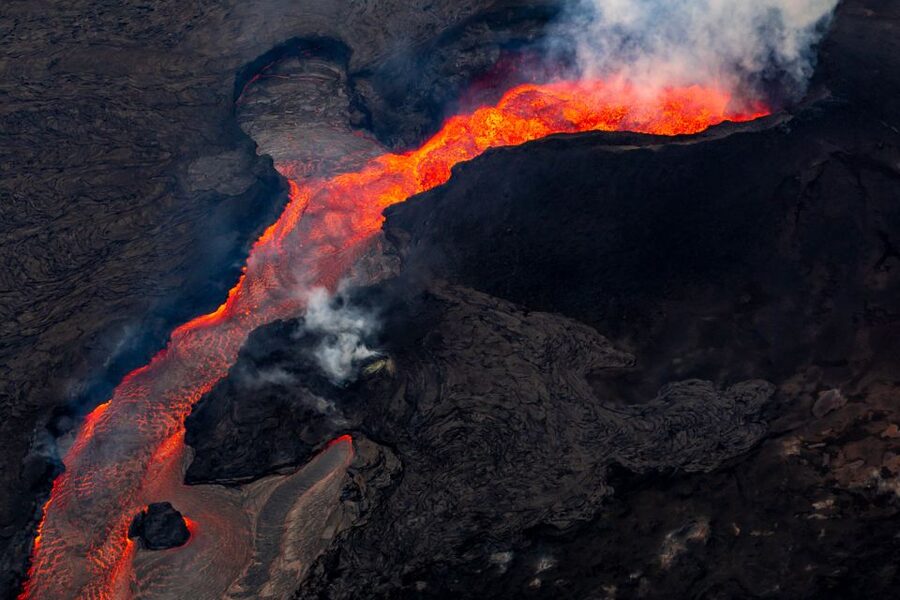
Volcanoes have a way of stealing the show. From the air, you get the power and the pattern. This 1-hour helicopter ride from Hilo is built for seeing how Kilauea’s active terrain changes over time, with live pilot commentary and big, clear views you simply can’t match from the road.
I especially like the chance to fly right over the Kilauea caldera and take in what “active” looks like from above. I also love the way the route layers in multiple volcanic zones, including the Pu‘u ‘Ō‘ō area and far-off views of Mauna Kea and Mauna Loa in the same flight. One drawback to plan for: where you fly can shift with weather, and that can affect which specific overlooks you get.
Small group, big sky. You’re limited to 6 participants, and the ride is led by an English-speaking guide/pilot who calls out what you’re seeing as you go. That keeps the whole experience feeling personal rather than rushed.
In This Review
- Key Things I’d Prioritize on This Flight
- Entering the Volcano World From Hilo
- What You’ll See: Caldera, Pu‘u ‘Ō‘ō, and Mauna Kea + Mauna Loa
- Black Sand, Lava Fields, and Waterfalls With Blue Pools
- Stop-by-Stop Route: From Takeoff to Kilauea, Pu‘u ‘Ō‘ō, and Back
- Safety and Comfort Rules You Should Not Ignore
- Pilots, Live Commentary, and Why the Ride Feels Professional
- Group Size, Photo Windows, and How to Prepare Mentally
- Price of $379 for 1 Hour: Is It Worth It?
- Weather Dependence: Planning Without Getting Stressed
- Should You Book This Hilo Volcano Helicopter Tour?
- FAQ
- How long is the helicopter tour?
- Where do I meet for the tour?
- What’s included in the price?
- What do we see during the flight?
- Is the exact route guaranteed?
- How large is the group?
- Is there a guide, and what language do they speak?
- Are there weight restrictions?
- What documents do I need to bring?
- Is it suitable for children, pregnancy, or motion sickness?
Key Things I’d Prioritize on This Flight
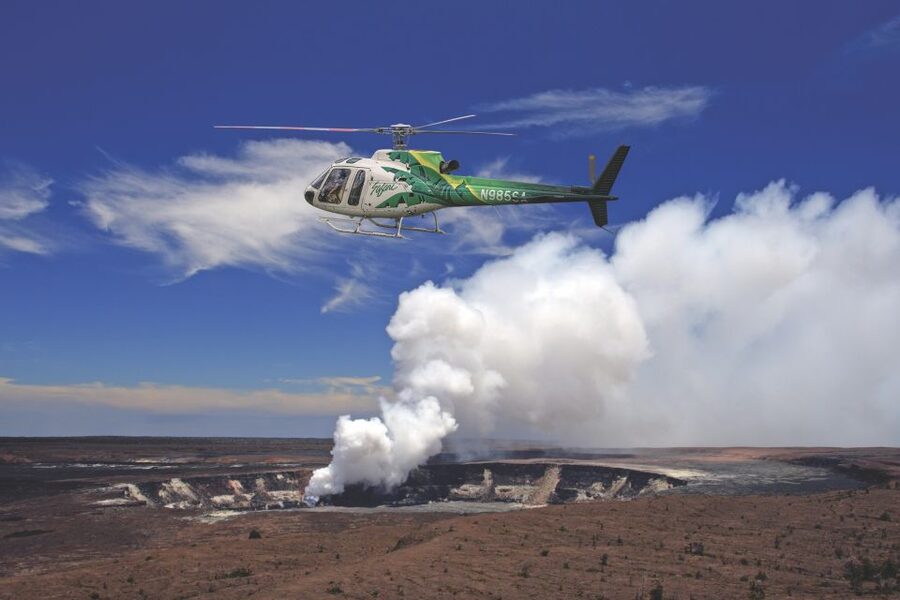
- Kilauea caldera from above: you see the shape of the heat and the churn, not just the aftermath
- Pu‘u ‘Ō‘ō volcanic cone views: a clear aerial read of how the volcano builds and remakes
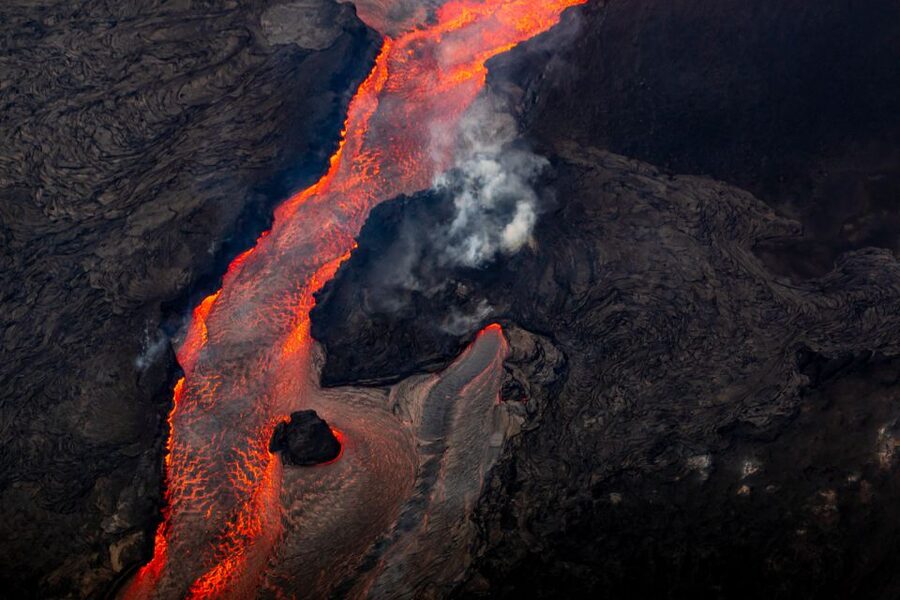
- Lava fields that are forming vs. older lava: you get both “new” and “spent” in one pass
- Mauna Kea and Mauna Loa in the distance: useful scale for understanding the island’s volcanic lineup
- Waterfalls and deep blue pools: one of the best “contrast” moments, where jungle meets water and rock
Entering the Volcano World From Hilo
The starting point is in Hilo at 2220 Kekuanaoa St, at the Safari Helicopters office. From there, you take off and head straight toward Volcanoes National Park—so you’re not spending your time bouncing along roads before the fun starts.
The value here is simple: a helicopter compresses a lot of “volcano viewing” into a short window. In one hour, you get sweeping aerial angles that help you understand how the island works. Roads can show you pieces. This flight shows you the whole puzzle from the sky.
Also, the small group size matters. With up to 6 people, you’re more likely to hear the pilot’s commentary clearly and get a calmer experience overall. That’s a big deal on a flight where your main job is to look up, stay comfortable, and take it all in.
You can also read our reviews of more tours and experiences in Hilo.
What You’ll See: Caldera, Pu‘u ‘Ō‘ō, and Mauna Kea + Mauna Loa
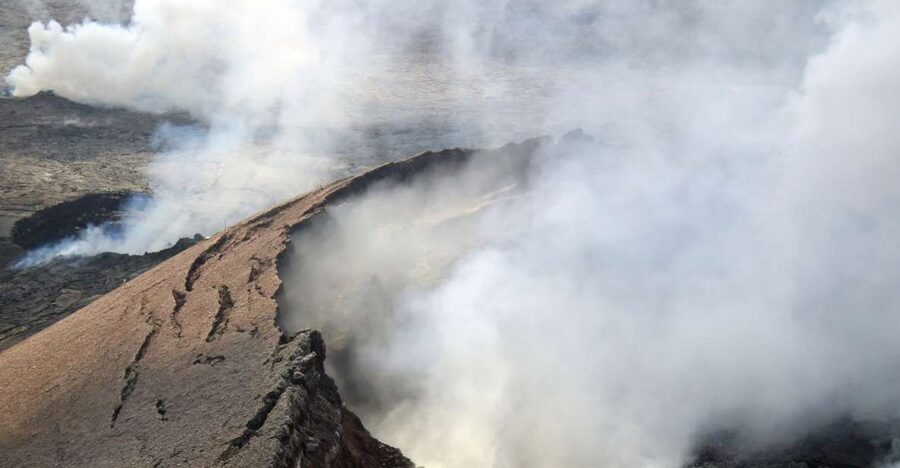
The core visual theme is Kilauea’s changing structure. You’re not just looking at a static view. You’re flying over a system that keeps reshaping itself.
Here’s what’s on the checklist for your time in the air:
Kilauea (caldera views)
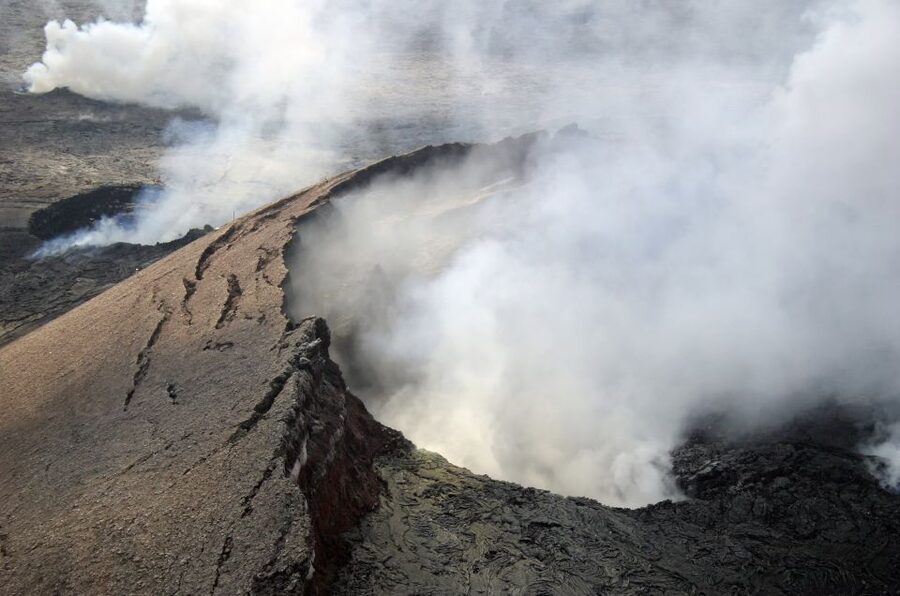
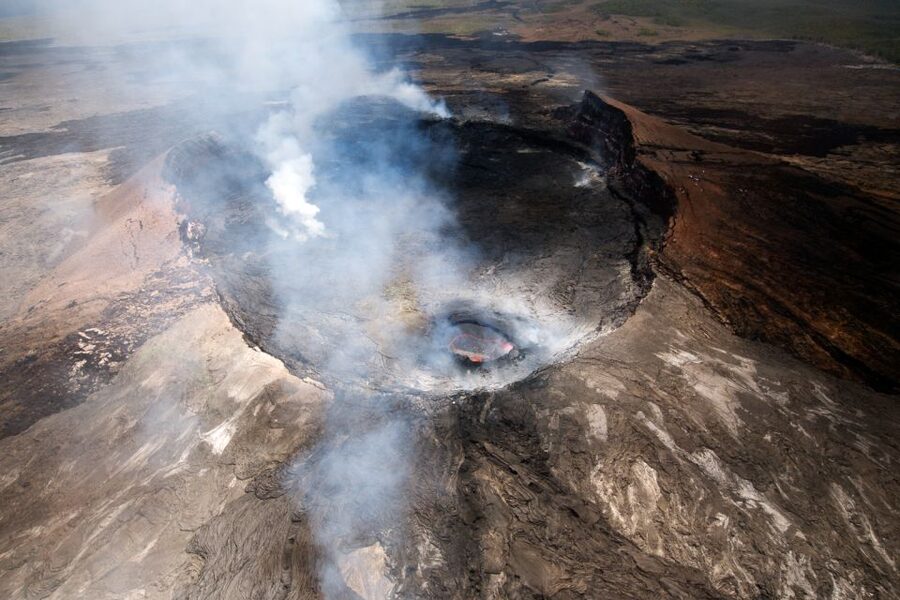
You’ll fly over the caldera—meaning you’ll see the volcano’s wide, defining bowl. From above, the caldera gives you scale. You start to understand why some ground features feel close up on the ground, yet look completely different once you’re higher.
Pu‘u ‘Ō‘ō volcanic cone
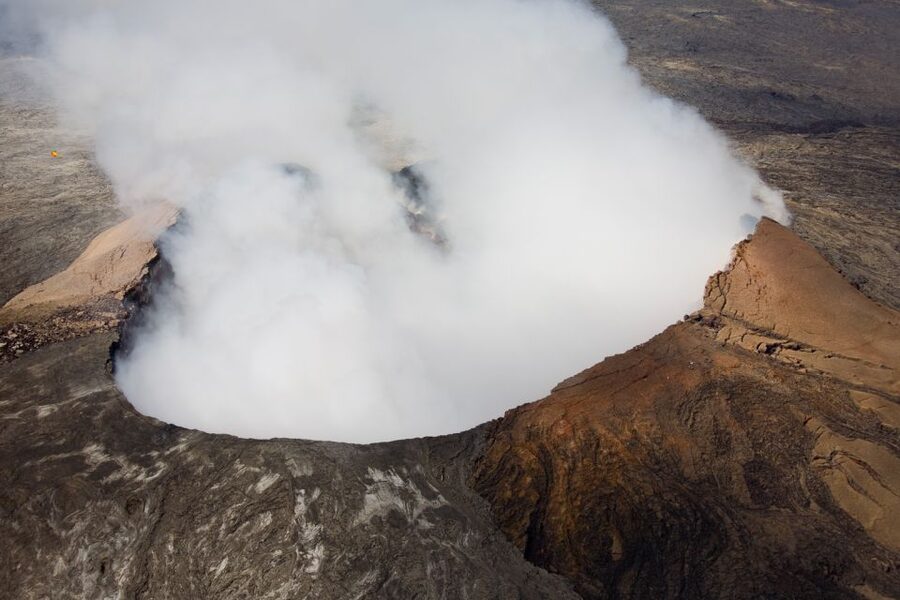
The flight includes views of the Pu‘u ‘Ō‘ō cone. In practice, this is one of those moments where the shape reads instantly: you can see how the cone rises and how surrounding terrain fans out.
Mauna Kea and Mauna Loa in the distance
You’ll also have views of Mauna Kea and Mauna Loa. This is not just a bonus photo stop. It’s helpful context. Seeing them from the same flight helps you grasp that the Big Island’s volcano story isn’t one chapter—it’s multiple peaks at once.
Black Sand, Lava Fields, and Waterfalls With Blue Pools
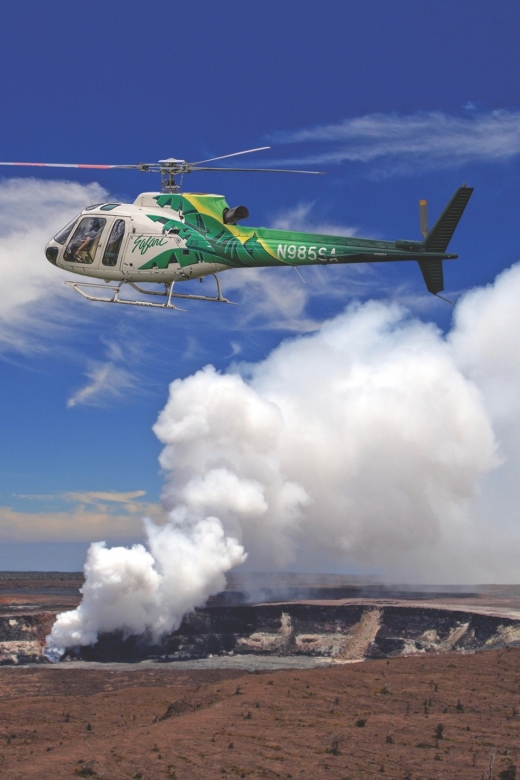
This tour is built around contrast: molten rock, dark beaches, wet jungle, and then the big blue of water.
You can expect to see:
Black sand beaches where lava once flowed into the sea
This is one of those details that changes your perspective fast. From the air, you can spot how coastline and lava meet. It’s a reminder that eruptions don’t just stay inland.
New lava fields forming vs. older lava fields
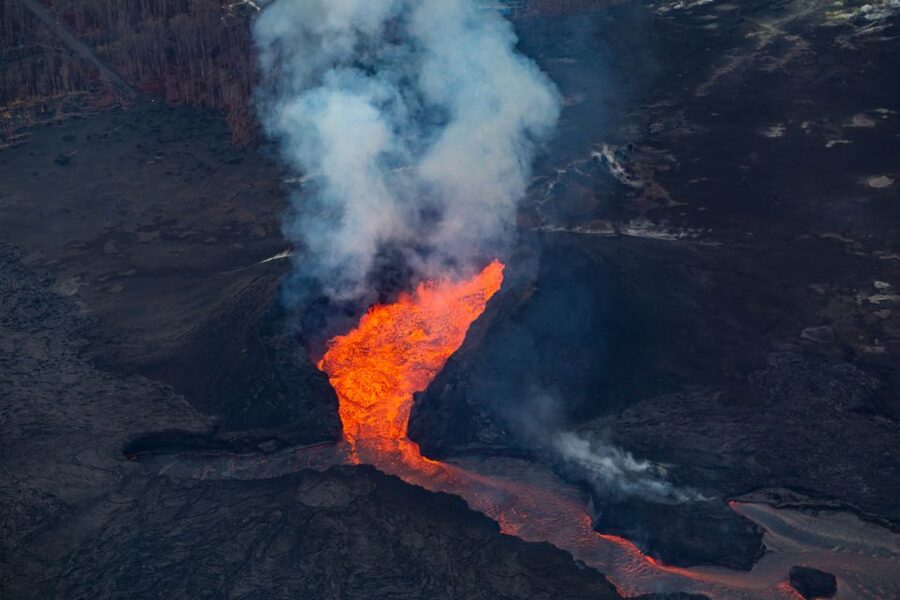
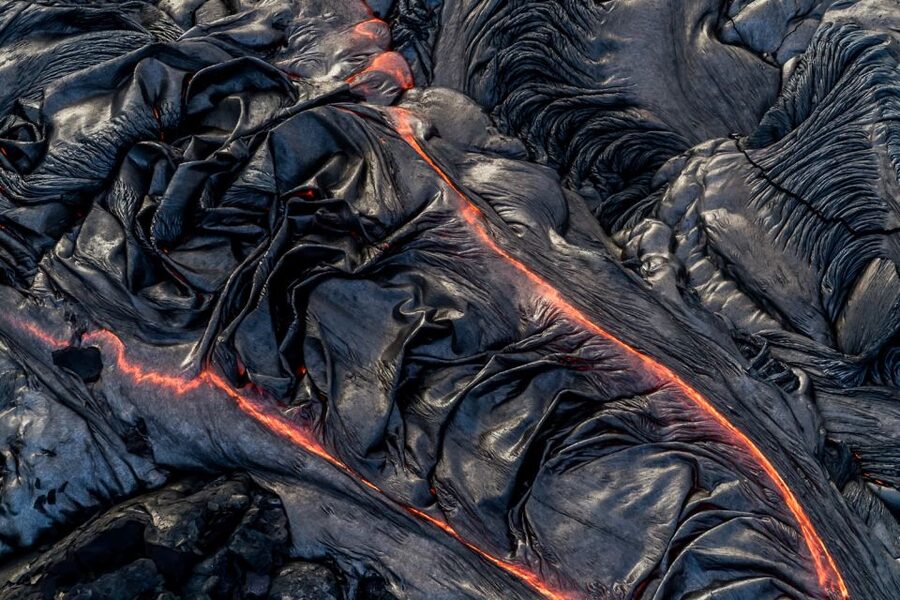
The itinerary includes flying over lava areas that are forming and also over older fields. That matters because it’s not all “the same black rock.” Time shows up in the texture and how the terrain looks from above. Even without technical training, your eyes can read change.
Waterfalls in dense jungles, with deep blue pools
The flight includes waterfalls creating deep blue pools amid jungle greenery. This is where the island looks less like raw geology and more like a living system. The blue pools are especially striking because the color is such a clean counterpoint to dark volcanic ground.
One practical note: specific site areas are weather dependent, so don’t assume you’ll see every single highlight in the exact same way every time. The good news is the flight is designed around these themes, so you should still come away with a strong “how it all connects” feeling.
Stop-by-Stop Route: From Takeoff to Kilauea, Pu‘u ‘Ō‘ō, and Back
Even though the tour runs for 1 hour, it follows a clear order so you know what you’re getting.
1) Starting location: 2220 Kekuanaoa St
You meet at the Safari Helicopters office in Hilo and get oriented. This is where the experience stays grounded and professional—because once you’re in the air, you want everything to feel smooth and predictable.
2) Fly to Hawaii Volcanoes National Park
After takeoff, the route goes directly toward Volcanoes National Park. This is a time-saver and also helps you see Kilauea’s world quickly, before the light changes too much.
3) Kilauea caldera views
You spend time over the caldera area. This is usually where your “big picture” understanding starts clicking, because the caldera’s shape defines how everything around it behaves.
4) Pu‘u ‘Ō‘ō area
Next comes the Pu‘u ‘Ō‘ō volcanic cone. This segment is great for photos because the cone’s form is readable even if cloud cover softens the edges.
5) Mauna Kea
Mauna Kea is part of the distant-view portion of the flight. Think of this as scale-setting: your brain connects the dots between multiple volcanoes.
6) Mauna Loa
Mauna Loa follows. Together, the two are a quick visual lesson in how the island’s volcanic activity stretches across the island.
7) Return to 2220 Kekuanaoa St
You come back to the same starting point. With a 1-hour format, there’s no long haul time attached—just a tidy loop that keeps your day from getting swallowed.
Safety and Comfort Rules You Should Not Ignore
Helicopter rides are thrilling, but they’re also serious about safety and body positioning. The tour sets clear expectations, and you should plan around them.
Here are the big rules that affect comfort:
Weight balance requirements (extra seat rules)
Because of safety and weight balance, any individual guest weighing 250 pounds or more must purchase an additional seat. Also, if two people each are under 250 pounds but their combined weight is 420 pounds or more, they must buy an additional seat. This isn’t a “maybe” rule. It’s part of how the flights are managed.
Sitting upright is required
Passengers who can’t sit upright will not be permitted. If you’re dealing with mobility issues, it’s worth thinking through how you’ll manage the seat position during the flight.
Not suitable for several health situations
The tour is not suitable for children under 2, pregnant women, people with claustrophobia, people afraid of heights, people with vertigo, people who are sick with a cold, people over 250 pounds, and people with motion sickness. If you’re in any of those categories, this is one of those times to listen to the guidance instead of hoping for the best.
Cold weather and “helicopter body reality”
You might find it cooler in the air than you expect, especially over volcanic terrain. If you’re the type who gets chilled easily, plan with a layer.
On safety, the overall vibe from the people who have taken this flight is strongly positive. Multiple accounts praise careful handling, strong safety focus, and pilots who explain what they’re doing while keeping everyone calm.

Pilots, Live Commentary, and Why the Ride Feels Professional
The tour includes a live tour guide in English, and the experience is led by the pilot. That matters because helicopter flying over volcano terrain isn’t just about sightlines—it’s about knowing what you’re looking at.
In past flights, pilots such as Andrew, Sam, Drew, and Matt have been called out for being skilled and for sharing interesting facts during the ride. A standout pattern in feedback: pilots adjust when conditions allow, so you sometimes get better views than the original plan.
One review story that’s worth remembering: one pilot changed the planned route when better weather offered improved photo opportunities. That kind of flexibility is a sign you’re in hands that are paying attention, not just following a script.
Also, ground staff get credit for staying organized and patient with schedules. With weather-dependent routing, a calm, structured crew can make the difference between “waiting” and “feeling taken care of.”
Group Size, Photo Windows, and How to Prepare Mentally
Small-group helicopter tours can feel chaotic if the briefing is sloppy. Here, the structure is tight: up to 6 participants, a short 1-hour run, and a guide/pilot who keeps you informed while you watch.
For photos, your best strategy is mindset. Don’t think of this as a single perfect shot. Think of it as multiple angles in motion:
- watch for changes in color and texture on lava fields
- scan for the cone shapes and caldera edges
- use distance views (Mauna Kea and Mauna Loa) as “context shots,” not close-ups
You’ll also want to keep expectations realistic. Weather can alter which specific areas you see, and in the air you’ll deal with passing cloud or haze at times. The pilot’s job is to work with conditions, and your job is to look early and look broadly.
Price of $379 for 1 Hour: Is It Worth It?
At $379 per person for a 1-hour helicopter tour, this isn’t a budget activity. But the value can be very strong if you care about aerial geology and want maximum payoff in minimal time.
Here’s how I’d judge the price using what the flight actually delivers:
- You get helicopter access, not a ground-only view
- You cover multiple key volcanic areas in one ride: Kilauea, Pu‘u ‘Ō‘ō, Mauna Kea, and Mauna Loa
- You get live English commentary and a professional operation (safety and organization are repeatedly praised)
- You’re in a small group, which can mean better attention during the flight
If you’re the type who loves big-sky perspective and wants to understand volcanic change—especially the contrast between older lava and newer forming areas—this kind of ride can feel worth it fast.
If you’re mainly looking for a calm, low-stimulation activity, or if you know you’re prone to motion sickness or fear heights, then $379 can’t fix that. This tour isn’t built for everyone.
Weather Dependence: Planning Without Getting Stressed
The itinerary notes that site-specific areas are weather dependent. That’s the honest reality of flying over volcano terrain.
So, how do you plan well?
- Pick a day where you’re not rushing to catch another far-away flight right afterward
- Have a flexible attitude about exact viewing points
- Know that the pilot and guide will work with conditions to still deliver the main themes: caldera, cone, distant peaks, lava fields, and (when possible) waterfalls and pools
The upside: even when weather changes your exact route, the flight still has the same “through-line.” You’re still flying over active and old volcanic features, plus the jungle-and-water contrast.
Should You Book This Hilo Volcano Helicopter Tour?
Book it if you want the fastest way to wrap your head around Kilauea’s scale and ongoing change. This tour is especially strong for:
- people who love aerial views and want photos that feel different from road lookouts
- anyone who wants both active volcanic terrain and wider island context
- visitors who value small group size and clear, professional safety
Think twice if:
- you’re affected by motion sickness, vertigo, or fear of heights
- you can’t sit upright comfortably for the flight
- you fall into any of the stated “not suitable” categories
If you do book, go in ready to look up and accept that weather is part of the deal. The operation’s reputation for safety, smart routing, and helpful pilots (with names like Andrew, Sam, Drew, and Matt showing up in feedback) suggests you’ll be in good hands.
FAQ
How long is the helicopter tour?
The tour duration is 1 hour.
Where do I meet for the tour?
You meet at the Safari Helicopters office at 2220 Kekuanaoa St.
What’s included in the price?
The package includes the helicopter tour.
What do we see during the flight?
You fly over the Kilauea caldera, view the Pu‘u ‘Ō‘ō volcanic cone, look at Mauna Kea and Mauna Loa in the distance, see black sand beaches where lava flowed into the sea, explore new and older lava fields, and (when conditions allow) fly over waterfalls with deep blue pools in jungle greenery.
Is the exact route guaranteed?
No. Site-specific areas are weather dependent.
How large is the group?
The group is limited to 6 participants.
Is there a guide, and what language do they speak?
Yes. There is a live tour guide, and the language is English.
Are there weight restrictions?
Yes. Due to weight balance and safety, any individual guest weighing 250 pounds or more must purchase an additional seat. Also, if two guests individually are under 250 pounds but together weigh 420 pounds or more, they must purchase an additional seat.
What documents do I need to bring?
Bring a passport or ID card, and a credit card.
Is it suitable for children, pregnancy, or motion sickness?
It is not suitable for children under 2 years, pregnant women, people with claustrophobia, people afraid of heights, people with vertigo, people with a cold, people over 250 lbs (113 kg), or people with motion sickness.