REVIEW · CODY WYOMING
From Cody: Full-Day Yellowstone National Park Tour
Book on GetYourGuide →Operated by CoveredGround Tours · Bookable on GetYourGuide
Old Faithful can steal the show. This full-day tour from Cody hits Yellowstone’s most famous geothermal stops plus wildlife hot spots, all with hotel pickup and a small group.
I especially like the way Old Faithful is handled: you’re brought to the right place so the eruption moment feels timed, not luck-based. I also like the mix of big scenery and up-close features, from the Fishing Bridge trout run to the strange chemistry of Norris Geyser Basin.
One real consideration: it’s a long 12-hour day. You’ll start early (pickup by 7:00 AM), you need steady walking on trails and boardwalks, and the whole outing depends on good weather.
In This Review
- Key takeaways before you book
- Starting From Cody: A 12-Hour Yellowstone Hit List Done the Easy Way
- Fishing Bridge and Yellowstone Lake: Walk It, Then Look for Wildlife
- Mud Volcano at Dragon’s Mouth Springs: Weird Steam, Real Geology
- Hayden Valley: Wildlife Chances That Make the Day Feel Like It’s Working
- Artist Point and the Yellowstone Canyon View: A Signature Yellowstone Moment
- Virginia Cascade Drive and the Gibbon River: Scenic Driving With a Lunch Option
- Norris Geyser Basin and Firehole Falls: Yellowstone’s Most Intense Geothermal Zone
- Grand Prismatic Spring: Walk Up to the World’s Largest Hot Spring
- Old Faithful Timing at Upper Geyser Basin: The Eruption Moment
- West Thumb Geyser Basin: Ending With Yellowstone Lake’s Shoreline Geothermal Zone
- Price and What It Gets You: Is $260 Worth It?
- What to Bring for Comfort on a 12-Hour Day
- Should You Book This Cody-to-Yellowstone Tour?
- FAQ
- What’s included in the tour price?
- How long is the tour from Cody?
- What time does pickup happen?
- How many people are in the group?
- What should I bring?
- Is the tour wheelchair accessible?
- What happens if the weather is bad?
Key takeaways before you book
- Small-group size (up to 10) means more time at each stop and less van chaos.
- Old Faithful timing is a big part of the value, not just another photo stop.
- Grand Prismatic Spring gives you a real “world’s largest hot spring” viewpoint moment.
- Norris Geyser Basin shows Yellowstone at its most intense, including Firehole Falls.
- Hayden Valley is built for wildlife watching chances, from bison to gray wolves.
Starting From Cody: A 12-Hour Yellowstone Hit List Done the Easy Way
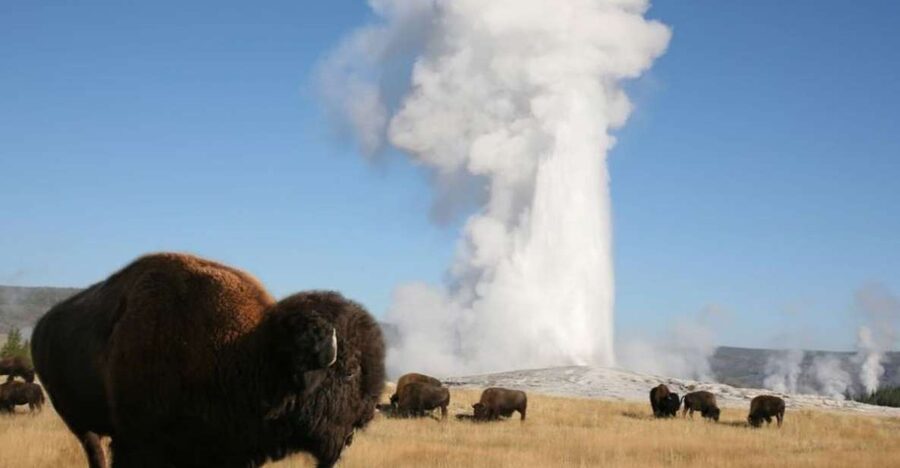
If you want Yellowstone but you only have one day, this tour is built for you. You get pickup from your Cody accommodation, then ride in an air-conditioned vehicle with a live English-speaking guide. With a group limited to 10 participants, it feels more personal than the bigger buses you see in the park.
The real win here is time management. Yellowstone is huge, and self-driving can turn into parking lines and rushed timing between distant stops. On this tour, you’re moving along the Grand Loop Road and key geyser corridors in a way that’s meant to get you to the major sights when they matter.
Also, the day is structured around walkable viewpoints. You’ll take short strolls (with comfortable shoes), plus a couple of longer look-and-stand moments where your guide helps you know where to go and what you’re actually seeing.
You can also read our reviews of more tours and experiences in Cody Wyoming.
Fishing Bridge and Yellowstone Lake: Walk It, Then Look for Wildlife
Your first major stop is Fishing Bridge, with the fresh-air stretch across the historic bridge. This is one of those simple, satisfying Yellowstone moments: you’re not just staring from a car window. You’re up close, walking and taking in the air, the water, and the movement around the bridge.
Fishing Bridge is also tied to the Yellowstone Cutthroat Trout spawning season, when hundreds of native trout move through the area. It’s a small ecological detail that makes the stop feel less like a postcard and more like a living system in motion.
And on the drive toward Fishing Bridge, you’ll have chances to spot wildlife—grizzlies and bald eagles are specifically mentioned as things to keep an eye out for. Even if you don’t see them, you’ll still get a strong foundation view of Yellowstone Lake. The tour passes by the lake as you travel between the Fishing Bridge area and Grant Village on the Grand Loop Road, so you get that “this place is enormous” feeling right away.
Practical note: if you’re the type who hates crowds or wants wide-open photos, Fishing Bridge can still be busy. The fix is to use the guide’s timing and your own walking pace—get your bearings fast, then look for angles that aren’t jammed shoulder-to-shoulder.
Mud Volcano at Dragon’s Mouth Springs: Weird Steam, Real Geology
Next up is Dragon’s Mouth Springs, where you can step onto the boardwalk for a short stroll to view the hydrothermal Mud Volcano. This is not a gentle, pretty geyser scene. It’s more like Yellowstone showing off its messier side—mud bubbling and steam rising where you’d expect something calmer.
This stop is valuable because it breaks up the day. After the lake-and-wildlife focus, Norris and Old Faithful can feel like back-to-back geothermal intensity. Mud Volcano is a different texture of geothermal activity, and that variety helps the rest of the day land.
What to expect here is movement and noise from the hydrothermal area. You’ll want to stay aware of footing and follow the boardwalk path carefully. If your shoes are comfortable, you’ll be fine.
Hayden Valley: Wildlife Chances That Make the Day Feel Like It’s Working
Hayden Valley is the tour’s big wildlife watching block. You’re guided toward the kind of landscape where you might see bison, elk, moose, and even gray wolves. The point isn’t that wildlife is guaranteed—it’s that this is one of Yellowstone’s classic places to look.
Why I like this part of the schedule: the day is otherwise heavy on geothermal features. Hayden Valley gives your eyes a different job. Instead of tracking where steam is rising, you’re scanning distances and watching movement patterns—ears, heads, and the way animals cross open ground.
A helpful mindset: if you’re trying to spot wildlife, slow down. Don’t rush your scan. Let the guide point out what to look for, then give yourself a few minutes to actually see it.
Artist Point and the Yellowstone Canyon View: A Signature Yellowstone Moment
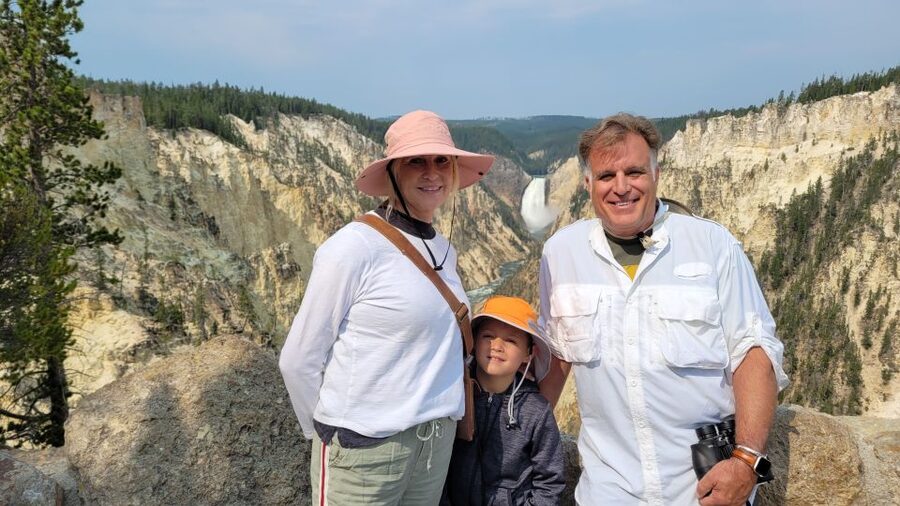
Then comes the Grand Canyon of the Yellowstone view from Artist’s Point. The tour frames it as a canyon that is about 20 miles long and roughly 1,000 feet deep, and that scale really hits once you’re standing where you can see the bend and fall of the canyon.
This is also a good stop for learning the “why” behind the drama. You’re looking at a river-carved channel shaped by time, not just a cliff edge with a viewpoint. It’s one of the places where Yellowstone starts to feel like a story of geology you can read with your eyes.
After the canyon, you’ll head to the Canyon Visitor Education Center for a coffee and shopping break. That matters more than people think on a long tour. It’s a chance to refill energy, use a restroom, and buy small souvenirs that are actually connected to what you just saw.
Virginia Cascade Drive and the Gibbon River: Scenic Driving With a Lunch Option
The itinerary then shifts to the Virginia Cascade Drive and the Gibbon River. This section is slower, which is a good thing on a 12-hour schedule. You get to ride through areas with water movement and calmer scenic pacing.
You’ll also have the option to eat your packed lunch here. If you brought lunch, this is a practical moment to use it rather than saving it for a later, busier stop. If you’re hungry earlier, talk with your guide because the timing can help you avoid getting stuck waiting at the wrong place.
One thing I appreciate about these “in-between” areas is that they keep the day from feeling like a checklist. Yellowstone is impressive enough without nonstop adrenaline.
Norris Geyser Basin and Firehole Falls: Yellowstone’s Most Intense Geothermal Zone
Norris Geyser Basin is where the tour turns up the geothermal volume. The tour describes Norris as the hottest, most acidic, and most dynamic part of Yellowstone, and that’s exactly the vibe you get. You’re looking at features shaped by extreme geothermal conditions, where the ground looks active even when you aren’t directly watching an eruption.
You’ll observe Firehole Falls too, plus natural surroundings around Firehole canyon. Firehole Falls is described as roaring waters, and that sound adds a different layer to the experience. Instead of just steam-and-vapor visuals, you’re getting water power mixed with thermal activity.
This stop is worth your full attention, even if you’ve seen other geyser basins before. Norris tends to feel more dramatic and less predictable than the classic clockwork reputation some geysers get elsewhere.
Grand Prismatic Spring: Walk Up to the World’s Largest Hot Spring
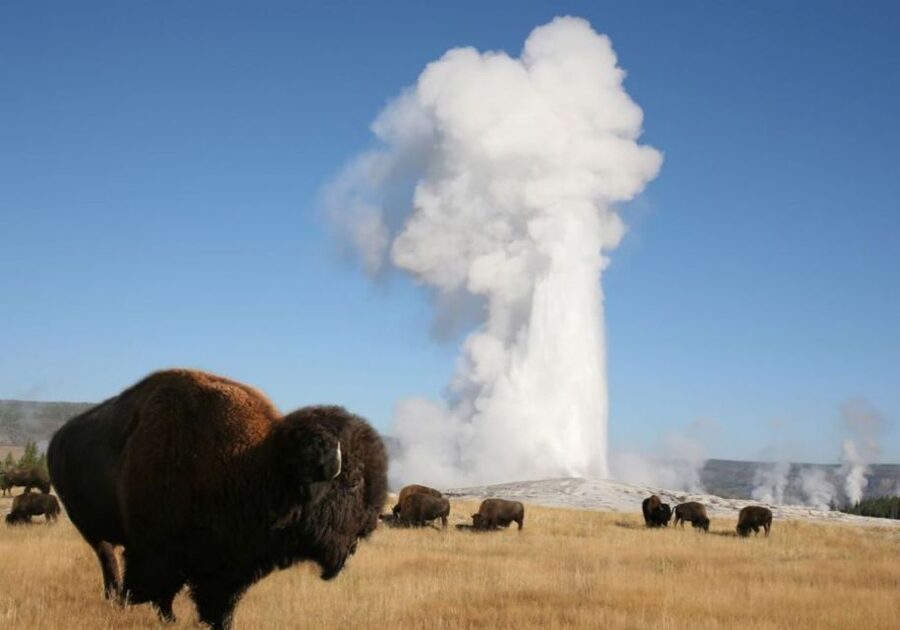
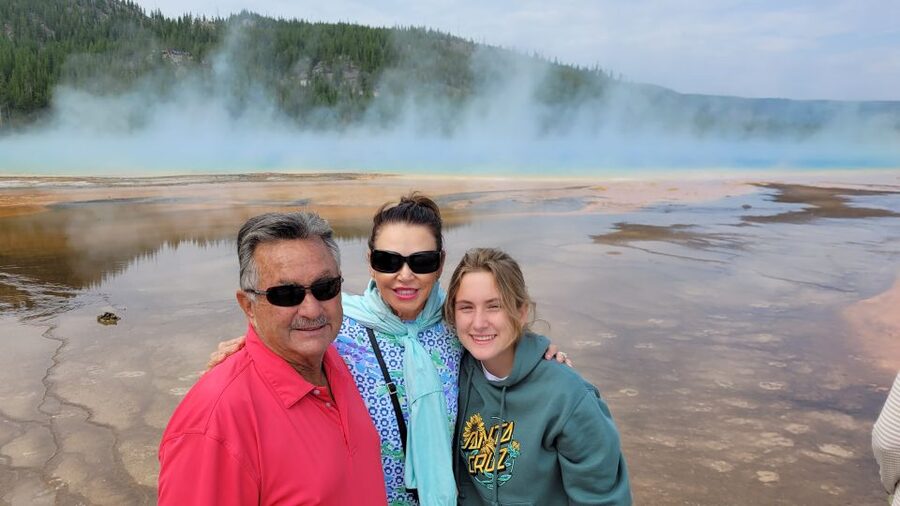
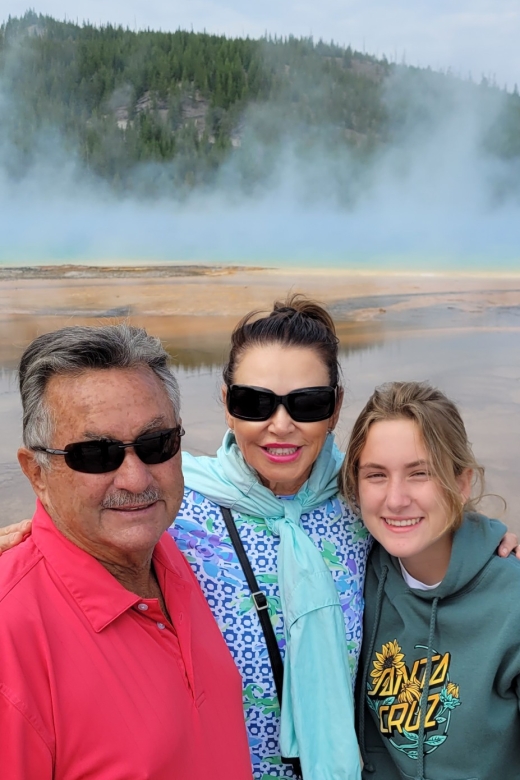
The most famous color stop on the day is Grand Prismatic Spring. The tour calls it the world’s largest hot spring, and that fact changes how you experience the view. It isn’t just about spotting colors. It’s about recognizing scale and heat-driven mineral patterns spread across a wide area.
You’ll take a walk up to the viewpoint for the spring and see the colors in person. This is another stop where timing and viewpoint matter. It’s easy to take one quick photo and move on. If you want better results, slow down for a few minutes and look for how the colors shift with perspective.
Even if clouds roll in, the mineral tones can still show up well from the viewing area. The main thing is being ready for weather conditions and wearing shoes you can trust.
Old Faithful Timing at Upper Geyser Basin: The Eruption Moment
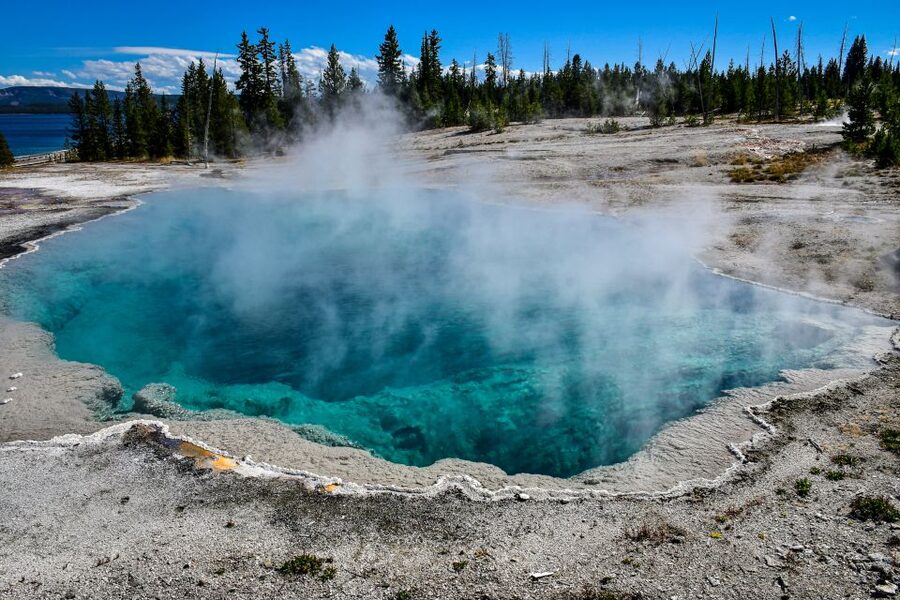
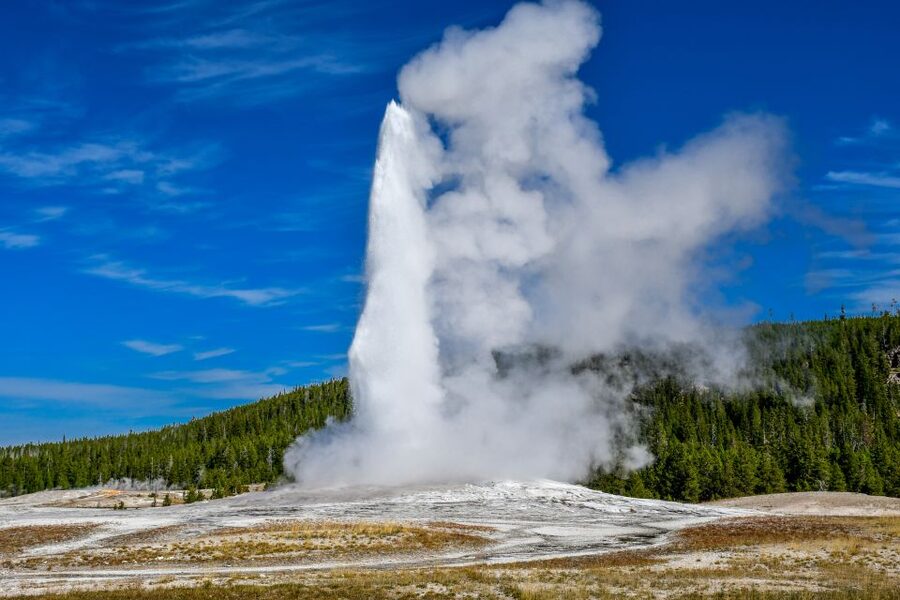
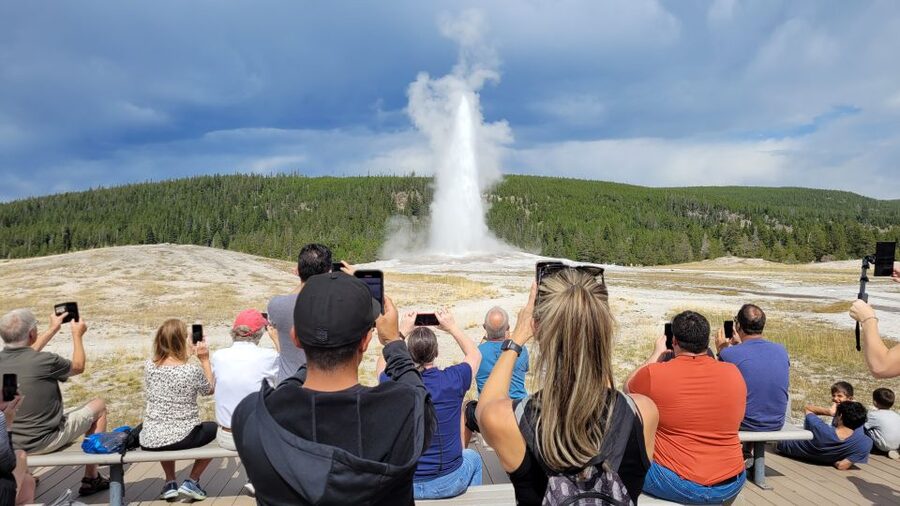
Then you reach Old Faithful in the Upper Geyser Basin. This is the highlight for many people for one reason: Old Faithful erupts on time often enough that guides can plan around it. The tour explicitly leans into that excitement—watching Old Faithful erupt with the confidence that it’s on schedule.
This is where a guide can make a real difference. You’re not just waiting near a landmark. You’re at a geothermal zone where correct positioning and timing affect your viewing comfort and your odds of catching the eruption without sprinting around.
If you’ve ever tried to do Old Faithful on your own, you know the difference between luck and planning. On trips led by guides like Cody and Kianna, there’s a pattern in how the day flows: you arrive when the eruption is near, and you aren’t stuck guessing while other people shuffle for a better spot.
After the eruption, you’ll get about 1.5 hours of free time for souvenir shopping and exploring the historic Old Faithful Inn. That’s a nice buffer, because it turns the experience from purely watch-and-go into a chance to browse, snack, and settle your brain before the return drive.
West Thumb Geyser Basin: Ending With Yellowstone Lake’s Shoreline Geothermal Zone
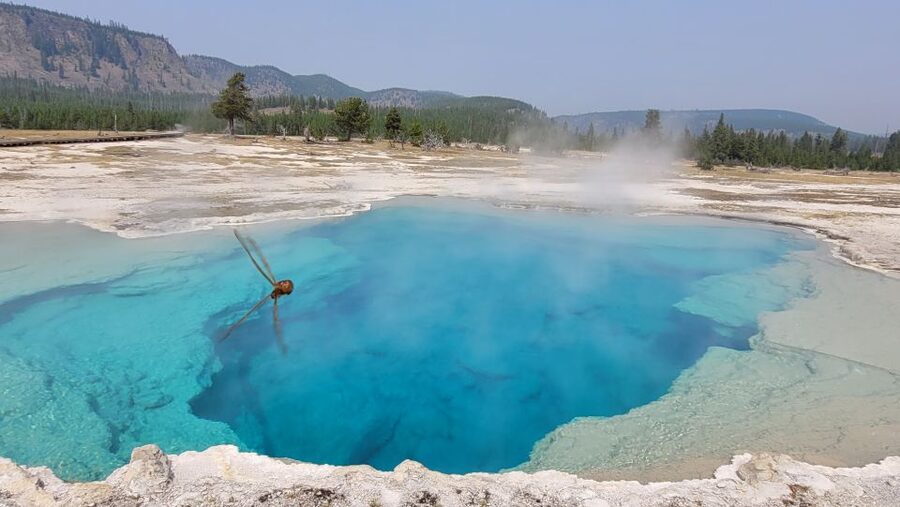
Before heading back to Cody, the tour finishes with a stop at West Thumb Geyser Basin. This area is described as the only geyser area located directly on the shores of Yellowstone Lake, which makes it visually different from many other basins.
Ending here gives you a “full-circle” feeling. You started the day with Yellowstone Lake views around Fishing Bridge, and you close with a geothermal zone that literally meets the waterline. It’s a strong wrap-up image for the day, especially after you’ve already seen multiple basins with more land-based activity.
You’ll likely move through this stop with a bit more fatigue than earlier in the day, so it helps to keep your expectations simple: come for the shoreline geothermal look and enjoy the contrast with the rest of the park.
Price and What It Gets You: Is $260 Worth It?
At $260 per person, this isn’t a budget add-on. But it also isn’t just transportation. You’re paying for a full, guided circuit with a lot of logistics handled for you.
Here’s what you’re getting value from:
- Hotel pickup and drop-off in Cody, so you don’t fight early-day parking or self-drive timing.
- An air-conditioned vehicle, which matters in Yellowstone when mornings and evenings can be cool or when the day heats up.
- A small group capped at 10, which reduces waiting and makes it easier for the guide to manage everyone.
- A live English-speaking guide, including stories and practical interpretation at major stops.
- Lunch and bottled water included, so you’re not scrambling for food between geothermal zones.
The major cost caveat: park entrance fees are not included. That means your total day cost will be higher once you add those fees. Still, the guided format can be worth it if you’d otherwise burn hours driving, parking, and trying to time Old Faithful yourself.
For first-timers, the biggest value is simple: you get the top Yellowstone highlights in one day, and you get context for what you’re seeing. For repeat visitors, it can still be useful if you want to focus on a fast, guided loop without driving.
What to Bring for Comfort on a 12-Hour Day
This tour is very practical, but your feet do the heavy lifting. Bring comfortable shoes and skip sandals or flip-flops. You’ll be walking bridge paths and using boardwalk-style areas at geothermal stops.
Weather also plays a role. The experience requires good weather, and if it’s canceled due to poor weather, you’ll be offered a different date or a full refund. Even on a good day, mornings can start cooler and warming up later is common, so dress in layers you can adjust.
One more comfort tip: plan for a long day with snacks and water already handled through the included bottled water and lunch. You’ll still feel the day in your legs, so taking short pauses when your guide gives you a moment is smart.
The tour is stroller accessible, and service animals are allowed. Wheelchair access is not available, so if mobility is a factor, you’ll want to plan carefully.
Should You Book This Cody-to-Yellowstone Tour?
I’d book this if you want Yellowstone’s greatest hits without the stress of driving a giant park for one day. It’s especially good for first-timers who care about seeing Old Faithful erupt, walking the historic Fishing Bridge, and getting a guided approach that keeps you on track—something guides like Francis and Allison are praised for when they help make the day feel smooth and memorable.
Skip it if you need wheelchair accessibility, or if you want deep hiking and long stays in only one area. This is designed for a full loop of major sights, so it moves at a pace that fits big coverage rather than slow exploring.
In short: if you’re aiming for a high-value Yellowstone day with strong timing and clear guidance, this tour is a solid way to do it.
FAQ
What’s included in the tour price?
Lunch, bottled water, and hotel pickup and drop-off are included. Park entrance fees are not included.
How long is the tour from Cody?
It runs for about 12 hours.
What time does pickup happen?
Pickup is included, and you should be ready by 7:00 AM.
How many people are in the group?
The group is small, limited to 10 participants.
What should I bring?
Wear comfortable shoes. Sandals or flip-flops are not allowed.
Is the tour wheelchair accessible?
No. It is stroller accessible, but it is not wheelchair accessible.
What happens if the weather is bad?
This experience requires good weather. If it’s canceled due to poor weather, you’ll be offered a different date or a full refund.