
REVIEW · MIAMI
Everglades National Park: Self Guided Driving Audio Tour
Book on Viator →Operated by Drive with Action · Bookable on Viator
The Everglades feel different when you have a guide. This self-guided driving audio tour strings together the park’s best-known stops, with hands-free audio that plays as you reach each point, plus offline maps for when cell signal vanishes. You’ll get story time between walks so you’re not just driving and hoping for the best.
I especially like the way the tour is priced for real-world groups: $16.99 per car (up to 4 people) means you’re not paying per head just to learn what you came to see. I also appreciate that you can repeat the same route during the next year, so rain or bad timing doesn’t wreck your trip. One drawback to plan for: the tour depends on a phone app and an upfront download, so if your setup is shaky or you’re at the wrong starting pin, you can lose time before audio kicks in.
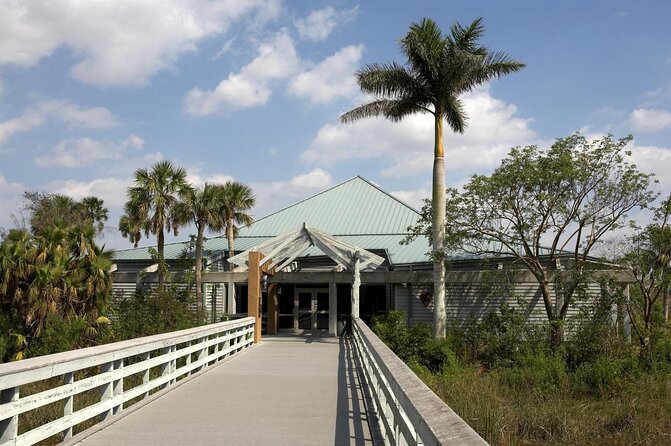
In This Review
- Key reasons this audio driving tour feels worth it
- What you’re really paying for: one car, 48+ miles, 39+ stories
- Price and entry fees: where the real cost shows up
- How the audio tour works on your phone (and why that matters)
- A drive that ends at Flamingo: pacing that won’t fry your day
- Stop-by-stop: what each part of the tour is good for
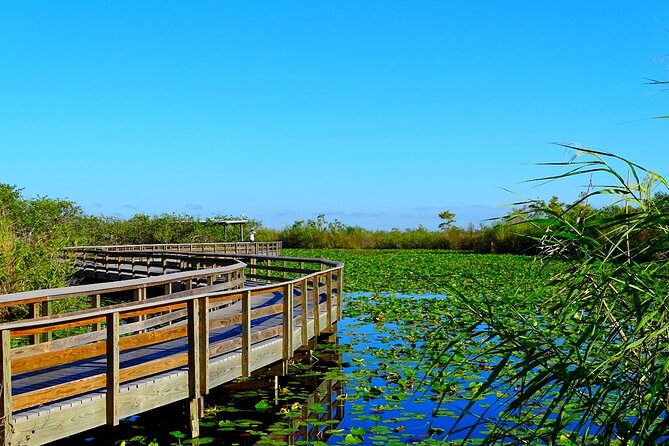
- Stop 1: Anhinga Trail boardwalk (the classic Everglades wildlife loop)
- Stop 2: Christian Point Trail (views with a moderate effort)
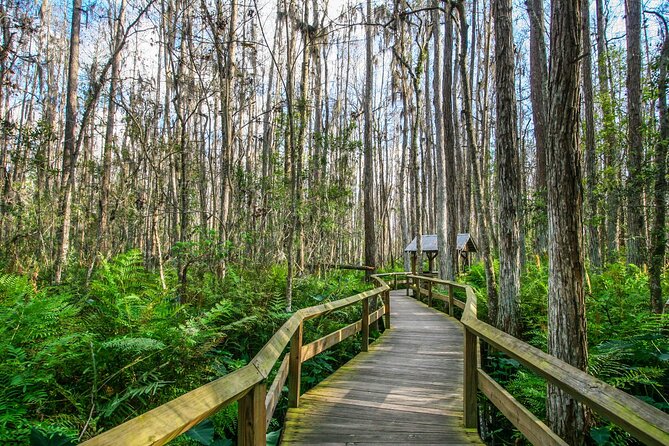
- Stop 3: Mahogany Hammock Trail (walk through a boardwalk jungle)
- Stop 4: Everglades Outpost (an animal rescue stop with a purpose)
- Stop 5: Ernest F. Coe Visitor Center (history that explains the fight)
- Stop 6: West Lake Trail (watch water ripples for gators and crocs)
- Stop 7: Main Park Road (Earnest F. Coe and Marjory Stoneman Douglas)
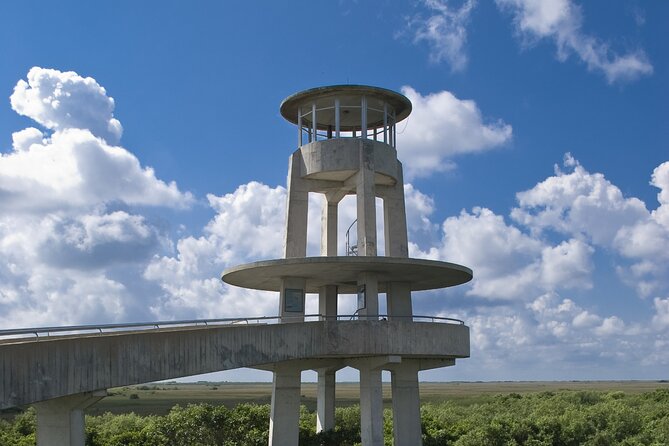
- Stop 8: Pa-Hay-Okee Lookout Tower (the river of grass from above)
- Stop 9: Gumbo Limbo Trail (easy shade, easy walking, ferns and shade)
- Stop 10: Nine Mile Pond Canoe Trail (only works if you have a boat)
- Stop 11: Everglades National Park welcome (the orientation you actually need)
- Stop 12: Snake Bight Trail (3.6 miles out-and-back through shade)
- Stop 13: Pinelands Trail (a paved loop with an endangered ecosystem vibe)
- Stop 14: Flamingo Visitor Center (services plus rentals)
- Stop 15: Eco Pond Trailhead (a pond that often delivers wildlife)
- Wildlife watching style tips that match this route
- Who should book this audio tour (and who might not love it)
- Should you book this Everglades self-guided driving audio tour?
- FAQ
- Where does the tour start and end?
- How much does it cost?
- How long does the tour take?
- Is a park entrance fee included?
- Does the tour work offline?
- Do I need Wi‑Fi during the tour?
- How does the audio start at each stop?
- Can I pause the tour or skip stops?
- What kind of sound setup works best?
- Is the tour in English?
Key reasons this audio driving tour feels worth it
- Auto-triggered stories start when you arrive at each stop, so you don’t have to babysit a screen.
- Offline maps and audio mean you can keep moving even when service drops out.
- 15+ practical stops cover trails, boardwalks, lookouts, and visitor centers along a road route.
- Walk-and-drive flexibility lets you hop off, take a hike, then pick up where you left off.
- One purchase per car makes it easier to keep costs down for families and friends.
- Year-long access gives you a second shot if weather, timing, or energy levels don’t cooperate.
What you’re really paying for: one car, 48+ miles, 39+ stories
At $16.99 per group up to 4, the value is simple: you’re buying a listening companion for the whole vehicle, not a ticket per person. That matters in a place like the Everglades, where half the fun is choosing how long you linger at boardwalks and overlooks.
The route is planned to cover the essentials without forcing a strict schedule. You’re looking at about 2 to 3 hours as a rough completion time, with the tour described as about 3–4 hours when you include walking portions. And yes, it’s a long drive by park standards—48+ miles—so you’ll want to treat this like a road trip with breaks, not a quick loop.
Most importantly, the stories are designed to help you notice the park. Instead of only seeing sawgrass and water, you learn what to look for: where wildlife tends to show up, what the plants are doing, and why this ecosystem is so hard to replace once it’s gone.
You can also read our reviews of more tours and experiences in Miami.


Price and entry fees: where the real cost shows up
This tour pass covers the audio experience, not Everglades National Park entry. An entrance fee is required, and it covers seven consecutive days. Your audio tour is separate from that park access cost.
So the smart way to budget is:
- pay the park entrance fee for your trip window, then
- add the audio tour once per car to stretch your understanding across multiple stops.
If you’re traveling with two to four people, the per-car pricing can feel like a bargain. If you’re solo, it can still be worthwhile, but your value swings on whether you’ll actually use the stories at several stops instead of just listening during the drive.
How the audio tour works on your phone (and why that matters)
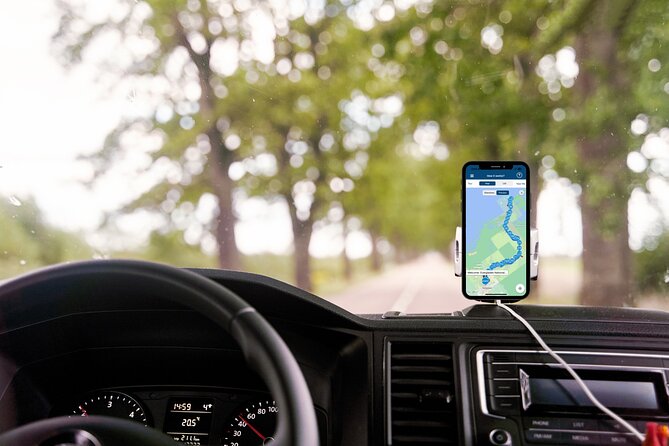
This tour uses the Action’s Tour Guide App (a separate app). After booking, you get instructions with a password by email and text. You’ll need to download the tour while you have strong Wi‑Fi or cellular, because the app then works offline after that.
Once you’re on site:
- open the tour app,
- go to the first story point,
- and the audio should start automatically based on location.
For car audio, the instructions recommend connecting your phone to your car stereo via Bluetooth, USB, or AUX. For walking segments, headphones can help because boardwalks and trails can get noisy fast with wind, bugs, and your own shoes.
A practical note based on real-world use: when audio doesn’t seem to match the map, it’s often a connection or playback issue (Bluetooth settings, volume, or phone audio routing). Before you start driving, take 30 seconds to confirm your audio source. You’ll save yourself the kind of stress that turns a nature day into a tech support day.
A drive that ends at Flamingo: pacing that won’t fry your day
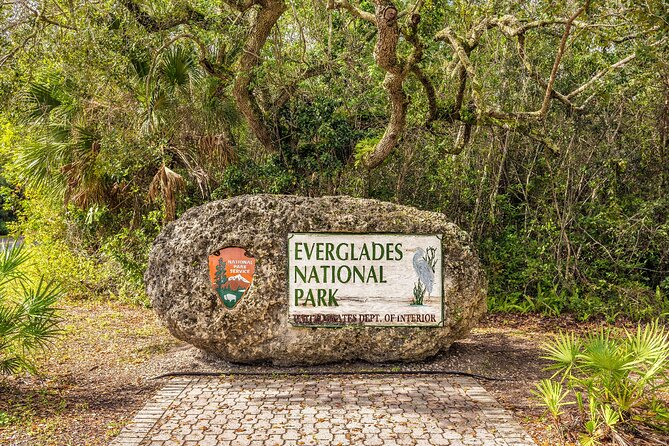
The tour goes from the start area near Florida City and works its way toward Flamingo. You can start and pause whenever you like. If something pulls your attention—another boardwalk, another bird—you don’t need to race back to a schedule.
Here’s the pacing logic that works best:
- Do the longer boardwalks and trails first, when you still have energy.
- Use the visitor centers and lookouts as resets.
- If you’re pressed for time, skip the longer hikes and keep the audio running while you drive.
Also, plan for the fact that some stops are active walking, not just a viewpoint. For example, Christian Point Trail is a four-mile round trip, and Snake Bight Trail is 3.6 miles out-and-back. If your goal is to maximize wildlife time over walking time, lean into the shorter boardwalks like Anhinga Trail and Gumbo Limbo Trail.
Stop-by-stop: what each part of the tour is good for
Think of this route as a mix of “look,” “walk,” and “listen.” The walking stops teach you what the Everglades looks like up close; the road and lookout stops train your eye for what’s out on the water.
Stop 1: Anhinga Trail boardwalk (the classic Everglades wildlife loop)
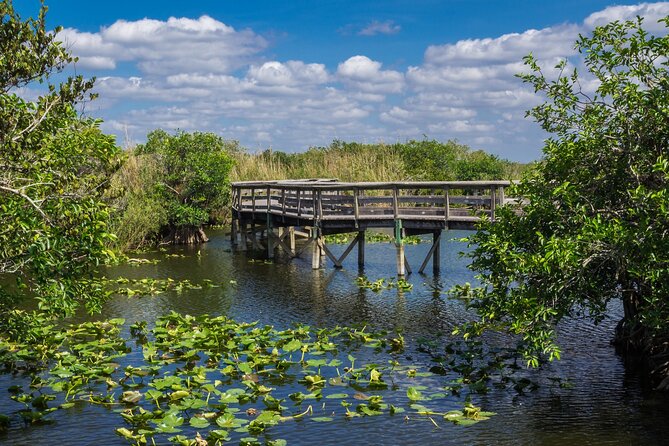
This is the big one for wetlands wildlife. Anhinga is a mile-long boardwalk that loops through sawgrass marsh. It’s short enough to fit without wrecking your day, but long enough to give you repeated chances at wildlife sightings.
If you want the Everglades to feel alive—birds moving, water creatures doing water-creature things—this is the best start. The boardwalk format also keeps you from constantly scanning for where to step.
Potential consideration: it’s the park’s most popular hike, so expect company. If you need solitude, you’ll appreciate later stops that are described as less crowded.
Stop 2: Christian Point Trail (views with a moderate effort)
Christian Point is meant as a breather from crowds. The trail is four miles round trip with moderate difficulty. It’s slightly more challenging than some of the other options on this route, but the payoff is a wide-open shoreline view.
If your legs are willing and you want a change of scenery from tight boardwalks, this is a strong choice. Bring water and keep it steady; four miles can feel longer in humid conditions even when the trail isn’t steep.
Stop 3: Mahogany Hammock Trail (walk through a boardwalk jungle)
This is a half-mile boardwalk described as about 10 minutes. You’re moving through dense hardwoods, and the story behind it is memorable: it’s home to the largest living mahogany tree in the United States.
This stop is ideal when you want a quick nature hit without committing to a long hike. The payoff isn’t just the tree trivia, either—it’s the way the forest feels close around you.
Stop 4: Everglades Outpost (an animal rescue stop with a purpose)
At the Everglades Outpost, you can meet over 200 exotic animals. The focus here is rescue and rehabilitation: the Freers, Bob and Barbara Freer, started rescuing animals in 1991 with small birds and raccoons, then expanded to animals like lemurs and big cats, among others.
This stop is worth it if you like learning how conservation can work through rehabilitation and release into original habitats. It also gives you a different kind of Everglades lesson—how human choices create consequences for animals far beyond the shoreline.
Stop 5: Ernest F. Coe Visitor Center (history that explains the fight)
This is where you zoom out. The story ties early-1900s changes to the park’s survival: large areas were drained and turned into agriculture or residential land, while hunting of wildlife was rampant and unchecked.
The point isn’t guilt or doom. It’s context: the park you’re seeing today exists because people argued, advocated, and pushed back.
Stop 6: West Lake Trail (watch water ripples for gators and crocs)
This half-mile boardwalk leads to West Lake. It takes about 10 minutes and is set up for water viewing. Water visibility isn’t always crystal clear, but you’re looking for hints—like ripples—where an alligator or crocodile might be swimming across.
If you’re the type who enjoys quiet scanning (the patient kind, not the impatient kind), you’ll have fun here. If you want movement, linger a little longer than you think you need.
Stop 7: Main Park Road (Earnest F. Coe and Marjory Stoneman Douglas)
This stop adds the human story behind the park. Earnest F. Coe is often called the father of the Everglades, and Marjory Stoneman Douglas becomes the key partner. She wrote columns for the Miami Herald, advocated for women’s rights and racial justice, and fought hard for conservation starting in the 1920s.
This is a useful reminder that parks aren’t just “set aside and forgotten.” People argued for them, and language mattered. If you like history that connects to what’s around you now, this part clicks.
Stop 8: Pa-Hay-Okee Lookout Tower (the river of grass from above)
You reach the platform via a short boardwalk. Then you get panoramic views of the river of grass.
It’s a quick stop—described around 5 minutes detour—but it changes your sense of scale. From down on trails, the Everglades can feel like a single watery world. From up here, it starts to look like a system.
Stop 9: Gumbo Limbo Trail (easy shade, easy walking, ferns and shade)
This half-mile trail is paved, shaded, and easy. It winds through hardwood trees with lush ferns. It’s described as about 15 minutes to complete.
This is a nice option if you want an effortless leg stretch, or if you’re traveling with someone who wants a short walk. It also works well as a break between longer efforts.
Stop 10: Nine Mile Pond Canoe Trail (only works if you have a boat)
This is the out-on-the-water stop. Instead of hiking on land, it’s a canoe trail: people with boats can paddle through a 5-mile loop in shallow, grassy marsh.
The tour notes that water levels are generally high enough in fall and winter, though drought can change things. If you don’t have a boat, you’ll likely treat this as a viewing moment rather than the main activity.
Best use: if you’re renting or bringing a canoe, this stop turns the Everglades from a passive viewing experience into a hands-on one.
Stop 11: Everglades National Park welcome (the orientation you actually need)
This is your on-ramp into how to see the ecosystem. You get the basic idea: this is a delicate system unlike anywhere else, and the future of the Everglades depends on how it’s managed.
This kind of orientation matters because it changes how the next stops feel. Instead of seeing random boardwalks, you start linking plant communities and wildlife behavior to what you’re walking through.
Stop 12: Snake Bight Trail (3.6 miles out-and-back through shade)
Despite the name, it’s B-I-G-H-T, not bite. A bight is a kind of bay, and the trail opens onto a scenic bay. It’s 3.6 miles out-and-back, described at about an hour on average.
It’s also open to bikes, except for the brief boardwalk portion at the end. If you like shade and then payoff views, this is a solid mid-length trail.
Stop 13: Pinelands Trail (a paved loop with an endangered ecosystem vibe)
The Pinelands area is described as the most endangered ecosystem in the Everglades. The loop is half a mile, paved, and goes through pines, palmettos, and wildflowers.
The description suggests it can feel like walking through something primeval—old-feeling nature with a different plant mix than the marsh boardwalks. It’s also easier to fit into a day schedule because it’s short.
Stop 14: Flamingo Visitor Center (services plus rentals)
At Flamingo Visitor Center you get the practical stuff: snacks, restrooms, and an information booth. And it offers rentals, including canoes, kayaks, and bicycles.
This stop is useful because it can solve a key problem: if you want to do water-focused parts (like the canoe loop), this is where you can set yourself up.
Stop 15: Eco Pond Trailhead (a pond that often delivers wildlife)
Eco Pond is built for close-to-water wildlife watching. The half-mile loop goes around a pond that’s almost always packed with wading birds, ducks, and songbirds. The tour also suggests watching the water for softshell turtles and alligators.
This is a great capstone if you want your final Everglades moment to be focused on life around the waterline without needing a long hike.
Wildlife watching style tips that match this route
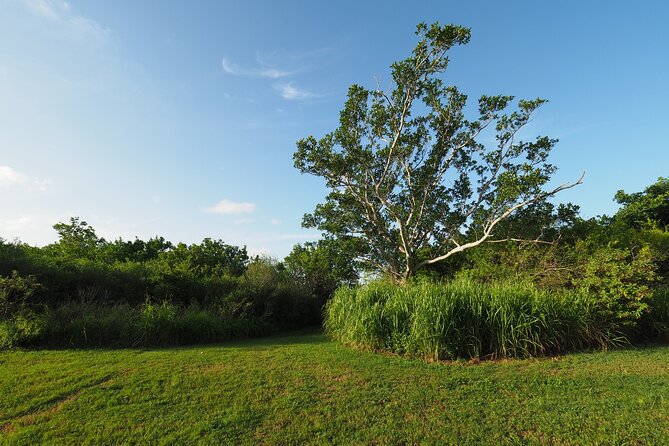
This tour makes wildlife viewing feel less random because each stop is chosen for what it reveals. Use that.
- At Anhinga Trail, aim for patience along the boardwalk. The marsh is designed for spotting wetlands wildlife.
- At West Lake Trail, watch for signs like ripples rather than only focusing on clear sightlines.
- At Eco Pond, slow your pace and let the birds show up. The pond trail is built for repeated looks.
Also, plan your footwear. You’re doing boardwalks, shaded paths, and a couple of longer hikes. Even when a trail is short, the conditions can make it feel longer than the posted mileage.
One more thing if you’re traveling with a dog: dogs are not permitted on the trails (boardwalk rules can still affect where you can go). If your plan involves pet-friendly stops, build the day around what’s allowed on the specific trail types.
Who should book this audio tour (and who might not love it)
This is a good fit if you want:
- your own pace with breaks for snacks and photos,
- a structure that covers the key Everglades stops without turning your day into a group tour,
- and a way to learn while driving, since the audio is built to start when you reach each point.
It may feel less ideal if:
- you dislike phone setup or troubleshooting,
- you want a live guide to answer questions on the spot,
- or you’re sensitive to accuracy in historical details. One listener flagged some historical date issues, so if you’re a strict fact-checker, treat stories as helpful guides—not as the final word for every minor detail.
Should you book this Everglades self-guided driving audio tour?
If you’re heading to the Everglades for the first time and you want a road trip that teaches you how to see what’s around you, I’d book it. The per-car price helps, and the ability to use it again during the next year is a real safety net.
Go for it especially if your plan includes a mix of boardwalks, a lookout, and at least one longer trail like Snake Bight or Christian Point. And bring a little tech readiness—download on strong Wi‑Fi, check your audio output before you hit the road, and you’ll get far more out of your day.
If your dream Everglades day is mostly about short stops and lots of rest, you can still use this tour well by focusing on the shorter walks and visitor center stops while letting the audio guide you between them.
FAQ
Where does the tour start and end?
The tour starts near W Palm Dr & 3 Av in Florida City, FL 33034, USA, and it ends at Flamingo, FL 33034, USA.
How much does it cost?
It costs $16.99 per group, up to 4 people.
How long does the tour take?
It’s described as about 2 to 3 hours to complete, with the overall experience often fitting around 3 to 4 hours when you include walking.
Is a park entrance fee included?
No. Everglades National Park requires an entrance fee, which covers seven consecutive days. That fee is not included with the audio tour.
Does the tour work offline?
Yes. Offline maps are included, and once the tour is downloaded, it works without cellular or Wi‑Fi.
Do I need Wi‑Fi during the tour?
You must download the tour while you have strong Wi‑Fi or cellular. After that, it works offline.
How does the audio start at each stop?
You open the app onsite, go to the first story point, and the audio begins automatically. The stories play based on your location as you follow the tour route.
Can I pause the tour or skip stops?
Yes. You can pause anytime, start and stop on your schedule, and skip items you don’t care about. You can also repeat stories.
What kind of sound setup works best?
The instructions suggest connecting your phone to your car stereo using Bluetooth, USB, or AUX. For walking segments, headphones are recommended.
Is the tour in English?
Yes. The tour is offered in English.