REVIEW · SIHANOUKVILLE
Discover Bokor National Park
Book on Viator →Operated by Scooter Trails · Bookable on Viator
Bokor feels half-forgotten, half-loaded with meaning. This guided scooter ride takes you into the abandoned world of Bokor Hill Station, where French colonial glamour faded, Khmer Rouge violence lingered, and ruins later made room for a modern casino. I love the climb on a scooter because it turns the trip into a moving viewpoint—Kampot looks unreal from the hill—and I love stopping at places like the Black Palace while your guide connects the dots from empire-era resort life to war-era shelter. One drawback to weigh: the tour is short (listed around 5 to 30 minutes), so you’re here for focused stops, not a slow, all-day exploration.
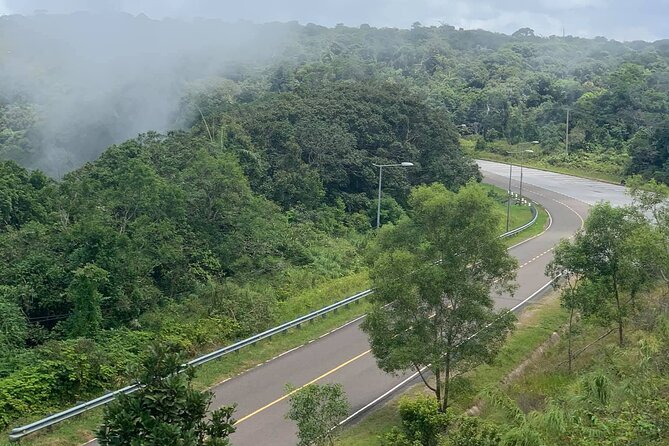
After you’re picked up and fitted with a helmet, you’ll head toward Bokor and start with big sky-and-height moments. You drive roughly 12 km up and pause at a parking area for a sweeping view over Kampot, plus a quick explanation of how the river links town to the sea. It’s the kind of “get your bearings fast” start that helps the ruins make sense later.
Then the route shifts into story mode: abandoned structures, religious sites, and the tragic overlay that comes with them. You’ll see the 1936 Black Palace (built facing the Yeay Mao statue), visit Wat Sampov Pram from 1920, and also make time for an old Catholic church described as one of the Khmer Rouge’s last strongholds. If you’re into guided interpretation, you’ll likely enjoy the way some guides—like Rithy, known for calm safe riding and strong English—bring both history and politics into plain language.
In This Review
- Key highlights worth your time
- Bokor’s story: French resort glamour to Khmer Rouge shadows
- Scooter Trails style: what the ride really feels like
- Bokor Mountain viewpoints: the Kampot panorama that starts it all
- Black Palace ruins: 1936, Yeay Mao, and the abandoned banquet feel
- Wat Sampov Pram (1920): a temple stop with real spiritual weight
- The old Catholic church: one of the last Khmer Rouge strongholds
- How your guide shapes the whole experience (Rithy as a great example)
- Price and value: what $35 buys in Bokor
- Getting the most out of a short ride
- Who should book this Bokor scooter tour—and who might skip it
- Should you book Scooter Trails’ Bokor National Park experience?
- FAQ
- FAQ
- Where does this tour start?
- How much does the Bokor National Park scooter tour cost?
- How long is the experience?
- Is pickup included?
- What’s included with the tour?
- Are entrance tickets included?
- Does the tour require good weather?
- Is there free cancellation?
- How big is the group?
Key highlights worth your time
- Bokor Mountain scooter climb: a quick ride to a major Kampot panorama
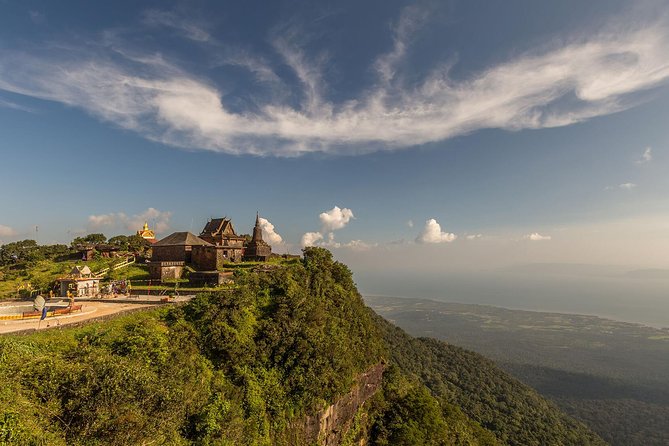
- Black Palace details: the 1936 palace facing the Yeay Mao statue, plus nearby abandoned buildings
- Wat Sampov Pram (1920): a real temple stop, not just ruins
- Khmer Rouge-linked stop: the old Catholic church is a key emotional moment on the route
- Small group cap (up to 2): more chance for questions and pacing that feels personal
Bokor’s story: French resort glamour to Khmer Rouge shadows
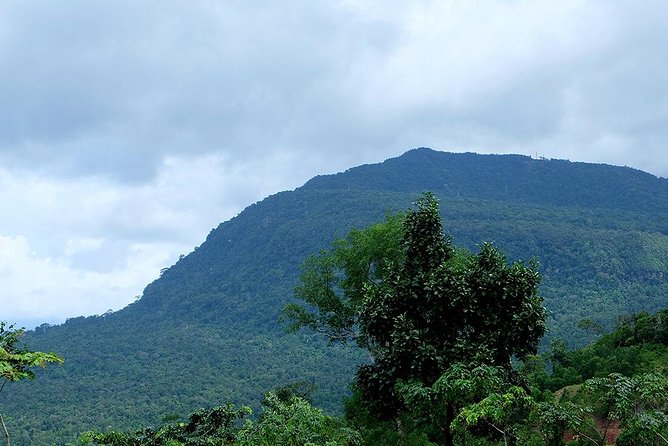
Bokor Hill Station didn’t start as a ruin. It began as a French colonial mountain resort in the 1920s, a cool escape concept for hotter lowlands. In the 1960s, it had its heyday—think swing-era leisure at altitude. Later, it became one of the last hideouts connected to the Khmer Rouge, and when that era ended, the whole place mostly slid into abandonment.
What’s striking today is the contrast. Bokor is both weathered and staged: many structures sit in decay, yet a new casino was built in 2012, pulling some modern life back into the hill. The scooter tour works well because it doesn’t treat the ruins like a theme park. Instead, it frames them as chapters—revered past, wartime reality, then the post-ruin rebuild attempt.
That matters for you because it changes how you look. When you stop at a palace wall or a church, you’re not just taking photos—you’re placing the scene on a timeline. If you like understanding why a place looks the way it looks, Bokor rewards you.
You can also read our reviews of more tours and experiences in Sihanoukville.
Scooter Trails style: what the ride really feels like
This is a guided scooter experience run by Scooter Trails, with a setup designed to keep things easy. You get a scooter and helmet, plus drinking water and a cold towel. There’s also first-aid on hand, and hotel pickup and drop-off are included—so you’re not doing map gymnastics in a confusing area.
One more thing: the group size is limited, with a maximum of 2 travelers. In practice, that often means you get a bit more control over stop timing and questions. You’re also more likely to get a calmer pace on the road.
Duration is listed as roughly 5 to 30 minutes. That doesn’t mean the whole day is only that long; it usually means the ride segments and stop-and-talk moments are kept short. For planning, assume you’re getting a compact, guided highlight set rather than a long, wandering circuit.
If you’re hoping to do a slow, deep exploration on foot all over Bokor, you might feel rushed here. But if your time is limited—or you want an efficient first taste of Bokor—this format is a practical fit.
Bokor Mountain viewpoints: the Kampot panorama that starts it all
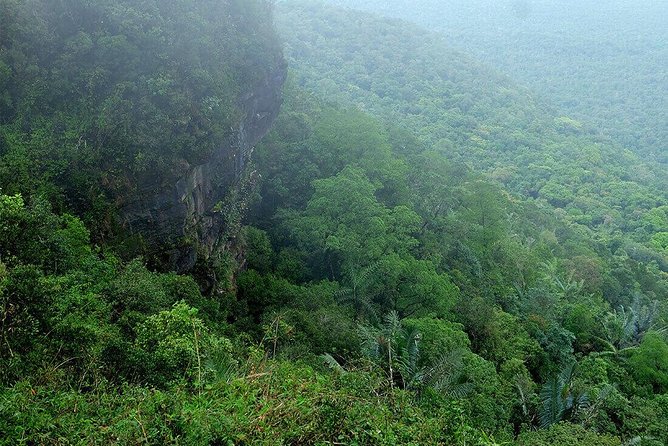
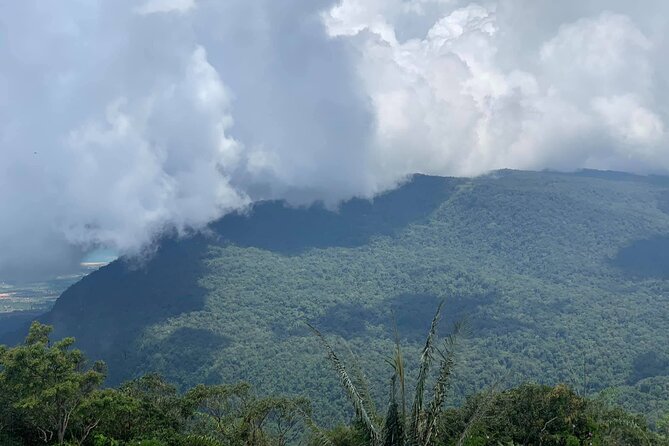
The first big payoff is the climb and the view. You drive about 12 km up to a hill parking area, and that’s where you get the “wow” moment: a breathtaking look over Kampot town. This is one of those views that makes the geography feel real.
A guide will point out how the river connects town to the sea, helping you visualize why Kampot’s location matters. Even if you’ve been in Kampot before, it’s different to see the waterways and the town’s layout from above. You start to understand the region’s logic—where people settled, where transport flows, and why coastal access matters.
Practical note: since this is a viewpoint stop, it’s worth bringing your most reliable camera/phone setup. You may be moving quickly between sights, so don’t waste time fumbling with settings once you’re at the parking area. Also, dress for shade changes—mountain weather can feel unpredictable.
Black Palace ruins: 1936, Yeay Mao, and the abandoned banquet feel
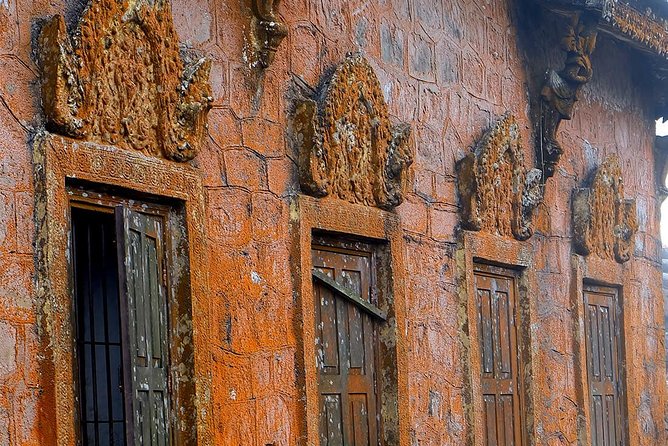
Next comes one of Bokor’s most recognizable stops: the Black Palace. This palace was built in 1936, and it faces the Yeay Mao statue. That directional choice is a detail you’ll hear about on the spot because it helps explain the symbolism and layout of the hill station era.
Here’s what I like about this stop from a visitor perspective. You get to see grandeur that’s now hollowed out. The palace isn’t just “old.” It’s the kind of building that suggests power and ceremony. Standing there, you can almost feel the difference between a resort that welcomed visitors and a place that later became something darker and more secretive.
Behind and nearby, you can also spot other remnants—there’s an old restaurant and additional abandoned buildings in the vicinity. This is where your guide’s storytelling earns its keep. If your guide explains what those structures were for, the ruins feel less random and more like an ecosystem of functions: gathering, housing, worship, and administration.
Possible drawback: ruins can be visually similar at a glance, especially if you’re moving fast. If you tend to forget details after a few stops, ask your guide to point out what’s most important to look at first—like the palace orientation toward Yeay Mao, or what the nearby structures likely served.
Wat Sampov Pram (1920): a temple stop with real spiritual weight
Bokor isn’t only palaces and collapse. The tour includes a Buddhist temple visit at Wat Sampov Pram, built in 1920. This matters because it shifts the mood from political ruins to religious continuity.
You’ll find a beautiful religious building, and your guide will explain Buddhism. Even with a quick stop, it’s a reminder that the hill isn’t only an artifact of conflict. It’s also a living landscape where faith has its own history.
For you, this stop can do two useful things. First, it gives your brain a reset—religious architecture tends to slow time. Second, it helps you read the rest of Bokor with more balance. When you later see churches tied to the Khmer Rouge period, you’ll understand why sacred spaces mattered to different communities and in different eras.
If you want a respectful experience, keep your posture and volume in check, and treat this like a temple visit, not a photo-only waypoint. Even when a tour has a tight schedule, basic manners go a long way.
The old Catholic church: one of the last Khmer Rouge strongholds
One of Bokor’s most intense highlights is the old Catholic church, described on this tour as one of the last strongholds for the Khmer Rouge. You’re not visiting a generic church stop here. You’re entering a place where religion, endurance, and violence overlap in the regional narrative.
This is a moment that can feel heavy. The advantage of having a guide is that you’re not left to guess at context. Instead, you’re given a story framework that connects the site to Bokor’s wider tragedy—how the same hill that once drew colonial tourists later became a hiding place in war.
If you’re sensitive to political history or wartime subject matter, give yourself mental space during this segment. Don’t cram it between frantic photo sessions. Take a minute to look, then listen. If your guide uses clear English and stays factual, the experience tends to feel grounded rather than sensational.
How your guide shapes the whole experience (Rithy as a great example)
The tour lives or dies by the guide. Based on real-world feedback, some guides bring a mix of calm driving, clear English, and interpretation that doesn’t shy away from politics. One named guide, Rithy, is specifically praised for riding safely and slowly when others were less confident with a motorbike, plus for sharing attraction history with political context in a way that landed.
That matters for you even if you’re confident on scooters. Slow, controlled riding reduces stress. Good explanations reduce the “I saw it but didn’t really understand it” feeling.
If you get a guide like Rithy, you’ll likely leave with a sense of cause-and-effect rather than a pile of random stops. That’s the difference between a quick ride and a meaningful one.
Price and value: what $35 buys in Bokor
At $35 per person, this tour is priced as a budget-friendly, guided “highlight circuit.” The real value isn’t just the scooter ride. It’s the bundle of basics you normally end up paying for separately in Cambodia: hotel pickup and drop-off, scooter and helmet, drinking water and a cold towel, plus a local guide. You’re also getting first-aid and a mobile ticket.
What’s not included is also important. Admission ticket items aren’t included, and a waterfall ticket is specifically listed as not included. Travel insurance isn’t listed as included either, so plan on bringing your own if you use it.
Here’s how to judge value for your travel style:
- If you want a guided introduction to Bokor’s major sites in a short time, this price looks fair.
- If you wanted a long day of exploring with lots of downtime, $35 might feel small—but not because the tour is lacking; because the time is compact.
- If you’re already comfortable navigating and renting locally, you might compare costs. But you’d likely lose the structured storytelling and the “jump to the best viewpoint quickly” benefit.
Getting the most out of a short ride
Because the schedule is compact, your best strategy is to treat this as a first pass. You’ll hit the key spots—Bokor Mountain viewpoint, Black Palace area, Wat Sampov Pram, and the old Catholic church—and you’ll leave with enough context to explore on your own later if you want.
A few practical tips that help:
- Ask your guide what to photograph first at each stop, so you don’t spend your best angles chasing details.
- Wear layers. Mountain air can change fast, and you’ll be in and out of sun.
- Bring water even if it’s provided. The cold towel is nice, but it doesn’t replace hydration if you’re out in the heat elsewhere.
Also, this experience is described as weather-dependent. If it’s rainy or too gloomy, visibility and comfort may suffer. If the operator cancels due to poor weather, you’ll be offered another date or a refund.
Who should book this Bokor scooter tour—and who might skip it
This is a good fit if you:
- Have limited time near Kampot or Sihanoukville and want a guided Bokor intro
- Like history with a clear human story—French resort era to Khmer Rouge period
- Want a small-group scooter ride with gear included
- Prefer short, efficient stops over a long hiking day
You might skip it if you:
- Want hours of walking around ruins at your own pace
- Expect a long, multi-hour itinerary beyond a quick viewpoint-and-stop circuit
- Are looking for a guaranteed day without any disruptions. Weather can matter, and operations can vary over time.
Also, if you’re booking during periods when Cambodia experiences major disruptions, I’d confirm your departure status in advance. There have been cases where people reported no pickup and trouble with refunds when tours weren’t running. You can’t eliminate all risk, but a quick confirmation call/message the day before is cheap insurance.
Should you book Scooter Trails’ Bokor National Park experience?
If your goal is a focused, guided taste of Bokor Hill Station—views, abandoned palaces like the Black Palace, a temple stop at Wat Sampov Pram, and the emotionally charged old Catholic church—then yes, it’s worth booking. The price is reasonable for what you get, and the included pickup, scooter, helmet, and guiding make it simpler than DIY.
The only reason I’d hesitate is the short listed duration. If you’re expecting a long, wandering Bokor day, you’ll want a longer format tour instead. But if you want to get oriented fast, learn the place’s layered story, and ride out with a few unforgettable stops, this setup is a smart use of time.
FAQ
FAQ
Where does this tour start?
The tour is based in Sihanoukville, Cambodia, and it includes hotel pickup and drop-off.
How much does the Bokor National Park scooter tour cost?
It costs $35.00 per person.
How long is the experience?
The duration is listed as approximately 5 to 30 minutes.
Is pickup included?
Yes. Hotel pickup and drop-off are included.
What’s included with the tour?
You get drinking water and a cold towel, first aid, a local guide, and the scooter and helmet.
Are entrance tickets included?
No. Admission ticket(s) are not included, and a waterfall ticket is also listed as not included.
Does the tour require good weather?
Yes. The experience requires good weather, and if it’s canceled due to poor weather, you’ll be offered a different date or a full refund.
Is there free cancellation?
Yes. You can cancel for a full refund up to 24 hours in advance.
How big is the group?
The maximum group size is 2 travelers.