REVIEW · CRATER LAKE NATIONAL PARK
Crater Lake National Park Self-Guided Driving Audio Tour
Book on Viator →Operated by Travel with Action · Bookable on Viator
Crater Lake sounds best with your own soundtrack. This self-guided audio driving tour turns the rim road into an easy-to-follow story loop, with hands-free playback that syncs to where you are. I like that it’s timed for real stops (and short walks) instead of just talking at you from the parking lot.
You get a lot of meaning for your $16.99: the geology and park history click into place as you move from Rim Village and pumice to the best viewpoints. The main thing to keep in mind is that you must download the tour while you have strong Wi‑Fi/cellular access, because the park can be spotty and the app has to be ready before you arrive.
In This Review
- Key things to know before you start
- Price and time: $16.99 per car for a tight 2–3 hour plan
- Where you start and how you actually play the audio
- Stop-by-stop: Rim Village to Pumice Castle (where the story begins)
- Rim Village: a planned “real life” edge to the park
- Pumice Castle: why pumice looks like it belongs in a science movie
- Wizard Island and the rim viewpoints: where names come from
- Wizard Island: not magic schools, just geology and shape
- Watchman Peak: the classic view with a real uphill effort
- Merriam Point: another strong rim pause
- Cloudcap to Phantom Ship: reading depth and fog cues
- Cloudcap Overlook: the highest view point on the route
- Phantom Ship Overlook: a formation that changes with weather
- Sun Notch Trail: short walk, big sense of place
- Vidae Falls, wildflowers, and seasonal reality checks
- Vidae Falls: spring power, later slowdown
- Castle Crest Wildflower Garden: early bloom timing after heavy snow
- When the app works best—and when you should be cautious
- Who this tour suits (and who might want a different plan)
- Should you book this Crater Lake self-guided audio tour?
- FAQ
- Do I need a park entrance pass for Crater Lake?
- How long is the audio tour?
- Is the tour self-guided or do I meet someone?
- Does it work offline?
- How do I start the tour once I’m onsite?
- Can I connect the audio to my car stereo?
- Is it per person or per car?
- What are the tour’s starting and ending points?
- Are there seasonal closures that affect the route?
- What if I want to use the tour again later?
Key things to know before you start
- Offline-first design: download the tour once on good service, then use it without cellular or Wi‑Fi.
- Works hands-free while driving: audio plays automatically based on your location, so you don’t need to tap through.
- Forty-plus stories over ~44 miles: expect a scenic pace, not a rush.
- Some road/area closures affect the full loop: you may need to drive back and do sections separately.
- You’ll still need a park entrance pass: the tour is not a substitute for admission.
- Up to 4 people per purchase: you’re paying per group, not per person.
Price and time: $16.99 per car for a tight 2–3 hour plan

At $16.99 per group (up to 4 people), this is priced like a “pay once, listen together” option—good value if you’re traveling with family or friends and you’d rather self-drive than ride with a narrator on a bus. It’s also not a one-trip ticket. You get new lifetime access with no expiry, so you can reuse it later on another visit or even another trip with a different schedule.
The tour itself is designed for about 2 to 3 hours over roughly 44 miles, with 40+ audio stories. That’s a realistic chunk of time for Crater Lake if you’re stopping often but still trying to keep the day moving. If you tend to linger for photos, plan a little extra room—especially near the viewpoints and at any trail stops where you’ll want to walk beyond the obvious photo spot.
One logistical note that matters: Rim Drive and the North Entrance Road are closed for the season, so the routing won’t match a perfect “full circle” of the lake. You’ll want to read the park situation on the official site before you set expectations for a complete rim-road loop.
Where you start and how you actually play the audio
You’ll start at Steel Information Center, Munson Valley Rd, Crater Lake, OR 97604, and finish at Castle Crest Wildflower Garden (still inside Crater Lake National Park). The onsite window listed is 9:00 AM to 5:00 PM daily for the overall period shown, but the big practical tip is simple: arrive when daylight and road access match what you want to see.
Here’s the flow that keeps things smooth:
- After booking, you’ll get a password and setup instructions by email/text (you’re directed to search for audio tour messages).
- Download the Action’s Tour Guide App using strong Wi‑Fi/cellular.
- Once you’re onsite, open the app and start the tour for your planned starting direction. There are two versions (north vs. south starting points), and using the wrong one can throw off GPS timing.
- Play audio in your car through your system using Bluetooth, USB, or AUX. If you plan to walk, consider headphones for clearer audio while moving.
The hands-free setup is the point of this tour: the stories are designed to play automatically when you reach the right spot. That’s great when it works the way it’s intended—less great if you choose not to download ahead, or if you’ve started the wrong version for your direction.
Stop-by-stop: Rim Village to Pumice Castle (where the story begins)
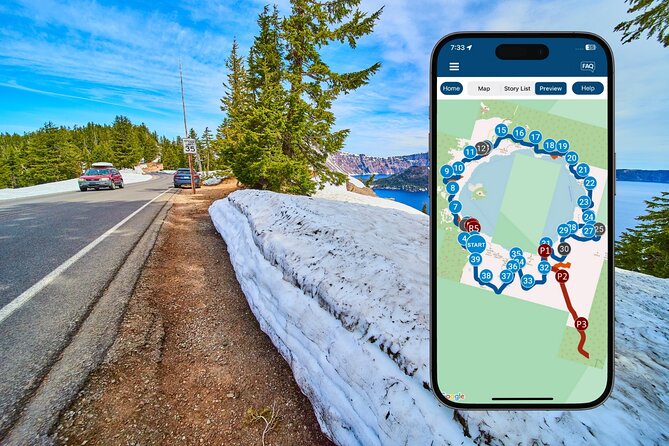
Rim Village: a planned “real life” edge to the park
The tour kicks off at Rim Village, where early planners aimed to build in a way that looked like people might actually live there. This isn’t just trivia. It gives you a lens for the buildings you see along the rim: they were meant to blend into the environment, not show off like an out-of-place development.
What you’ll enjoy here: the way the tour connects human choices (how the village was designed) with the wild scale of Crater Lake. It makes the rim feel less random.
Watch for: if you’re rushing to the dramatic lake views, you might miss the point of this first stop. Take a minute so the “why” lands before the “wow.”
Pumice Castle: why pumice looks like it belongs in a science movie
Next is Pumice Castle, tied to Mount Mazama’s eruption story. You learn that the mountain didn’t just erupt once. Smaller eruptions released lightweight volcanic rock packed with gas bubbles—pumice, full of holes, making it so light.
This stop is short but useful. It turns the park from scenery into process. When you later look out at the lake, you start noticing how the views are tied to real forces: heat, pressure, and violent release.
What you’ll enjoy here: a fast geology lesson that makes later landmarks feel connected, not separate.
Wizard Island and the rim viewpoints: where names come from
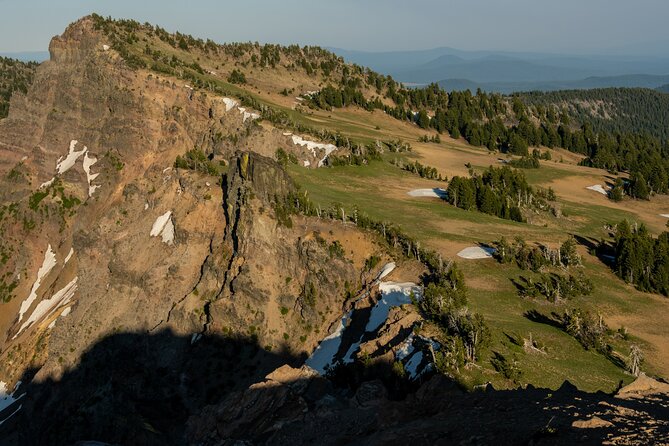
Wizard Island: not magic schools, just geology and shape
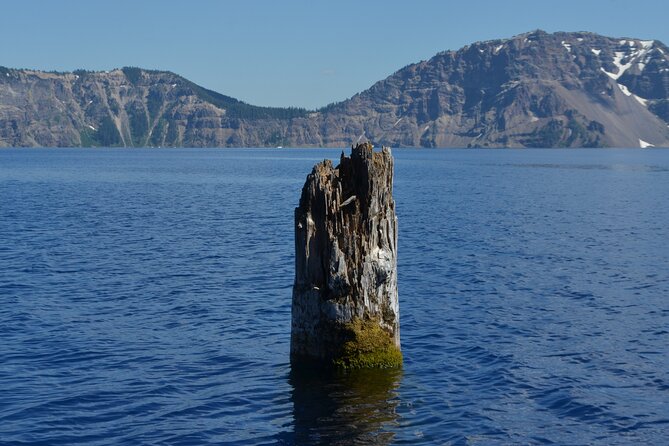
Wizard Island gets its name from a small peak on the island that looks like a pointy wizard’s hat. The tour keeps it playful, but the real value is that you’re looking at the island with intention. It’s easier to spot and interpret once you understand why the name fits.
This is also a reminder that Crater Lake’s “details” often hide inside silhouettes. If you’re only checking for the widest lake shot, you may miss the shape cues that make the island stand out.
Watchman Peak: the classic view with a real uphill effort
If you want a more active stop, Watchman Peak includes a 2-mile trail that’s moderately difficult. Expect rougher terrain and an elevation gain of about 400 feet, with around an hour total including walking time.
This is one of those choices where the audio guide helps you decide to spend effort. The payoff is an unobstructed, memorable view. If you skip it, you’re still fine; Crater Lake is dramatic anyway. But if you’re the type who likes views earned by a short climb, this is worth it.
Merriam Point: another strong rim pause
Merriam Point is another viewpoint stop where the theme stays consistent: give your eyes time to adjust to depth and scale. You’ll be able to compare angles and see how the lake changes as you move along the rim.
Tip for you: move slowly here. Let your brain calibrate. Crater Lake can look unreal at first glance, and your photos will improve once you’ve spent 2–3 minutes actually looking.
Cloudcap to Phantom Ship: reading depth and fog cues
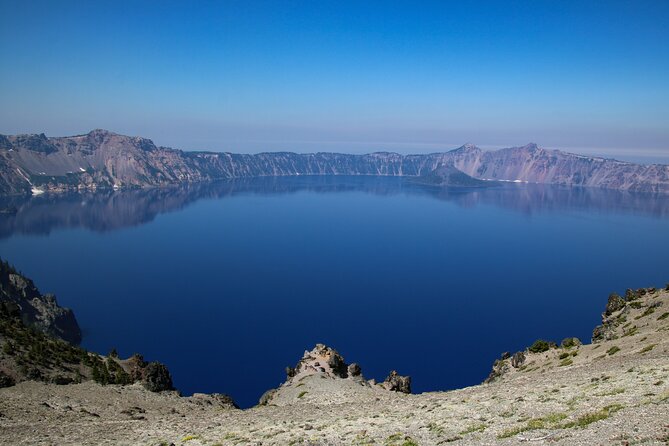
Cloudcap Overlook: the highest view point on the route
Cloudcap Overlook is described as the highest point for catching a view of Crater Lake. From here, you get a clear sightline looking west, and the guide helps you understand lake depth—because the viewpoint gives you enough context to judge how far down you’re looking.
There’s also a useful orientation cue: beyond the lake, Mount Scott rises behind you as the highest point in the park. That kind of framing makes later viewpoints easier to interpret.
Phantom Ship Overlook: a formation that changes with weather
At Phantom Ship Overlook, the name sounds theatrical, but the explanation is grounded: it’s not a boat, it’s a collection of ancient volcanic rock formations sitting offshore. When fog rolls in, the shapes can look like a ghostly ship sailing across the lake surface.
Even if you don’t get fog, this stop is still valuable because it teaches you to look at how formations sit in water context. It’s also the kind of spot where a 5-minute pause can feel like a lot longer.
Sun Notch Trail: short walk, big sense of place
Then you hit Sun Notch Trail, an easy half-mile loop that takes about 15–20 minutes. It’s positioned as a view-gathering stop, with focus on Phantom Ship and the deep blue water of Chaski Bay below.
Because it’s shorter, it’s a great fit if you want movement without a long hike. It’s also a nice break from constant driving—your legs get a reset while the audio continues to guide you.
Vidae Falls, wildflowers, and seasonal reality checks
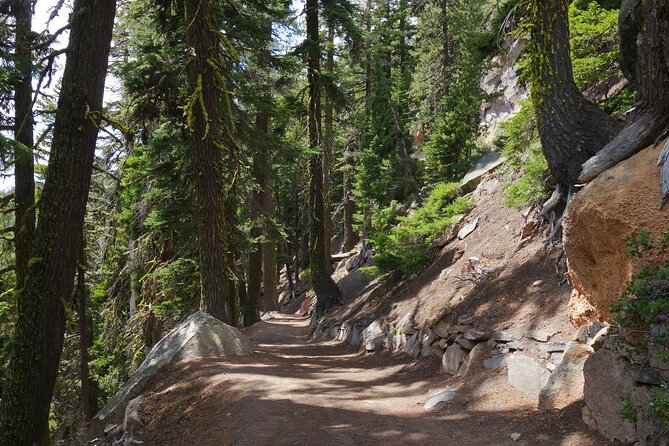
Vidae Falls: spring power, later slowdown
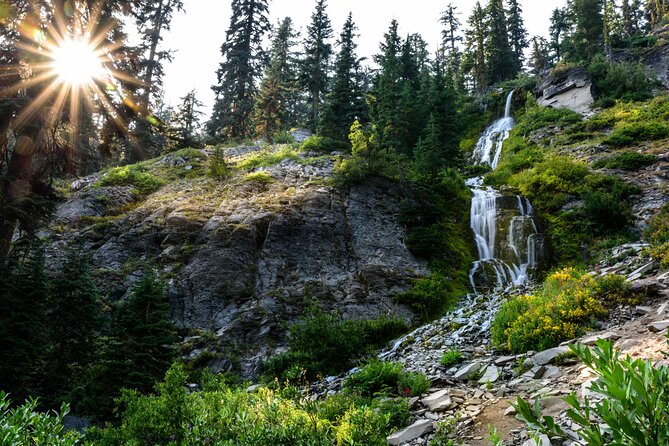
The audio sets you up for a common “wait, why is it weak?” moment. Crater Lake is 600 feet below, so where does the waterfall’s water come from? The guide explains that Vidae Falls is spring-fed and depends on seasonal snowmelt and rainfall. That means it’s typically most powerful in spring and early summer, then slows later.
This is the kind of detail that saves you from disappointment. If you visit later in the year and the falls aren’t roaring, it won’t feel like a broken promise—it’ll make sense.
Castle Crest Wildflower Garden: early bloom timing after heavy snow
Finally, the tour ends at Castle Crest Wildflower Garden, but the content here is really about timing. The tour notes the first flowers peeking through snow (including Mountain violets and Gorman buttercups) after an average winter with nearly 50 feet of snow.
Even though this is “near the end,” it’s a thoughtful conclusion: Crater Lake isn’t just a single summer view. It’s a place shaped by long winters, short bursts of growth, and the slow pace of seasonal return.
When the app works best—and when you should be cautious
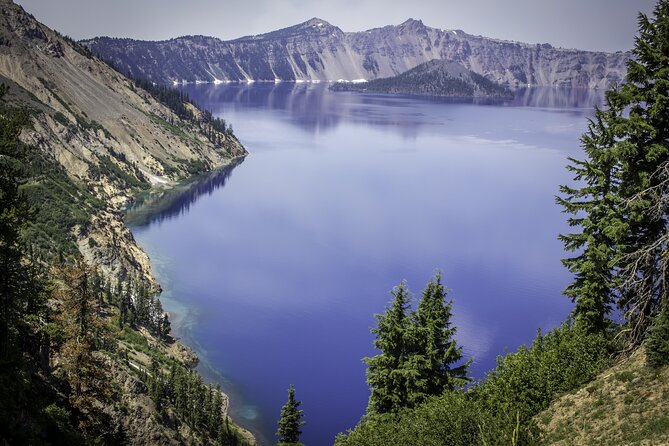
This is where I want you to set realistic expectations. The audio tour concept is smart: it’s hands-free, it’s offline, and it’s easier to do on your schedule than joining a guided group.
But you should be ready for the one thing that can ruin the experience: tech setup. The issues people report tend to fall into a few buckets, and you can avoid them:
- Download readiness: if you can’t download beforehand and you arrive without good service, the tour may be hard to use because the park can limit connectivity.
- Wrong tour version: there are different versions for different starting directions. If you pick the wrong one, GPS-based playback can feel late, early, or off-pattern.
- Navigation expectations: the guide is for audio and location cues, not a perfect step-by-step driving map. If you expect it to replace your own navigation, you might feel let down.
My practical advice: download on strong Wi‑Fi before you ever reach the park. Then, once onsite, take 30 seconds to confirm you started the correct direction version before you commit to the first story.
Who this tour suits (and who might want a different plan)

You’ll likely love this tour if you:
- want Crater Lake guidance while you drive your own pace
- enjoy learning in short bursts (instead of a full lecture)
- travel as a group of up to 4 and want one purchase per car
- plan to stop at viewpoints and take short walks without hiring a guide
You might want a different setup if:
- you hate fiddly phone app setup
- you rely on the audio guide as your sole navigation method
- you’re visiting during periods with road/area closures and you need a guaranteed full “one ring around the lake” experience
Should you book this Crater Lake self-guided audio tour?
I think this is a strong buy for the price—if you treat setup as part of the trip. Once downloaded, the format makes Crater Lake feel organized without taking away your freedom. The best parts are the way the audio explains what you’re looking at: pumice geology, why names fit (Wizard Island), and why season changes what you’ll see (Vidae Falls and wildflower timing).
I wouldn’t book it if you’re worried about app downloads or you’re the type who will get frustrated by GPS timing quirks. For everyone else, it’s a practical way to turn a scenic drive into a coherent story loop—especially when you’re already committed to spending real time at overlooks and short trails.
FAQ
Do I need a park entrance pass for Crater Lake?
Yes. The tour does not include park passes, and Crater Lake National Park requires an entrance pass for vehicle entry.
How long is the audio tour?
It’s designed for about 2 to 3 hours to complete, covering around 44 miles.
Is the tour self-guided or do I meet someone?
It’s self-guided. There’s no one meeting you at the start point; you’ll begin at Steel Information Center and follow the audio cues.
Does it work offline?
Yes. It uses offline functionality after you download. You’ll download the tour while you have strong Wi‑Fi/cellular, since park service can be limited.
How do I start the tour once I’m onsite?
Open Action’s Tour Guide App once you’re onsite, choose the appropriate tour version for your starting direction, then start the first story point. Audio plays automatically based on location cues.
Can I connect the audio to my car stereo?
Yes. Audio setup can use Bluetooth, USB, or AUX. Headphones can help for any walking parts.
Is it per person or per car?
It’s per group / per car, priced at $16.99 per group up to 4 people.
What are the tour’s starting and ending points?
Start: Steel Information Center on Munson Valley Rd. End: Castle Crest Wildflower Garden in Crater Lake National Park.
Are there seasonal closures that affect the route?
Yes. Rim Drive and the North Entrance Road are listed as closed for the season. Also, the areas between Sun Notch Trailhead and Cloudcap Overlook are temporarily closed, so you may need to drive back and access sections separately.
What if I want to use the tour again later?
You get new lifetime access with no expiry, so you can use it anytime on any trip as many times as you want.