REVIEW · BIG BEND NATIONAL PARK
Big Bend National Park Self-Guided Driving Audio Tour
Book on Viator →Operated by Drive with Action · Bookable on Viator
Big Bend has a way of making time feel slower, which is exactly what you need here. This self-guided driving audio tour strings together a 72+ mile route with 90+ stories that play as you reach each stop, so the park teaches itself as you roll along. I especially like the hands-free, location-based narration (it keeps you moving at a good pace) and the amount of story variety, from fossils and ranching to the Sierra del Carmen’s extreme remoteness. The one drawback to plan for: you still need a Big Bend entrance pass, and you’ll want to download the app at good signal before you head in.
If you’re the type who likes to wander, pause, take photos, then get right back in the car, this format fits. You can start whenever you’re ready during park hours, listen in English, and stop for short walks without worrying that you’ll fall behind a group schedule. The route is designed for a 2 to 3 hour loop, but the real “time” varies based on how long you linger at viewpoints and overlooks.
One more practical note I’d flag up front: start the audio at the correct starting point in the app. In one case, people ended up hearing only part of the route until they switched to the right route version. So, do yourself a favor: follow the app’s cues and route color, not your guesswork.
In This Review
- Key highlights worth paying attention to
- A 72-mile drive where the audio follows your location
- Starting at the park sign near Alpine: the gateway feeling
- Chihuahuan to Sierra del Carmen: remote doesn’t mean empty
- Fossils and the Rio Grande: history you can actually see
- Avery Canyon to Marfa Lights: ranching, railroads, and the strange glow
- Ranching spreads: Sam Nail, Homer Wilson, and the Blue Creek view
- Geology breaks: chert tools, Sotol Vista, and Mule Ears
- Terlingua ghost town to Castolon: where the past lingers in plain sight
- Santa Elena Canyon: the last, big jaw-drop
- Price and planning: when $16.99 is actually a bargain
- Who this audio drive fits best (and who should choose differently)
- Should you book this Big Bend self-guided audio tour?
- FAQ
- How long does the Big Bend National Park self-guided driving audio tour take?
- What does the tour cost?
- Do I need a park entrance pass?
- Does the audio tour work offline?
- What language is the tour offered in?
- How do I start the tour when I arrive?
- Can I pause the tour and resume later?
- How do I listen while driving?
- Where does the tour start and end?
- Is it a private tour?
- Is free cancellation available?
- What if the audio seems to cover only part of the park?
Key highlights worth paying attention to
- Offline maps + offline audio make this work even when cell service drops.
- Bluetooth/USB/AUX audio setup turns your phone into the best seat in the car.
- Fossil Bone Exhibit and Fossil Discovery Exhibit connect Big Bend geology to real discoveries and replicas.
- Ross Maxwell Scenic Drive gives big canyon-and-mountain views with frequent pullouts.
- Mule Ears Spring Trail and Tuff Canyon Overlook are short stops that reward you with standout geology.
- Santa Elena Canyon is the payoff end with towering cliff views and a Rio Grande access point.
A 72-mile drive where the audio follows your location

This tour is built like a self-guided road trip with smart timing. The route is over 72 miles and designed to take about 2 to 3 hours, with roughly 90+ separate audio moments triggered by where you are. That matters because it prevents the usual problem with audio tours: you miss the story while you’re scrambling to park, or you hear everything out of order.
Technically, you’ll use the Action Tour Guide App. You download the app on your phone (while you have strong Wi‑Fi or cellular), then enter a password sent by email and text. Once you’ve downloaded, you can use the tour offline, which is a huge deal in Big Bend, where signal can be spotty. For the best experience in the car, connect your phone to your stereo using Bluetooth, USB, or AUX. If you plan to step out briefly to listen while walking, headphones can help.
The tour is private in the sense that only your group participates. That keeps it calm. Nobody’s waiting for you, and you don’t have to rush other people to hit a schedule. You can pause, take snacks and photo breaks, and then restart when you’re ready.
Starting at the park sign near Alpine: the gateway feeling
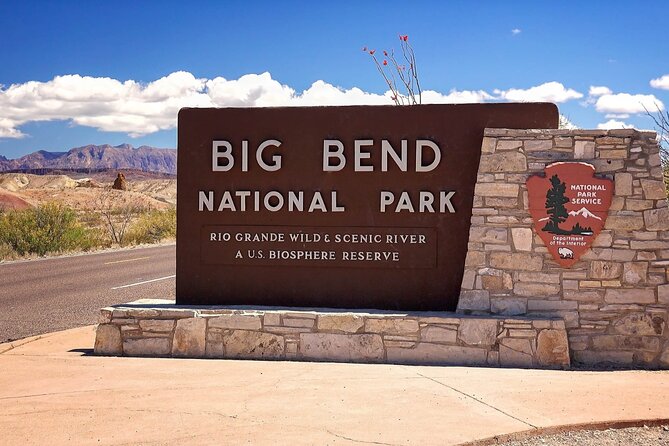
You begin near the Big Bend National Park sign in Alpine, Texas. It’s a good first step because it sets the tone: you’re entering a place that’s rugged, spread out, and far from anything “easy.”
The early audio stop is at the entrance station area—short and simple, but useful. You’ll hear how this entrance station is the main gateway to the park, and you’ll get a quick feel for the park’s tone: modest on the outside, serious about what’s ahead.
Right after that comes a quick orientation on the Chihuahuan Desert. It’s one of those facts that sounds almost silly until you picture it. You get the scale reference that the desert is so huge that France could fit inside it. That’s the mental reset you want early on: Big Bend isn’t a small desert you can “check off” in a short drive. It’s a region, and you’re moving through it.
This is also where you’ll want to be alert about expectations. You won’t see “one single” view everywhere. Some stops are viewpoints; some are short pulls with stories; some are near trails. The audio format helps you connect the geography you see to what you’re hearing.
Chihuahuan to Sierra del Carmen: remote doesn’t mean empty
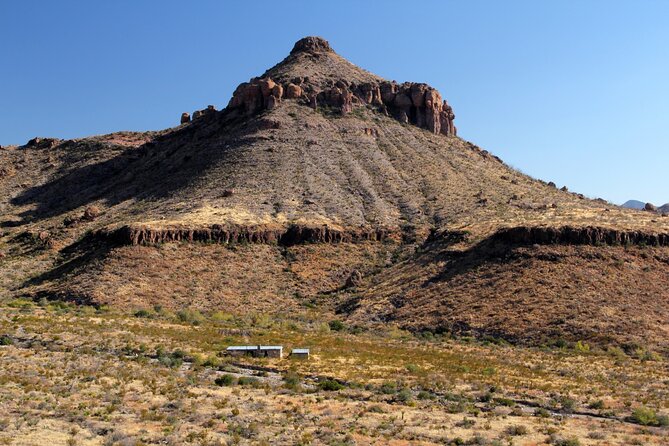
As the drive continues, you get a stop dedicated to Sierra Del Carmen on the Mexican side of the Rio Grande. This is a story-driven detour from the typical “wow, mountains” narration. The point here is remoteness: no rivers, roads, or towns in the Sierra. That kind of emptiness can feel unreal, and the audio helps you understand why the region has earned a reputation as one of the most remote places on Earth.
Then you shift toward the Chisos area, where the park starts doing something special. Big Bend is mostly desert, but the Chisos Mountains are forested. That contrast is explained as a “sky island” situation—like a green pocket floating above the surrounding arid world. Even if you’re not hiking yet, this story changes how you look at what’s ahead. A darker ridge in the distance isn’t just scenery; it’s a different ecosystem.
If you’re listening while driving, this part of the tour gives you an easy mental model: desert dominates until you approach the mountain zone, where the environment changes sharply. That’s also where you’ll notice your road impressions start matching the audio themes.
Fossils and the Rio Grande: history you can actually see
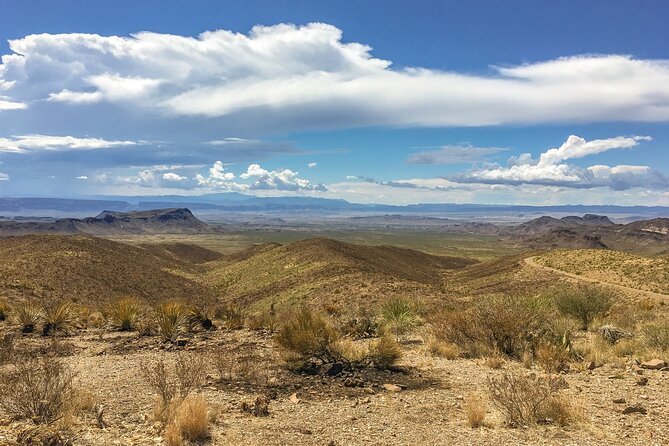
Two of the most “park-brain” moments come from the fossil-focused stops.
First is the Big Bend National Park – Fossil Bone Exhibit. This is where you get the setup: historic village remains by the Rio Grande, plus a hot springs hiking trail option. The tour description notes that you can take an hour-long detour partway through if you want to extend your journey. That’s worth considering if you’re the type who likes one longer break during the drive. If not, you can still get the core narration and continue smoothly.
Later, you’ll hit the Fossil Discovery Exhibit, which opened in 2017. This stop is about replication and discovery. You’ll hear that paleontologists at Big Bend have excavated more than 1,200 fossils and that this is the only National Park where rocks from the Cretaceous period have been found (as stated in the tour info). For me, the value here is that it turns geology into a narrative you can remember. It’s not just “cool rocks.” It’s a timeline of what the park preserves.
Here’s a practical planning thought: fossil exhibits can make a longer visit feel tempting, especially if you’re reading and looking closely. If you want to keep the tour near the 2 hour mark, treat the exhibits like a focused stop—hit the main parts, then move on.
Avery Canyon to Marfa Lights: ranching, railroads, and the strange glow
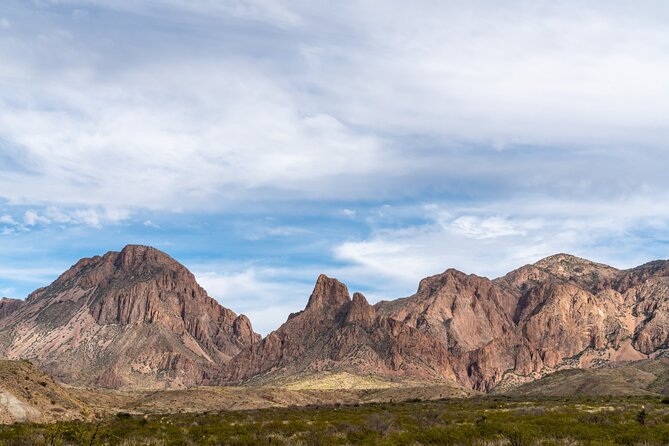
Once you’re past the desert and the “sky island” idea, the tour pivots into Big Bend’s human story: ranching, settlement, and the way railroads reshaped where people lived.
Avery Canyon is named after J.C. Avery, who ranched there at the start of the 1900s. The audio connects ranch expansion to the railroad reaching Marathon in the 1880s. It also mentions the scale of track—4,000 miles—and how that growth contributed to Brewster County’s formation. Even if you’re just grabbing a viewpoint, this stop gives you a reason to care about names you’ll see on maps.
Then you move into one of the most scenic pieces of driving: Ross Maxwell Scenic Drive. The tour info emphasizes it as a route through diverse scenery, with panoramic views of the Chisos Mountains and Santa Elena Canyon in the mix. The best part of this stop is that it’s designed with frequent pullouts for photo opportunities. That makes it easy to stop briefly without feeling like you’re wasting time.
Next is the Marfa Lights Viewing Area. The audio tells a story from 1883: a young cowhand seeing a flicker of light in the distance, assuming it was an Apache fire, then hearing other settlers reported similar lights the next day. This is one of those moments where the value is less about certainty and more about atmosphere. Stand, look, and let the story do what stories do—give meaning to the darkness.
Ranching spreads: Sam Nail, Homer Wilson, and the Blue Creek view
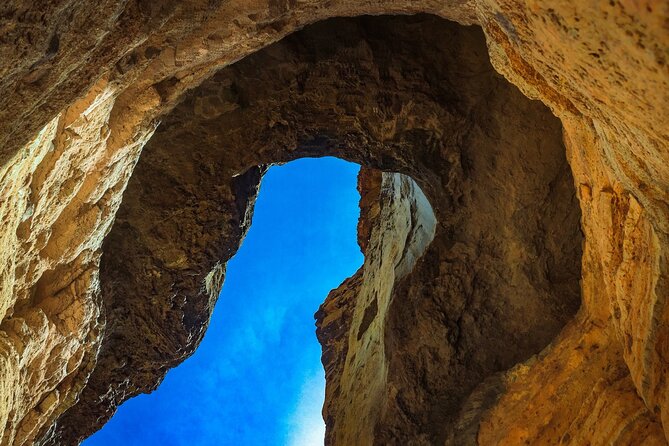
A big portion of this drive is about ranch scale and survival. The tour includes Sam Nail Ranch, described as a 15,000-acre ranch that ran for nearly 40 years. You’ll hear how two brothers headed to Brewster County during the ranching boom in 1916 and how expanding homesteads tied to World War I-era encouragement to grow food and conserve resources.
This stop is valuable because it explains why Big Bend history isn’t just “old buildings.” It’s land management, economics, and endurance. You also get a sense of how long these ranch operations shaped the region.
The tour then covers Homer Wilson Ranch, with a scenic view of the Blue Creek Valley. The audio shares that Wilson settled there in 1929 as a World War I veteran who wanted a peaceful place to build a home for his family.
At a practical level, these ranch stops are short. That can be a benefit if you’re trying to fit a lot into a day. But if you love long interpretive walks, you might feel a pull to do more reading on your own or spend extra time around nearby pullouts.
Geology breaks: chert tools, Sotol Vista, and Mule Ears
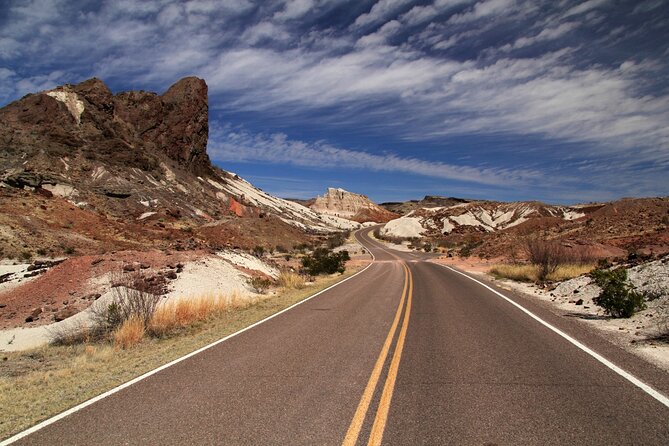
If you want Big Bend to feel real, geology is the fastest route there. This tour leans hard into rock stories, and the stops are timed so you’re not just hearing facts—you’re seeing cues.
At Lower Burro Mesa Pour-off Trail, the audio points to pre-mining value. It notes that 13,000 years ago, prehistoric hunter-gatherers found chert there, described as colorful sedimentary rock suitable for stone tools like spearheads. That’s a powerful switch: the trail isn’t only for a scenic view; it’s connected to how people made tools from what was in front of them.
Then you’re at Sotol Vista, where the audio frames a panoramic look across the Chihuahuan Desert, with the Chisos Mountains silhouetted in the distance and the Rio Grande and distant canyons in view. Vista stops are where you can let your eyes adjust. If you’ve been looking straight ahead at road and scrub, this kind of view helps you understand the scale.
After that comes Mule Ears Spring Trail, an odd formation explained as rhyolite shaped by geological dikes—magma filling cracks and cooling into solid rock. The value here is that you learn the “how” behind the shape rather than just being told it’s unusual.
If you’re wondering whether these are worth it when you’re pressed for time, the answer is yes—because the audio keeps each stop short and purposeful, and you’re getting a reason to look closely.
Terlingua ghost town to Castolon: where the past lingers in plain sight
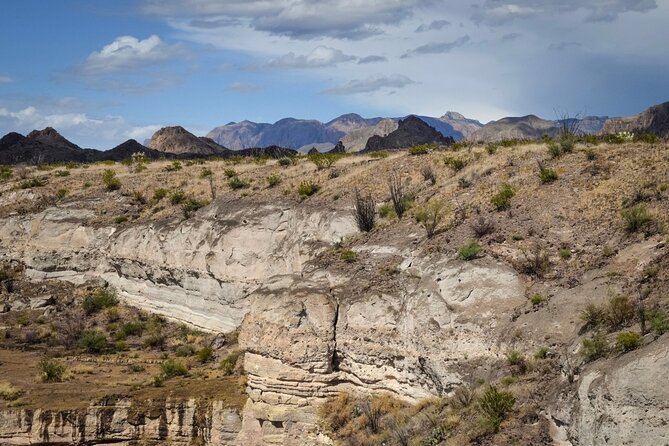
As you approach the far edge of the loop, the tour turns more story-forward again, moving from ranch and rock into settlement and decline.
Terlingua Ghost Town is described as a mining district that became a ghost town. The audio notes that the name comes from tres lenguas—English, Spanish, and Lipan Apache mentioned as the languages spoken during its founding. The story also frames Terlingua as a sleepy Mexican village that sprang up near the Rio Grande before mining changes everything.
Next, you reach Castolon Historic District. The narration sets expectations honestly: it doesn’t look like much at first. Then it tells you to watch for historic buildings off to the right, described as some of the only remnants of pre-park days in that area. This kind of warning is useful because it keeps you from thinking you’re in the wrong place. You know what to look for.
Santa Elena Canyon: the last, big jaw-drop
The endpoint phase is built around Santa Elena Canyon, and it’s the kind of ending that makes the whole drive feel worth it.
First is Santa Elena Canyon River Access, described as the best chance to get close to the Rio Grande. This is where you’re aiming for that “up close” feeling—especially if you like standing near water in a place that’s mostly dry. It’s also a good moment to slow down and just watch.
Then comes Santa Elena Canyon itself. The audio cues a major viewpoint: jaw-dropping limestone cliffs, with the Rio Grande plunging about 1,500 feet below (as stated in the tour info). The narration also asks you to consider how the dramatic shape formed, which gives your brain a job while you look.
This is where the tour works best as a whole. You’ve been learning desert ecosystems, fossil timelines, ranch histories, and rock shapes. Now the canyon ties it together visually—cutting through the park like proof that time and water did their work.
Price and planning: when $16.99 is actually a bargain
The tour costs $16.99 per group, up to 4 people. That pricing structure is the real value play: instead of per person, you’re splitting the cost across the car. If you’re traveling as a pair or a small group, it’s often cheaper than hiring a guided tour for a similar length of time. You also get something guided tours can’t always offer: flexibility to pause, skip, and take short side breaks when you feel like it.
Time planning matters most here because Big Bend punishes rushing. The route is designed for 2 to 3 hours, but you should expect some variability if you add the optional hot springs detour. Also remember that the park entrance pass is required and is not included. If you arrive without a plan for the entrance fee, your “self-guided” day can turn into an avoidable delay.
A tip that comes straight from how this tour is designed: use your car stereo for the drive so you don’t have to crank volume. And do the app download when you have good signal—people run into trouble when they arrive with the app half-prepped. Once everything is downloaded, the tour should keep working offline.
Also check park hours in your planning window. The tour lists 8:00 AM to 4:00 PM for the operating dates shown, and starting too late is a common way to feel rushed.
Who this audio drive fits best (and who should choose differently)
This tour is a great match if you want:
- a short, self-paced Big Bend outing that still feels educational
- a route with built-in stories so you don’t have to guess what you’re looking at
- a mix of desert, geology, and human history without committing to a full hiking day
It may be less ideal if you want:
- long, in-depth museum-style time at each stop
- lots of frequent long walking (the stops are mostly short, designed for quick viewing and parking-friendly breaks)
- a fully guided group experience where a person manages everything on the spot
Should you book this Big Bend self-guided audio tour?
I think it’s an easy yes if you want a first Big Bend day that feels structured without being rigid. The biggest wins are the hands-free location-triggered storytelling, the offline capability, and the way the stops connect—desert to mountains, fossils to ranching, then canyon cliffs at the end.
If you’re the kind of traveler who loves to read and explore slowly, you might feel tempted to spend extra time beyond the 2 to 3 hour design. That’s fine—just be ready for the tour to run longer than planned. And if you do book, spend five minutes before entering the park making sure the app is downloaded and you start at the correct starting point so the route plays the way you expect.
FAQ
How long does the Big Bend National Park self-guided driving audio tour take?
It takes about 2 to 3 hours to complete, based on the provided tour route and timing.
What does the tour cost?
The price is $16.99 per group (up to 4 people).
Do I need a park entrance pass?
Yes. The tour requires an entrance ticket to visit Big Bend National Park, and it is not included.
Does the audio tour work offline?
Yes. It includes offline maps, and the tour is designed to work without cellular or Wi‑Fi after the download.
What language is the tour offered in?
The tour is offered in English.
How do I start the tour when I arrive?
Go to the starting point. No one meets you. Enter the first story’s point in the app and the audio should begin automatically.
Can I pause the tour and resume later?
Yes. You can start and pause whenever you like and enjoy breaks for snacks and photos.
How do I listen while driving?
You can connect your phone to your car stereo using Bluetooth, USB, or AUX. The audio is also compatible with Apple CarPlay.
Where does the tour start and end?
It starts at the Big Bend National Park Sign in Alpine, TX 79830, and ends at the Santa Elena Canyon Trail in Terlingua, TX 79852.
Is it a private tour?
Yes. It’s listed as a private tour/activity, meaning only your group participates.
Is free cancellation available?
Yes. Free cancellation is offered up to 24 hours in advance for a full refund.
What if the audio seems to cover only part of the park?
If audio coverage seems limited, check that you launched the correct version/route in the app and follow the route cues provided there.