REVIEW · GARDINER
VIP Private North Yellowstone National Park Winter Excursion
Book on Viator →Operated by Globe Trekkers Excursions · Bookable on Viator
Winter Yellowstone feels private and wild. This private North Yellowstone winter excursion turns a long, cold drive into a focused hunt for steam, wildlife, and quiet scenery along the Yellowstone River and beyond. You get hassle-free pickup from the Bozeman area, plus a guide who handles the driving so you can scan for bison, elk, bighorn sheep, coyotes, and more.
I like the private, just-your-party setup because it keeps stops practical and not rushed. I also love the fact that you’re not going empty-handed: bottled water, snacks, soda, and even binoculars plus an SLR camera are included to help you actually enjoy the wildlife viewing. The one real consideration is weather: the experience requires good conditions, and if it has to be canceled, you’ll be offered another date or a full refund.
In This Review
- Key Things That Make This Winter Trip Work
- North Yellowstone in Winter: Why This Feels Like a Different Park
- Getting Oriented Fast in Gardiner and Paradise Valley
- Yankee Jim Canyon: A Short Stop With Big Winter Character
- Gardiner and the Roosevelt Arch: The Classic North Entrance Mood
- Mammoth Hot Springs: Steam, Stone, and Geology You Can Feel
- Undine Falls: Frozen Over, Still Alive
- Slough Creek and the Lamar Valley Beginning: Wildlife Odds Go Up
- Private Guide Advantage: Less Chasing, More Seeing
- What’s Included (and What Isn’t) for a 5 to 7 Hour Day
- Gear, Breaks, and Staying Comfortable in Winter Cold
- Price and Value: When $250 Makes Sense
- Should You Book This North Yellowstone Winter Excursion?
- FAQ
- How long is the VIP Private North Yellowstone National Park Winter Excursion?
- Where does the tour start?
- Is pickup offered from Bozeman?
- Is this a private tour?
- What is included in the price?
- Is lunch included?
- What happens if the weather is poor?
- Can I cancel for a full refund?
Key Things That Make This Winter Trip Work
- Private for your party: no bus crowding, and your stops can match your pace
- North Entrance routing: Gardiner as the classic gateway, even when other sides can be limited
- Thermal stops that feel alive: Mammoth Hot Springs steam and geothermal energy in winter
- Frozen-in-place scenery: Undine Falls often looks dramatically frozen while the river still moves behind it
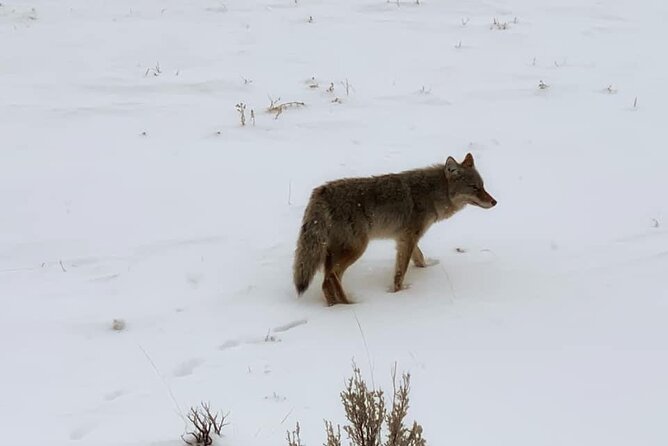
- Wildlife scanning focus: frequent opportunities around Lamar Valley viewpoints and river corridors
- Warm-up support included: bottled water, snacks, soda, plus short, well-timed breaks
North Yellowstone in Winter: Why This Feels Like a Different Park
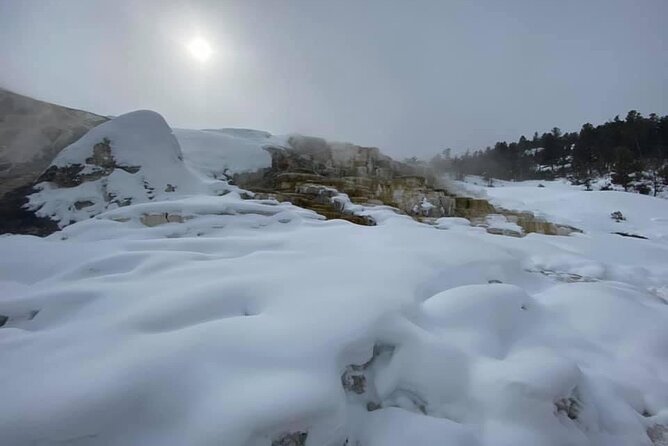
Yellowstone in winter is not just summer with snow. It’s slower, quieter, and stripped down to what actually matters: wildlife moving through open ground and the thermal system acting like a giant engine underfoot. The best part of this kind of day is that you’re not fighting traffic or crowd flow. You’re rolling with the seasons.
The tour is built around that idea. You’re out for about 5 to 7 hours, starting at 9:00 am, with a private guide handling the driving and pacing. Your job is the fun part: looking up, looking out, and watching for movement in that pale winter light.
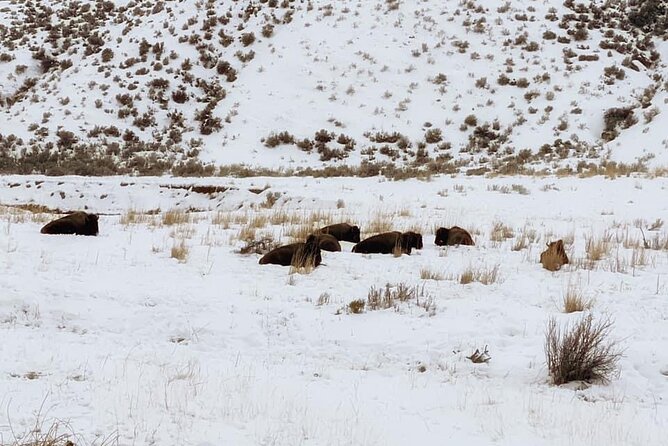
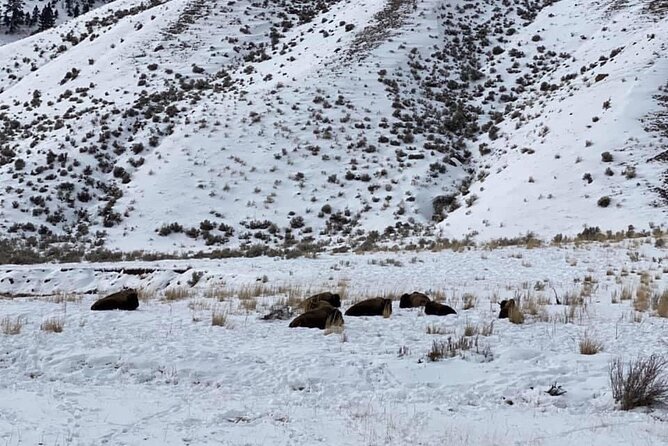
And because it’s a private excursion, you get the freedom to linger when something is happening. Bison standing quietly in a snowbank. Elk shifting across an open slope. Coyotes doing their patient, watchful thing. In winter, those moments can be sudden and memorable, and timing really matters.
You can also read our reviews of more tours and experiences in Gardiner.
Getting Oriented Fast in Gardiner and Paradise Valley
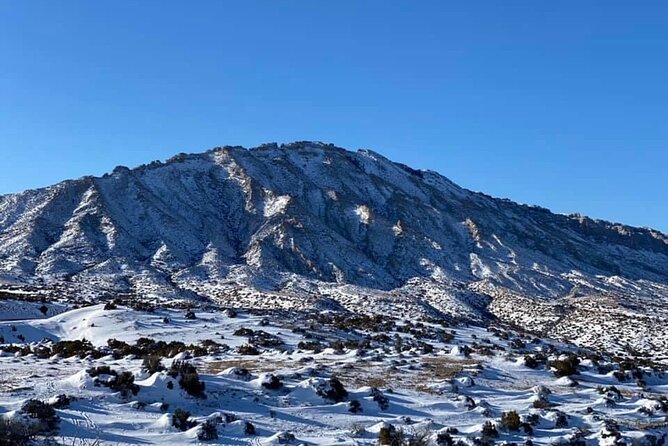
You start in the Gardiner area, with the meeting point at Yellowstone Forever, 308 W Park St, Gardiner, MT 59030. If you’re staying in the Bozeman area, pickup is included, and you’ll be returned afterward.
From there, you’ll head through Paradise Valley, a wide river valley of the Yellowstone River with big mountain shapes on both sides. It’s the kind of place where, even if you don’t see wildlife immediately, you quickly get that Yellowstone winter rhythm: long sight lines, crisp air, and tracks or distant movement that can turn into a sighting once you’re ready to look.
Paradise Valley is also a great “context” stop. The Yellowstone River here is known for fly fishing, and the valley connects to the broader region’s hot springs story (including well-known names like Chico, La Duke, and Hunter’s). Even if you’re not visiting those exact springs on this day, learning the geography makes the geothermal stops feel more grounded.
Yankee Jim Canyon: A Short Stop With Big Winter Character
One of the first scenic pulls is Yankee Jim Canyon, about 13 miles north of Yellowstone National Park. It’s a short stretch on the Yellowstone River, but in winter it’s all motion and texture. The canyon is known for having the largest rapids on the Yellowstone River outside the park.
In summer, that spot is more about water action. In winter, it’s about the contrast: ice edges, cold air, and that rushing river energy still pushing through a narrow corridor. The tour keeps this stop efficient (around 10 minutes), which is good. You get the payoff without burning time when you want to be farther inside the park looking for wildlife.
Practical note: this is a good place to use your binoculars early, because once you start seeing wildlife, the day often turns into a pattern of spot, pause, photograph, move.
Gardiner and the Roosevelt Arch: The Classic North Entrance Mood
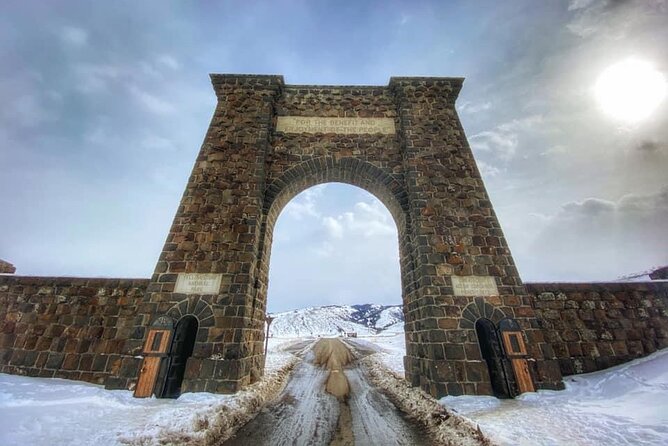
Gardiner is the original gateway into Yellowstone, and it has that old-school “you’re here” feel the moment you roll in. You’ll also have a short window to visit the Roosevelt Arch, an iconic entrance marker that frames the park like a postcard you can walk through.
This stop is brief (about 20 minutes), but it serves a purpose. It’s where you shift from travel mode to park mode. You get your bearings, warm up a bit if you can, and reset your eyes for the thermal and wildlife sections ahead.
If you’re coming in from the Bozeman side, this is also where the logic of the route becomes clear. You’re not trying to cover every corner of Yellowstone. You’re concentrating on the North side experience that’s strong for winter wildlife viewing.
Mammoth Hot Springs: Steam, Stone, and Geology You Can Feel
Next up is Mammoth Hot Springs, and this is one of those Yellowstone stops that always looks different in winter. You’re not just seeing a hot-spring area. You’re seeing how the park’s volcanic energy shows itself at the surface.
Mammoth Hot Springs sits outside the caldera boundary, but it’s still tied to the same magmatic system that powers other thermal zones. In plain terms: it’s proof that Yellowstone’s heat is a big, connected machine, not just a random pile of geysers.
The tour time here is about 15 minutes, and that’s exactly right. Winter viewing rewards quick focus because you’ll be warm in short bursts and then back outside to keep looking. Mammoth Hot Springs is where you’ll want to slow down your pace just a little, grab photos, and take in the way steam rises and shifts with the cold air.
This is also a good stop to use your camera skills. Your guide provides use of an SLR camera, which is helpful if you want clearer shots of steam patterns and wildlife distance without relying only on phone zoom.
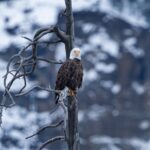
Undine Falls: Frozen Over, Still Alive
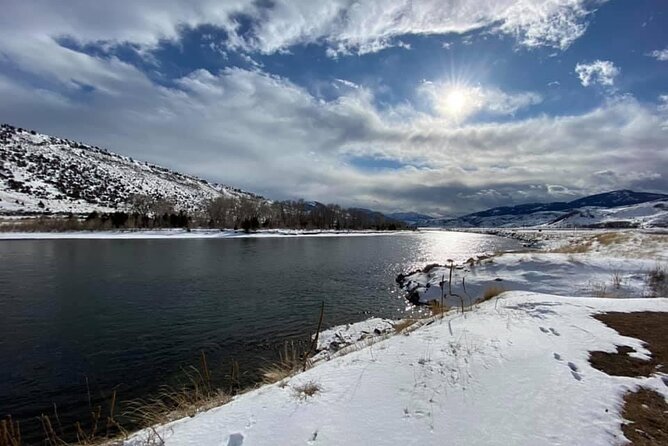
Undine Falls is a quick stop (around 5 minutes), but it can be surprisingly dramatic in winter. The waterfall is often frozen over while the river continues flowing behind it, so you get that weird, beautiful mix of still ice and moving water pressure.
This is the kind of scene that makes you stop moving for a moment. It’s not huge like some of the park’s other falls, but in winter it’s a little more intimate. You’re close enough to understand how the ice forms and where the flow remains active.
Because it’s short, don’t overthink it. Step out, take a few steady photos, and move on. Save your longer “stay” moments for wildlife spotting, since that’s where your day can get truly special.
Slough Creek and the Lamar Valley Beginning: Wildlife Odds Go Up
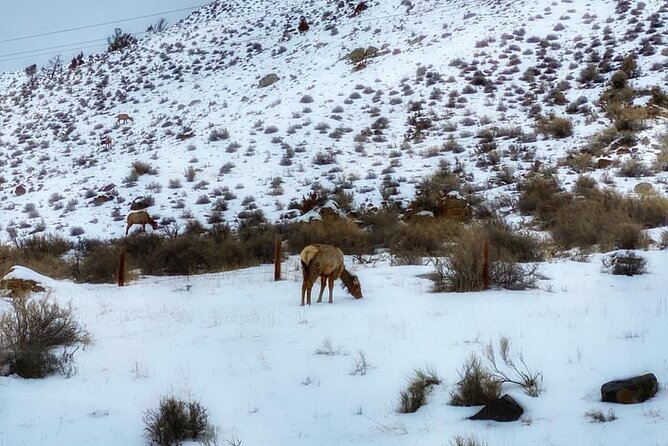
The final major positioning stop is Slough Creek, with a view toward the beginning of Lamar Valley. This is one of the best winter concepts Yellowstone has for wildlife: open space, wind, and long sight lines.
You’re not promised animals, of course. But the park experience here is built around the idea that winter animals move more noticeably. You’re in the right zone to spot bison, elk, bighorn sheep, coyotes, and other creatures that use these corridors.
This is where I really value having a guide. A private guide doesn’t just drive; they read the terrain and keep your focus in the right place at the right time. In the winter, a lot of wildlife is visible only if your eyes know what to look for: movement on a distant ridge, a dark shape in snow, or a sudden shift in grazing patterns.
Even better, this tour’s structure keeps wildlife viewing from turning into random wandering. You get short stops timed around what winter can deliver.
Private Guide Advantage: Less Chasing, More Seeing
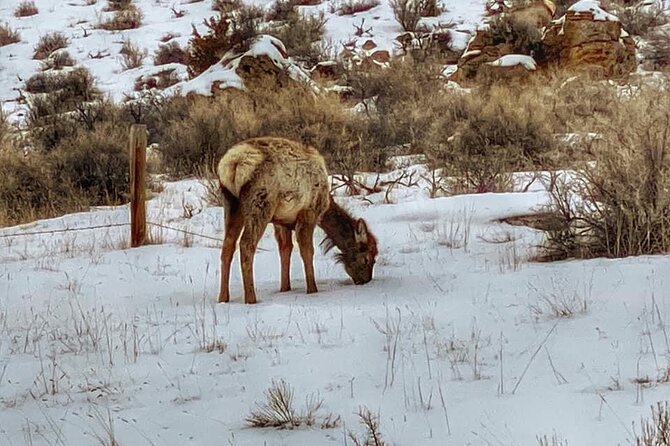
The tour’s biggest strength is the private format. When you’re not sharing the day with a busload of strangers, your guide can respond to what’s actually happening outside—without waiting for everyone to catch up or to return from a photo detour.
Guides on this experience include names like Mimi, Jason, Miriam, AJ, Dennis, and Spencer, and the common thread in how people describe their days is simple: they pay attention. They help you spot animals you’d likely miss on your own, and they handle timing for breaks and snacks so you don’t burn energy at the wrong moment.
There’s also a practical comfort side. People highlight the vehicle comfort and that the pacing feels right for winter. That matters more than it sounds, because half the challenge of a winter Yellowstone day is staying alert and not getting mentally tired before the best sightings happen.
What’s Included (and What Isn’t) for a 5 to 7 Hour Day
This trip is priced at $250 and includes a lot of the “friction” that often ruins winter travel days. You’re covered for:
- Private transportation
- Bottled water
- Snacks and soda
- Use of an SLR camera and binoculars
- All fees and taxes
- Hotel or AirBnB pickup/drop-off (Bozeman area is specifically mentioned) and return
What’s not included is lunch. That doesn’t mean you won’t get a break—you’ll likely have time to stop and reset—but you should plan to buy or bring your own food for that part of the day.
The value question, then, isn’t just $250 versus self-driving. It’s whether you want:
- a guide to set the pace and spot wildlife,
- gear to help you photograph and scan effectively,
- and a private, planned route that minimizes wasted time.
For winter Yellowstone, that planning component is worth a lot. You’ll be spending your energy where it counts: on sightings and thermal sights, not on navigating ice-slow roads and guessing where to pull over.
Gear, Breaks, and Staying Comfortable in Winter Cold
This tour gives you helpful extras, especially for photography and wildlife viewing. Binoculars mean you can actually focus on distant animals without squinting. The included SLR camera use can be a big help if you want sharper shots than a phone typically gives you in winter light.
You also get bottled water, snacks, and soda/pop, which is the kind of support that keeps you from feeling stuck once you’re outside. On a 5 to 7 hour winter outing, “snacking before you’re hungry” makes a difference.
Now the obvious winter reality: dress warm. The tour is outdoors around scenic viewpoints and thermal areas, and winter temperatures can be unforgiving even when the air is clear. Bring layers you can manage, plus gloves you can still move in when you want to grab photos.
If weather turns, the operator requires good conditions. If the day has to be canceled due to poor weather, you’ll get offered a different date or a full refund.
Price and Value: When $250 Makes Sense
At $250, this isn’t the cheapest way to reach Yellowstone. But it is a cost that matches what you’re buying.
You’re paying for:
- private transport with a guide doing the driving,
- time-saving routing in a season where daylight and conditions matter,
- included supplies (water, snacks, soda),
- and spotting support through binoculars and camera use.
If you’re traveling with family members who want wildlife and thermal stops but don’t want the stress of self-navigation, the private format can feel like a “stress tax” worth paying. If you’re a couple, it can also work well because you’re not sharing attention or stopping for a crowd schedule.
The value is highest when you’re truly here for the big Yellowstone winter payoff: wildlife sightings plus geothermal scenery, done in the right order and without feeling rushed.
Should You Book This North Yellowstone Winter Excursion?
Book it if you want a guided winter day that balances thermal sights and wildlife viewing from the North Entrance side, with pickup support from Bozeman and a private setup that keeps the day flexible.
Skip it (or plan extra carefully) if:
- you’re not comfortable in cold weather,
- you need a guaranteed lunch provided,
- or your schedule is tight and you can’t handle a weather-related date change.
If you’re aiming for the magic of winter Yellowstone without the guesswork, this is a strong choice. It’s the kind of outing that helps you see more than you would on your own, while keeping the day warm, timed, and genuinely enjoyable.
FAQ
How long is the VIP Private North Yellowstone National Park Winter Excursion?
It runs about 5 to 7 hours.
Where does the tour start?
The meeting point is Yellowstone Forever, 308 W Park St, Gardiner, MT 59030. The tour ends back at the meeting point.
Is pickup offered from Bozeman?
Yes. Hotel or AirBnB drop-off and pick-up are included.
Is this a private tour?
Yes. It’s private, and only your group participates.
What is included in the price?
All fees and taxes are included, along with private transportation, bottled water, snacks, soda/pop, and use of an SLR camera and binoculars.
Is lunch included?
No. Lunch is not included.
What happens if the weather is poor?
This experience requires good weather. If it’s canceled due to poor weather, you’ll be offered a different date or a full refund.
Can I cancel for a full refund?
Yes, you can cancel up to 24 hours in advance for a full refund.