REVIEW · NORTH DAKOTA
Theodore Roosevelt National Park Self-Guided Driving Audio Tour
Book on Viator →Operated by Travel with Action · Bookable on Viator
Wild badlands views feel close by car. This self-guided audio tour turns the Theodore Roosevelt National Park North Unit into a stop-by-stop experience with 40+ location-triggered stories. I love that you can park, walk a trail, and still hear the narration without touching your phone much. I also like the practical offline setup—no signal needed once you download. One drawback to plan around: like any app-based experience, if your audio setup fails, you may miss the first stories.
You’ll spend about 1 to 2 hours if you keep it light, but the full route is longer—over 29 miles with a walk-and-view pace closer to 2 to 3 hours. The tour is designed for a small group, too, since it’s priced per car (up to 4 people). The audio is in English, and you start at the first marked story point and follow the cues through the drive.
If you want a park visit that mixes geology, wildlife, and historic ranch remains without hiring a guide, this fits. Just remember: park admission and passes are separate, and you’ll want decent phone battery before you head out.
In This Review
- Key highlights you’ll actually use
- Theodore Roosevelt National Park by audio: what this tour feels like
- Price and value: $24.99 per group vs. park admission
- Getting started without stress: download first, then go offline
- The route in context: 29+ miles, 40+ stories, and real pacing
- Stop 1: Little Mo Nature Trail to River Bend Overlook
- The Cannonball Concretions: odd shapes with a science story
- North Unit Visitor Center: your planning hub
- Caprock Coulee Loop and Buckhorn Trail: two hikes, two moods
- Caprock Coulee Loop (moderate, about 4.4 miles)
- Buckhorn Trail (moderately challenging, about 10.8 miles)
- Bentonitic Clay Overlook: the science stop that doesn’t feel dry
- Badlands Overlook and the bison comeback
- Elkhorn Ranch Site Trail: Roosevelt-era remains in a short walk
- Oxbow Overlook: the final big curve
- Oil Well Road: when North Dakota turned into oil country
- How well does it work in real life? Lessons from the ratings
- Who this tour suits best (and who should consider a different format)
- Practical tips to make the most of your drive
- Should you book this Theodore Roosevelt National Park audio tour?
- FAQ
- How much does the Theodore Roosevelt National Park self-guided driving audio tour cost?
- How long does the tour take?
- What language is the audio tour in?
- Will it work without cell service or Wi-Fi?
- Do I need to download anything before arriving?
- How do I start the tour onsite?
- Can I pause and resume the tour whenever I want?
- How do I play the audio in the car?
- Does the tour include park entry?
- What are the tour’s opening hours?
Key highlights you’ll actually use

- Hands-free GPS audio plays based on your location, so you can focus on the views instead of tapping screens.
- Offline maps + offline playback after setup, which is huge in a low-signal area like western North Dakota.
- A stop plan that makes sense: short walks, overlooks, and a few hikes at clear effort levels.
- Wildlife and geology in the same loop, from bison viewing to the story behind rock formations.
- Small-group value: you buy once per car for up to four people.
- Lifetime access, no expiration, so you can reuse it on a future trip.
Theodore Roosevelt National Park by audio: what this tour feels like
The best self-guided tours do one thing well: they help you move through a place without you feeling lost. This one leans into that. Instead of a generic talking-head history, you get a route tied to where you are—so you’re always heading toward the next practical stop.
The North Unit is big-sky and wide-open. That’s fun, but it can also make your time feel scattered if you’re guessing which overlooks matter. The audio guide gives you a rhythm: park, walk a little, look long, then drive to the next point.
I also like that the format supports real travel habits. You can pause for photos, skip a stop, or spend more time where you care. Nothing here forces a strict schedule beyond the daylight and your own legs.
Price and value: $24.99 per group vs. park admission
The tour itself costs $24.99 per group (up to 4 people). For a couple or a small family, that’s often the difference between doing a narrated experience and skipping it entirely.
But you’ll also need to budget for the park. Theodore Roosevelt National Park admission is not included and is listed as $30.00 per booking (and park passes are required). That’s the big “gotcha,” because the audio cost is only part of the total.
Here’s how I’d judge value for you: if you’ll do at least most of the scheduled stops (not just the first overlook), the narration usually pays off. If you plan to stop only for one short trail, you might feel the app is less worth it.
Getting started without stress: download first, then go offline
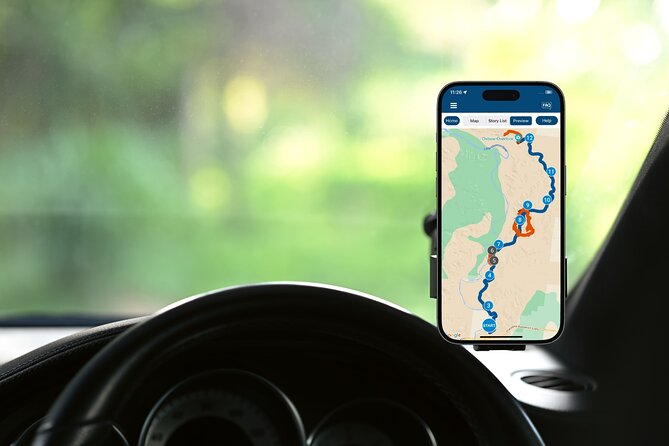
The setup is simple, but it’s also the one place you can accidentally trip yourself up. The tour requires you to download the tour while you’re in strong wifi/cellular. After that, it works offline.
Once you have it set, the tour runs without cellular or Wi-Fi. That’s a big deal in this area, where reception can be spotty to nonexistent.
You’ll also want a solid audio plan:
- For driving, connect your phone to your car stereo using Bluetooth, USB, or AUX.
- If you walk, using headphones can help keep sound clear (especially if the wind is loud).
- Audio is compatible with Apple CarPlay. Android Auto is said to be on the way, not guaranteed right now.
When you arrive onsite, there’s no guide meeting you. You open Action’s audio tour app, start from your planned direction (if choices appear), and then follow the story points. Audio plays automatically from one stop to the next.
The route in context: 29+ miles, 40+ stories, and real pacing
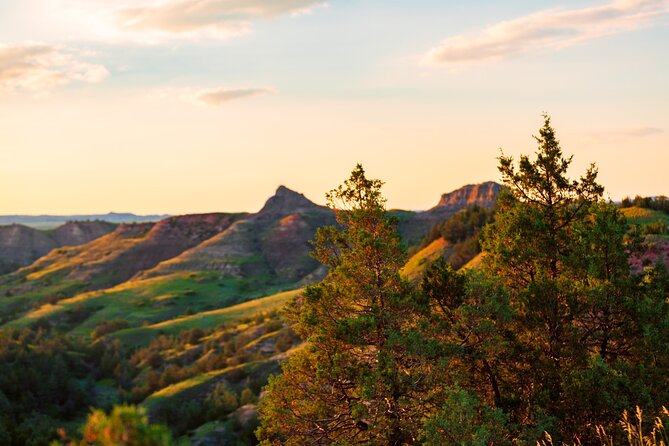
The driving portion is long enough to feel like a proper loop: the tour is described as over 29 miles long with 40+ audio stories. Even if the listing says about 1 to 2 hours, the provided timing notes suggest 2 to 3 hours to do the full experience well.
That timing mismatch is actually useful. It means you can shape your day:
- Want a quick hit? Do the overlooks and skip longer hikes.
- Want the full effect? Plan for more walking time at a few stops.
Also note the tour length matters for comfort. Bring water, and expect to do more walking than you might from a “driving tour” label.
Stop 1: Little Mo Nature Trail to River Bend Overlook
Your tour starts with a classic “get your bearings” move: the Little Mo Nature Trail. It’s an easy loop you can do right after you park near Juniper Campground. This is smart early on. You’re fresh, the trail doesn’t demand much, and you get a feel for the North Unit before you crank up the driving.
I like that the audio timing here is built around short effort: the trail gives you a stretch and a quick look at how the park’s terrain works. If you’re traveling with mixed mobility, this tends to be the easiest win of the day.
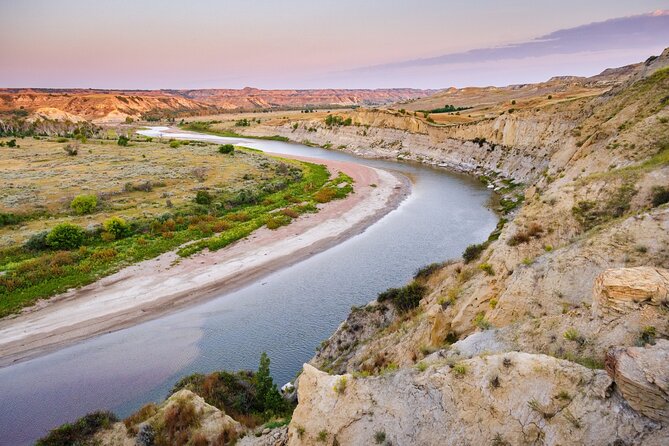
Next up is River Bend Overlook, reached via a short, easy walk. You’re aiming at a historic stone structure perched on a butte, with the Little Missouri River winding below through rugged badlands.
This stop is more than a view. It gives you a “why it looks like this” perspective: the river carved the terrain, and you’re seeing the result. If you only had time for one overlook early in the route, this is a strong candidate.
The Cannonball Concretions: odd shapes with a science story
After the big-view overlooks, the tour shifts to “how did that happen?” with the Cannonball Concretions Pullout. These are large spherical stones—geologic oddities you can reach with an easy walk from the parking area.
The narration explains the formation: mineral-rich water cemented sediment, creating those rounded shapes. This is one of those places where the science makes the scenery more interesting. You stop looking for beauty only and start looking for process.
Practical tip: wear shoes you don’t mind getting dusty. This area looks tough and dry, and pullouts often sit on uneven ground.
North Unit Visitor Center: your planning hub
A key mid-route stop is the North Unit Visitor Center. Rangers are there, and the center can help with trip planning and backcountry permits. There’s also a bookstore and you can watch a film about the park’s natural wonders and history.
This is a smart “real-world check” point. Even if your day is guided by audio, you can use the center to confirm what’s open, what’s safe, and what you might want to adjust.
If you’re the type who likes to verify before you commit to a trail, this stop is worth making unhurried.
Caprock Coulee Loop and Buckhorn Trail: two hikes, two moods
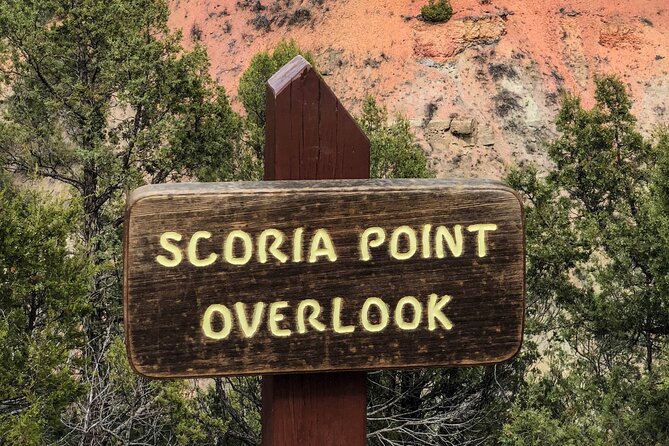
The tour includes hikes at different difficulty levels, and you can pick based on energy.
Caprock Coulee Loop (moderate, about 4.4 miles)
The Caprock Coulee Loop is described as moderate and about 4.4 miles, crossing badlands and grassy buttes with views over the Little Missouri River Valley.
This is a good fit if you want a workout without going full endurance mode. It also feels like it belongs in North Dakota: open terrain, big sky, and a trail that keeps your attention moving.
Bring water, and wear sturdy shoes. The description is clear that shoes matter here.
Buckhorn Trail (moderately challenging, about 10.8 miles)
For more leg burn, there’s the Buckhorn Trail—a 10.8-mile loop described as moderately challenging. It winds through grasslands with views of the Little Missouri River and rock formations.
One of the practical bonuses mentioned is wildlife potential. You should keep your eyes open for bison, but maintain a safe distance. This is exactly the kind of hike where your best moments come from slowing down at the right points and watching the terrain.
If you do Buckhorn, I’d think of it as your “main hike.” Don’t try to cram multiple long trails into the same day unless you’re comfortable with that pace.
Bentonitic Clay Overlook: the science stop that doesn’t feel dry
Next is Bentonitic Clay Overlook, which adds a more scientific lens. You’re looking at blue-black clay layers formed from volcanic ash that capped the plateau below.
This is a different kind of “wow” stop. Instead of focusing only on what you see above ground, it explains the geology behind the park’s layers. If you like learning, this can be a standout.
The time commitment is short (it’s presented as about 10 minutes), which makes it easy to include even if you’re busy.
Badlands Overlook and the bison comeback
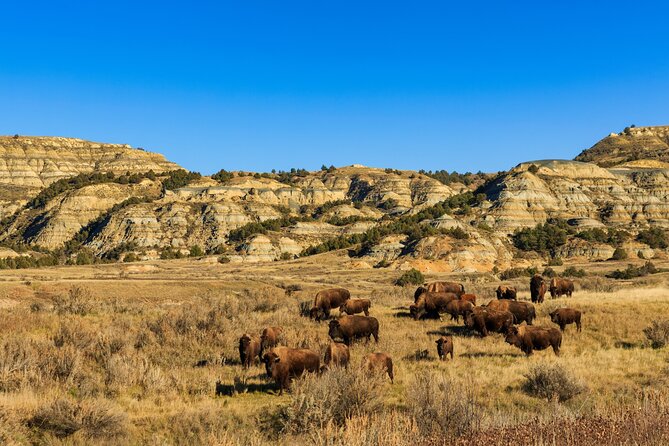
The tour continues with Badlands Overlook with a focus on bison. The narration points out that bison were once near extinction and are now back, thanks to reintroduction efforts.
This matters because Theodore Roosevelt National Park is known for bison in the Great Plains ecosystem. Watching them is better when you know the story behind why they’re there.
Again, keep your distance. Overlooks are meant for viewing, not approaching.
Elkhorn Ranch Site Trail: Roosevelt-era remains in a short walk
You’ll also see the Elkhorn Ranch Site Trail, described as an accessible 0.7-mile hike to view the foundation of President Roosevelt’s ranch cabin.
A short “history on your feet” stop can change the feel of the whole day. This is the moment where the park stops being only geology and wildlife and becomes personal—linked to a specific story.
One practical note: the advice says to download a GPS map beforehand, because service can be spotty. That’s consistent with the offline setup, but it’s still good to plan your walking navigation with extra care.
Oxbow Overlook: the final big curve
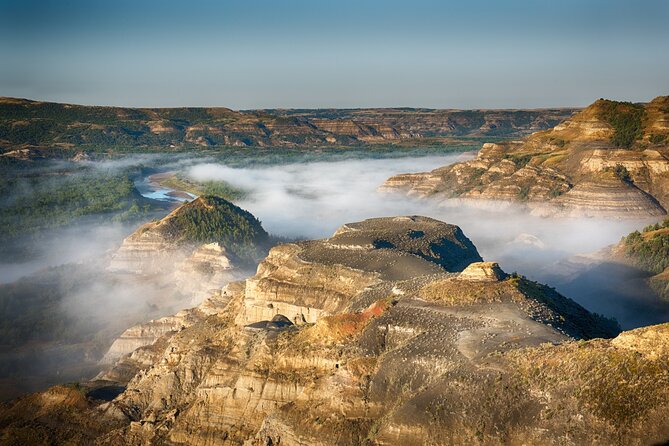
The tour finishes with Oxbow Overlook, described as the final stop on the North Unit Scenic Drive. The focus here is the dramatic river curve: the Little Missouri River makes a near 180-degree bend through rugged badlands.
This is the kind of vista that rewards standing still. The audio here is paired with informative signage that explains the river’s ever-changing course, and the panorama does the rest.
If you’ve been driving for hours, save time here to just look. It’s a strong “wrap it up” moment because it pulls together water + time + terrain.
Oil Well Road: when North Dakota turned into oil country
After nature and ranch history, the tour shifts into modern history with Oil Well Road. The narration connects the North Dakota oil boom to the Bakken Formation discovery in 2006, and explains how horizontal drilling and fracking unlocked reserves.
It also notes the boom peaked around 2012, leaving an impact on the economy and landscape.
This stop is useful if you want your national park day to include more than prehistory and wildlife. It also gives you a fuller view of why this area looks the way it does today—human activity has shaped the region too.
How well does it work in real life? Lessons from the ratings
The overall rating is 4.3 based on 12 reviews. The most serious complaint in the feedback is an app failure: one person reported it didn’t work after the first trailhead information.
I’d treat that as your reminder to plan as if technology could hiccup:
- Make sure you download the tour in strong connectivity before you leave town.
- Test audio in the car before you start the drive portion.
- Bring a car charger or at least a backup battery if you’re worried about phone life.
On the positive side, the strong themes are easy navigation, good narration, and the ability to learn a lot while driving. People highlighted buffalo and the overall beauty of the drive, and several mentioned the audio tour felt easy to use.
Who this tour suits best (and who should consider a different format)
You’ll enjoy this tour most if you:
- Want flexibility: start when you’re ready, pause for photos, and skip stops you don’t care about.
- Prefer learning in your own style, with storytelling that plays hands-free.
- Like a blend of overlooks, short walks, and a couple of hike options rather than one long guided trek.
It’s a good fit for couples, friends, and small families traveling in one car. It’s also a nice choice if you don’t want the cost and schedule pressure of a traditional guided tour.
I’d be more cautious if you:
- Rely totally on phone tech and don’t want to troubleshoot setup.
- Are sensitive to battery drain or audio connection issues.
- Want a fully guided explanation inside each building at the pace of a ranger-led program.
Practical tips to make the most of your drive
- Plan your time like a hiker, not like a casual driver. The route notes point toward a 2–3 hour experience when you actually do the stops.
- Bring water if you do any of the trails. The longer hike options in particular are described as requiring sturdy shoes and water.
- Use your car audio for driving. Then use headphones when walking if the wind or distance makes speakers hard.
- Give yourself buffer time at overlooks—some are short on paper, but you’ll want to sit and watch.
Should you book this Theodore Roosevelt National Park audio tour?
Yes, if you’re aiming for a low-stress way to see the North Unit with high value per dollar. $24.99 per group is the kind of pricing that makes sense for a shared experience, and the offline, hands-free design is exactly what you want in a place where signal can be unreliable.
Skip it only if you’re planning to do just one or two stops, or if you’re worried about depending on app setup. Otherwise, this is a very workable way to turn a long, scenic drive into a sequence of meaningful places—overlooks, bison moments, ranch history, and geology—at a pace that’s yours.
FAQ
How much does the Theodore Roosevelt National Park self-guided driving audio tour cost?
The tour costs $24.99 per group, up to 4 people. Theodore Roosevelt National Park admission is not included (listed as $30.00 per booking) and you’ll still need the required park passes.
How long does the tour take?
The duration is listed as about 1 to 2 hours, but the full route note says it takes about 2 to 3 hours to complete.
What language is the audio tour in?
The audio tour is offered in English.
Will it work without cell service or Wi-Fi?
Yes. The tour includes offline maps, and it works perfectly without cellular or Wi-Fi after you download the tour content.
Do I need to download anything before arriving?
Yes. After booking, you’ll get email and text setup instructions, plus you must download the tour while in strong wifi/cellular. After the download, it works offline.
How do I start the tour onsite?
Open Action’s separate audio tour guide app once you’re onsite, enter the password sent by email and text, then start at the first story’s point. Audio should begin automatically and follow location cues.
Can I pause and resume the tour whenever I want?
Yes. The tour is designed for you to start and pause anytime, take breaks for snacks and photos, and continue on your own pace.
How do I play the audio in the car?
You can connect your phone to your car stereo using Bluetooth, USB, or AUX. Audio playback is compatible with Apple CarPlay.
Does the tour include park entry?
No. Park admission and park passes are not included, and you’ll need to handle that separately.
What are the tour’s opening hours?
Opening hours are 9:00 AM to 4:30 PM, Monday through Sunday, for the listed date range.