REVIEW · THREE RIVERS
Sequoia National Park: Group Stargazing Program
Book on GetYourGuide →Operated by Big Trees Tours · Bookable on GetYourGuide
Look up, then learn what you see. This 1-hour Sequoia stargazing session stays close to the park roads with no hiking, so you’re not racing back in the dark. Scott guides you through constellations and modern space science with stories tied to different cultures.
I love the calm pace—sit or stand, point to the sky with a laser, and use star maps to orient yourself fast. I also like the mix of cultural stories and current astronomy, from mythology to what real missions are finding out now.
One thing to plan for: the meeting area has no cell coverage, and it’s easy to miss the exact spot at night. Bring a flashlight, and expect to use the photos provided to find the meeting point.
In This Review
- Key highlights I’d plan around
- One Hour, No Hike: The Comfort Advantage in Sequoia
- Where You Meet Matters: Potwisha Overflow Lot vs General Sherman
- Potwisha Overflow Lot (near Three Rivers entrance)
- General Sherman Tree parking area (near Wuksachi Lodge / Lodgepole)
- Plan for no cell service
- What Happens During the Hour: Laser Pointer Constellations + Star Maps
- The Story Layer: Constellations Across Cultures
- Science Talk Without the Lecture Feel
- Special-Night Possibilities: Comets and Nova Events
- Cold-Night Comfort: Hand Warmers, Clothing, and Flashlight Rules
- Safety in Total Dark: What to Expect and How to Feel Ready
- Accessibility and Who It’s Not For
- Price and Value: Why $25 Can Be a Good Deal Here
- Who Should Book This Stargazing Program
- Should You Book? My Straight Answer
- FAQ
- How long is the stargazing program?
- How much does it cost?
- Where do we meet for the program?
- Is there cell coverage at the meeting spot?
- Do we have to hike to see the stars?
- What’s included in the tour?
- Is the tour wheelchair accessible?
- What should I bring for a cold, dark evening?
- Who shouldn’t book this activity?
- What’s not allowed during the program?
Key highlights I’d plan around
- Two close-by meeting locations that keep you from driving a long distance after dark
- Constellation pointing with a laser pointer paired with planispheres to help you follow along
- Cultural sky stories + modern science (plus Q&A during the hour)
- Cold-night comfort with hand warmers and tips on what to wear
- Beginner-friendly, with extras for astronomy fans, including rare events on nature’s schedule
One Hour, No Hike: The Comfort Advantage in Sequoia
If your main goal is seeing the stars, you do not need a long hike plan. This program is built around a relaxing 1-hour viewing session where you settle in and look up. You’re inside Sequoia with a guide doing the work of pointing out what matters, so you can keep your energy for enjoying the night.
The best part for many first-timers is that you also avoid the classic problem: the sky is stunning, but then you still have to drive far back to lodging after dark. Here, the meeting spots are chosen to keep travel simple. You’ll spend your time on the sky, not on the headache of late-night navigation.
Where You Meet Matters: Potwisha Overflow Lot vs General Sherman
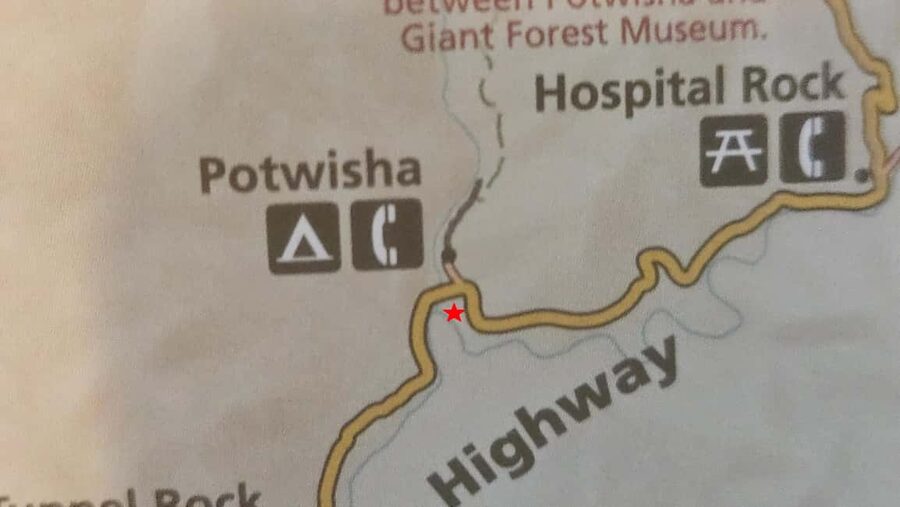
Sequoia has multiple “great darkness” areas, but this program uses two practical starting points so you can match your day’s plan.
Potwisha Overflow Lot (near Three Rivers entrance)
You meet in an overflow parking lot across the road from Potwisha Campground (not inside the campground itself). It’s about 10 minutes inside the park near the Three Rivers entrance station, which makes it a straightforward option if you’re basing yourself around the entrance area.
There’s an important detail: there is no Google Map location for this exact meeting spot. You’ll want to use the photo set to find the exact spot at night. The host sets up red lights so you can spot the group.
General Sherman Tree parking area (near Wuksachi Lodge / Lodgepole)
The second option is at the parking area for the General Sherman Tree, with an easy 10-minute drive from Wuksachi Lodge or Lodgepole Campground. This is a nice choice if you’re already spending your evening on that side of the park and don’t want to backtrack.
Winter availability is noted for Potwisha, so if you’re visiting in the colder months, you’ll want to check the schedule for which location is used.
Plan for no cell service
At the meeting location, there’s no cell coverage. This matters for simple reasons: you can’t rely on GPS updates, messages, or rideshare app help if you’re a little turned around. I recommend you arrive a few minutes early, use a map before you lose signal, and then follow the provided photos on-site.
What Happens During the Hour: Laser Pointer Constellations + Star Maps
This is not a “stand here and hope” type of activity. You’re guided the whole time, with a clear pace designed for people who don’t know the sky yet.
The host uses a laser pointer to point out constellations as the group looks around the night sky. At the same time, you’re given planispheres (star maps) so you can connect the names you hear to what you see overhead. That combination helps you avoid the typical frustration of stargazing, where the guide points and you’re still trying to figure out where to look.
You can expect a mix of:
- constellation walkthroughs
- sky objects that are visible that evening
- science talk that’s explained in plain language
- time to ask questions, if you’re the type who likes to raise your hand
There’s also a relaxed physical setup. You can sit or stand, depending on what you prefer and what’s comfortable for your group.
The Story Layer: Constellations Across Cultures
What makes this program feel more meaningful than a basic astronomy lesson is how it connects the sky to people. You’ll hear about the significance stars play in different cultures, including living traditions and cultural stories tied to the past and human motivation for the future.
In practical terms, this helps your brain remember what you’re seeing. Instead of only memorizing star names, you learn why different groups described the sky the way they did. It’s also a fun conversation starter later—especially if you’re traveling with kids or a mix of ages.
If you’re curious about how the stars show up across the world, you’ll likely enjoy the way Scott ties stories to what you can actually spot in the sky that night.
Science Talk Without the Lecture Feel
This program also keeps one foot in real research. You’ll get chances to talk about up-to-date scientific findings, including how modern discoveries connect to the sky above you.
You don’t need a science degree to follow it. The tone is built for an evening under the stars: part explanation, part story, and part “wait, that’s what that object actually is?” moments.
You may also hear about space-based science and current missions, which is a great contrast if you’ve only learned astronomy from old textbooks. It makes the night sky feel current, not frozen in the past.
Special-Night Possibilities: Comets and Nova Events
On some nights, the host notes unique sky happenings—events that are rare enough to feel special even to experienced sky watchers. That can include the chance to view a passing comet or a nova star burst.
Keep your expectations flexible: these events happen on nature’s schedule, not yours. Even when they don’t occur, you’re still doing the main job—seeing stars and learning what you’re looking at with a guide.
Cold-Night Comfort: Hand Warmers, Clothing, and Flashlight Rules
Sequoia nights can get cold fast, especially when you’re staying still and looking up for an hour. The program includes hand warmers on cold nights, but you still need to dress for the temperature.
Here’s what I’d do to stay comfortable:
- wear warm layers (nights can be chilly)
- bring a flashlight for safety
- plan for stillness, not walking, so your body might cool down
You might notice the activity is simple physically, which is the point—but that also means you rely more on clothing choices than movement to stay warm.
Safety in Total Dark: What to Expect and How to Feel Ready
One concern that comes up for many people is wildlife. This program is in the dark, so you’ll want to be sensible and calm. The host emphasizes safety, and the experience is designed to feel managed—no wandering around alone.
Still, your best move is to come prepared:
- don’t show up in flimsy footwear if the ground is uneven
- use your flashlight on the approach and for any walking
- follow the group’s lead for where to stand or sit
Also note the rules: bare feet aren’t allowed. Drones are not allowed either. These rules are there for safety and respect, not to spoil your fun.
Accessibility and Who It’s Not For
This is a wheelchair-accessible program, and seating is available upon request for ADA accommodations. If you need to sit, you can arrange that ahead of time.
But it’s also important to know the limits. The program is not suitable for visually impaired people, and it’s also marked not suitable for hearing-impaired people. There’s also no mention of special visual aids for those who need them, which is why I’d treat the stated suitability rules as a hard guide, not a suggestion.
Children under 2 years are not suitable, and unaccompanied minors are not allowed. If you’re bringing kids, you’ll want to plan around those boundaries and consider whether your child can comfortably handle a dark outdoor hour with limited movement.
Price and Value: Why $25 Can Be a Good Deal Here
At $25 per person for a 1-hour guided session, this isn’t just “pay for the view.” You’re paying for:
- a host-led constellation and culture explanation
- star maps (planispheres) and interactive sky visuals like 3D models (including a 3D model of the solar system and a 3D model of Saturn)
- comfort extras like hand warmers on cold nights
- planning help for your next day in the parks (you’ll get hike recommendations for Sequoia and Kings Canyon)
You’re also paying to solve a logistics problem: the program is set up so you don’t have to drive far after dark. In a park where parking and late-night driving can be stressful, reducing the travel burden can be worth real money, even if the cost is modest.
If you’re the type who would otherwise skip stargazing because you don’t want to do the research, this can feel like paying for a shortcut. And if you’re already into astronomy, you’ll still likely enjoy the cultural layer and the Q&A-friendly format.
Who Should Book This Stargazing Program
This is a strong fit if you:
- are new to stargazing and want to learn quickly
- want a low-effort night activity with no hiking
- have limited time in Sequoia and want a focused evening plan
- enjoy mixing stories and science instead of only one or the other
- want an easier drive situation after dark
It’s also a good option when you’re traveling with families across ages, because the session is structured around pointing, maps, and storytelling—exactly the kind of format that helps kids and adults stay engaged.
Should You Book? My Straight Answer
Yes, I think you should book this if your goal is to experience Sequoia’s night sky in a way that’s organized, comfortable, and understandable. You get real structure for a one-hour window: constellation pointing, star maps, cultural stories, and current science—without the burden of a long hike or long drive afterward.
Skip it if your group needs a different accessibility format (it’s marked not suitable for visually and hearing-impaired visitors), if you’re bringing a very young child under 2, or if you prefer independent stargazing with no guide.
FAQ
How long is the stargazing program?
It lasts 1 hour.
How much does it cost?
The price is $25 per person.
Where do we meet for the program?
You meet at one of two locations in Sequoia: Potwisha Overflow Lot (across the road from Potwisha Campground) or the parking area for the General Sherman Tree.
Is there cell coverage at the meeting spot?
No. There is no cell coverage at the meeting location.
Do we have to hike to see the stars?
No. It’s a relaxing hour under the night sky with no hiking.
What’s included in the tour?
You get a guided stargazing experience, star maps (planispheres), a 3D model of the solar system, a 3D model of Saturn, and seating upon request for ADA accommodations. Hand warmers are provided on cold nights, and the host brings a laser pointer for pointing out constellations.
Is the tour wheelchair accessible?
Yes. The program is wheelchair accessible, and seating can be provided upon request for ADA accommodations.
What should I bring for a cold, dark evening?
Dress warmly because nights can be cold, and bring a flashlight for safety.
Who shouldn’t book this activity?
It’s not suitable for children under 2 years old, and it’s marked not suitable for visually impaired people and hearing-impaired people. Unaccompanied minors are also not allowed.
What’s not allowed during the program?
Drones, fireworks, and bare feet are not allowed.