REVIEW · PANAMA CITY
Embera Experience at the Chagres National Park
Book on Viator →Operated by CONOZCA PANAMA PRIMERO Tours & Transfers, S. A. · Bookable on Viator
A canoe ride into real Panama culture. This is an 8-hour, small-group day trip that takes you from Panama City into the Chágres National Park area, then out on a hand-carved piragüa to meet the Embera community at Puerto Corotú and Purubiakirú. You also get local context as you pass through San Miguelito and stop at key points along the way, so it feels more like a lived-in day than a checklist.
Two things I really like: the boat ride itself—made from a single tree trunk—and the way the Embera welcome you, guide you, and share music, art, and food during your time with them. One watch-out: if you expect an unstructured, walk-in, no-rules cultural experience, this visit is organized and time-bound, so you might want to come with patience and respect for the format rather than for maximum spontaneity.
I also like the human touch behind the scenes. Their team (including guides such as Luis and the host Rafael Tello from Conozca Panama Primero Tours) shows genuine pride in getting people to the right places and keeping the day moving without rushing the important moments.
In This Review
- Key highlights you’ll feel fast
- Why the Chagres River matters to Panama’s canal and your day
- 7:30 am pickup, San Miguelito, and the practical road stops
- Cemex and the route into Chagres National Park
- Puerto Corotú: where the Embera meet you by the lake
- Riding the piragüa on jungle water: timing, animals, and a pro tip
- Purubiakirú (2 hours): music, art, gastronomy, and real conversation
- Lunch, snacks, fruits, and how the day paces itself
- Price and value: what $193 includes and why it’s not just sightseeing
- Who this fits best (and who should think twice)
- Practical expectations: weather, biosecurity, and comfort
- Should you book this Embera day trip to Chagres National Park?
- FAQ
- How long is the Embera Experience at the Chagres National Park?
- What does the tour cost?
- What time does the tour start?
- Is this a small-group tour?
- What’s included in the price?
- Is a vegetarian option available?
- Where do you meet the Embera community?
- How long is the Embera cultural experience?
- Is the boat ride different in the dry vs. rainy season?
- What is the cancellation policy?
Key highlights you’ll feel fast
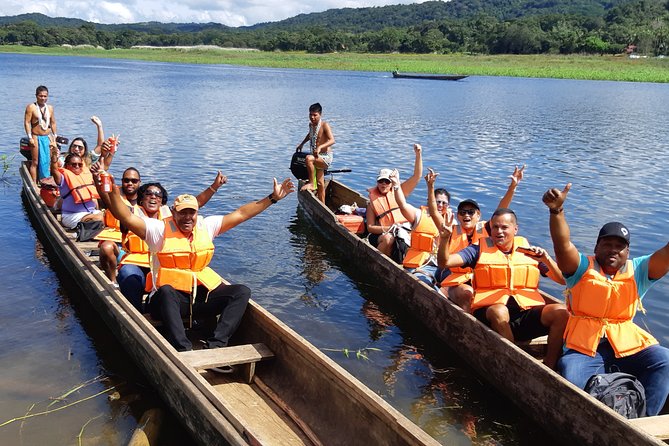
- Hand-carved piragüa boat travel that gets you through jungle scenery in a way buses can’t.
- Embera welcome at Puerto Corotú, with a guided introduction and biosecurity protocols followed.
- Chagres National Park visitor context, including biodiversity and how local life ties to the reserve.
- Local economy stop for tropical fruit, where your purchase supports producers instead of just foraging for souvenirs.
- Purubiakirú culture time (2 hours) with music, art, gastronomy, and community smiles.
Why the Chagres River matters to Panama’s canal and your day
This trip isn’t only about a culture visit. It’s also about water—specifically the Chágres River, which plays a major role in how the Panama Canal operates. The Chágres River supplies more than 35% of the water needed for ship transits on the interoceanic route, so you’re not just touring a pretty region; you’re seeing why this landscape is important to Panama’s big story.
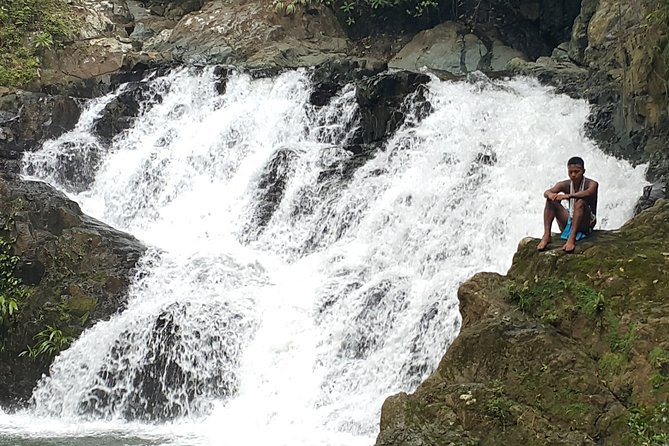
When you reach Puerto Corotú, you’ll learn how the water system works through a man-made lake (Alajuela Lake) that was flooded in the late 1930s to store Chágres River water for rainy-season operations. That matters because your boat time and feel for the environment will shift with the season. In the dry season, navigation can extend up to 1 hour; in the rainy season, it’s shorter—around 40 minutes—because river levels are at their maximum.
In other words, your day is tuned to the real rhythms of the river, not a rigid schedule that ignores nature.
7:30 am pickup, San Miguelito, and the practical road stops
The day starts early, with hotel pickup and a start time of 7:30 am. After the initial welcome and biosecurity protocols, you head out through Panama City toward neighborhoods that most first-time visitors only drive through.
One of the early things you see is a cemetery in its traditional form. It’s not flashy, but it gives you a quick, honest sense of local customs and how community life has deep roots.
Then you roll into San Miguelito, a district with more than 300,000 residents and a history tied to military and dictatorship-era power shifts. The key point for your visit is perspective: this part of Panama is dense, lived-in, and real—not staged for tourism—so you’ll feel the country beyond the central skyline.
On the way, there’s also a quick photo-and-people stop at Carr Transístmica 1001 at La Cabima, where transportation issues and long commutes have contributed to growth. You’ll get a 10-minute stop to buy fruits that will accompany your lunch, and the point is simple: you’re supporting local producers rather than treating the day like you’re just being transported from attraction to attraction.
Cemex and the route into Chagres National Park
A short stop near Cemex comes with useful context. This is described as the world’s largest cement factory, and it arrived in Panama during a construction boom tied to the Panama Canal expansion projects (including the third set of locks). You don’t need to be an engineering nerd to appreciate what this means: Panama’s modern economy and its infrastructure sit right alongside the natural systems your day will soon enter.
From there, you move into the limits of Chágres National Park. There’s a 15-minute park break for restrooms and a visit to the visitor center, which is a smart pause. You’ll get an introduction to biodiversity and the lifestyle of people living around the reserve, so when you later see birds, amphibians, and reptiles during the boat ride, you have a bit more mental map.
Even if you’re short on time, this visitor center stop is worth treating like a primer. It helps you notice more on the water instead of just watching green scenery slide by.
Puerto Corotú: where the Embera meet you by the lake
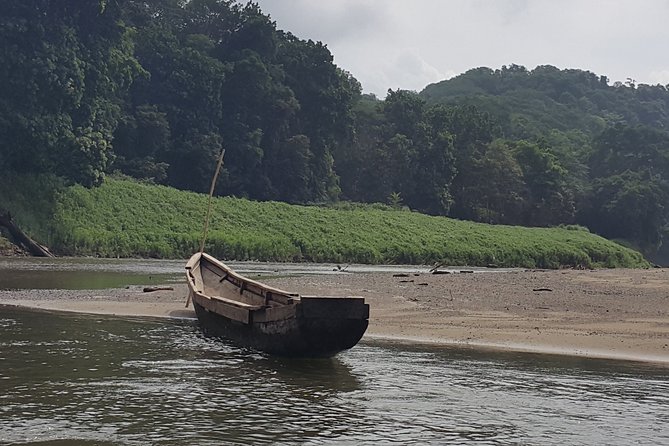
Puerto Corotú is an artisanal port and a working embarkation point for locals from surrounding communities. It sits in front of Alajuela Lake, an artificial lake created when Americans flooded the area in the mid-1930s to store water from the Chágres River during the rainy season.
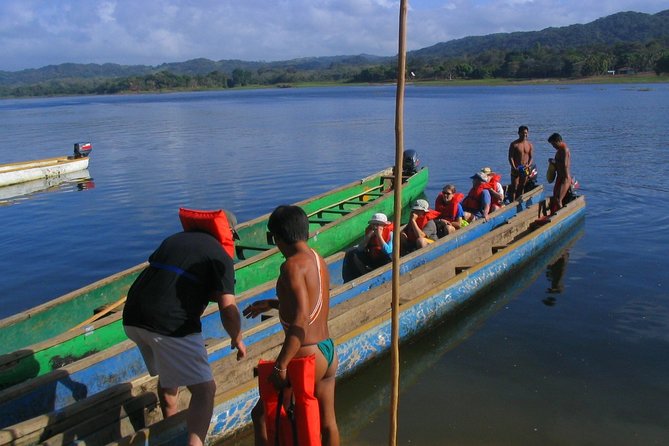
Here, you meet the indigenous Embera community. This is also where the day’s energy changes from roadside touring to face-to-face cultural exchange. The Embera welcome you, you follow the biosecurity protocols during your visit, and you’re guided to where you board your piragüa.
It’s a short segment—about 15 minutes—but it’s the emotional hinge of the tour. You move from “seeing Panama” to “being in Panama,” meaning you’ll pay more attention to voices, gestures, and the small rules of respectful interaction.
Riding the piragüa on jungle water: timing, animals, and a pro tip
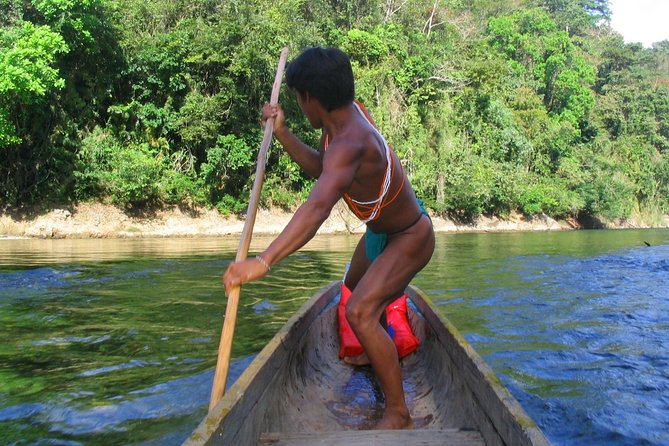
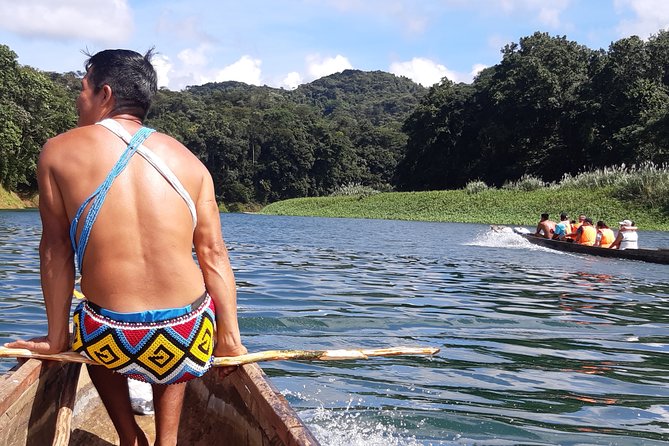
Once you’re on board, the experience becomes very physical and very visual. Your boat ride is through tropical jungle, and nature is part of the show: birds, amphibians, and reptiles may appear during the journey. The skilled indigenous people maneuver the boat through El Chagres, and that’s the kind of competence you only notice when you’re actually watching it in motion.
Also pay attention to the timing differences by season. In the dry season, the trip can extend up to 1 hour of navigation. In the rainy season, it’s shorter (about 40 minutes) because the river runs higher. That affects more than duration—it can change how much you feel the quiet details of the jungle versus how quickly you’re moving through current and mist.
One extra practical note from the experience’s vibe: if you own a dive mask and like using it for underwater viewing, bring it. In at least one case, a traveler used one and found fish easy to spot. Just don’t expect a guarantee—use it as an optional add-on for the moments when conditions let you see.
Purubiakirú (2 hours): music, art, gastronomy, and real conversation
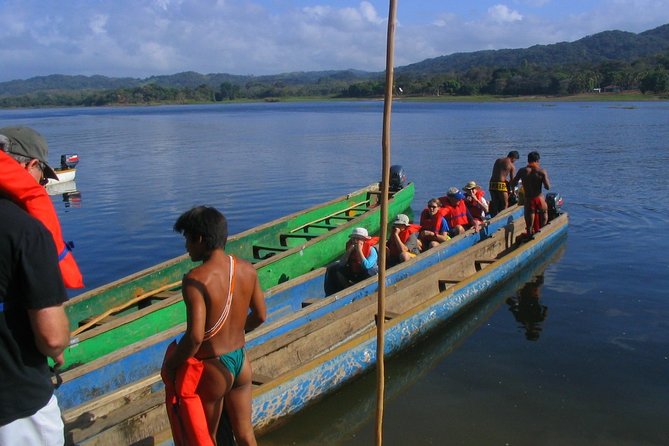
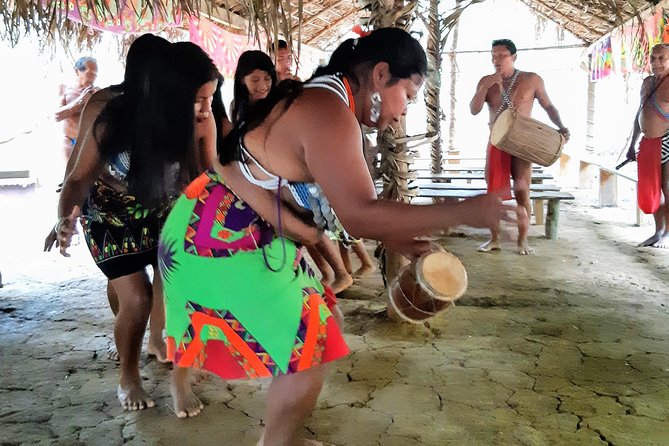
Purubiakirú is where the tour leans most heavily into culture. This is described as the place where two worlds meet: Embera community members and visitors from around the globe.
Your time here is 2 hours, and it’s centered on experiences you can engage with—music, art, and gastronomy—plus time to enjoy conversation and community energy. The overall tone from the information you’re given is warm: sincere smiles, memorable moments, and a chance to see the culture through what people make and share, not just through photos on a wall.
If you like learning through interaction, this is the part to focus on. Ask questions with respect. Pay attention to what they choose to show you. And if you want to photograph, do it with the understanding that you’re visiting a living community, not a theme park set.
Lunch, snacks, fruits, and how the day paces itself
Your day is structured around comfort and timing, which matters because you’re moving between neighborhoods, park facilities, and then boat travel.
Lunch is included, and you’ll have fruits you buy during the short La Cabima stop to go with it. There are also snacks and bottled water included throughout the day. Translation: you won’t be forced into convenience-store meals at random times, which helps when you’re traveling with a group and keeping the schedule steady.
The tour also includes restroom breaks at the park visitor center, so you’re not scrambling while you’re waiting for boat logistics.
Group size is capped at 25 travelers, and the trip is small-group overall. That usually means you’ll have enough attention to ask questions without feeling lost in a crowd.
Price and value: what $193 includes and why it’s not just sightseeing
At $193 per person, this isn’t a budget city bus tour. But it’s also not priced like a private charter experience. The value comes from what’s bundled:
- Hotel pickup and drop-off
- A small-group guided day
- Lunch, bottled water, snacks
- Seasonal tropical fruits
- Professional bilingual guides
- Admission included for the main Embera cultural segment
The big value driver is the combination of transportation + guided cultural time + boat-based access into the Chágres area. Many Panama day trips try to replace boat time with faster viewing stops. Here, you’re actually on the water and you’re meeting people in a community setting.
So if you’re comparing it to doing the same day on your own, the question becomes: could you realistically organize safe transport, time your park entry, and arrange the Embera meeting and boat access without paying for guiding and coordination? For most visitors, the included services make the price feel more sensible.
Who this fits best (and who should think twice)
This is best for you if you want an authentic-feeling day that blends natural context with a community visit, and you’re comfortable with basic adventure travel (boat ride, jungle environment, outdoor time).
It also calls for moderate physical fitness. The walking demands are not described in detail, but you’re being clear-eyed about being active for the day.
On the other hand, it’s not recommended if you have back problems, heart complaints or other serious medical conditions, or if you’re pregnant. If any of those apply, you’ll want to choose a different Panama experience that keeps you on a calmer, more accessible route.
Children must be accompanied by an adult, which matters for family planning.
Practical expectations: weather, biosecurity, and comfort
The tour requires good weather. If conditions aren’t right, it can be canceled and you’ll be offered a different date or a full refund. That’s important because boat time and park experience depend on visibility and safety.
Biosecurity protocols are part of the experience from the start. It’s not something you need to overthink—just follow the instructions given by your guide and stay flexible.
Comfort-wise, plan for a full day starting at 7:30 am and ending around 8 hours later. Even if you’re not a hardcore outdoors person, you’ll still be outside and moving, so wear shoes you trust.
If you’re the type who likes photos, bring a plan: you’ll have several short stops for visuals (cemetery, neighborhoods, fruit buying), and you’ll also have photo opportunities during the Embera segments. Just be respectful about asking before photographing people up close.
Should you book this Embera day trip to Chagres National Park?
Book it if you want one of the most direct ways to connect Panama City with the Chágres River region, and if you’ll appreciate a day that mixes boat travel with a guided Embera cultural visit rather than focusing only on scenery. The included lunch, snacks, bilingual guides, and structured access to Puerto Corotú and Purubiakirú make it easier to enjoy without constant logistics.
Skip or switch if you can’t meet the moderate fitness expectation or if you fall into the medical categories flagged by the tour. Also, if you dislike organized community visits and prefer long, free-form exploration, you may find the time with the Embera less open-ended than you’d hoped.
FAQ
How long is the Embera Experience at the Chagres National Park?
The tour lasts about 8 hours.
What does the tour cost?
It is listed at $193.00 per person.
What time does the tour start?
The start time is 7:30 am, with hotel pickup included.
Is this a small-group tour?
Yes. It is described as a small-group tour with a maximum of 25 travelers.
What’s included in the price?
Included are hotel pickup and drop-off, small-group tour, lunch, bottled water, snacks, seasonal tropical fruits, and professional bilingual tour guides.
Is a vegetarian option available?
Yes. A vegetarian option is available if you advise at booking time.
Where do you meet the Embera community?
You meet the Embera community at Puerto Corotú and then spend additional time at Purubiakirú.
How long is the Embera cultural experience?
You get 2 hours at Purubiakirú as part of the main cultural time.
Is the boat ride different in the dry vs. rainy season?
Yes. In the dry season, navigation can be extended up to 1 hour; in the rainy season, it is reduced to about 40 minutes.
What is the cancellation policy?
Free cancellation is available up to 24 hours in advance for a full refund. If you cancel less than 24 hours before the start time, the amount paid is not refunded.