REVIEW · PHILADELPHIA
Driving Tour of Valley Forge National Park from Philadelphia
Book on Viator →Operated by WeVenture · Bookable on Viator
One half day. One Revolutionary War turning point. This driving tour from Philadelphia makes Valley Forge easy to reach, then strings together the most important sites with story-first guiding. I like that you start with round-trip transit from Center City and finish back at the meeting point without wrestling with parking.
The pacing is built for clarity: you hit the Visitor Center, the Washington headquarters area, and the memorials, with enough time at each stop to actually see what you came for. One possible drawback: it’s tight timing, so if you want to linger in exhibits for a long time, plan to do a bit of self-guided follow-up later.
What I like most is the way the stops connect into a single picture of winter 1777–78. At the Muhlenberg Brigade huts, you get a real sense of the hard shelter conditions soldiers faced, not just famous names. The tour also spotlights places like the National Memorial Arch and von Steuben’s role so you understand how the Continental Army held on, then reorganized.
The other big plus for me is the small group feel. The experience is capped for a personal ride (you’ll see both a cap of 12 and a max of 6 travelers listed), which helps the guide answer questions without rushing. As a small consideration, since food and drink aren’t included, you’ll want to plan for a simple snack and hydration so the day stays comfortable.
In This Review
- 5 Key Things You’ll Notice on This Valley Forge Tour
- Valley Forge in Half a Day: Why This Driving Tour Works
- Price, Group Size, and Pickup: Getting There Without Stress
- Stop 1: Visitor Center at Valley Forge, Then You Get the Big Picture Fast
- Muhlenberg Brigade Huts: What Winter Shelter Looked Like
- National Memorial Arch: A Moment for Sacrifice and Perspective
- Washington Headquarters at 1400 N Outer Line Dr: Leadership With a Physical Address
- Von Steuben Statue: The Army’s Change From Survival to Fighting
- Artillery Park, Washington’s Chapel, and the Schuylkill River Thread
- Artillery Park: The Practical Side of Power
- Washington’s Chapel: A Gothic Revival Memorial
- The Schuylkill River: Nature as a Strategic Factor
- What the Guide Adds: Storytelling That Keeps You Oriented
- Timing, Comfort Tips, and Bathroom Stops You’ll Be Glad About
- Who This Tour Suits Best (and Who Should DIY It)
- Should You Book This Valley Forge Driving Tour?
- FAQ
- How long is the Valley Forge driving tour?
- Where do we meet in Philadelphia?
- What time does the tour start?
- What is included in the $149 per person price?
- Are admissions covered for the stops?
- How big is the group?
- Is food or drink included?
- Can I cancel for a full refund?
- Is a mobile ticket provided?
5 Key Things You’ll Notice on This Valley Forge Tour
- Easy Philly pickup and round-trip transport means you focus on history, not logistics.
- Small-group format keeps the ride and stop-and-ask-your-guide moments feeling personal.
- Visitor Center start gives you context before you walk the grounds.
- Washington headquarters stop at 1400 N Outer Line Dr adds a concrete sense of command and daily decisions.
- Von Steuben and artillery connections help you understand how the army changed from survival to fighting.
Valley Forge in Half a Day: Why This Driving Tour Works
Valley Forge is one of those places where the details matter. Without context, you can walk through ruins and memorials and still miss the story. This tour is designed to fix that by starting at the Visitor Center, then moving quickly but thoughtfully from site to site.
The big win is that you’re not cobbling together your own plan from multiple sources. You’ll follow a guided sequence that covers leadership, training, and the survival challenges of winter. You also get scenic views along the drive, which is a nice bonus in a place that’s often remembered through hardship.
Price, Group Size, and Pickup: Getting There Without Stress
The price is $149 per person for about 4 hours 30 minutes, with round-trip transit from Philadelphia included. For this kind of experience, that price makes sense because it bundles transportation, a local English-speaking guide, and a donation to Valley Forge National Park. You’re also saving time on routing and figuring out where to park.
Logistically, you meet at 1200 Arch St, Philadelphia, and the tour starts at 9:00 am. You’ll return to the same meeting point at the end. That matters because Valley Forge days can go sideways if you’re spending half your time on driving, traffic, and parking.
Group size is another practical factor. The tour is described as capped at 12 for a personal feel, and the maximum traveler count is also listed as 6 for some departures. Either way, you shouldn’t feel like you’re inside a moving crowd at every stop.
Stop 1: Visitor Center at Valley Forge, Then You Get the Big Picture Fast
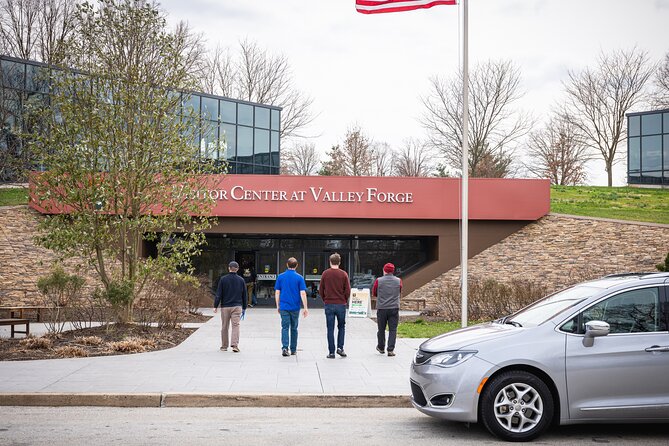
Your first stop is the Visitor Center at Valley Forge. It’s a strong opener because it gives you the framework: a self-guided exhibit plus a documentary that explains what happened in the winter of 1777–78. This sets the stage for everything else you’ll see on the tour.
Even if you’re not a museum person, this is the part that helps history click into place. Washington’s men didn’t just endure cold and hunger; Washington’s leadership and the army’s resilience transformed them. Seeing that narrative first makes later stops feel more specific instead of just scenic.
Plan for about 15 minutes here. If the Visitor Center is open, you’ll likely get enough time to understand the basics. On some dates, guides have handled closures by adding another meaningful stop along the way, so don’t worry too much if one indoor element isn’t available.
Muhlenberg Brigade Huts: What Winter Shelter Looked Like
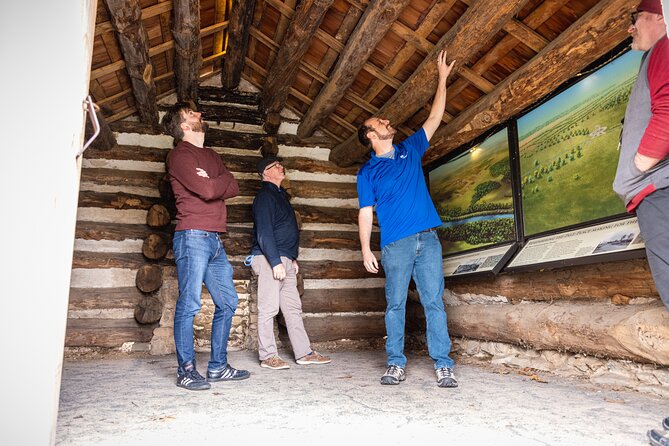
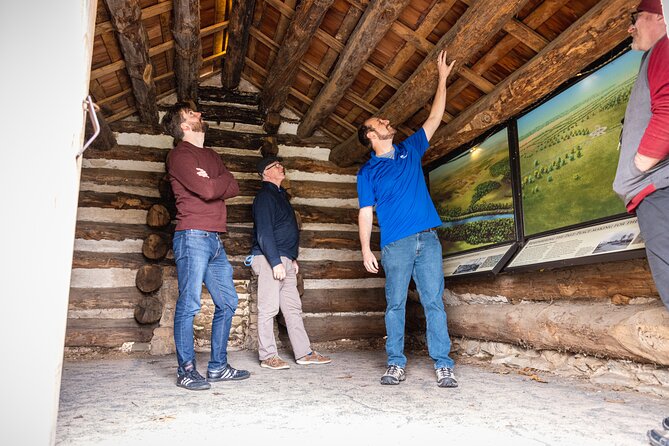
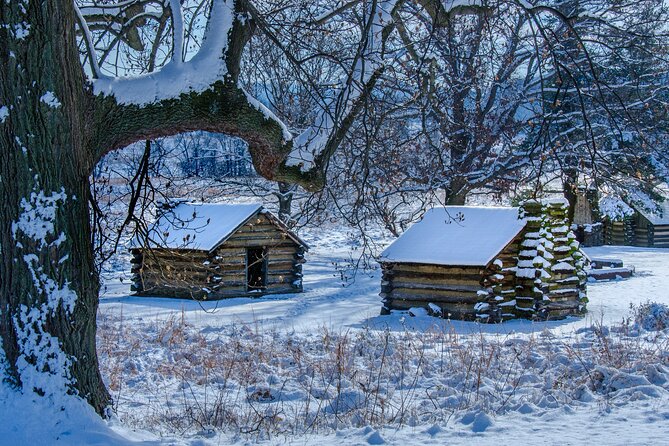
Next comes the Muhlenberg Brigade area, where the huts served as winter quarters in 1777–1778. These were built by soldiers under harsh conditions to provide shelter for troops trapped by the terrible winter at Valley Forge.
This stop is special because it’s one thing to hear about hardship. It’s another to stand near reconstructed hut spaces and understand how limited that protection really was. You’ll get about 20 minutes, which is enough time to look around and connect what you learned at the Visitor Center to the physical reality of the encampment.
The best way to use this time: don’t just scan. Slow down for the sections that feel uncomfortable. Even without a lot of interpretive reading, you’ll start to understand why people remember Valley Forge as much for survival as for strategy.
National Memorial Arch: A Moment for Sacrifice and Perspective
After the huts, you’ll go to the National Memorial Arch. This memorial commemorates the sacrifices of Washington and his soldiers while encamped at Valley Forge.
A quick stop can still be meaningful here, because this is one of the places where the tone shifts from daily life to collective remembrance. You’ll have about 15 minutes, which is enough to get oriented and then keep moving so the tour stays on schedule.
If you’re the kind of person who likes photos, this is a good one. But don’t treat it like a simple picture point. Use it as a reset: remind yourself that the army wasn’t training in comfort. They were building endurance.
Washington Headquarters at 1400 N Outer Line Dr: Leadership With a Physical Address
One of the most concrete stops on the route is at 1400 N Outer Line Dr, the stone home that served as headquarters for George Washington during much of the encampment. The exterior alone helps you visualize command in a grounded way. And if the interior is open that day, you may have a chance to see the gorgeous interior across three floors.
This is a strong 20-minute stop because it turns Washington from a name into a place. You can stand in the same general environment where decisions were likely discussed, and it makes the surrounding winter story feel more human. Even if the building is only partially accessible, the overall effect is still strong.
The only caveat is simple: opening hours can affect what you can see inside. You’re still going to get value from the exterior and the site context even if you can’t access every floor.
Von Steuben Statue: The Army’s Change From Survival to Fighting
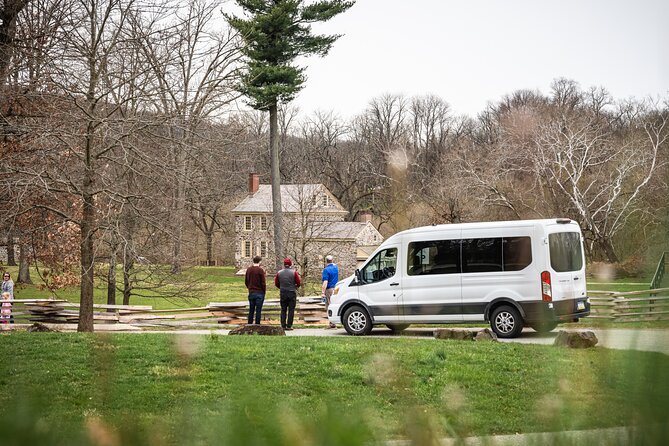
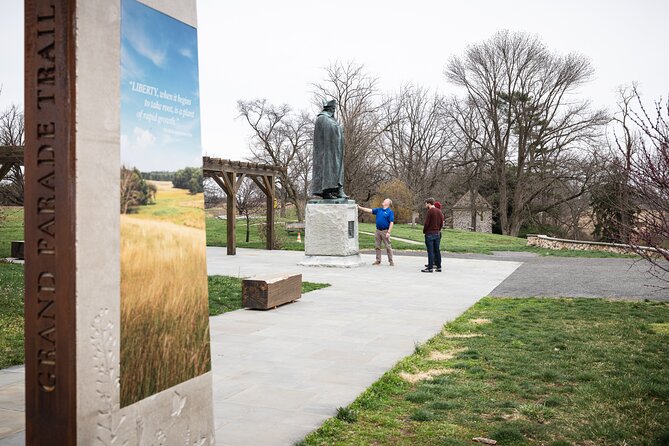
The tour then heads to the Statue of General Friedrich von Steuben. Von Steuben is one of those Revolutionary War figures who often gets less attention than the biggest names, but his impact was huge. Washington entrusted him to reorganize and retrain the weary troops.
The guide’s framing here is the key. The statue overlooks the fields of the old Parade, where von Steuben’s training helped transform Continental soldiers into a more lethal fighting force. You’ll have about 10 minutes here, which is short, but it’s targeted.
How to make it worthwhile: connect the dot between the earlier survival stops and this training moment. Valley Forge wasn’t just a waiting room for the war. It was a training ground. This stop helps you see that transition clearly.
Artillery Park, Washington’s Chapel, and the Schuylkill River Thread
By the time you reach the later stops, the tour starts stitching the whole encampment into one working system: artillery logistics, commemoration, and the natural geography that mattered.
Artillery Park: The Practical Side of Power
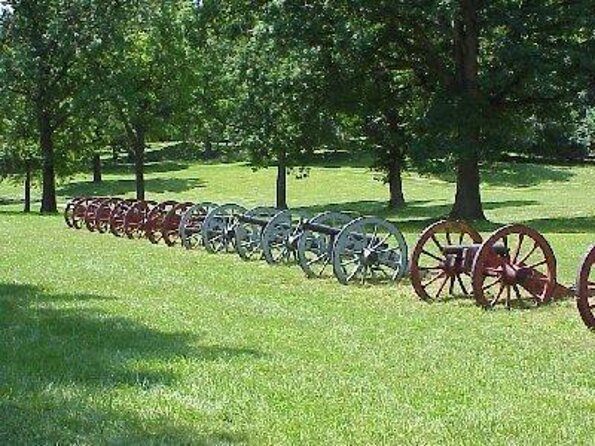
The Artillery Park played a crucial role as a logistical and strategic hub for the Continental Army’s artillery units. You’ll see reconstructed artillery pieces and exhibits explaining why artillery mattered, including training, maintenance, and deployment.
This is valuable because it gives you the “how” behind fighting, not just the “who.” Many people remember famous battles, but Valley Forge is about preparation and organization. About how could a winter encampment build effective force? Artillery answers part of that question.
Washington’s Chapel: A Gothic Revival Memorial
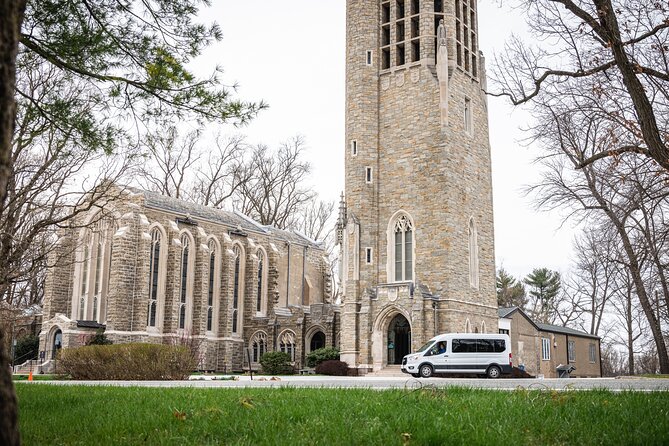
Next is the active chapel, a Gothic Revival-style memorial dedicated to General George Washington. This stop adds a quieter emotional note to the day. With about the time budget typical for the later sites, it’s more about reflection than studying.
One advantage here is that the chapel often feels like a natural place to slow down. You’ll be moving most of the day, so a brief calm stop helps everything else land.
The Schuylkill River: Nature as a Strategic Factor
The Schuylkill River flows through Valley Forge, and it mattered during the Revolutionary War as a transportation and communication waterway for both the Continental Army and the British forces.
This kind of geography note is easy to overlook if you’re only thinking about military strategy. But rivers shape movement and supply lines. Even with a brief mention during the tour, it helps you understand why this area was important beyond the encampment itself.
What the Guide Adds: Storytelling That Keeps You Oriented
The guide is a major part of why this tour gets such strong ratings. You’ll have a local English-speaking guide, and the role they play goes beyond reciting dates. The best version of this tour is when the guide turns facts into a clear timeline and helps you understand why each site mattered in context.
You might also get a guide with a strong sense of humor, or someone who stays flexible if an expected stop is closed. For example, some guides have handled situations like Visitor Center closures by adding another interesting stop. Another repeated theme is that if a guide doesn’t know something immediately, they’ll go ask a Park Service ranger—so you get answers instead of vague guesses.
Guides you may hear about on past departures include people like Tom, Adam, James, Dale, Laura, and Marty. The common thread in their approach is time for questions and enough care to keep the story coherent.
This kind of guiding is especially helpful at Valley Forge because the terrain and memorials can feel scattered if you’re on your own. With the guide, you know what you’re looking at and what it meant.
Timing, Comfort Tips, and Bathroom Stops You’ll Be Glad About
This tour runs about 4 hours 30 minutes, starting at 9:00 am. You’ll be walking a bit at each stop and also riding between them, so it’s not a full-day endurance hike. Still, it’s smart to treat it like a morning-and-midday outing rather than a casual stroll.
One practical tip from people who’ve done it: bring water. Valley Forge can feel long and chilly in winter, and warm days can still add up when you’re moving between sites.
Also, there are bathroom stops at Valley Forge, and people report clean bathrooms with soap and water. That matters for confidence during a tightly timed tour. If you’re traveling with kids or you just hate last-minute searching, this is a real comfort win.
Who This Tour Suits Best (and Who Should DIY It)
This is a great fit if you want the essentials of Valley Forge without spending your day planning. If you like Revolutionary War history but you also want context explained in plain language, you’ll probably find this tour satisfying.
It’s also a good choice for:
- couples who want a meaningful half-day outing
- families who need a guided route and short stops they can handle
- solo travelers who want transportation and easy navigation
If you’re the type who wants to study every exhibit line by line, you might feel the time pressure. In that case, you could use the tour for orientation and then come back later for a slower self-guided visit.
Also, since food and drink aren’t included, avoid booking if you hate carrying snacks and water. It’s an easy fix, but it’s still your responsibility.
Should You Book This Valley Forge Driving Tour?
Yes, I think you should book this if you’re trying to see Valley Forge efficiently and understand what you’re looking at. The mix is strong: Visitor Center context first, then key encampment sites, then leadership, training, and artillery logistics. It’s also genuinely easy logistically thanks to the round-trip pickup from Center City.
I’d skip it only if you want a slow museum experience or you hate time-structured outings. For most people, the value is in the pairing: transportation + small-group guiding + a stop plan that teaches rather than just shows.
If you like your history with story, questions, and clear site-to-site connections, this is a solid way to spend a half day at Valley Forge National Historical Park.
FAQ
How long is the Valley Forge driving tour?
It runs about 4 hours 30 minutes (approx.).
Where do we meet in Philadelphia?
The meeting point is 1200 Arch St, Philadelphia, PA 19107, USA.
What time does the tour start?
The start time is 9:00 am.
What is included in the $149 per person price?
Transportation to and from Philadelphia and Valley Forge, a local English-speaking guide, a donation to Valley Forge National Park, and scenic views.
Are admissions covered for the stops?
The itinerary notes admission ticket entry as free at the listed stops, including the Visitor Center.
How big is the group?
It’s a small-group experience capped at 12, and the maximum traveler count is also listed as 6 for this activity.
Is food or drink included?
No. Additional food and drink are not included.
Can I cancel for a full refund?
Yes, you can cancel up to 24 hours in advance for a full refund.
Is a mobile ticket provided?
Yes, the tour includes a mobile ticket.